

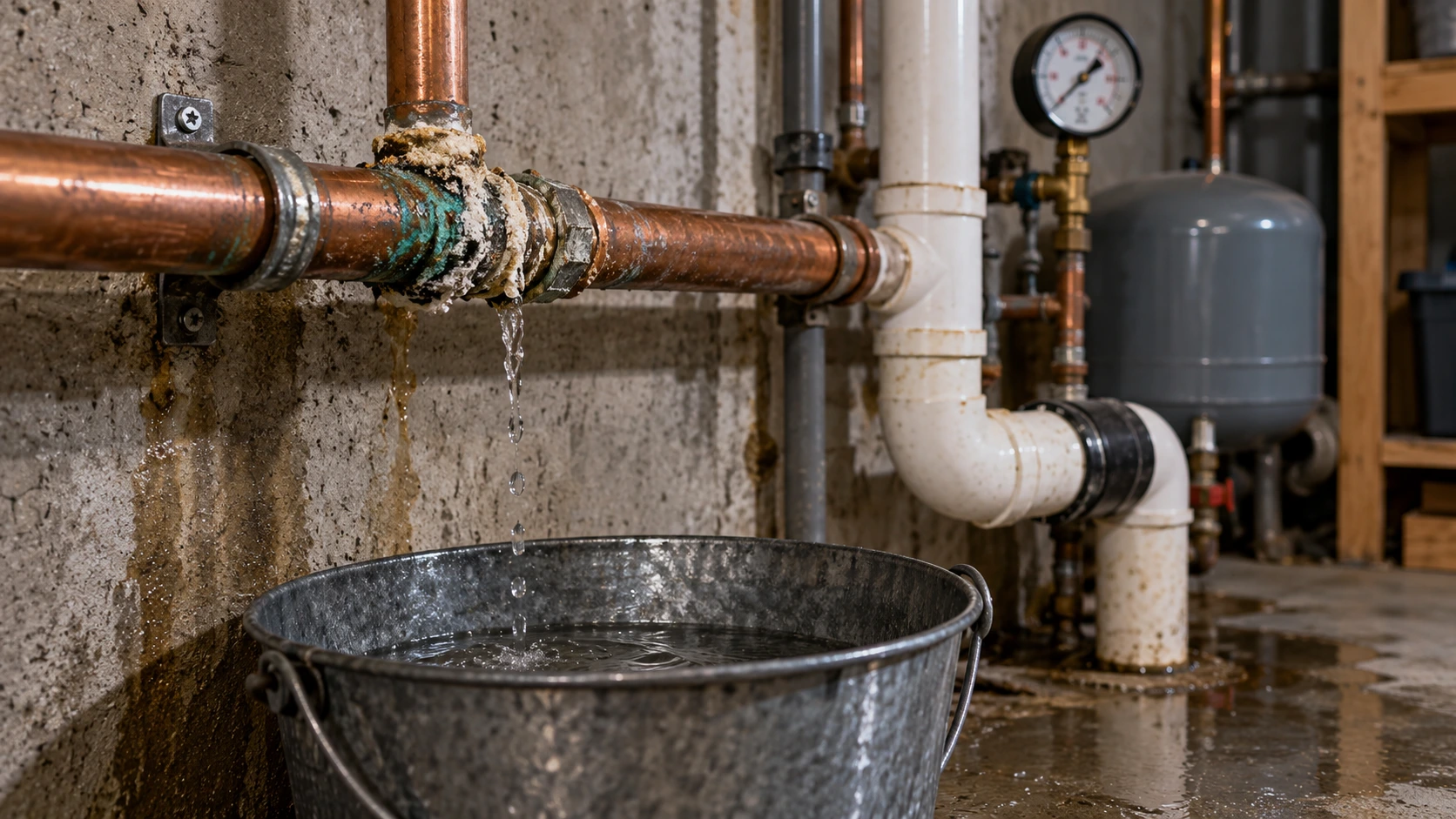
You repair one leaking pipe, everything looks dry again, and then another leak appears somewhere else. Sometimes it happens near the original repair. Other times, a completely different section of plumbing starts dripping.
When this pattern continues, the real question is no longer simply, “Where is the leak?” It becomes, “Why do the pipes keep leaking?”
Repeated plumbing leaks often indicate an underlying condition that hasn’t been corrected. The U.S. Environmental Protection Agency identifies old piping, worn plumbing fixtures, corrosion, cold temperatures, irregular water pressure, equipment malfunctions, and incorrect installation among the factors that can contribute to household leaks.
Some leaks are isolated failures. A worn connection under a sink or a damaged fitting can often be repaired without concern about the rest of the plumbing system. Recurring leaks are different. They may indicate that other sections of piping are experiencing the same stress, corrosion, deterioration, or pressure conditions.
Understanding the cause matters because repairing a hole doesn’t necessarily prevent the next one. The most effective solution depends on why the pipe failed in the first place.
Why Do Pipes Keep Leaking Even After Repairs?
A pipe repair addresses the damaged location. It doesn’t automatically correct the condition that caused the damage.
Imagine a section of metal pipe develops a small pinhole because corrosion has gradually thinned the pipe wall. A plumber removes the damaged section and installs a new piece. The repair itself may be completely sound, but another section of the original piping may have experienced similar deterioration.
The same principle applies to excessive pressure. Replacing a failed fitting stops that particular leak, but high pressure continues acting on every other connection in the plumbing system until the pressure problem is corrected.
Recurring pipe leaks therefore tend to fall into two broad categories.
Isolated Plumbing Failure
Sometimes a single component simply fails.
A connection may loosen. A fitting may become damaged. A valve may wear out. A section of pipe may be accidentally punctured during construction or renovation.
When the surrounding plumbing is otherwise in good condition, a localized plumbing repair may be all that’s required.
System-Wide Plumbing Stress
Repeated leaks in different locations deserve more investigation.
If several pipes, fittings, or supply connections are failing, a plumber may look for a condition affecting the wider system, such as excessive pressure, corrosion, freeze damage, poor pipe support, aging materials, or improper installation.
Finding that underlying condition can be more important than repairing the most recent leak.
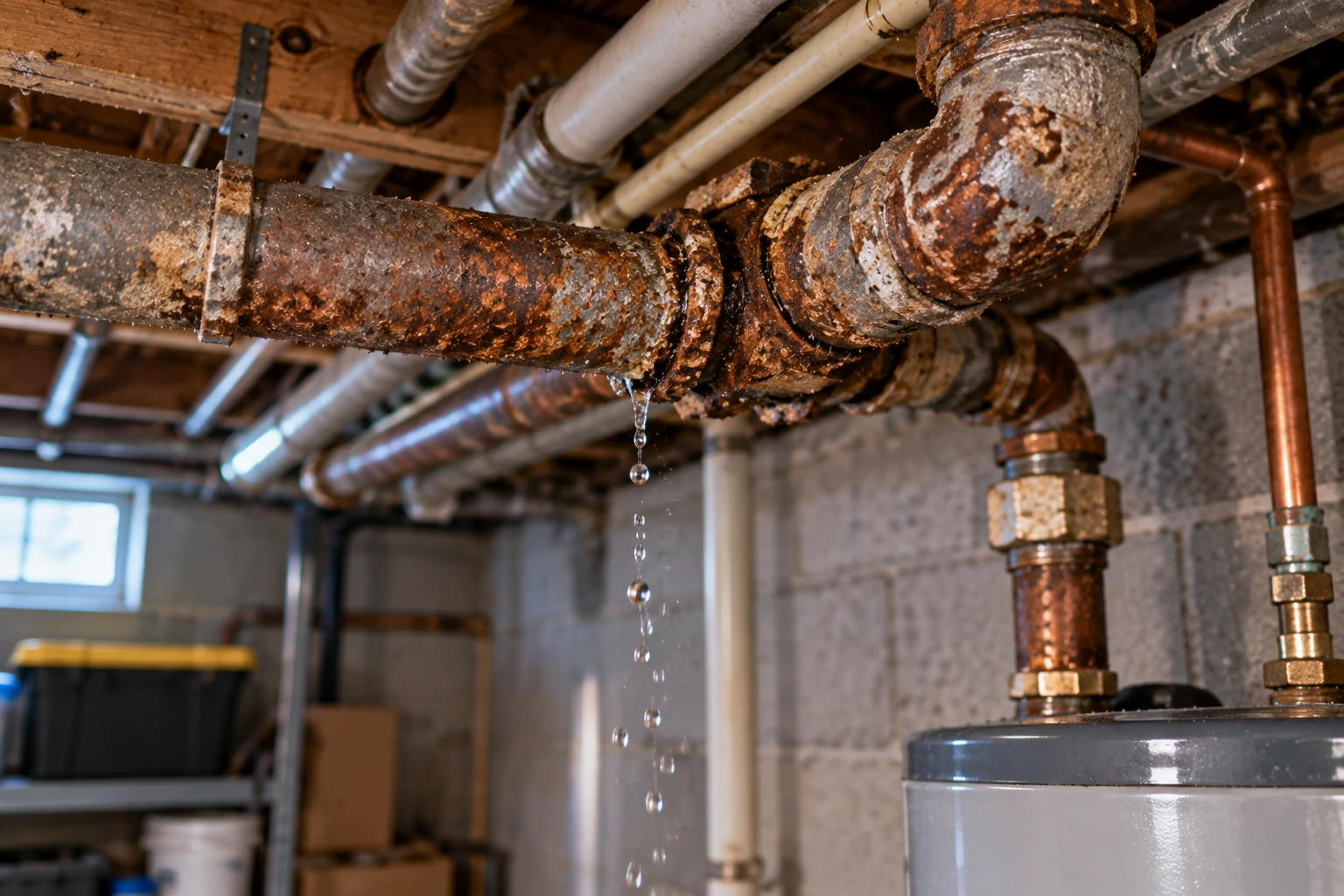
Corrosion Can Slowly Eat Away at Metal Plumbing
Corrosion is one of the most important causes of recurring leaks in metal plumbing.
The U.S. Geological Survey describes corrosivity as the tendency of water to react with plumbing pipes and fixtures. According to USGS, corrosive water can eventually contribute to plumbing leaks, and factors such as pH, chloride, dissolved solids, and alkalinity can influence how corrosive water may be.
Corrosion doesn’t always weaken an entire pipe evenly. In some situations, deterioration becomes concentrated in small areas.
Why Pinhole Leaks Develop
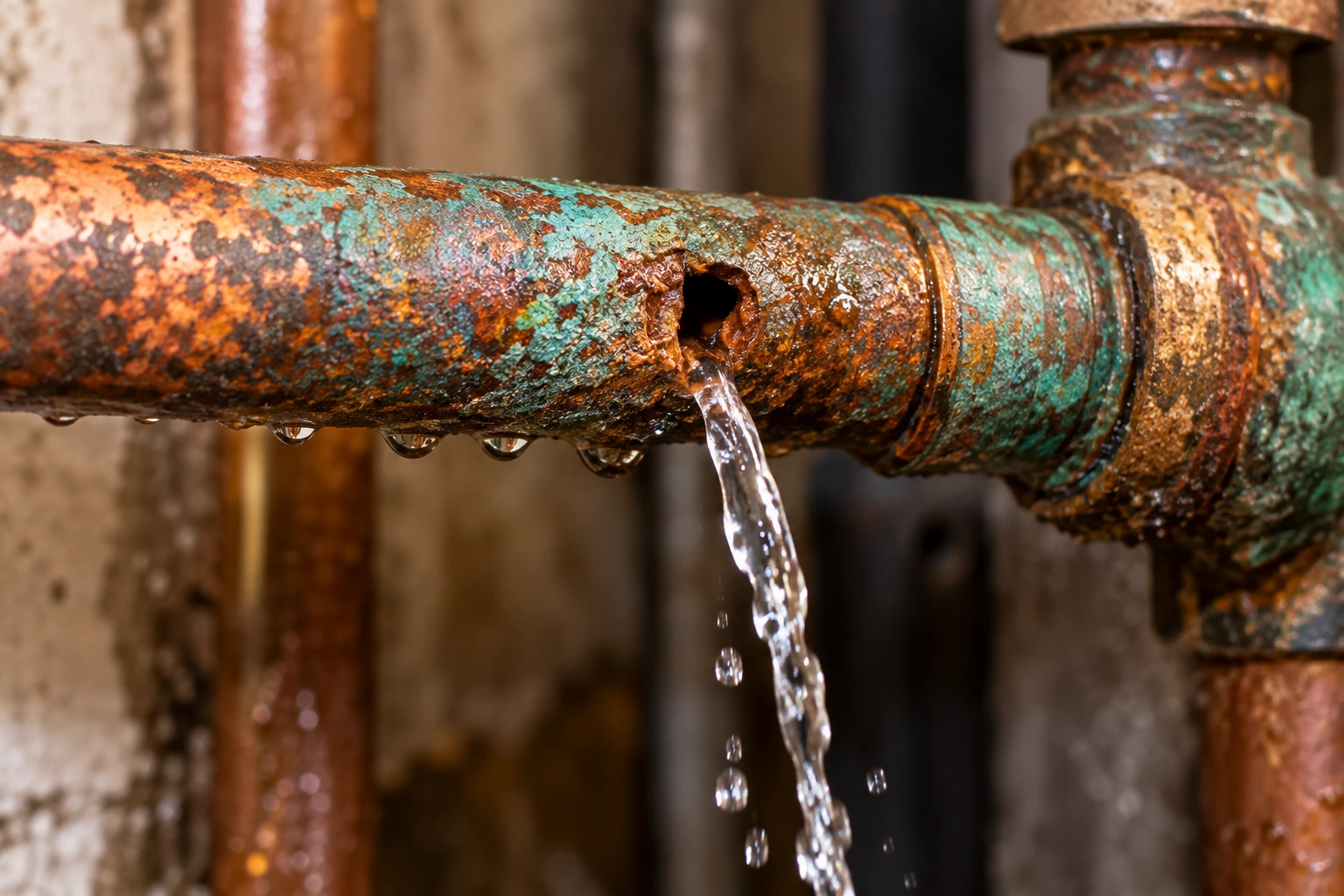
A pinhole leak is exactly what the name suggests: a very small opening in the pipe wall.
The hole may be tiny, but water is continuously under pressure inside the pipe. Even a small opening can release enough water to damage cabinets, drywall, ceilings, flooring, insulation, or nearby building materials.
USGS specifically identifies pitting and small pinhole leaks as possible signs associated with corrosive water.
The difficult part is that the visible hole may represent only the first section of pipe that became thin enough to fail.
Another area may already be deteriorating.
Why One Corrosion Repair May Be Followed by Another
Suppose several sections of the same metal plumbing were installed at approximately the same time and have carried the same water for years.
If one section develops corrosion-related damage, nearby sections may have been exposed to similar conditions.
Replacing the failed section doesn’t reverse deterioration elsewhere.
This doesn’t mean every pinhole leak requires replacing the entire plumbing system. It does mean repeated pinholes deserve a broader evaluation.
Professional leak detection services can help determine whether moisture is coming from one isolated opening or whether additional hidden leakage may be present.
Signs That Corrosion May Be Involved
Corrosion isn’t always obvious from the outside.
Visible deterioration, greenish or bluish staining near some metal plumbing components, metallic-tasting water, repeated pinhole leaks, or similar failures along the same piping may justify further investigation. USGS notes bluish-green staining, metallic taste, pitting, and small leaks among signs that may accompany corrosive conditions.
The correct response depends on the pipe material, water chemistry, location of the damage, and extent of deterioration.
High Water Pressure Can Keep Finding the Next Weak Connection
Many homeowners associate strong water pressure with good plumbing performance.
There is a point where more pressure stops being helpful.
Water pressure acts on pipes, fittings, valves, faucets, appliance connections, water heaters, fixture supply lines, and other components throughout the plumbing system.
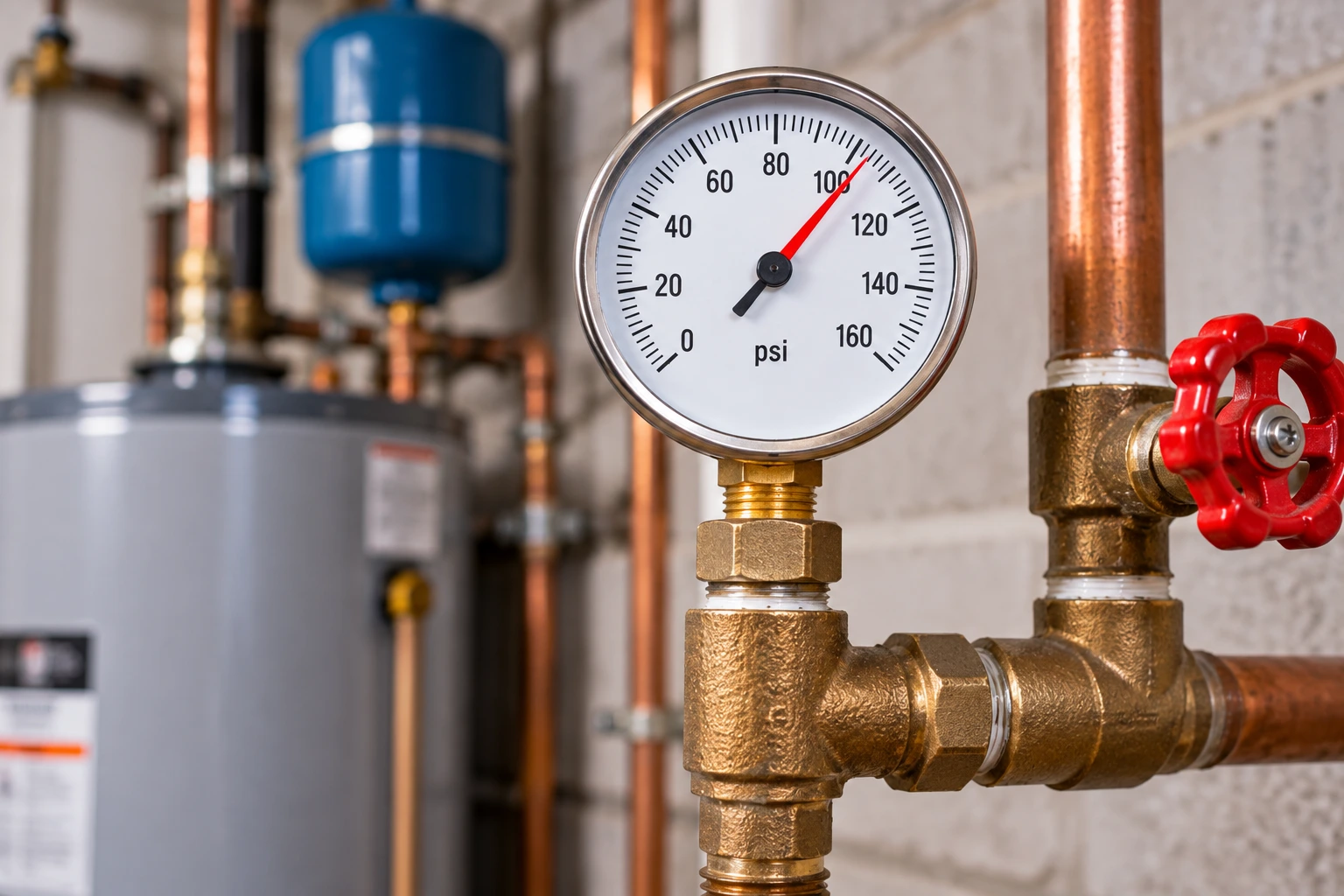
EPA WaterSense states that household water-using fixtures operate best when incoming pressure is generally between 45 and 60 psi. EPA also advises investigating or controlling substantially higher pressure using a pressure-regulating valve.
For Massachusetts properties, state plumbing regulations require a pressure-reducing valve when pressure at a plumbing fixture, device, or appurtenance exceeds 80 PSIG.
How High Pressure Contributes to Repeat Leaks
Think about an older plumbing system with dozens of fittings and connections.
Not every fitting has exactly the same strength. One may have slightly more wear than another.
Excessive pressure can expose the weakest point first.
That connection begins leaking and gets repaired. The system becomes watertight again, but the pressure remains unchanged.
Eventually, another vulnerable fitting may fail.
This can create the frustrating cycle of repairing one leak after another without realizing that the pressure itself needs attention.
How Household Water Pressure Can Be Checked
EPA WaterSense describes checking service pressure using a water pressure gauge attached to a hose bibb. Water-using fixtures and systems should be turned off during the test so the reading reflects service pressure.
A plumber can also evaluate whether the home’s pressure-reducing valve is present, correctly adjusted, and functioning as intended.
If several unrelated plumbing components have begun leaking, checking pressure is often a useful part of the diagnosis.
Aging Pipes and Fittings Can Start Failing in Multiple Places
Plumbing materials don’t remain unchanged forever.
Pipes experience years of water exposure, pressure cycles, temperature changes, vibration, repairs, mineral exposure, and normal use.
EPA includes old piping and worn plumbing fixtures among common factors associated with household leaks.
Age alone doesn’t tell you exactly when a pipe will fail. Two homes with piping installed during the same decade may have very different plumbing conditions.
Water chemistry, installation quality, pipe material, water pressure, previous repairs, and environmental exposure all influence how a plumbing system ages.
Pipe Condition Matters More Than a Simple Age Number
Homeowners sometimes search for an exact number of years that plumbing “should” last.
That can be misleading.
A plumber generally needs to look at the actual condition of the system.
A pipe that appears structurally sound and has no pattern of leaks may not need replacement simply because it is older.
On the other hand, several leaks developing along deteriorated piping can indicate that continued spot repairs are becoming less practical.
Fittings and Valves Age Too
The straight sections of pipe aren’t the only parts of a plumbing system that can wear.
Valves, connectors, joints, fixture supply lines, seals, and fittings can also deteriorate.
EPA WaterSense identifies leaking valves and poor connections to hot and cold water lines among common household leak sources.
If failures are becoming widespread, professional plumbing replacement may be worth comparing with continued individual repairs.
The right choice depends on how much piping is affected, where failures are occurring, and whether the cause can be corrected without replacing larger sections.
Poor Plumbing Installation Can Create Problems Years Later
Not every recurring leak comes from old plumbing.
A relatively new system can leak when installation problems place unnecessary stress on pipes and fittings.
EPA lists incorrect installation or application of water fixtures as one factor that can contribute to household leaks.
Installation-related problems aren’t always immediately visible.
A fitting can remain dry for months or years before pressure, temperature changes, or movement finally exposes the weakness.
Poorly Supported Piping
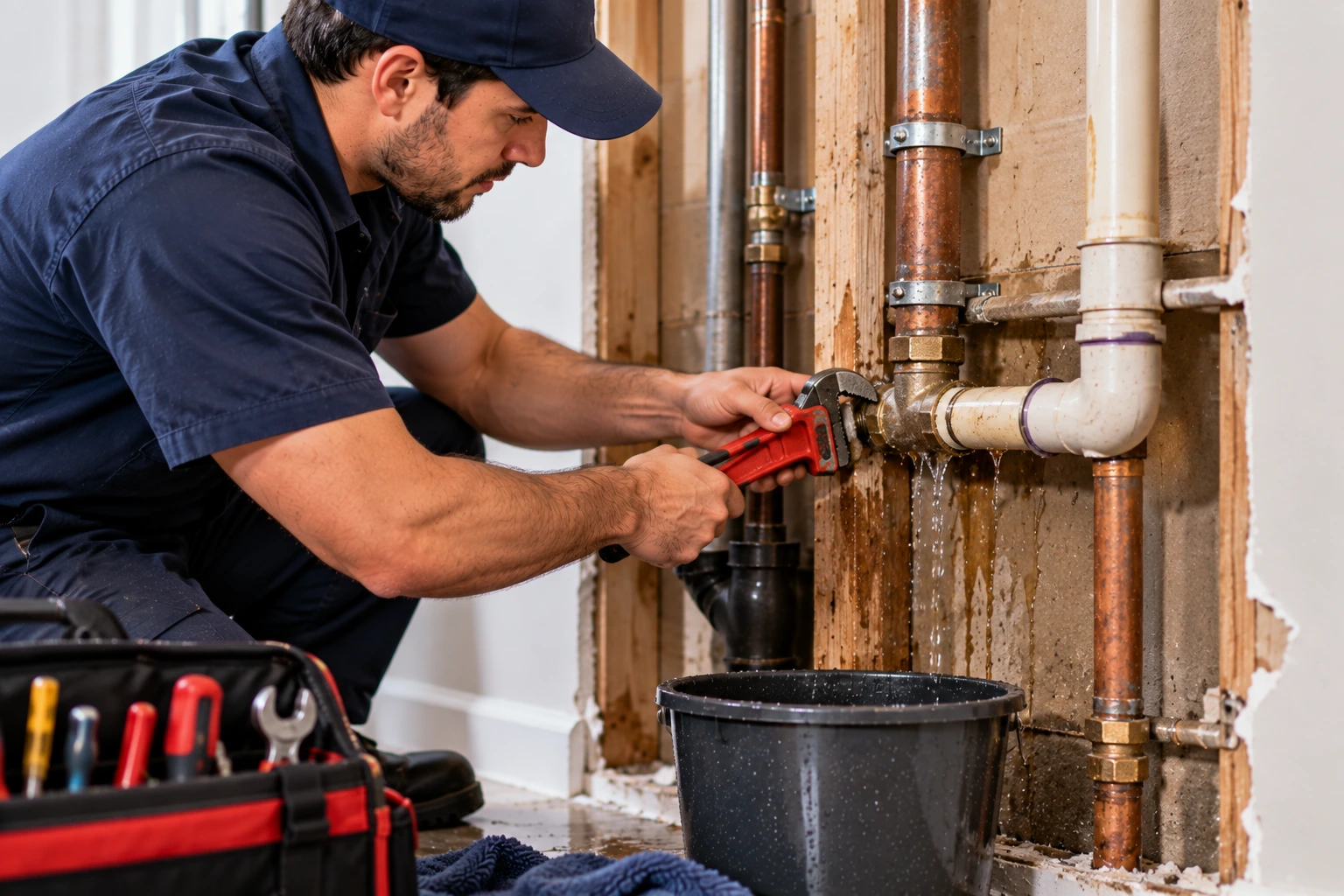
Pipes need appropriate support.
A long run of piping that is allowed to move excessively can place additional stress on joints and fittings.
Movement may become especially noticeable when valves open or close, appliances begin filling, or water rapidly changes direction.
Misaligned Connections
Pipes should meet fittings without unnecessary mechanical stress.
Imagine two pipe sections that don’t naturally line up, but are forced into position during installation.
The connection may initially hold.
Over time, however, constant sideways or twisting force can contribute to loosening or failure.
Improper Connections
Different plumbing materials and fittings have specific joining requirements.
A connection that isn’t prepared, tightened, supported, or sealed correctly may become a future leak point.
Professional plumbing installation services should consider the complete piping arrangement, not merely whether the connection remains dry immediately after installation.
Freezing Temperatures Can Damage Pipes Before You See Any Water
Cold weather is an especially important concern in Massachusetts.
The Massachusetts Division of Insurance warns that freezing temperatures significantly increase the risk of frozen and burst pipes.
When water freezes inside plumbing, the resulting conditions can place extreme stress on pipes and connections.
The leak isn’t always visible immediately.
Why a Frozen Pipe May Leak After It Thaws
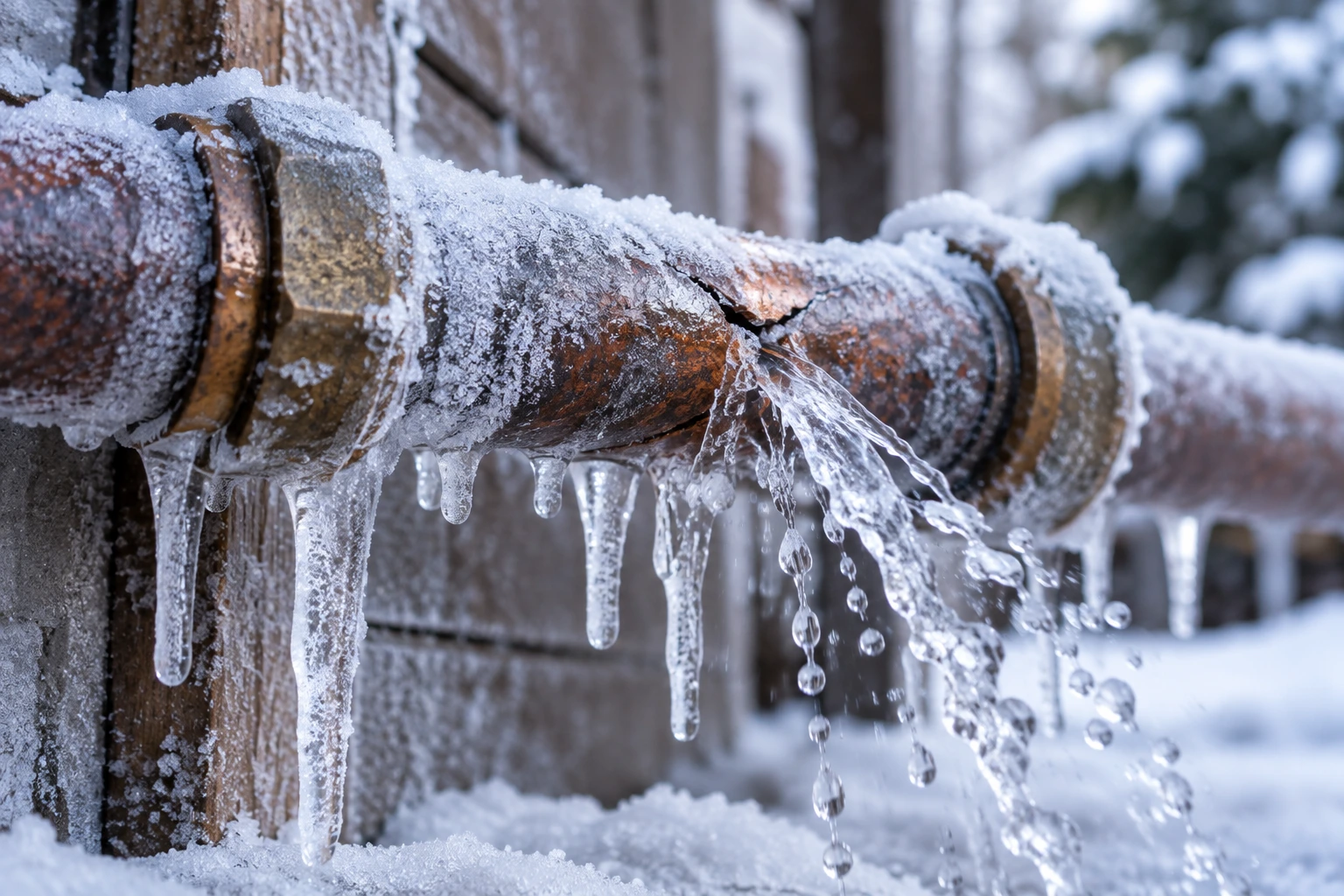
During freezing conditions, ice can block the pipe and damage the pipe wall or fitting.
While the water remains frozen, little or no liquid water may escape.
The problem becomes obvious when temperatures rise.
As the ice melts and normal water pressure returns, water may begin escaping through the damaged section.
That explains why homeowners sometimes discover major leakage after the coldest part of the weather has already passed.
Where Freezing Problems Often Begin
Pipes located in colder areas deserve particular attention.
These may include plumbing near exterior walls, garages, basements, crawl spaces, exterior hose connections, and other areas exposed to low temperatures or drafts.
Massachusetts cold-weather guidance recommends insulating vulnerable pipes and taking measures to reduce freezing risk.
A Small Freeze Event Can Create a Future Weak Point
Not every frozen pipe immediately splits open.
A pipe or fitting may experience damage that isn’t obvious during the first inspection.
If that section later becomes a leak source, identifying the earlier freezing event can help explain why the failure occurred.
Damage affecting the home’s supply piping may require water line services rather than another temporary patch.
Thermal Expansion and Water Hammer Can Put Extra Stress on Plumbing
Not all damaging pressure is constant.
Plumbing systems also experience pressure changes.
Two conditions worth understanding are thermal expansion and water hammer.
Thermal Expansion
Water expands as it is heated.
In certain closed plumbing systems, that increase in volume needs somewhere to go.
Massachusetts plumbing regulations address this issue by requiring a properly sized thermal expansion tank when a metering device with a check valve or backflow preventer creates a closed system.
When expansion isn’t properly managed, pressure changes may affect valves, fittings, water heater connections, and other vulnerable plumbing components.
Thermal expansion should not automatically be blamed for every hot-water-side leak. A plumber needs to evaluate system pressure, the water heater arrangement, and the presence and condition of required control devices.
Water Hammer
Have you ever heard a sharp bang when a washing machine, dishwasher, or other fast-closing valve stops water flow?
That pressure event is commonly known as water hammer.
Massachusetts plumbing regulations require pressure-absorbing devices in building water supply systems where quick-acting or solenoid valves can create high pressures when they close rapidly.
Occasional plumbing noise doesn’t prove that water hammer is damaging the system, but repeated banging deserves attention.
If pipes are moving violently or pressure spikes are occurring frequently, the problem may contribute to wear at joints and supports.
Pipe Joints, Valves, and Fixture Connections May Be Leaking Instead of the Pipe
A wet pipe doesn’t necessarily mean that the pipe itself has a hole.
Water can travel.
A small leak at a valve or fitting may run along the outside of a pipe before dripping several inches or even several feet away.
That can make the visible drip point misleading.
EPA WaterSense identifies worn toilet components, dripping faucets, leaking valves, and poor connections to hot and cold water lines among common sources of household leakage.
Kitchen Connections
The area beneath a kitchen sink contains several possible leak points.
Depending on the setup, there may be hot and cold supply connections, shutoff valves, faucet connections, drainage piping, appliance connections, and garbage disposal plumbing.
A homeowner may see water at the bottom of the cabinet and assume a supply pipe has failed when the moisture is actually coming from a fixture connection.
Recurring problems in this area may justify evaluating the broader kitchen plumbing system.
Bathroom Connections
Bathrooms contain many plumbing connections in a compact space.
Sinks, faucets, toilets, shower valves, tubs, supply lines, shutoff valves, and drainage components can all become sources of moisture.
If the same bathroom repeatedly develops leaks, inspecting the surrounding bathroom plumbing services may reveal whether the problem involves fixtures, connections, or hidden piping.
Fixture Problems
Sometimes replacing a worn connection or fixture is more appropriate than repairing surrounding pipe.
Professional fixture installation can address deteriorated faucets, valves, and related components when the problem is concentrated at the fixture itself.
Hidden Pipe Leaks Can Continue Long Before They Become Obvious
Some plumbing leaks are easy to find.
Water is dripping directly beneath the pipe and the damaged connection is visible.
Hidden leaks are different.
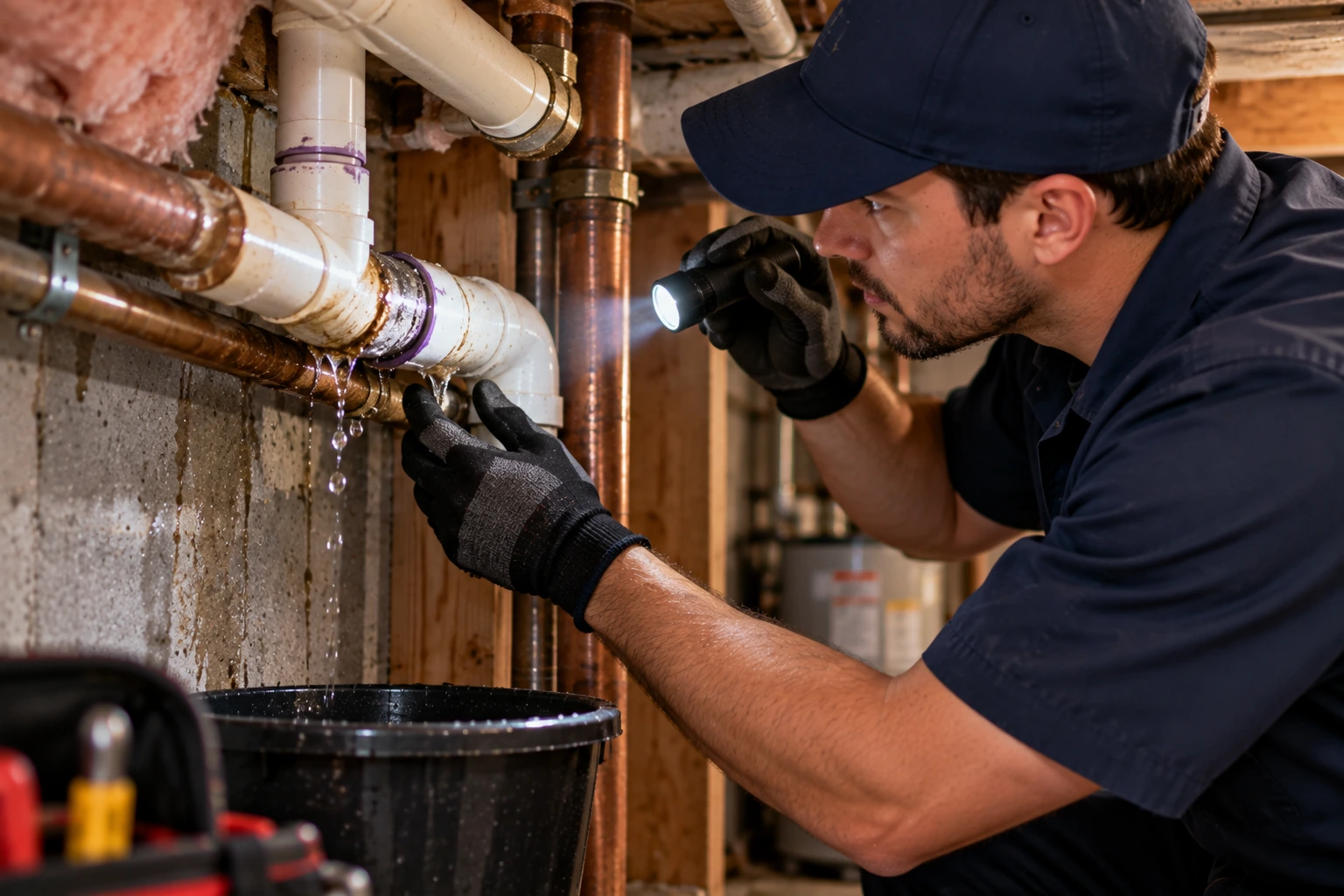
Pipes may run behind finished walls, underneath floors, above ceilings, through cabinets, or inside other concealed areas.
A slow leak can remain out of sight while moisture spreads into surrounding materials.
Signs That Deserve Investigation
A hidden leak may first appear as a water stain, damp drywall, moisture inside a cabinet, peeling paint, an unexplained wet area, or ongoing water use when fixtures are supposed to be off.
No single sign proves that a hidden supply pipe is leaking.
The source still needs to be located.
Use the Water Meter as a Starting Point
EPA WaterSense recommends checking the water meter before and after a two-hour period in which no water is being used.
If the meter changes during that period, a leak may be present somewhere in the property.
This test confirms unexplained water use. It doesn’t tell you exactly where the leak is located.
Leak Detection Technology Can Help
Modern leak detection systems generally work in one of two ways.
Some detect unexpected moisture. Others monitor water flow and look for unusual consumption patterns.
EPA notes that these devices can alert homeowners to unexpected dampness or abnormal water use and may help reduce water waste and property damage associated with leaks.
When the location remains unclear, professional leak detection services can help narrow the search before unnecessary sections of walls or flooring are opened.
Why Does Another Leak Sometimes Appear Near a Recent Repair?
This is one of the most frustrating situations for a homeowner.
A plumber repairs a leaking section. A short time later, another leak appears only a few feet away.
It is easy to assume that the repair somehow caused the new failure.
Sometimes there may be an installation issue that needs review, but a nearby leak can also reveal that the original section of pipe was part of a larger area of deterioration.
The First Leak May Have Been the Weakest Point
Suppose ten feet of pipe have experienced similar corrosion.
One small section becomes thinner than the rest and fails first.
That area gets replaced.
The remaining original piping may still contain the next weakest point.
Water pressure is now acting on that section exactly as it did before.
A second leak doesn’t necessarily mean the first repair failed. It may indicate that the initial leak was the first visible sign of broader deterioration.
Repeated Repairs Can Reveal a Pattern
This is why documenting previous leak locations can be useful.
If several failures occur along the same pipe run, involve the same material, or develop under similar conditions, the pattern becomes important.
At that point, the question shifts from:
“How do we patch this leak?”
to:
“How much of this piping is still dependable?”
That is a more useful question for deciding between another spot repair and replacing a larger section.
How a Plumber Diagnoses Recurring Pipe Leaks
Diagnosing recurring leaks requires more than locating moisture.
A useful inspection tries to determine why the failure happened.
The exact process depends on the property and the symptoms, but several areas are commonly considered.
The Location of Previous Leaks
One isolated leak tells a different story from five failures along the same pipe system.
A plumber may want to know where previous repairs were made, what failed, and whether those sections used the same pipe material.
Water Pressure
Pressure testing can reveal whether the plumbing is operating under unnecessary stress.
EPA recommends household service pressure in the general range of 45 to 60 psi for efficient operation, while Massachusetts regulations require pressure reduction where fixture pressure exceeds 80 PSIG.
Visible Pipe Condition
Accessible plumbing may be checked for corrosion, staining, previous repairs, damaged supports, loose fittings, or other deterioration.
Leak Location
A leak at a threaded fitting may have a different cause from several pinholes along a pipe wall.
The type and location of the failure can provide clues about what should be investigated next.
Temperature Exposure
When leaks appear after severe winter weather, freeze damage becomes relevant.
Plumbing near cold exterior areas may require closer inspection.
Plumbing Noise and Movement
Repeated banging, shaking, or movement can point toward pressure events or inadequate pipe support.
Massachusetts plumbing regulations specifically address pressure generated by quick-closing valves and require water-hammer protection in applicable systems.
Hidden Water Use
If there are signs of moisture but no obvious leak, meter testing and professional leak detection may help determine whether water is escaping somewhere out of sight.
A complete residential plumbing service can bring these clues together instead of treating each failure as an unrelated event.
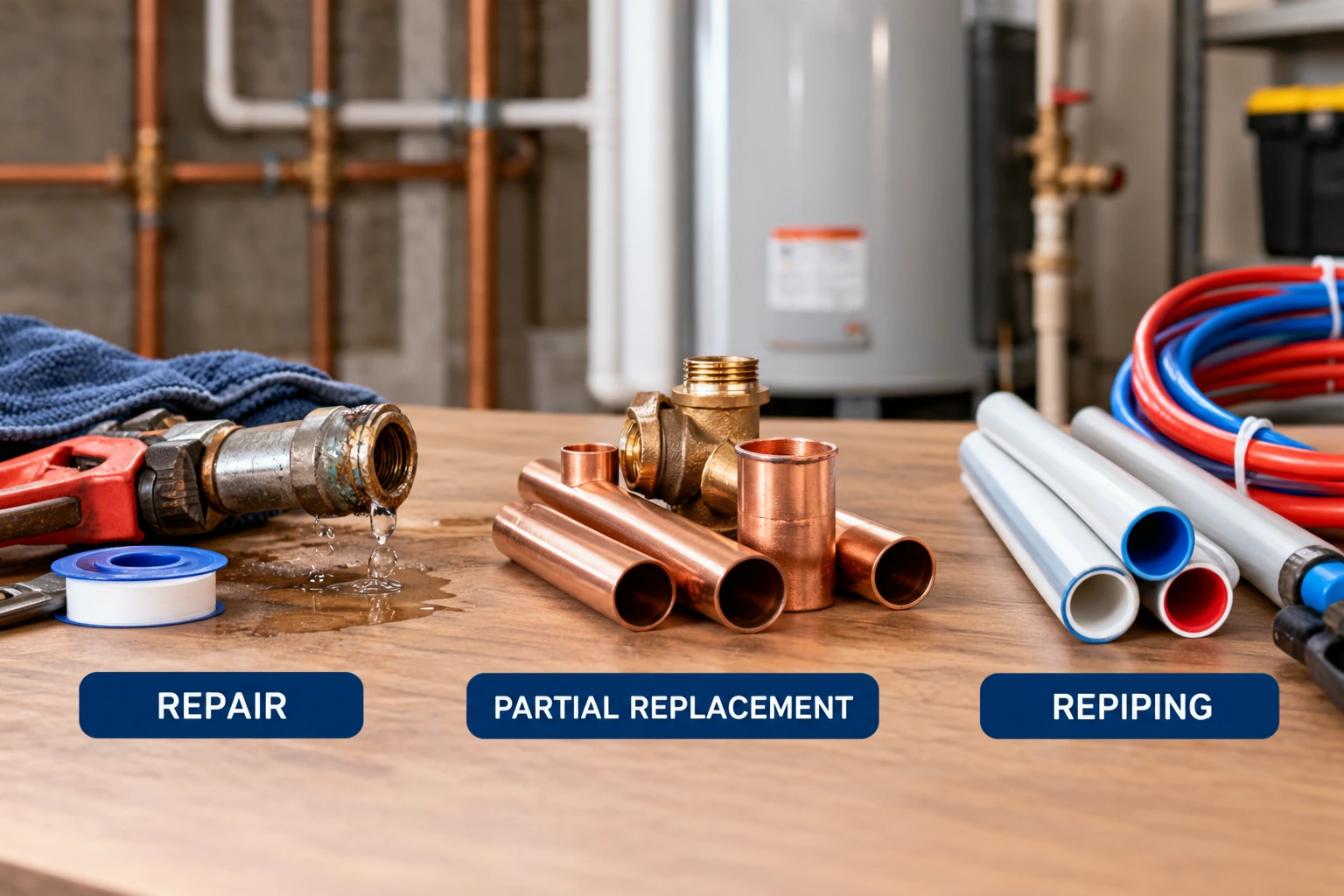
Repair, Partial Replacement, or Repiping: Which Makes More Sense?
Finding a leak is only the first decision.
The next question is how much plumbing actually needs attention.
There are generally three possibilities: repair the isolated failure, replace a larger damaged section, or consider broader piping replacement.
The correct choice depends on the evidence.
When a Local Repair May Be Enough
A local repair can make sense when the failure is clearly isolated.
For example, one damaged fitting in otherwise sound piping doesn’t necessarily justify replacing an entire water line.
If the surrounding pipe appears healthy, system pressure is normal, and there is no history of recurring leaks, correcting that one failure may solve the problem.
When Partial Pipe Replacement Makes More Sense
Sometimes the damaged area extends beyond the visible hole.
Several feet of deteriorated piping may need replacement even though water is escaping from only one point.
This approach can remove a larger weak section while leaving sound plumbing intact.
When Broader Replacement Deserves Consideration
Repeated failures can eventually change the economics and reliability of continued spot repairs.
If similar pipes are leaking in several locations, corrosion is widespread, previous repairs are accumulating, or inaccessible plumbing continues failing, broader plumbing replacement may be worth evaluating.
Replacement shouldn’t be recommended simply because plumbing is old.
The decision should be based on condition, failure history, pipe material, accessibility, pressure, and whether the underlying problem can realistically be corrected.
Ask What the Next Repair Is Likely to Solve
A useful question is:
“Will this repair correct the cause, or only the latest failure?”
If the answer is only the latest failure, ask what evidence suggests that the remaining piping is still in acceptable condition.
That discussion can help homeowners make a more informed decision instead of automatically choosing either the cheapest immediate repair or the largest possible replacement project.
How Can You Reduce the Risk of Future Pipe Leaks?
No plumbing system can be guaranteed never to leak.
Several practical steps can reduce avoidable problems and make leaks easier to catch before they cause greater damage.
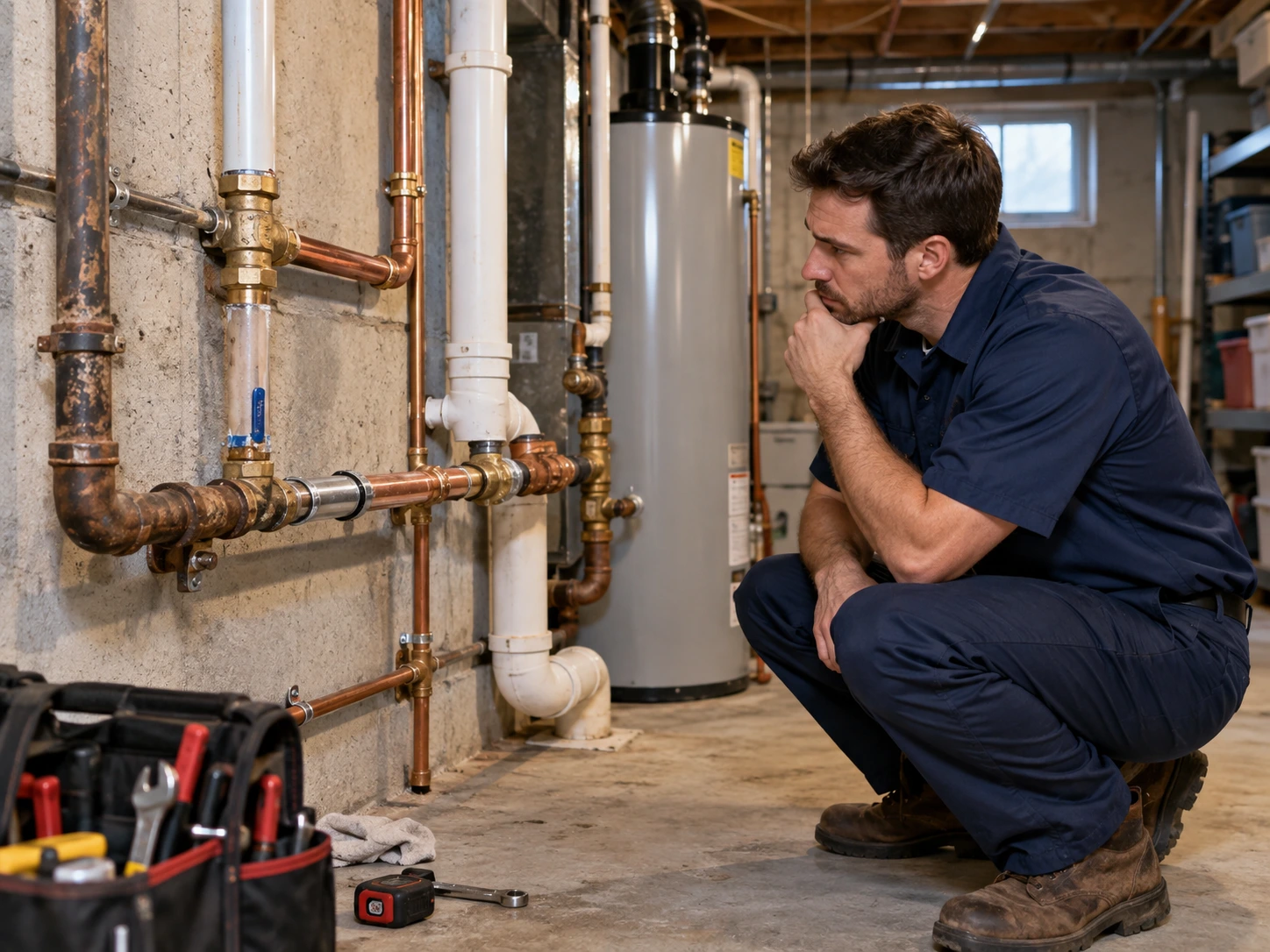
Start with the conditions that repeatedly appear in leak investigations: pressure, freezing exposure, visible corrosion, aging connections, plumbing movement, and unexplained water use.
Know Your Water Pressure
Unusually high pressure shouldn’t be ignored simply because fixtures appear to work well.
Pressure can be measured and the pressure-reducing valve can be checked when necessary.
EPA’s recommended service range of approximately 45 to 60 psi provides homeowners with a useful reference point.
Protect Pipes During Freezing Weather
Massachusetts guidance recommends insulating vulnerable water pipes and taking precautions during extreme cold.
Exterior hose connections and plumbing in colder areas should receive particular attention before freezing conditions arrive.
Pay Attention to Small Leaks
A slow drip can provide early warning.
Don’t wait for a small connection leak to become a major water release before investigating it.
Watch for Corrosion
Visible deterioration around accessible metal plumbing deserves attention, especially when the property has already experienced pinhole leaks.
Investigate Plumbing Noise
Frequent banging when valves close isn’t something that should simply be accepted as a normal feature of the house.
It may indicate pipe movement or a pressure-related condition that needs inspection.
Know the Main Water Shutoff
If a pipe suddenly breaks, being able to stop the incoming water quickly can reduce the amount of water released into the property.
Massachusetts cold-weather guidance recommends knowing how to shut off the water in case a pipe bursts.
Check for Hidden Water Use
A meter test can help reveal water use that isn’t explained by normal fixtures or appliances.
For broader preventive information, homeowners can use the home plumbing services guide to understand common household plumbing problems and maintenance needs.
Frequently Asked Questions
Why do I keep getting pinhole leaks in my pipes?
Repeated pinhole leaks can be associated with localized corrosion or deterioration of the pipe wall.
USGS identifies pitting and small pinhole leaks among potential signs associated with corrosive water.
One pinhole doesn’t prove that all plumbing needs replacement. Several similar leaks should prompt a closer look at the affected pipe material and surrounding plumbing.
Can high water pressure cause pipes to leak?
High pressure can place additional stress on pipes, fittings, fixtures, valves, and appliance connections.
EPA recommends incoming household service pressure around 45 to 60 psi for efficient operation. Massachusetts plumbing rules require pressure reduction when pressure at applicable plumbing fixtures or devices exceeds 80 PSIG.
Why does my pipe leak only when I use hot water?
A hot-water-only leak may involve a connection, valve, fitting, water heater component, thermal movement, or another part of the hot water system.
The location should be inspected before assuming the pipe itself needs replacement.
Closed plumbing systems also need appropriate thermal expansion control, which Massachusetts plumbing regulations address through expansion tank requirements in applicable configurations.
Can frozen pipes leak after they thaw?
Yes.
Freeze damage may become obvious only after temperatures rise and normal water flow returns.
Massachusetts officials specifically warn homeowners about frozen and burst pipes during cold weather.
Why is my pipe leaking at a joint?
Joint leaks can involve deterioration, movement, pressure, incorrect installation, or a connection that has loosened or failed.
The joint should be inspected along with the surrounding pipe rather than repeatedly tightened without understanding the cause.
Does one leaking pipe mean I need to repipe my house?
Not necessarily.
One isolated failure can often be repaired.
Broader replacement becomes more relevant when there is a documented pattern of leaks, widespread deterioration, repeated pinholes, or multiple failures involving the same piping.
How do I know whether I have a hidden water leak?
One simple starting point is the water meter.
EPA recommends comparing meter readings before and after a two-hour period when no water is being used. A change in the reading may indicate leakage somewhere on the property.
Professional leak detection may then be needed to identify the exact location.
Is plumbing noise related to leaking pipes?
Not every plumbing noise means a leak is developing.
However, repeated banging or pipe movement can indicate pressure events such as water hammer.
Massachusetts plumbing regulations recognize this issue and require pressure-absorbing devices where quick-acting valves create high pressures.
Should I keep repairing old pipes or replace them?
The answer depends on the pattern.
Occasional isolated repairs may remain reasonable when the surrounding plumbing is sound.
If repairs are becoming frequent and the same type of piping continues failing, comparing the cost and reliability of continued repairs with replacement can make sense.
What should I do if a pipe is leaking right now?
If water is actively escaping, the immediate priority is controlling the water supply.
Know where the main shutoff valve is located and how to operate it.
Once the flow is controlled, the damaged section and the cause of the failure should be evaluated.
A minor localized leak may need routine repair. A burst pipe or uncontrolled water release may require emergency plumbing service.
Stop Fixing the Symptom Without Checking the Cause
A leaking pipe doesn’t automatically mean the entire plumbing system is failing.
One damaged fitting may simply need to be replaced.
The situation changes when leaks become a pattern.
Corrosion can weaken additional areas of metal piping. Excessive pressure can continue stressing every connection after one leak is repaired. Freezing conditions can damage more than one exposed line. Incorrect installation can create long-term stress. Aging plumbing may develop several vulnerable locations around the same time.
That is why recurring pipe leaks deserve diagnosis, not just another patch.
Look at where previous leaks occurred. Check water pressure. Consider the condition and material of the piping. Pay attention to corrosion, freezing exposure, water hammer, aging connections, and unexplained water use.
When those pieces are considered together, it becomes much easier to determine whether the right solution is a simple repair, replacement of one deteriorated section, or a broader plumbing upgrade.
If pipes in your home continue developing leaks, Contact Foukas Plumbing & Heating to have the plumbing system inspected and determine what is causing the repeated failures.