

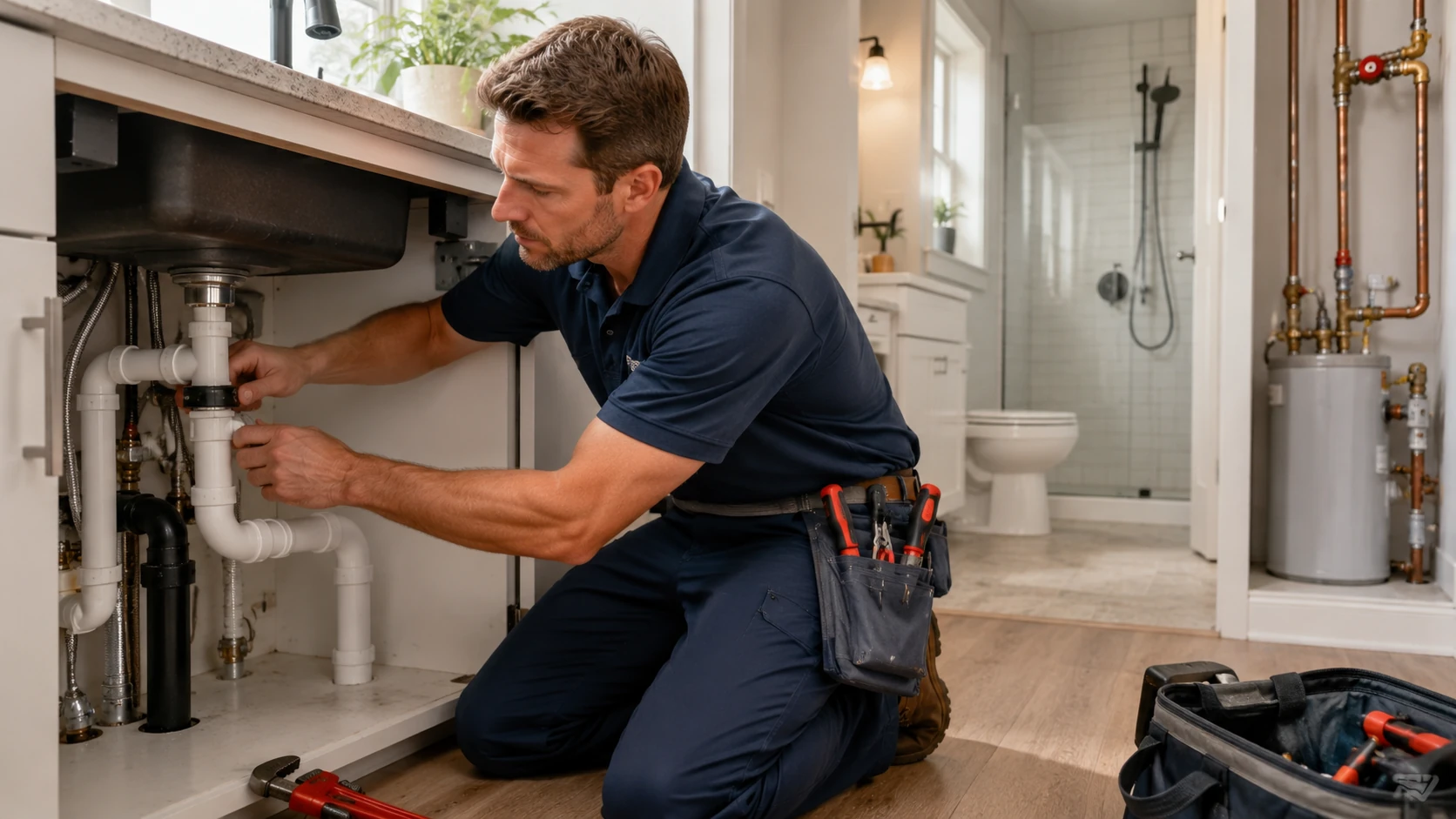
A home’s plumbing often goes unnoticed until something stops working. Turn on a faucet and water appears. Flush a toilet and wastewater disappears. Run the dishwasher or take a shower and several parts of the system work together behind the walls without much thought from the homeowner.
That changes quickly when a pipe starts leaking, a drain repeatedly backs up, water pressure falls, or a fixture stops working.
Understanding the Home Plumbing System makes these situations easier to recognize and manage. Homeowners don’t need to become plumbers, but knowing how water enters the property, where it goes after use, what common failures look like, and when professional help is needed can prevent a small concern from becoming a much larger repair.
This guide explains the major parts of a plumbing system, common Home Plumbing Problems, Plumbing repair and Plumbing replacement decisions, installations, emergencies, and practical Home Plumbing Maintenance for properties throughout Greater Boston and the North Shore.
How Does a House Plumbing System Work?
If you’ve ever wondered how does a house plumbing system work, the simplest answer is that two main systems operate together. One brings clean water into the property, while the other carries wastewater away.
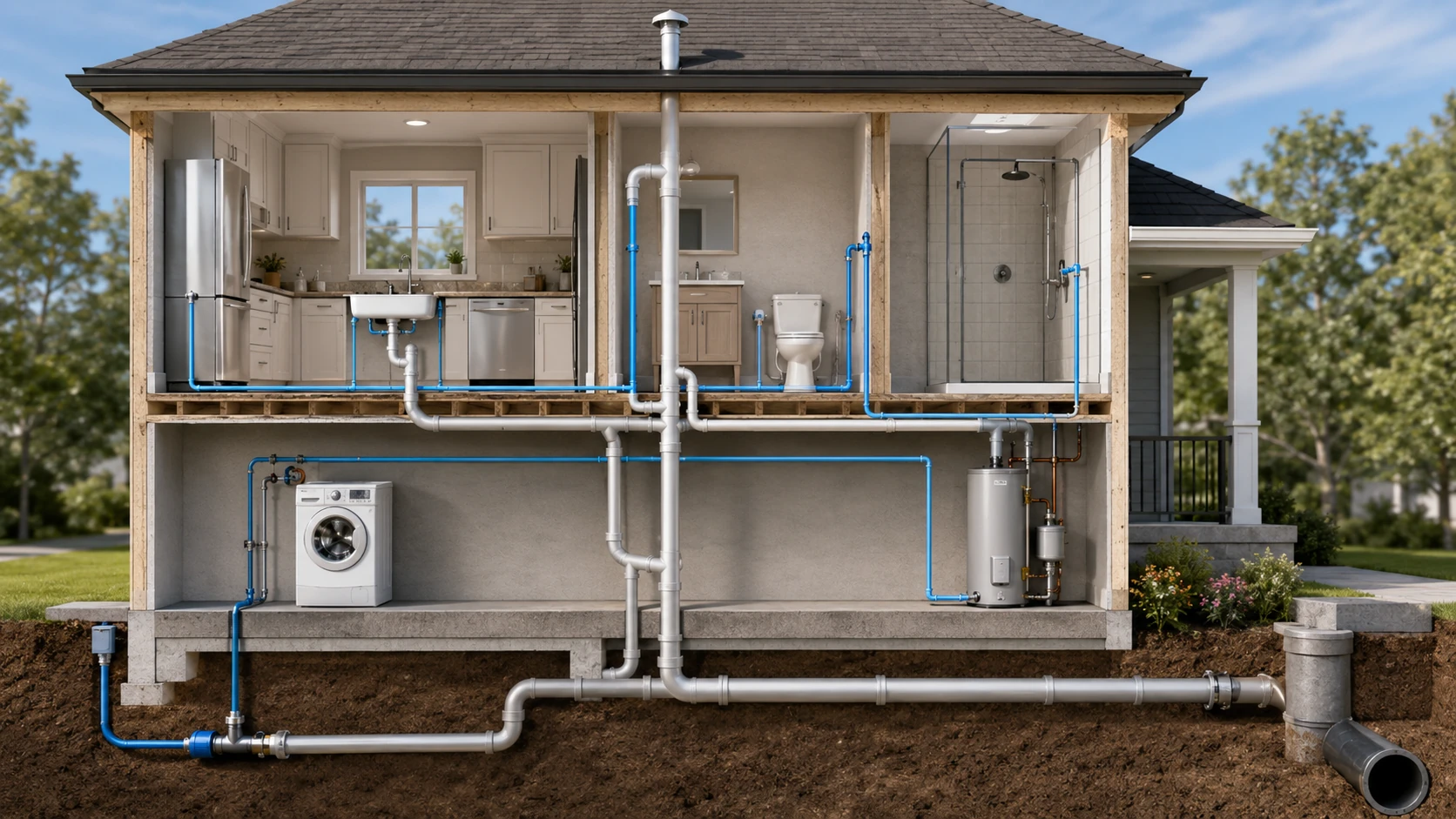
Fixtures, valves, traps, vents, drains, water-heating equipment, and connected appliances sit between those two systems.
Water Enters Through the Supply System
The water supply side of a house plumbing system distributes water to fixtures and equipment throughout the property.
Water lines branch off to serve places such as:
- Kitchen sinks
- Bathroom faucets
- Toilets
- Showers and bathtubs
- Washing machines
- Dishwashers
- Outdoor faucets
- Water heaters
Pressure allows water to travel through the supply piping when a fixture or appliance calls for it.
A problem anywhere along that route can affect one fixture, one room, or several areas of the home.
Wastewater Leaves Through the Drainage System
After water has been used, it enters the drain, waste, and vent system.
Drainpipes carry wastewater away from sinks, showers, tubs, toilets, and appliances. These pipes depend heavily on proper sizing, slope, connections, and venting.
Unlike pressurized water supply piping, residential drainage generally depends on gravity to move wastewater through the system.
Plumbing Vents Help Drains Work Correctly
Vent piping allows air into the drainage system and gives sewer gases a controlled route out of the building.
Without proper venting, drainage can become slow or inconsistent. Homeowners may notice gurgling sounds, unpleasant odors, or changing water levels in fixture traps.
A drainage problem that keeps returning may therefore involve more than a simple clog.
What Is Included in a Home Plumbing System?
The plumbing system in a house is more extensive than the pipes visible beneath sinks. Much of it runs behind walls, above ceilings, through floors, inside utility areas, and below the building.
Understanding these components makes it easier to identify where trouble may be developing.
Water Supply Pipes and Shutoff Valves
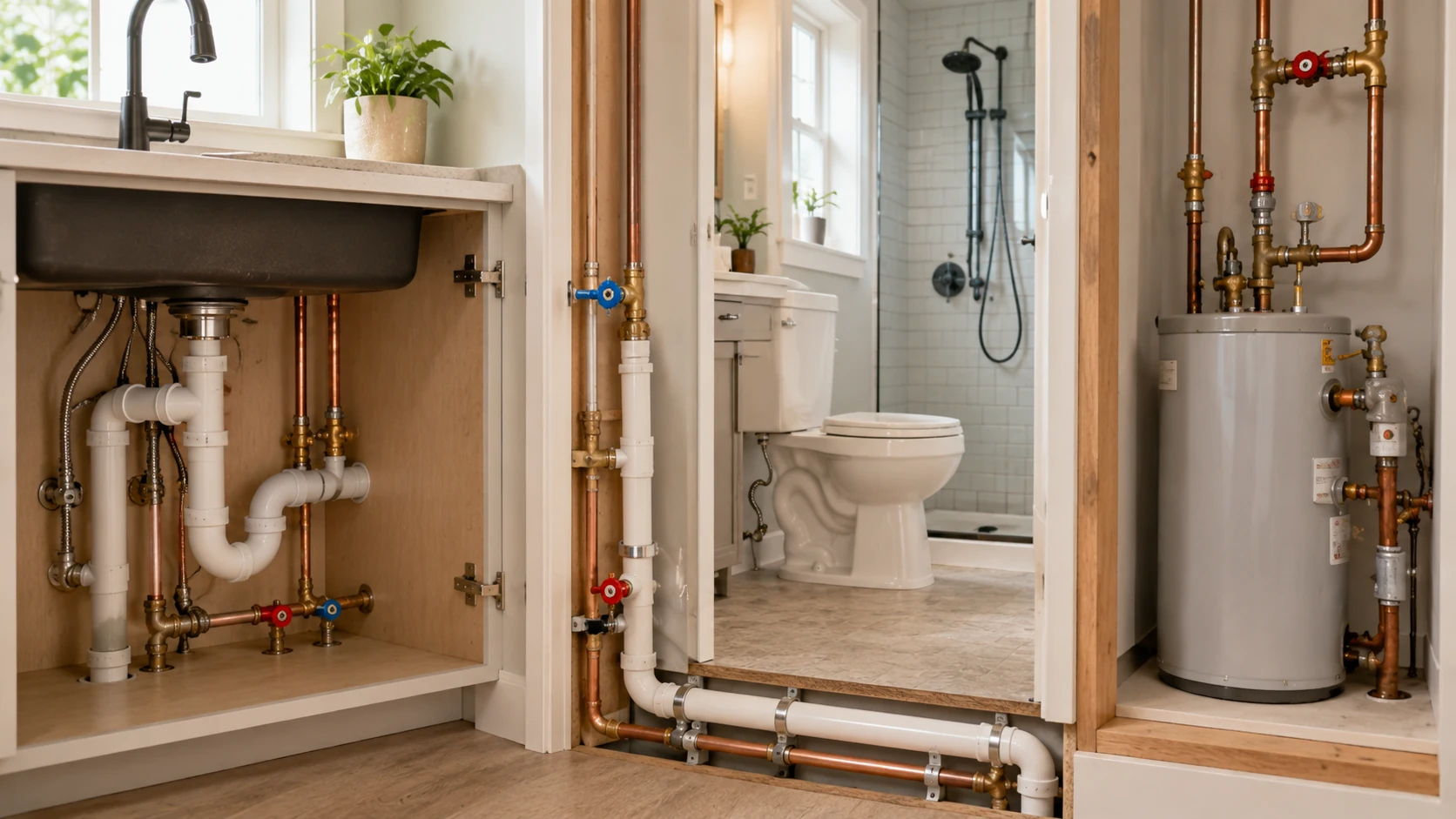
Supply piping delivers water throughout the property. Branch lines direct it to individual fixtures, while shutoff valves allow specific sections or fixtures to be isolated.
Knowing where the main water shutoff is located is especially useful.
If a supply pipe suddenly breaks, closing the main valve can reduce the amount of water entering the property while professional Emergency Plumbing assistance is arranged.
Drains, Traps, and Waste Lines
Every frequently used plumbing fixture needs a reliable path for wastewater.
The curved section of pipe commonly found below sinks is a trap. It holds a small amount of water that helps prevent sewer gases from entering occupied rooms.
Waste lines then connect individual fixtures to larger drain lines.
Problems may occur because of accumulated material, deteriorated components, poor connections, damaged piping, or deeper restrictions in the drainage system.
Fixtures and Connected Equipment
Fixtures are the points where homeowners interact with the plumbing every day.
They include faucets, toilets, sinks, tubs, showers, valves, and similar components.
Plumbing may also connect to equipment such as water heaters, washing machines, dishwashers, garbage disposals, and other water-using appliances.
Problems that appear to be equipment failures can sometimes originate in the plumbing supplying or draining that equipment.
Common Home Plumbing Problems and What They Can Mean
Some Home Plumbing Problems appear suddenly. Others develop slowly enough that homeowners become accustomed to them.
Recognizing the difference between an isolated inconvenience and a developing system problem can help determine the right response.
Leaking Faucets, Valves, and Pipes
Leaks can develop at fixtures, pipe joints, valves, appliance connections, supply lines, or concealed piping.
A visible drip beneath a sink is easier to identify than a slow leak behind a wall. Concealed leaks may instead show themselves through staining, damp materials, peeling finishes, unusual odors, or unexplained moisture.
Leaks should be investigated rather than repeatedly dried or covered.
Professional Plumbing Repairs can determine whether the problem involves a replaceable fitting, fixture component, valve, damaged section of pipe, or a larger piping concern.
Slow and Repeatedly Clogged Drains
A single slow sink may have a localized restriction.
When several fixtures drain slowly, backups return soon after cleaning, or wastewater appears at another fixture, the problem may lie farther into the drainage system.
Location matters.
For example, a bathroom sink that drains slowly by itself suggests a different problem than several downstairs fixtures backing up at the same time.
Low or Uneven Water Pressure
Low pressure may affect one fixture or several areas of the property.
Possible causes can include fixture buildup, partially closed valves, restricted piping, damaged components, supply-line problems, or other conditions affecting water delivery.
Replacing a faucet without identifying the source won’t solve a problem located elsewhere in the system.
Running Toilets and Fixture Problems
A toilet that continues running after flushing may involve internal components that no longer seal or operate correctly.
Faucets can develop dripping, loose handles, reduced flow, cartridge problems, or connection leaks.
These issues may look minor, but recurring fixture problems can signal that repair or replacement should be considered rather than repeatedly making temporary adjustments.
Warning Signs That Deserve More Attention
A serious plumbing failure rarely begins with a sign that says exactly what is wrong. Homeowners usually see symptoms first.
The ability to recognize those symptoms is one of the most useful parts of understanding plumbing in a house.
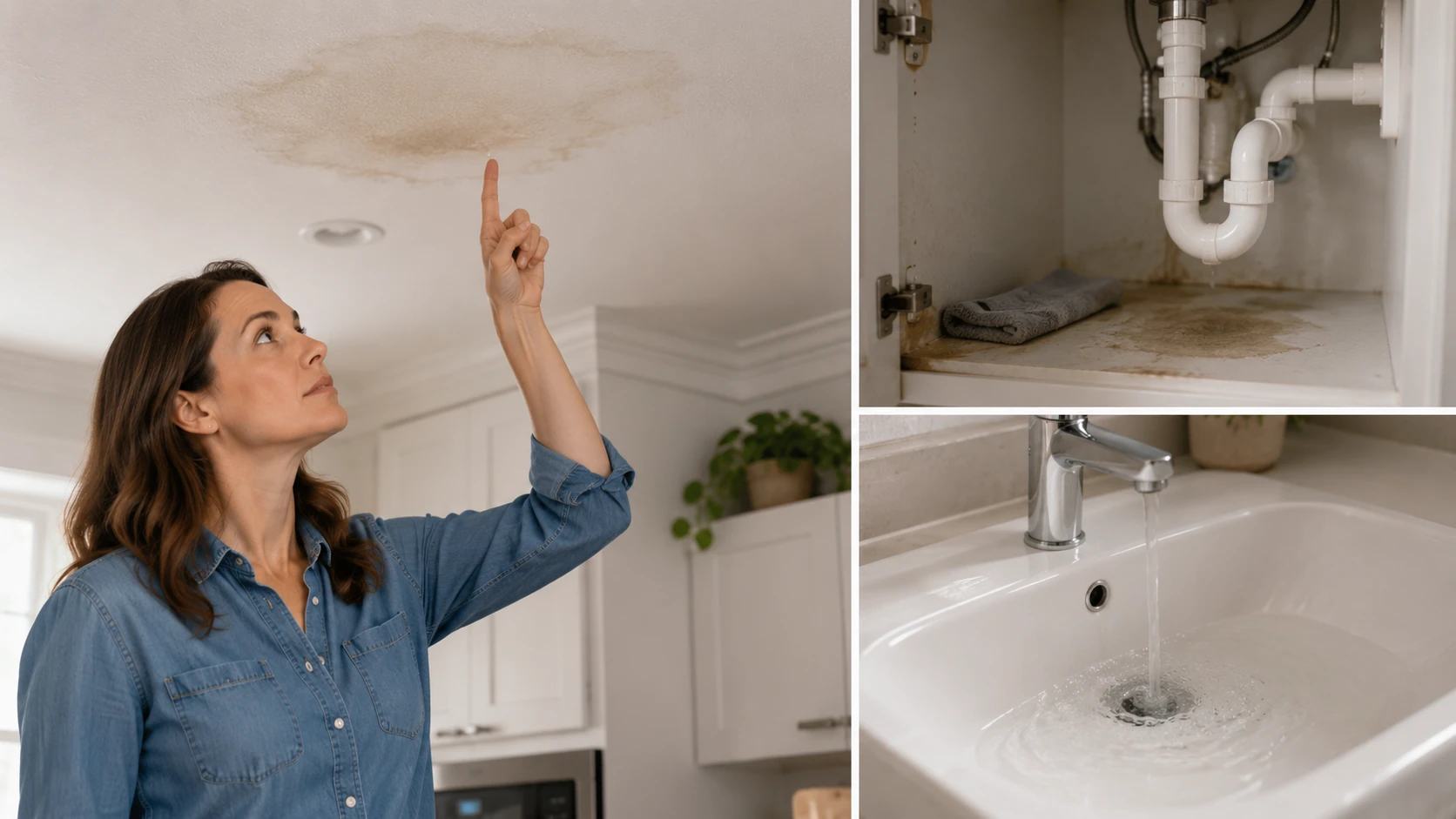
Water Stains or Unexplained Damp Areas
Moisture appearing on a ceiling, wall, cabinet, floor, or around a fixture deserves investigation.
The visible stain may not be directly beneath the source because water can travel along framing, piping, and building materials before becoming visible.
Repeatedly painting over the area doesn’t address the cause.
Gurgling, Odors, or Changing Drain Behavior
Drains that begin making unusual sounds can indicate changing airflow or wastewater movement.
Likewise, persistent drain or sewer odors shouldn’t simply be covered with fragrance or cleaning products.
A professional evaluation can determine whether the source involves a fixture trap, drainage restriction, venting issue, damaged connection, or another condition.
Recurring Problems in the Same Area
A drain that repeatedly blocks, a pipe connection that keeps leaking, or a fixture that fails again shortly after repair deserves a closer look.
Repeated failures often justify evaluating the surrounding system rather than treating each incident as unrelated.
Sudden Changes in Water Performance
A noticeable change in water pressure, temperature, drainage speed, or fixture performance can provide an early warning.
The important question isn’t only, “Does it still work?”
Ask what changed and why.
That shift in thinking often helps catch plumbing problems earlier.
When Home Plumbing Repairs Are Enough and When Replacement Makes More Sense
Not every plumbing problem requires new piping or equipment.
Good Home Plumbing Repairs focus on correcting the actual failure while preserving components that remain serviceable.
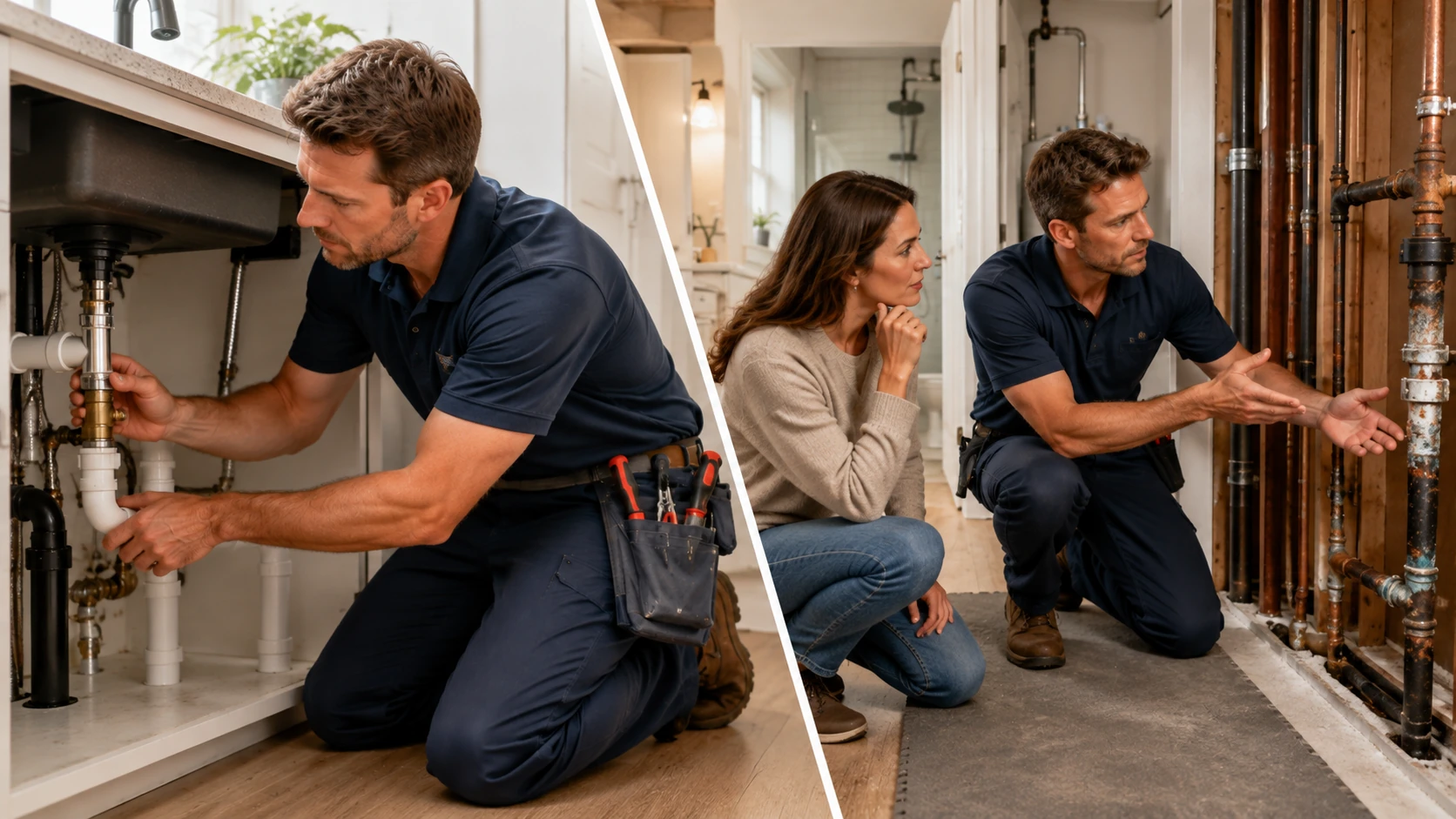
Repair Makes Sense When the Problem Is Isolated
A repair may be appropriate when a specific component has failed but the surrounding system remains in usable condition.
Examples may include a damaged valve, leaking connection, replaceable faucet component, toilet part, or limited pipe section.
Professional diagnosis matters because symptoms can be misleading.
Repeated Failures Can Change the Decision
Imagine a homeowner repairing the same deteriorating section of plumbing several times.
Each individual repair may solve the immediate leak, but new failures continue appearing nearby.
At that stage, continuing with isolated repairs may become less practical than evaluating Professional Plumbing Replacement for the affected section.
The right choice depends on condition, accessibility, material, failure history, property plans, and the scope of the problem.
Replacement Should Follow Inspection, Not Assumption
Age alone doesn’t tell the whole story.
Two plumbing systems installed at similar times may be in very different condition because of usage, water conditions, installation quality, previous work, exposure, and maintenance.
An inspection provides better information than automatically replacing something because it is considered “old.”
When Does a Plumbing Problem Become an Emergency?
The difference between a routine service call and an emergency usually comes down to immediate risk.
Water escaping uncontrollably, wastewater entering living areas, or a failure that threatens the property should be treated differently from a slowly dripping faucet.
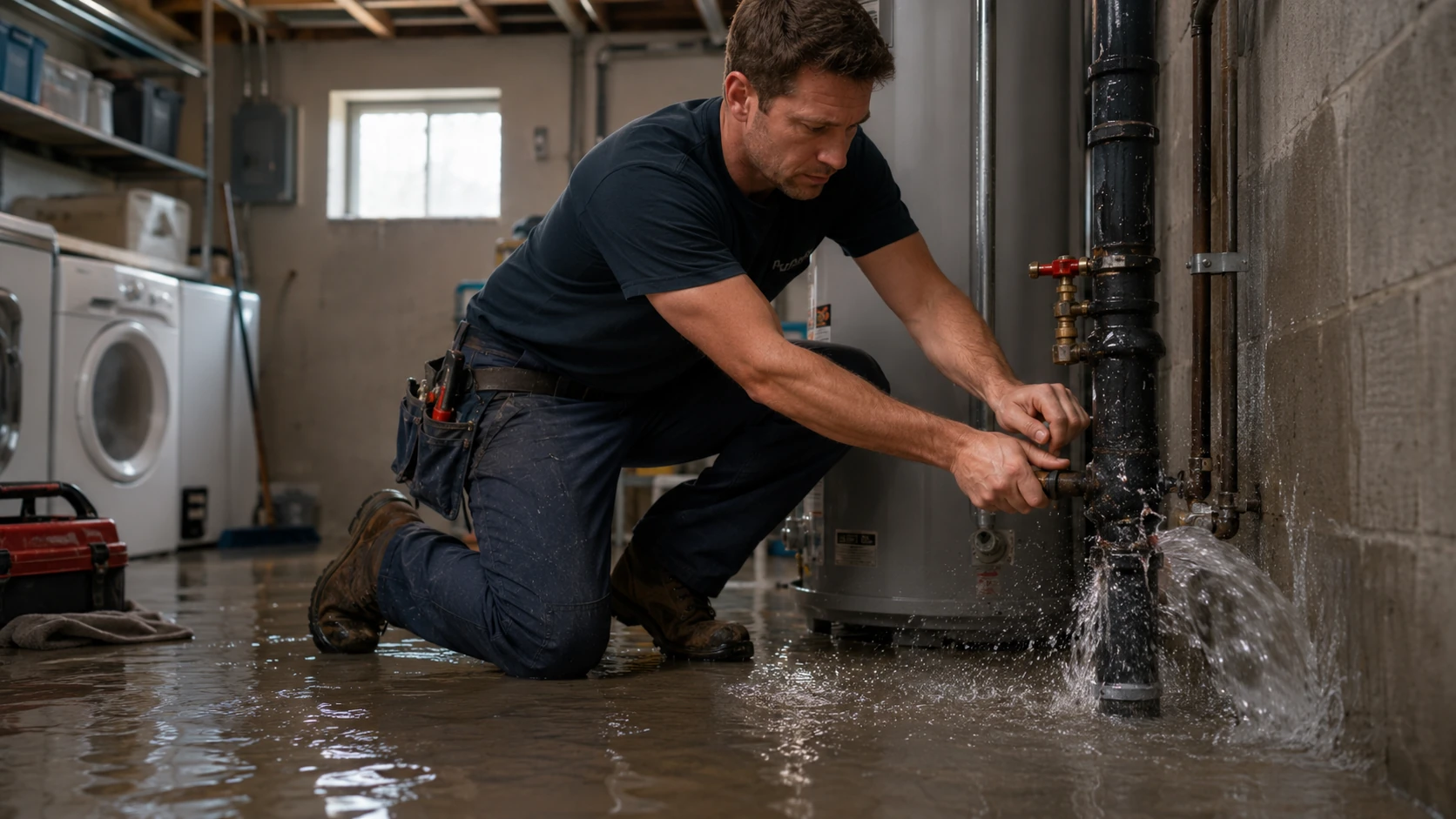
Burst or Rapidly Leaking Pipes
A substantial water leak can damage flooring, drywall, ceilings, cabinetry, insulation, belongings, and other materials.
If it can be done safely, shutting off the appropriate water supply can reduce additional water release until help arrives.
The next step is professional Emergency Plumbing service to identify and correct the source.
Sewer or Wastewater Backups
Wastewater returning through toilets, tubs, showers, floor drains, or other fixtures requires prompt attention.
Avoid repeatedly using affected plumbing fixtures while the cause remains unresolved.
Continued use can send more wastewater into a drainage system that is already unable to handle normal flow.
What Homeowners Should Do First
During a plumbing emergency, focus first on limiting additional damage.
Know how to locate the property’s main water shutoff before an emergency happens. Avoid opening walls or attempting repairs involving components you don’t understand.
Once the immediate water flow is controlled where possible, a plumber can assess the cause and determine the appropriate repair.
Planning Plumbing Installations Before Construction Begins
New plumbing work deserves just as much attention as plumbing repairs.
Poor planning during a remodel or addition can create access problems, drainage concerns, pressure issues, awkward fixture locations, and expensive changes later.
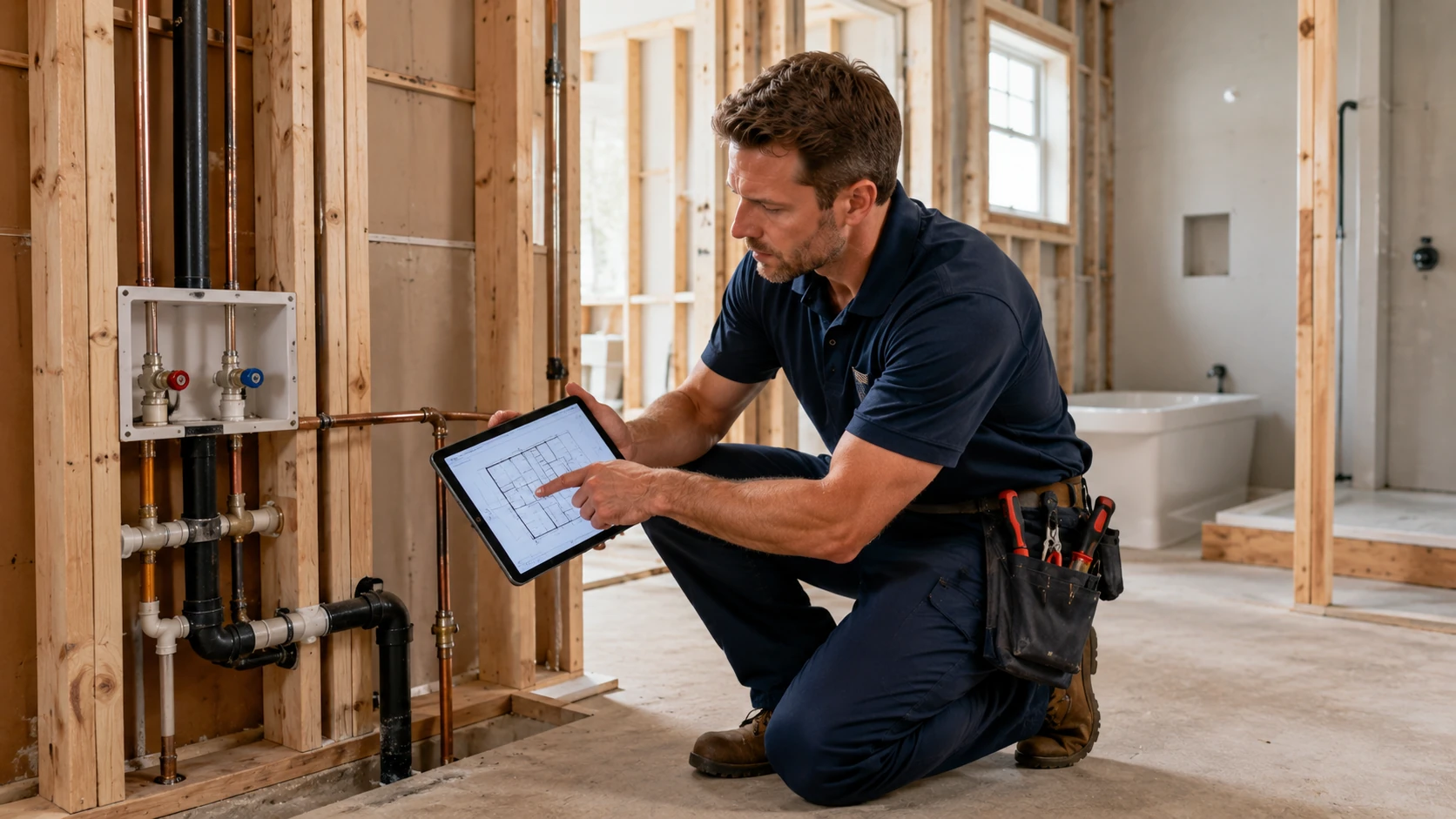
Fixture Installation Is More Than Connecting Water
Installing a sink, toilet, shower, appliance, or other plumbing fixture may require consideration of supply lines, drainage, venting, valves, clearances, connection points, and surrounding materials.
For this reason, Professional Plumbing Installations should begin with an assessment of what the new fixture requires and what the existing system can support.
Kitchen and Bathroom Renovations Need Plumbing Planning Early
Moving a kitchen sink or changing a bathroom layout can affect more than the visible fixture location.
Drain routing, water lines, venting, access, wall construction, floor layout, and equipment connections may all be involved.
Plumbing decisions made before walls and finishes are completed are generally easier to address than changes discovered late in construction.
Additions Can Change Plumbing Demand
Adding a bathroom, laundry area, kitchen, or other water-using space introduces additional demand.
The existing system should be considered as part of the project rather than assuming a new branch can simply be connected wherever convenient.
Planning first reduces the risk of discovering system limitations after construction has progressed.
Home Plumbing Maintenance That Helps Prevent Bigger Problems
Good Home Plumbing Maintenance is less about constantly working on pipes and more about noticing changes, protecting vulnerable areas, and correcting minor concerns before they spread.
Check Visible Plumbing Periodically
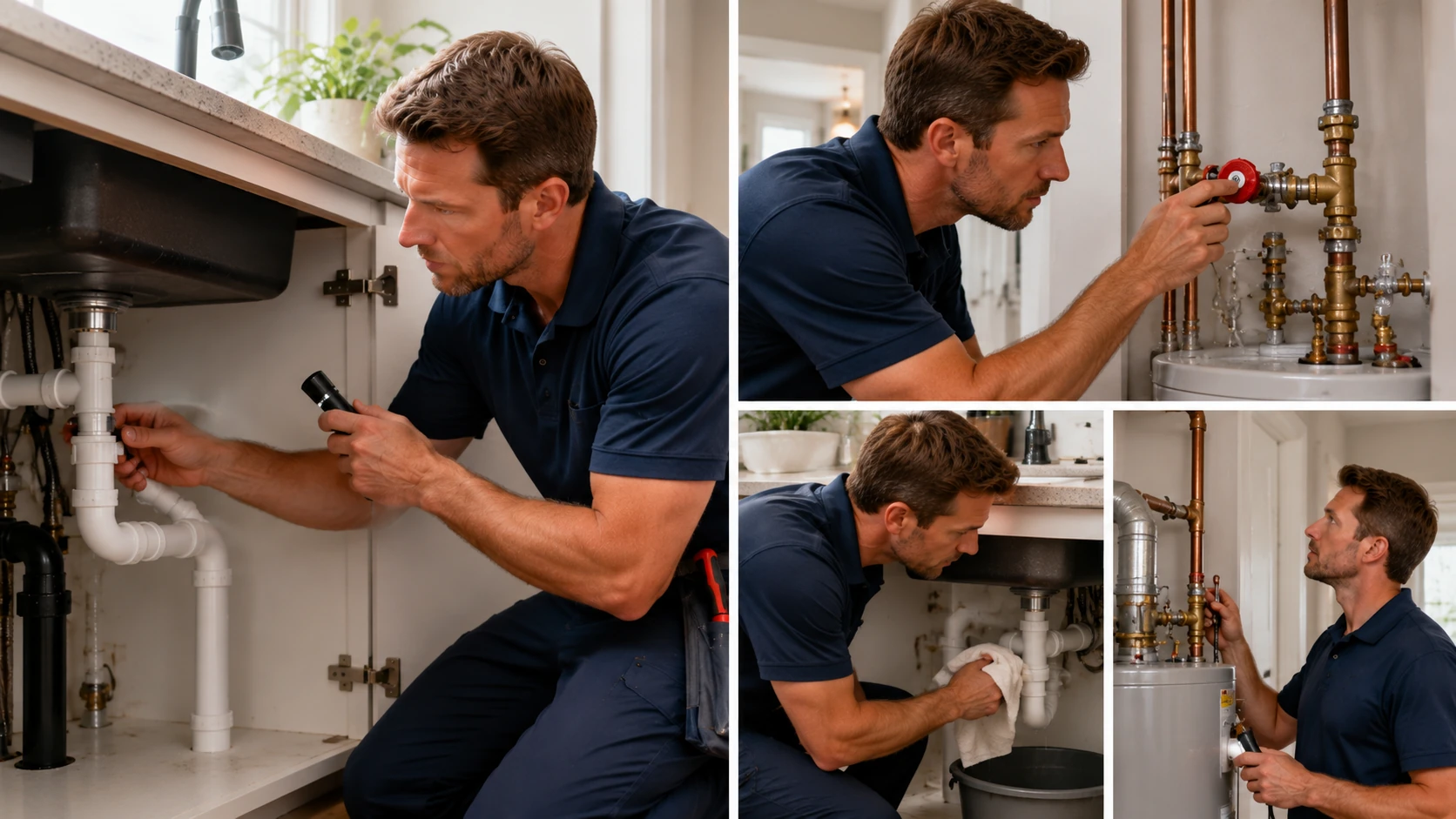
Look beneath sinks, around toilets, near appliances, inside accessible utility spaces, and around exposed piping.
Watch for:
- Moisture
- Corrosion
- Loose connections
- Water staining
- Dripping valves
- Damaged supply lines
- Unusual odors
A quick visual check can reveal problems before they become visible in finished areas.
Learn Where Your Shutoff Valves Are
Homeowners shouldn’t wait for a burst pipe to begin searching for the main shutoff.
Identify it in advance and make sure responsible household members know where it is.
Individual fixture shutoffs are also useful because they may allow a single problem area to be isolated without shutting water off to the whole house.
Treat Drains as Wastewater Pathways, Not Trash Disposal
Many recurring drain problems begin with materials that shouldn’t be entering the drainage system.
Kitchen grease, inappropriate paper products, heavy food residue, hair, and other debris can contribute to restrictions.
Drain care is easier than repeatedly dealing with backups.
Prepare Plumbing for Cold Massachusetts Weather
Cold conditions can place exposed or poorly protected water lines at risk.
Pay particular attention to piping in garages, exterior walls, basements, crawl spaces, utility areas, and other locations exposed to lower temperatures.
If a line has frozen before, don’t assume the problem has permanently disappeared after thawing. The reason it froze should also be investigated.
Different Properties Require Different Plumbing Services
A plumbing system isn’t identical in every property.
The service approach should reflect how the building is used, how much demand is placed on the system, and the type of plumbing involved.
Residential Plumbing Services
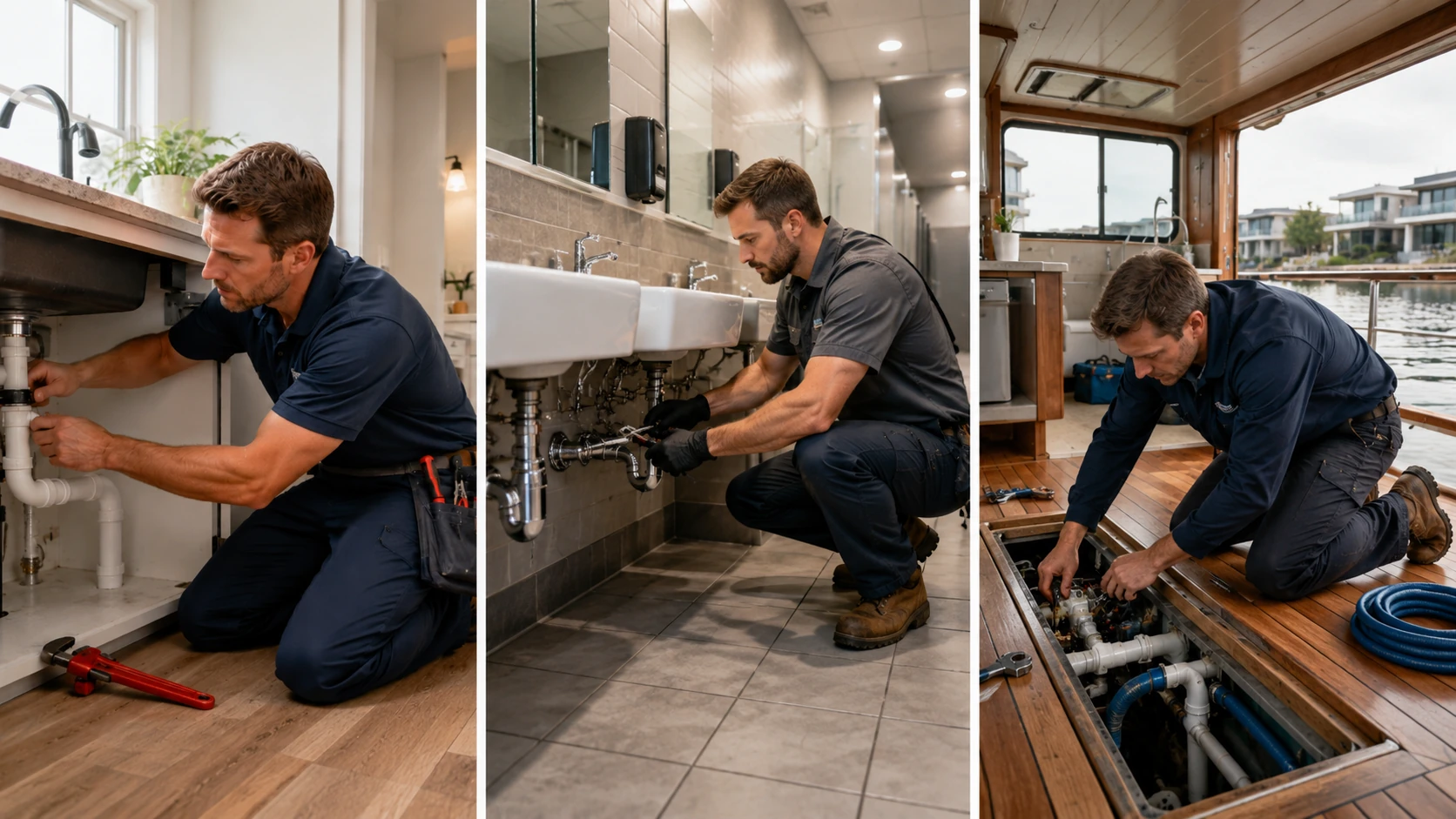
Residential Plumbing Services address the everyday systems found in houses, condominiums, apartments, townhomes, and other residential properties.
Homeowners commonly need help with fixtures, leaks, piping, drainage, water lines, bathrooms, kitchens, equipment connections, installations, and maintenance.
Because plumbing affects occupied living spaces, access and protection of finished areas also become important parts of the work.
Commercial Plumbing Services
Commercial Plumbing Services often involve higher usage, more fixtures, larger facilities, business schedules, tenants, employees, customers, and property-management requirements.
A plumbing issue in a commercial property can affect more people at once, so diagnosis, scheduling, access, and coordination may be different from a typical residential service call.
Houseboat Plumbing Services
Houseboat Plumbing Services involve another set of considerations because marine and floating properties can use compact water, drainage, sanitation, pumping, and storage arrangements.
A technician working in this setting must understand the actual plumbing configuration before recommending a repair or replacement.
Keeping these service categories separate also helps homeowners and property managers reach the information most relevant to their situation.
Plumbing Needs Across Greater Boston and the North Shore
Local service pages are most useful when they help readers find plumbing information specific to the community where their property is located.
The underlying plumbing principles remain similar, but property layouts, previous renovations, system condition, accessibility, exposure to cold temperatures, and individual building needs can vary considerably.
North Shore Plumbing Service Areas
Homeowners looking for local support can explore Plumbing Services Lynn, MA, Plumbing Services Salem, MA, Plumbing Services Peabody, MA, Plumbing Services in Beverly, MA, Plumbing Services in Danvers, MA, and Plumbing Services Woburn, MA for location-specific service information.
Other nearby communities may have different housing layouts and plumbing histories, which is why the affected property should always be evaluated individually.
Greater Boston and Nearby Communities
For properties closer to Boston and surrounding communities, useful local resources include Plumbing Services Everett, MA, Plumbing Services Revere, MA, Plumbing Services Somerville, MA, Plumbing Services Cambridge, MA, Plumbing Services Medford, MA, and Plumbing Services East Boston, MA.
These location pages can support readers who understand their plumbing problem but now need information about service availability in their area.
Local Pages Should Support the Guide, Not Duplicate It
This pillar article explains the broader subject of Home Plumbing Services.
Location pages should do something different. They should help users understand where services are available, what types of plumbing work are offered locally, and how to request help.
That relationship creates a stronger internal structure than repeating the same generic plumbing information across every city page.
How to Decide Between Repair, Replacement, and an Upgrade
Homeowners often ask for a repair when the more important question is whether repair remains the right long-term decision.
There isn’t one answer that fits every plumbing system.
Start With the Condition of the Failed Component
An isolated failure in an otherwise sound component may justify repair.
A badly deteriorated component surrounded by other worn materials creates a different situation.
Look beyond the immediate symptom.
Consider How Often the Problem Returns
A repair that solves the problem for a long period may make sense.
A system that requires repeated service in the same area deserves broader investigation.
For example, repeatedly repairing individual leaks along one deteriorating piping section may eventually become less practical than replacing that section.
Think About Upcoming Renovation Plans
A planned kitchen renovation, bathroom remodel, addition, or major property improvement may influence the decision.
If walls will already be opened, it may be useful to evaluate accessible plumbing at the same time rather than completing finishes and reopening them shortly afterward.
That doesn’t mean everything should automatically be replaced. It means the timing creates a good opportunity for inspection and planning.
Ask for the Reason Behind the Recommendation
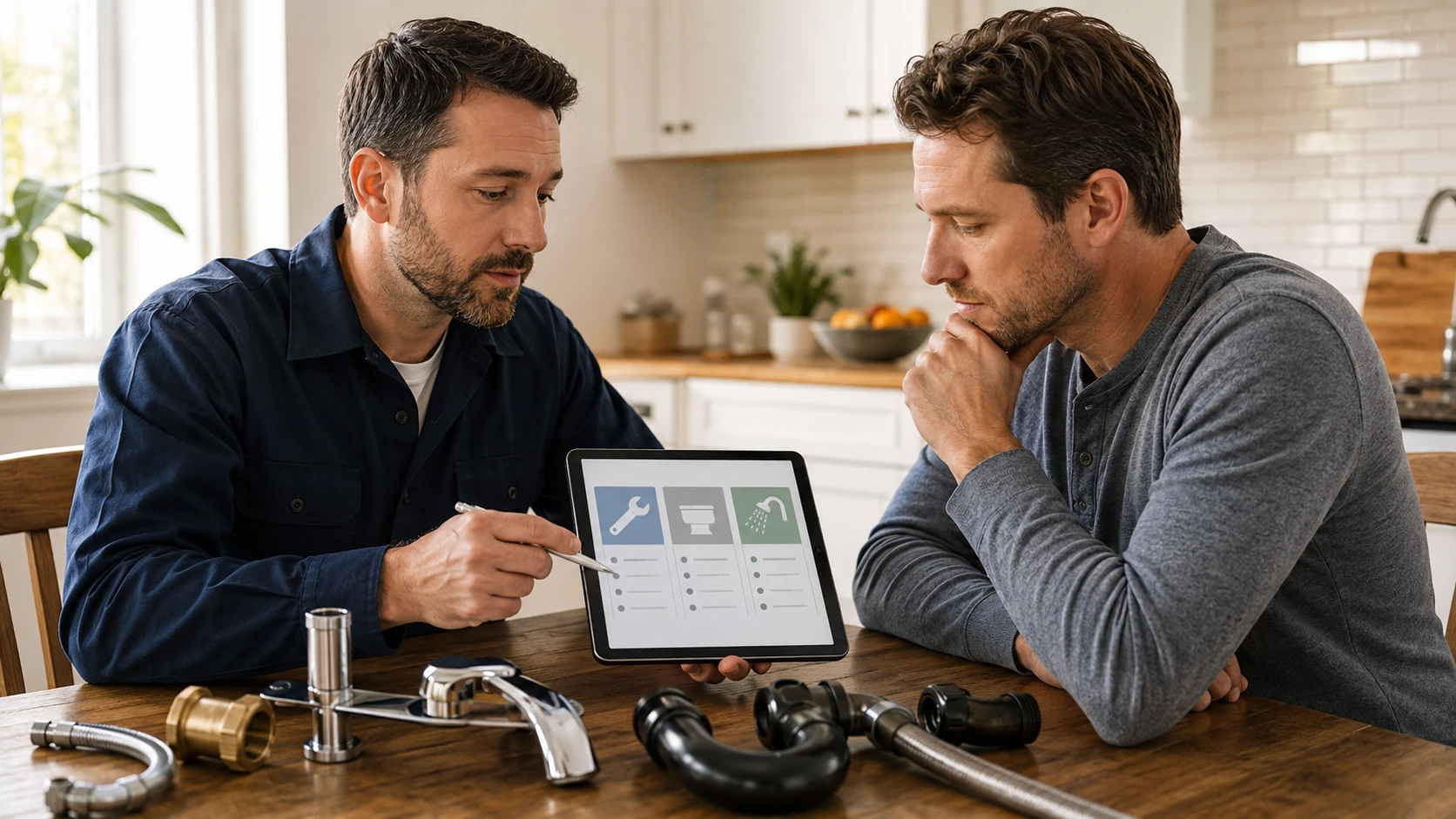
A homeowner should understand why a plumber recommends repair, replacement, or installation.
Useful explanations should address the current condition, cause of failure, available options, practical limitations, and what can reasonably be expected from the proposed work.
Clear reasoning is more valuable than simply being told that something “needs to be replaced.”
Building a Practical Plumbing Plan for Your Home
You don’t need detailed technical knowledge to manage a home’s plumbing responsibly.
A good plan starts with knowing the basics of the Home Plumbing System, watching for changes, dealing with leaks and drainage problems early, and understanding when professional evaluation is appropriate.
Know the System Before Something Goes Wrong
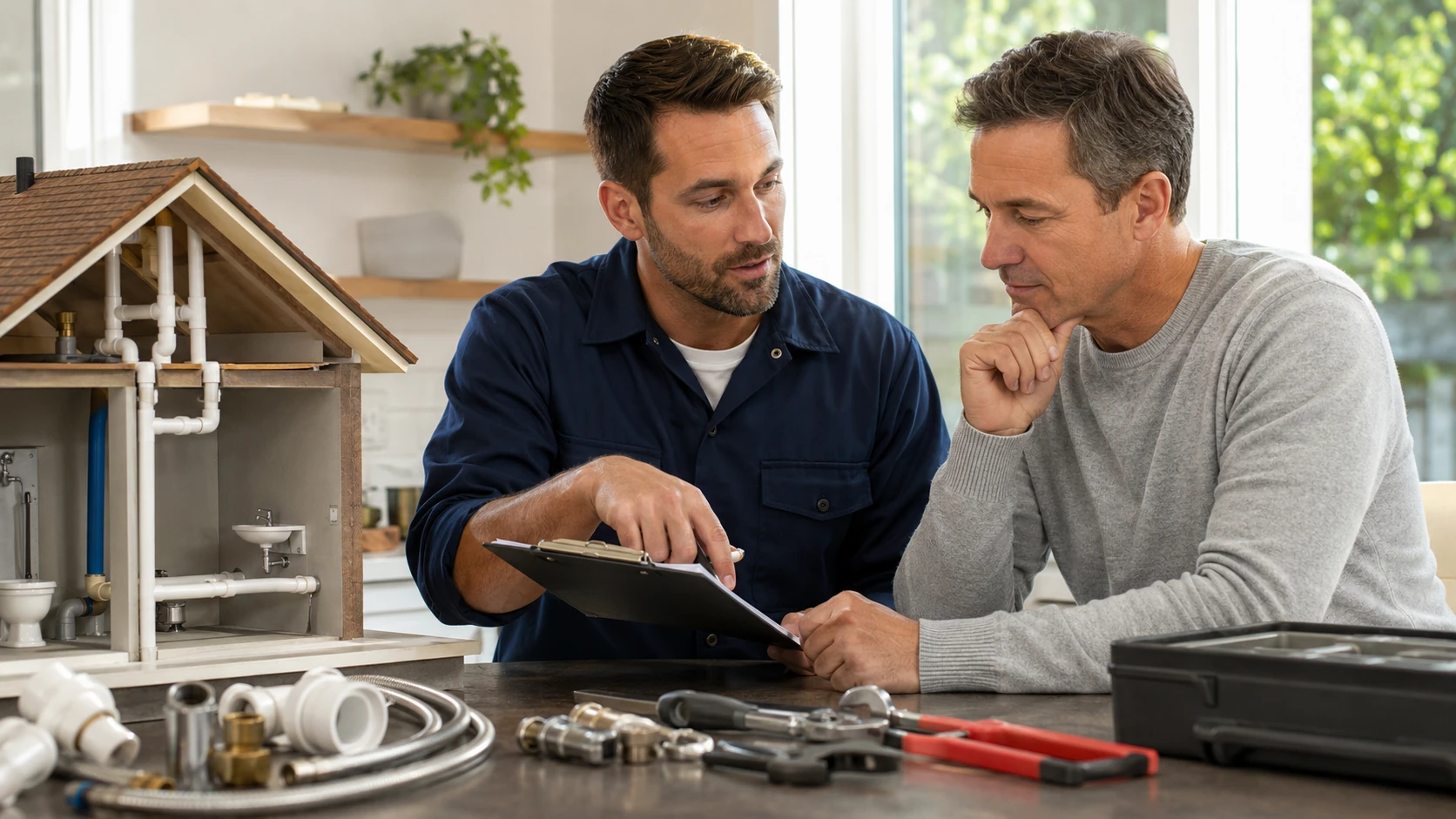
Find the main water shutoff. Identify accessible fixture valves. Pay attention to where visible water lines and drainage components are located.
Knowing these basics can save valuable time when a problem appears.
Don’t Judge Plumbing Problems Only by Their Size
A small stain may come from a larger concealed leak. A minor gurgle may point toward a drainage issue. A tiny recurring drip can indicate a failing connection.
Likewise, some visible problems really are limited and straightforward to repair.
Diagnosis separates the two.
Use Maintenance to Learn What Is Normal
Routine observation helps homeowners recognize change.
If you know how quickly a sink normally drains, how strong the water pressure usually feels, and where plumbing areas normally stay dry, unusual behavior becomes easier to spot.
That awareness is one of the simplest forms of preventive maintenance.
Get Professional Help When the Cause Isn’t Clear
DIY tasks have a place in basic home care, but repeatedly treating symptoms without knowing the cause can allow the real problem to continue.
Foukas Plumbing & Heating can help homeowners evaluate plumbing concerns, determine whether Plumbing Repairs, Professional Plumbing Replacement, or Professional Plumbing Installations are appropriate, and address urgent situations through Emergency Plumbing services.
The goal isn’t to replace everything that shows wear. It is to understand what is happening inside the system, correct the actual problem, and keep the plumbing serving the property safely and reliably for the years ahead.