

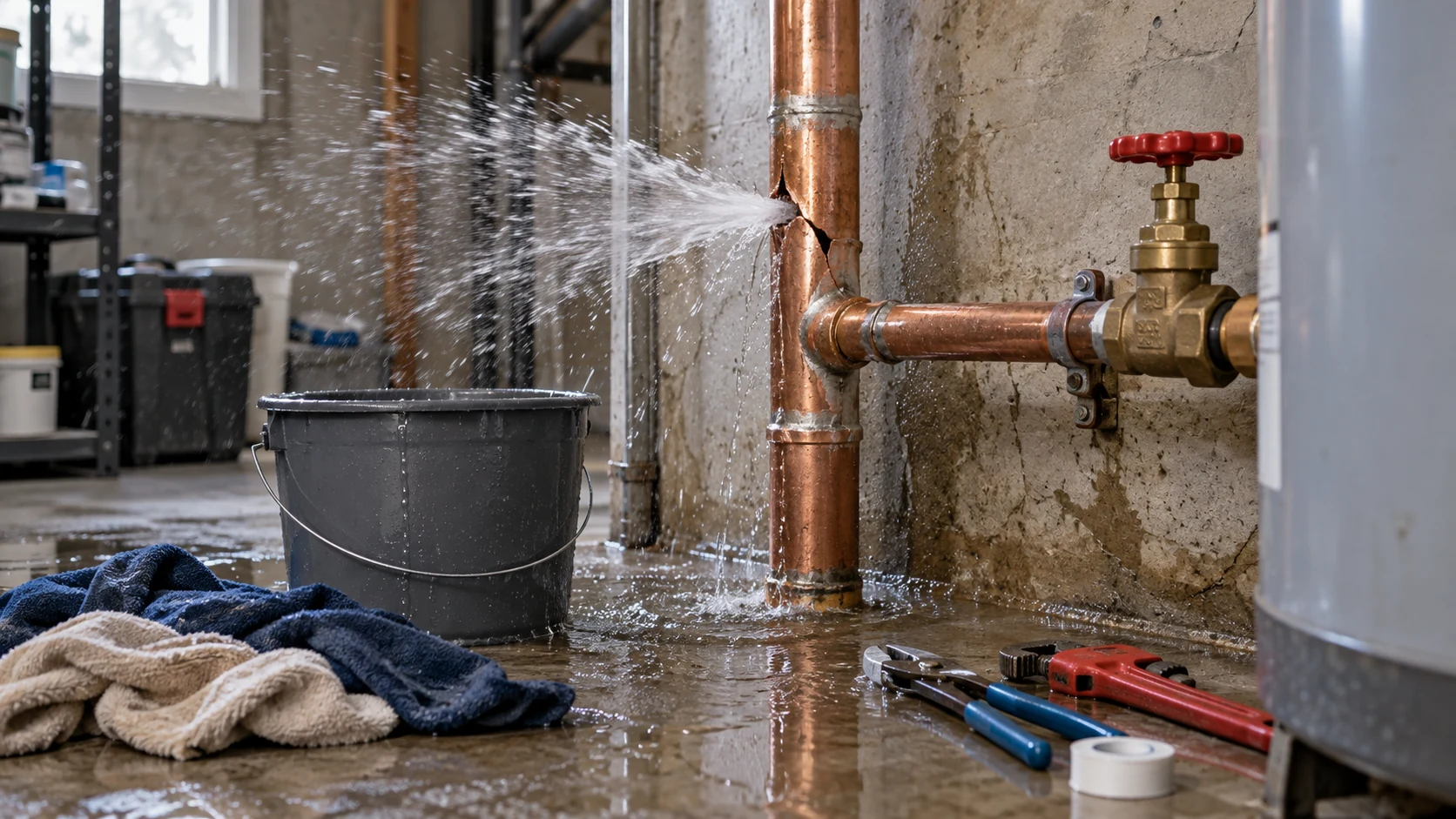
A burst pipe can turn into a serious home emergency very quickly. Water may spread through flooring, cabinets, walls, ceilings, insulation, and nearby belongings before you have time to understand where it is coming from.
Knowing what to do when a pipe bursts in your home can help you stop additional water from entering the plumbing system, reduce property damage, protect your family from electrical hazards, and give a plumber a clearer situation to work with.
The first priority is simple: stop the water supply as quickly and safely as possible. Once the water is under control, you can focus on electrical safety, containing the leak, documenting the damage, drying the area, and arranging a professional repair.
If water is actively flowing and you cannot control the source, contacting an emergency plumber should be one of your first steps.
The First Few Minutes Matter Most
When a pipe bursts, your attention naturally goes to the water already covering the floor. The bigger concern, however, is the water that may still be entering the property.
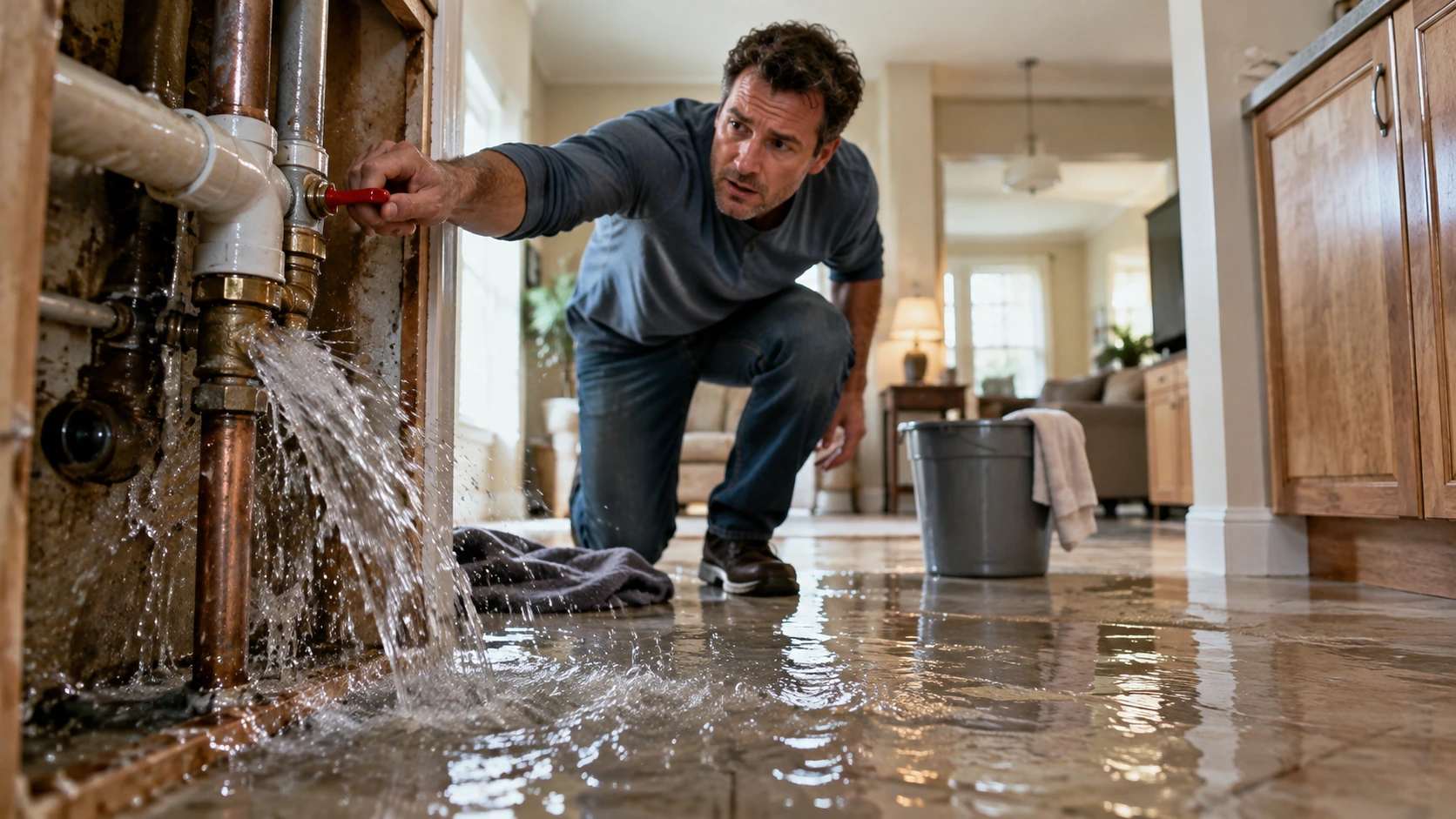
The faster you interrupt that supply, the easier it becomes to control the situation.
Your immediate priorities should generally be:
- Shut off the main water supply.
- Keep people away from electrical hazards.
- Open faucets to release water and pressure remaining in the plumbing.
- Move valuables away from the affected area if it is safe.
- Use containers or towels to limit the spread of water.
- Identify the likely location of the damaged pipe.
- Contact a plumber for inspection and repair.
- Photograph visible damage before major cleanup begins.
Avoid spending the first few minutes moving furniture while water continues pouring from the pipe. Stop the source first.
Homeowners who want a better understanding of their household system can also review common residential plumbing services so they know which types of problems typically require professional attention.
Shut Off the Main Water Supply
The most effective way to stop an active burst pipe is usually to close your home’s main water shutoff valve.
Every homeowner should ideally know where this valve is located before a plumbing emergency occurs. Depending on the property, it may be near the point where the main water line enters the building, in a basement, utility room, crawl space, mechanical room, or another accessible service area.
Turn the valve to the closed position. Some water may continue coming from the damaged area briefly because water remains inside the plumbing system.
If the shutoff valve is difficult to operate, badly corroded, damaged, or inaccessible, do not force it aggressively. Damaging the valve can make an already difficult situation harder to control.
Problems involving the main supply line may require professional water line services in addition to repairing the specific section that burst.
It is also useful to periodically confirm that you can locate your shutoff valve. Discovering its location during an active leak wastes valuable time.
Watch for Electrical Hazards Before Entering the Area
Stopping the water is important, but personal safety comes first.
Water near electrical outlets, appliances, extension cords, light fixtures, electrical panels, or exposed wiring can create a serious hazard.
Do not walk through standing water to reach electrical equipment.
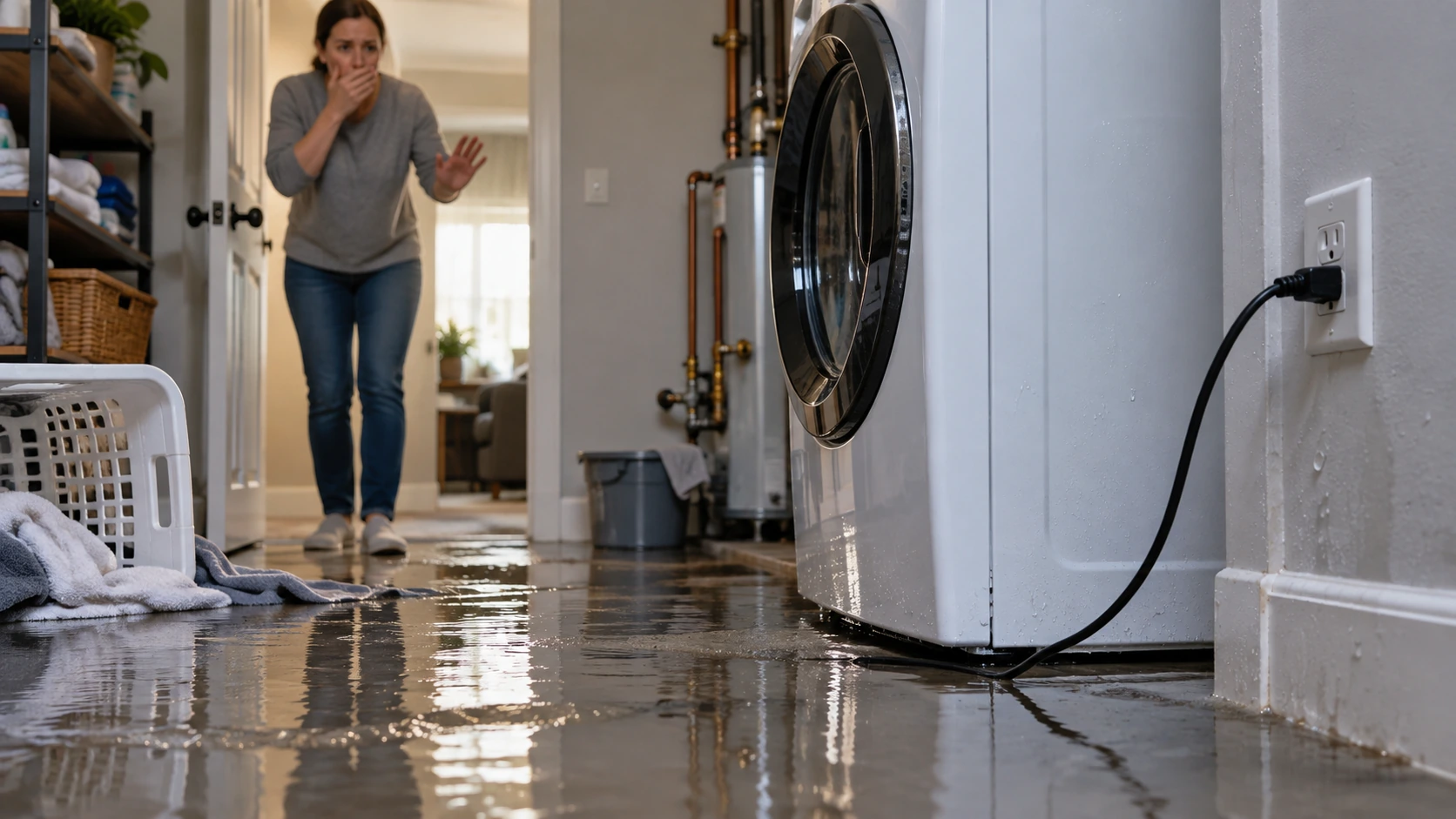
If the power can be shut off safely from a dry location, doing so may reduce risk. However, if the electrical panel itself is wet or you would need to enter water to reach it, stay away and contact an appropriate professional.
Water can also travel behind walls and ceilings. That means electrical components may become wet even when the visible leak appears several feet away.
For example, a pipe may burst inside an upstairs bathroom wall while water begins appearing through the ceiling of the room below. In that situation, the electrical risk may not be limited to the bathroom.
When you are unsure whether an area is electrically safe, avoid entering it until the risk has been evaluated.
Open Faucets to Drain the Remaining Water
After closing the main shutoff valve, open faucets around the home.
This allows water remaining inside the plumbing system to drain and can reduce pressure behind the damaged pipe.
Opening fixtures on lower floors may help water leave the system more efficiently because those fixtures sit lower within the plumbing network.
You can also flush toilets once after the water has been turned off to help remove some water stored within the system.
If the burst occurred during freezing weather, draining the pipes becomes particularly useful because other sections may still contain trapped or partially frozen water.
For a broader explanation of household plumbing maintenance and common residential issues, the home plumbing services guide provides additional homeowner guidance.
Contain the Water and Protect Your Belongings
Once the main supply is off and the area is electrically safe, focus on limiting how far the water spreads.
Use whatever appropriate equipment is available, such as buckets, towels, mops, or a wet vacuum.
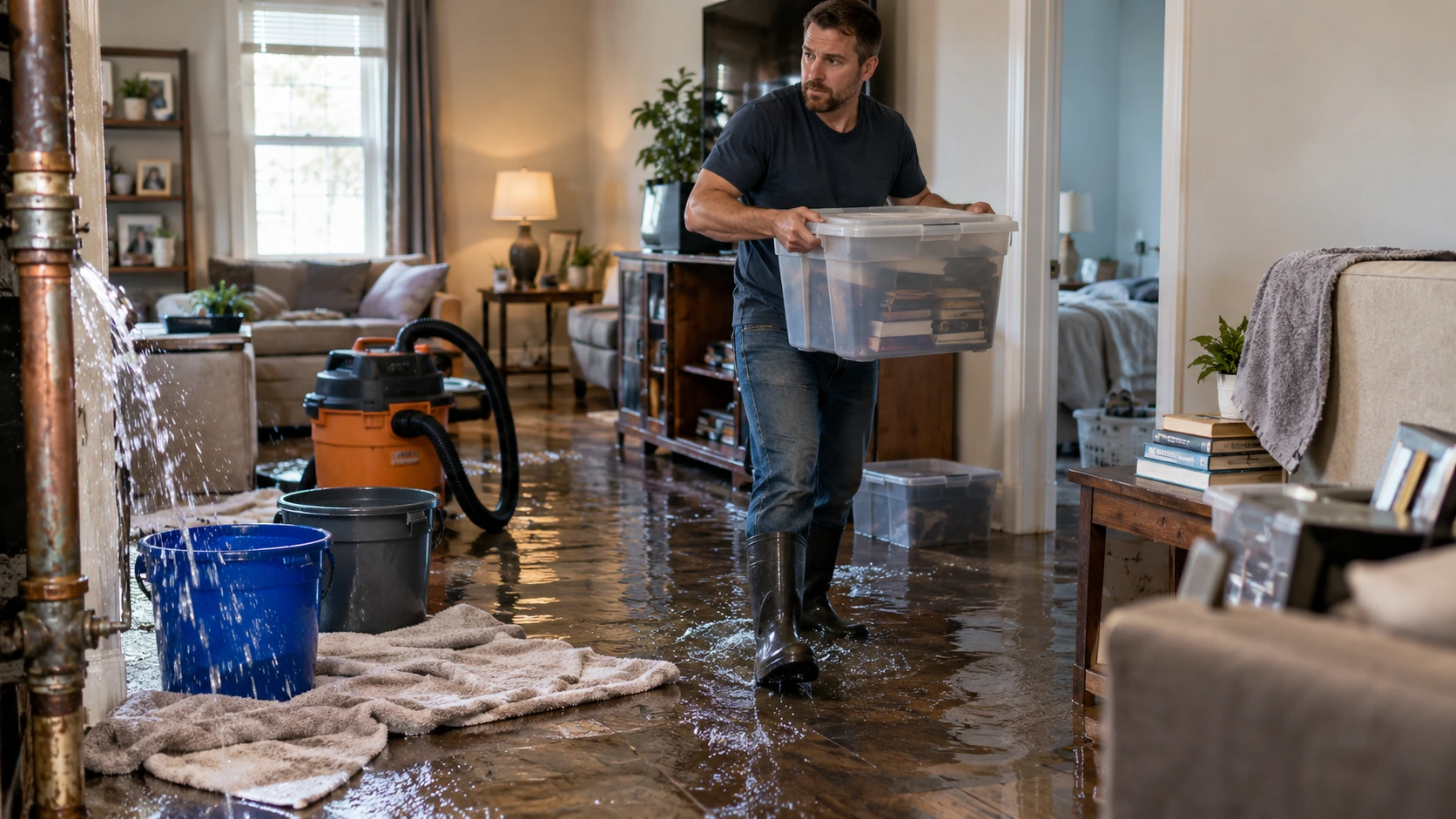
Move vulnerable belongings to a dry area when possible, including:
- Rugs and floor coverings
- Furniture
- Electronics
- Cardboard storage boxes
- Clothing
- Books
- Documents
- Small appliances
- Decorative items
- Items stored beneath sinks or cabinets
Pay particular attention to items sitting directly on floors because they can absorb moisture quickly.
If the leak is beneath a kitchen sink, empty the cabinet so water is not trapped around stored items. Burst supply lines or plumbing beneath sinks may also require kitchen plumbing services once the immediate emergency is controlled.
Similarly, problems around toilets, vanities, showers, or bathroom supply lines may require professional bathroom plumbing services.
If water is coming through a ceiling, do not stand beneath a section that looks swollen, bowed, cracked, or unstable. Wet building materials can become significantly heavier as they absorb water.
Your goal at this stage is not to make the home look normal again. It is simply to prevent the affected area from becoming larger.
Find the Damaged Pipe Without Causing More Damage
Sometimes the source of a burst pipe is obvious.
You may see a split copper pipe in the basement, a failed connection beneath a sink, or water spraying from exposed plumbing.
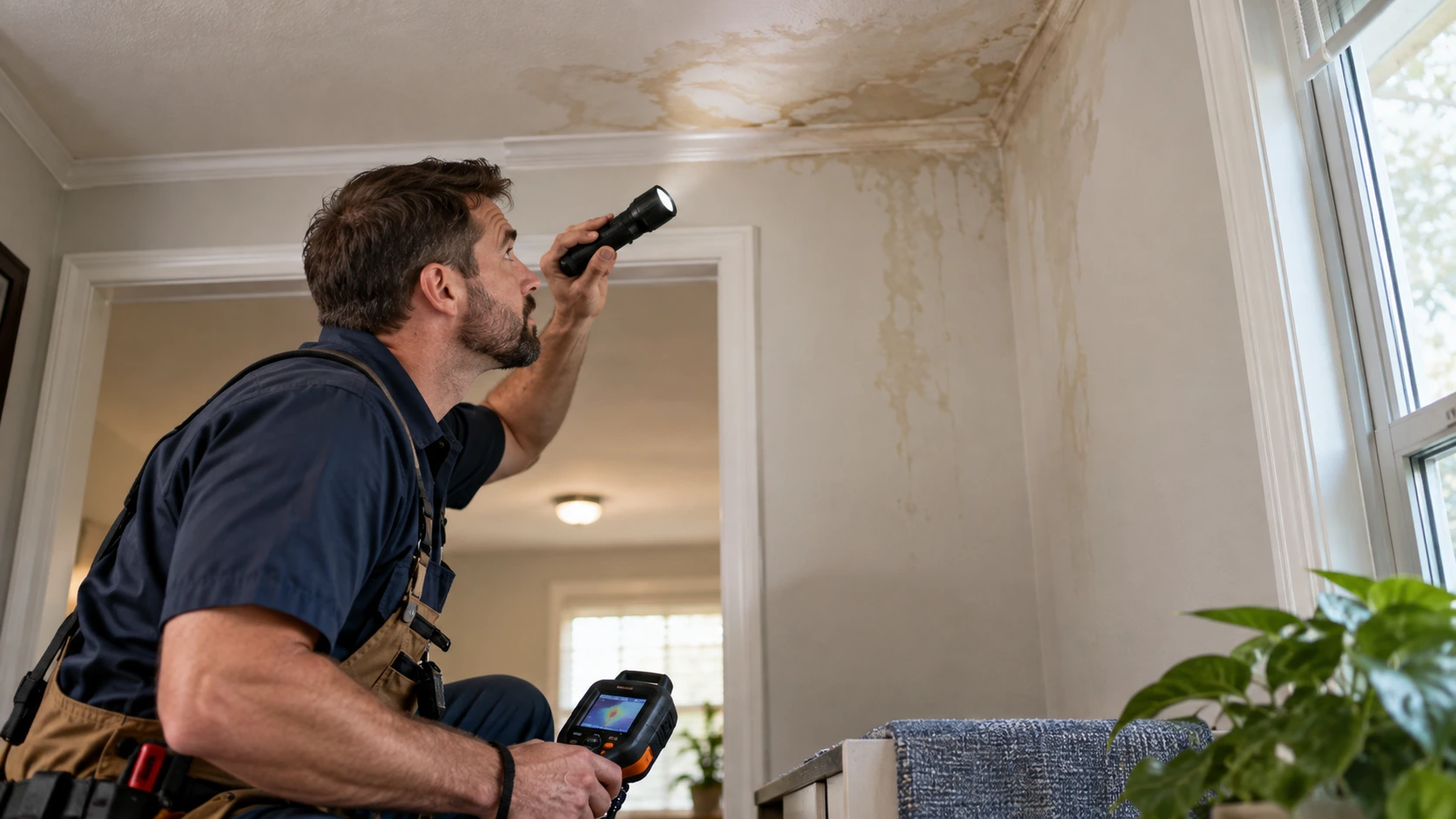
In other situations, the leak may be hidden behind drywall, beneath flooring, inside cabinetry, or above a ceiling.
Possible warning signs include:
- Water appearing through a wall
- Wet or stained ceilings
- Moisture around baseboards
- Bubbling paint
- Damp flooring
- Water collecting beneath cabinets
- Dripping sounds behind walls
- Unexplained moisture in another room
- Water appearing far from the suspected source
One of the challenges with plumbing leaks is that water does not always appear directly beneath the damaged pipe.
It can follow framing, plumbing lines, insulation, flooring, or other building materials before becoming visible.
Imagine a pipe breaks inside a second-floor wall. The first visible sign might be a stain appearing several feet away on the ceiling below because water followed a structural member before dripping downward.
That is why opening random sections of drywall is not always the best first response.
When the source is unclear, professional leak detection services can help identify where the moisture is coming from before unnecessary areas of the home are disturbed.
Can You Temporarily Repair a Burst Pipe Yourself?
Temporary repairs may sometimes slow a small leak after the water supply has already been shut off, but they should not be treated as permanent plumbing repairs.
Depending on the pipe and type of damage, homeowners may encounter temporary products such as pipe repair clamps or sleeves.
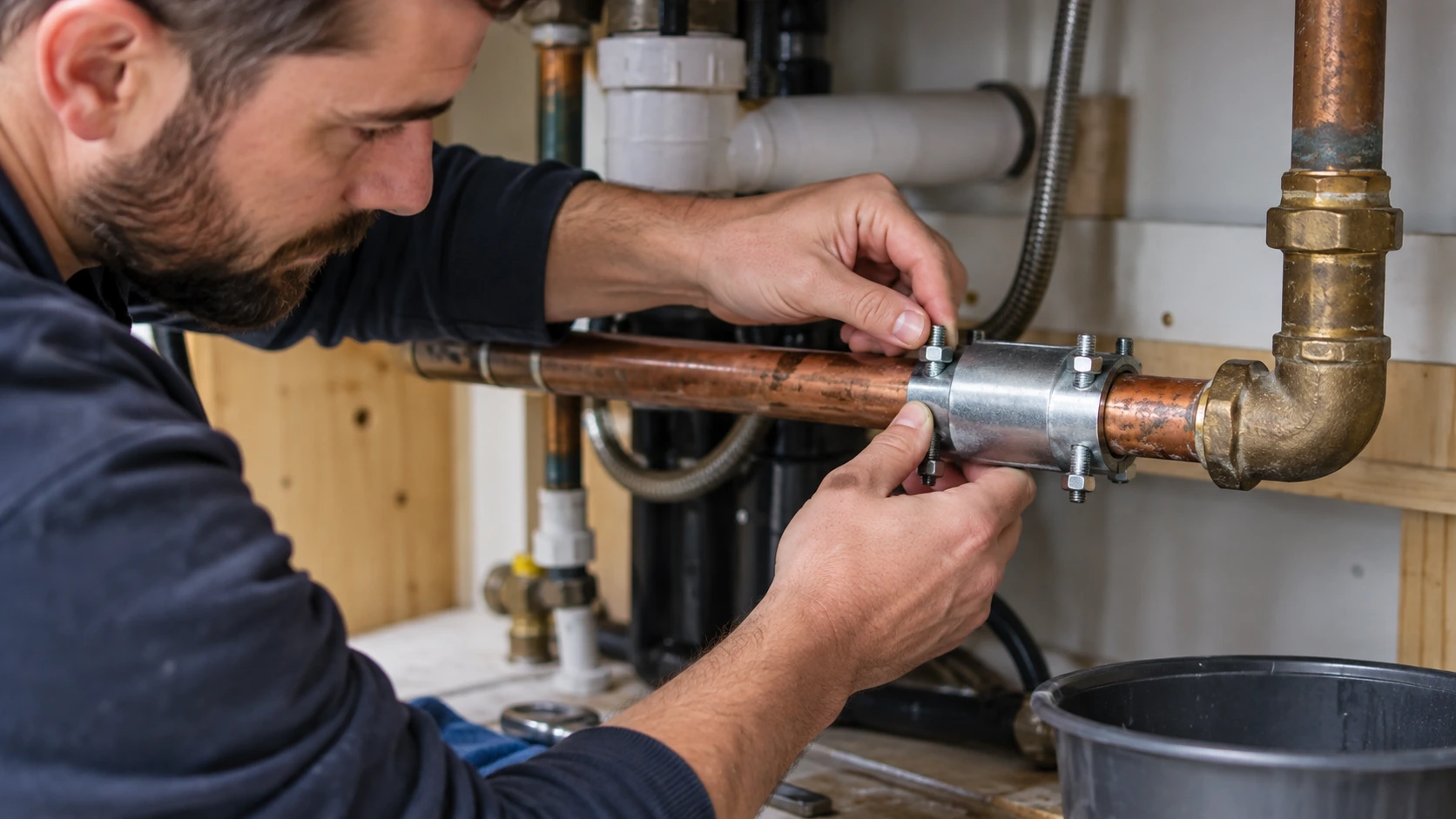
These measures can sometimes help control minor damage until a plumber arrives. Their effectiveness depends on several factors, including:
- Pipe material
- Location of the damage
- Size of the split
- Condition of the surrounding pipe
- Water pressure
- Accessibility
- Cause of the failure
A visible crack may be only one part of the problem.
For example, if freezing caused one section of pipe to split, nearby sections may have experienced similar stress. If corrosion caused the failure, the surrounding pipe may also be weakened.
Professional plumbing repairs allow the damaged area and surrounding connections to be evaluated rather than simply covering the visible opening.
Things You Should Avoid During a Burst Pipe Emergency
A fast response helps, but the wrong response can sometimes create additional problems.
Avoid turning the water supply back on simply to see whether the leak has stopped. If the damaged pipe has not been properly repaired, repressurizing the system can immediately restart the leak.
Do not repeatedly tighten old fittings without understanding why they failed. Excessive force can damage weakened plumbing components.
Avoid cutting open walls unless the location of the leak is reasonably clear and you know what utilities may be behind the surface.
Do not ignore moisture just because standing water has been removed. Water may remain inside walls, flooring, cabinets, insulation, or other materials.
Most importantly, do not take unnecessary electrical risks to save belongings.
Protecting the property matters, but personal safety should remain the priority.
Why Pipes Burst in the First Place
Understanding why a pipe failed is an important part of preventing the same problem from happening again.
Several different conditions can contribute to a burst.
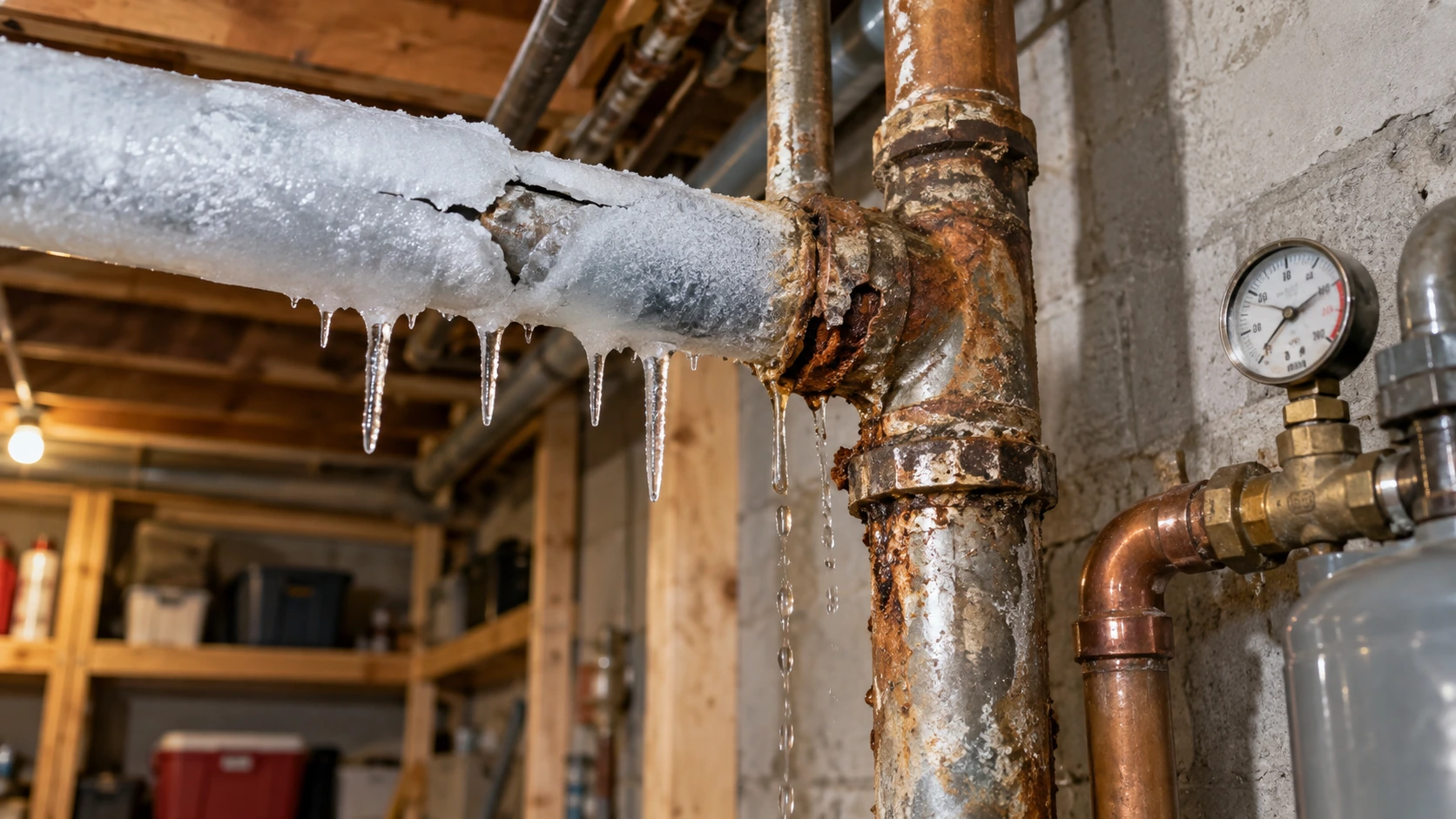
Freezing Temperatures
Water expands when it freezes.
If water freezes inside a pipe, pressure can build within the plumbing system. The pipe may eventually split at a weak point.
Interestingly, homeowners do not always discover the problem while the pipe is frozen. The leak may become obvious later when temperatures rise, the blockage begins thawing, and normal water flow returns.
Pipes located in poorly heated areas, exterior walls, crawl spaces, garages, or other exposed locations can be more vulnerable during very cold conditions.
Aging or Corroded Plumbing
Plumbing materials do not remain in perfect condition forever.
Corrosion, deteriorated fittings, weakened joints, and repeated exposure to normal operating conditions can gradually reduce the reliability of older plumbing.
One leak does not automatically mean an entire house needs new pipes, but repeated failures deserve closer investigation.
Excessive Water Pressure
Plumbing systems and fixtures are designed to function within appropriate operating conditions.
If pressure is excessive, additional stress may be placed on pipes, valves, fittings, supply lines, and plumbing fixtures.
A plumber can evaluate whether pressure may have contributed to repeated plumbing problems.
Physical Damage
Pipes may also be damaged during renovations, drilling, fastening into walls, construction work, storage activities, or accidental impact.
A screw entering a concealed pipe may create an immediate leak, or damage may develop into a problem later.
Installation or Connection Problems
Poorly supported piping, loose fittings, inappropriate connections, or installation problems may contribute to future leaks.
If the issue appears connected to previous plumbing work, a professional inspection can determine whether the affected section needs repair or more extensive correction.
What a Plumber Will Check After a Pipe Bursts
Repairing the visible crack is only part of the job.
A plumber may evaluate:
- The location of the failure
- Pipe material
- The damaged section
- Nearby fittings
- Shutoff valves
- Connections
- Water pressure
- Signs of corrosion
- Possible freezing exposure
- Other nearby leaks
- The condition of surrounding plumbing
The purpose is to determine both what failed and why it failed.
For a small localized problem, replacing one damaged section may be sufficient.
If several areas show deterioration, or if the home has experienced repeated pipe failures, professional plumbing replacement may be worth discussing.
When new sections of plumbing must be added or rerouted during the repair, professional plumbing installations may also be relevant.
The appropriate solution depends on the actual condition of the plumbing system rather than the size of the visible leak alone.
Document the Damage Before Major Cleanup
Once the emergency is under control, photograph or record the affected area before major cleanup begins when it is practical and safe.
Useful documentation may include:
- The damaged pipe
- Standing water
- Wet walls
- Ceiling stains
- Damaged flooring
- Wet cabinets
- Furniture damage
- Personal belongings affected by water
- The apparent path of the leak
- Areas opened during plumbing repairs
Take wider photographs showing the room as well as closer images showing specific damage.
Keep relevant invoices and records from plumbers, restoration contractors, replacement materials, and related services.
Insurance policies and coverage vary. If you intend to submit a claim, contact your insurance provider and follow the documentation requirements associated with your specific policy.
Avoid assuming that every type of plumbing or water damage will be treated the same way.
Drying the Area Is Just as Important as Stopping the Leak
Stopping the water solves the immediate plumbing problem, but moisture may remain throughout the affected area.
Water can soak into:
- Drywall
- Insulation
- Subflooring
- Wood framing
- Cabinets
- Flooring
- Trim
- Furniture
- Stored belongings
A surface may feel dry while moisture remains underneath or behind it.
Remove standing water promptly when it is safe to do so. Increase airflow where appropriate and pay attention to materials that remain damp.
Large leaks, soaked ceilings, wet insulation, water inside walls, or extensive flooring damage may require professional water extraction or restoration work.
The longer building materials remain wet, the greater the chance that additional repair work may be needed.
This is one reason the plumbing repair and drying process should be treated as connected parts of the same emergency rather than two completely separate problems.
How to Reduce the Risk of Another Burst Pipe
You cannot prevent every plumbing failure, but basic preparation can make emergencies easier to manage and may help identify developing problems earlier.
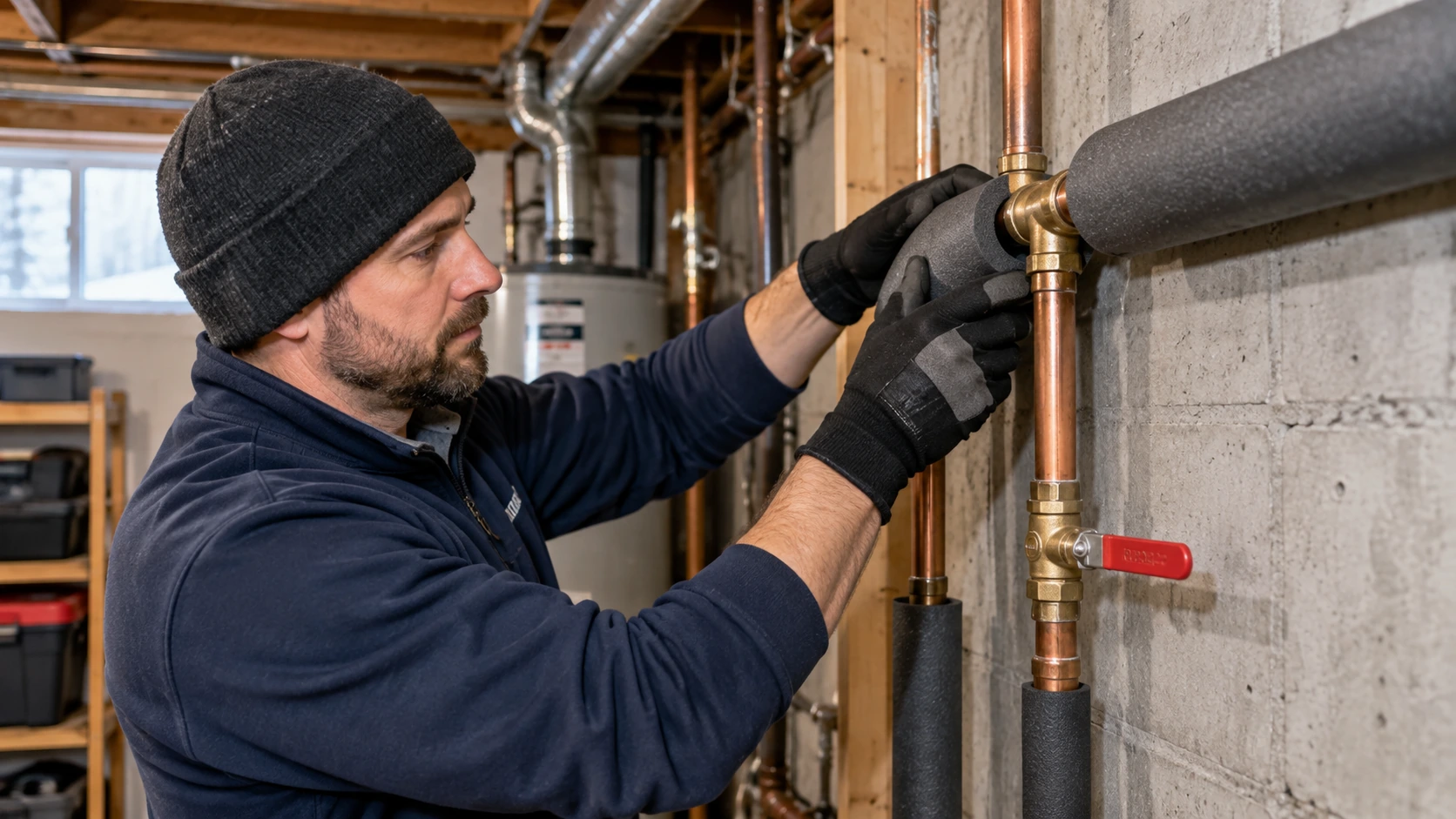
Know Your Main Shutoff Valve
Make sure household members know where the main water shutoff is located.
They should also understand how to close it.
A clearly accessible shutoff can save valuable time when water begins flowing unexpectedly.
Pay Attention to Small Leaks
Do not ignore recurring dampness, corrosion around fittings, small stains, dripping connections, or unexplained moisture.
A small plumbing problem is often easier to evaluate before it becomes an active emergency.
The broader plumbing services available for residential systems can address many of these issues before they progress.
Protect Vulnerable Plumbing During Cold Weather
Pipes in areas exposed to freezing temperatures may require additional protection.
Insulation, maintaining appropriate indoor temperatures, and addressing cold drafts around plumbing can help reduce exposure.
If a particular section has frozen before, it deserves additional attention because the conditions that caused the original problem may still exist.
Have Repeated Problems Inspected
One isolated leak may have a straightforward explanation.
Repeated pipe failures, recurring moisture, unusually frequent repairs, or corrosion appearing in several areas can indicate a broader plumbing issue.
In that situation, evaluating the system as a whole may be more useful than repeatedly repairing individual symptoms.
When Should You Call a Professional Plumber?
Some plumbing problems clearly require immediate professional attention.
Consider contacting a plumber when:
- Water continues flowing after you attempt to shut it off.
- You cannot locate the main shutoff valve.
- The burst pipe is hidden inside a wall or ceiling.
- The damaged section is difficult to access.
- Multiple areas appear to be leaking.
- The plumbing shows significant corrosion.
- The same section has failed before.
- Water pressure appears abnormal.
- You are unsure what caused the failure.
- The repair requires opening or replacing a section of the plumbing system.
Foukas Plumbing & Heating’s plumbing services cover household plumbing problems ranging from leaks and repairs to larger replacement needs.
Waiting to restore water until the damaged section has been evaluated can also help avoid immediately recreating the same leak.
Getting Your Home Back to Normal After a Burst Pipe
After the immediate emergency is controlled, the situation becomes much more manageable.
The remaining priorities are to repair the damaged plumbing, confirm there are no additional leaks, dry the affected materials, document the damage, and understand why the pipe failed.
Before restoring the main water supply, make sure the damaged section has been properly repaired and the plumbing system is ready to be pressurized again.
Once the water is turned back on, the repaired area and nearby connections should be checked carefully for additional leakage.
A burst pipe can be stressful, but knowing where the shutoff valve is, responding quickly, avoiding electrical hazards, and arranging the right repair can prevent the situation from becoming more difficult than necessary.
If you are dealing with a burst pipe, hidden leak, damaged water line, or another urgent plumbing issue, use the Foukas Plumbing & Heating contact page to request professional service.