

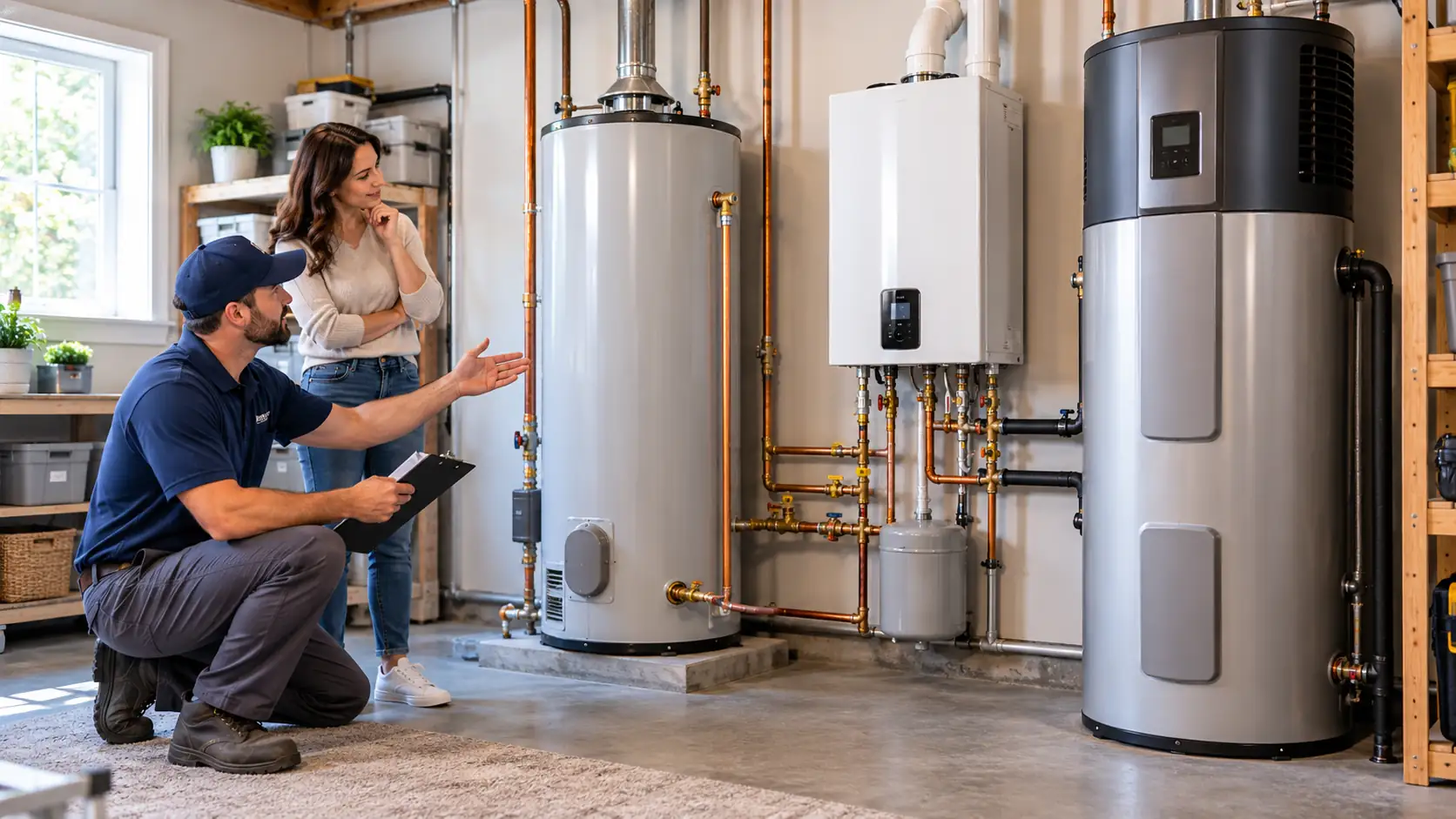
Choosing between water heaters gets easier when you start with your home. How much hot water do you use at the busiest time of day? What fuel or electrical supply is available? Where will the equipment fit? Those answers help you compare systems that can actually meet your needs.
The same questions matter when an existing heater starts causing problems. A repair may restore dependable service, while a damaged tank or repeated failures can make replacement worth considering. Before choosing either route, understand what has failed and what a new system would change.
For homeowners in Greater Boston and the North Shore, Foukas Plumbing & Heating provides water heater services covering installation, diagnosis, repair, and replacement. The guide below explains the decisions behind those services so you can discuss your options with clearer expectations.
How the main types of water heaters compare
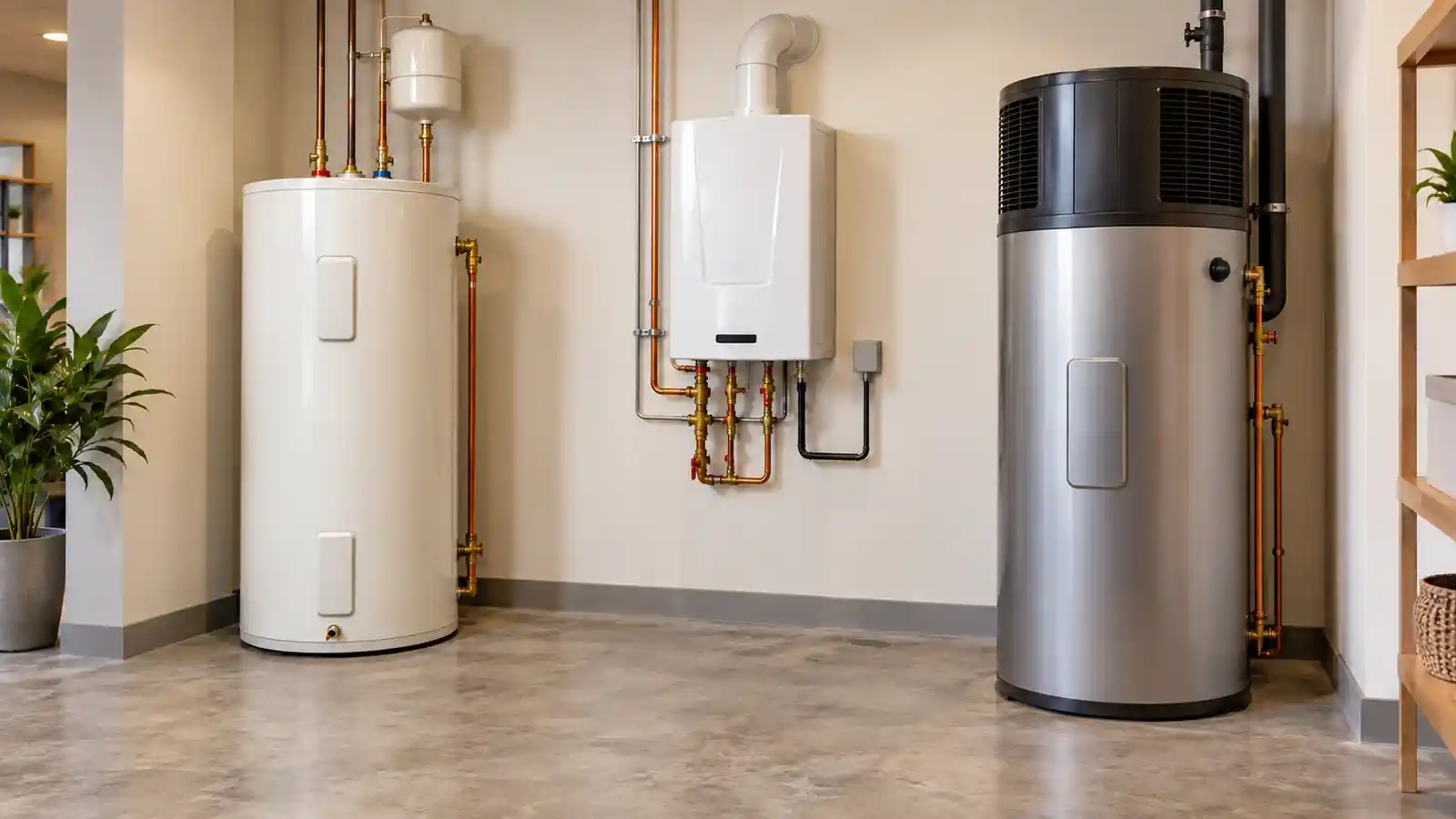
Storage, tankless, and heat pump describe how a system heats or holds water. Gas and electric describe its energy source. These categories overlap: a heat pump water heater usually has a storage tank and runs on electricity.
Conventional storage water heaters
A conventional tank holds heated water ready for use. Gas models use a burner; standard electric models use resistance heating elements. As hot water leaves, incoming cold water must be heated to restore the supply. Tank capacity and recovery performance both affect how well the system handles repeated use.
Storage equipment can be a practical choice when a suitable tank already fits the home and the existing connections can support a replacement. However, matching the old tank’s gallon capacity does not automatically mean the new model will perform the same way.
Tankless water heaters
A tankless heater heats water as it flows through the equipment. It avoids maintaining a large stored supply, but its output has a limit. A household can exceed that limit by running too many hot-water fixtures together.
This makes tankless an option to evaluate around your routines. Long showers and several simultaneous showers place different demands on the system. Foukas’s tankless water heater services include evaluating the flow demand and installation requirements before choosing equipment.
Heat pump and hybrid water heaters
A heat pump water heater moves warmth from surrounding air into stored water. Many residential models also have electric resistance elements to help during heavy demand or certain operating conditions. These combined systems are often called hybrid water heaters.
The heat pump can use less electricity than conventional resistance heating, but placement and operating mode matter. Frequent reliance on backup elements changes the energy savings you can expect.
| System | How it supplies hot water | Main planning consideration |
|---|---|---|
| Gas storage | Stores water heated by a burner | Tank delivery, gas supply, and venting |
| Standard electric storage | Stores water heated by electric elements | Tank delivery and electrical requirements |
| Tankless | Heats water during use | Simultaneous flow and incoming water temperature |
| Heat pump or hybrid | Transfers heat into a tank, with backup heat on many models | Airflow, room conditions, recovery, and drainage |
Choosing capacity around your busiest hour
The number of people in the home is a starting point. Your actual schedule provides a better picture of demand. Back-to-back showers, a large bathtub, and laundry during the morning rush can change what the system needs to deliver.
For storage equipment, compare the first-hour rating as well as tank size. This rating describes how much hot water the heater can deliver during the first hour when it begins with a fully heated tank. It accounts for stored hot water and the heater’s ability to produce more during that period.
Tankless sizing uses a different approach. The installer evaluates the hot-water flow required at the same time and the temperature rise needed between incoming water and the desired outlet temperature. Colder inlet water requires more heating, so a headline maximum flow figure alone is not enough to select a unit.
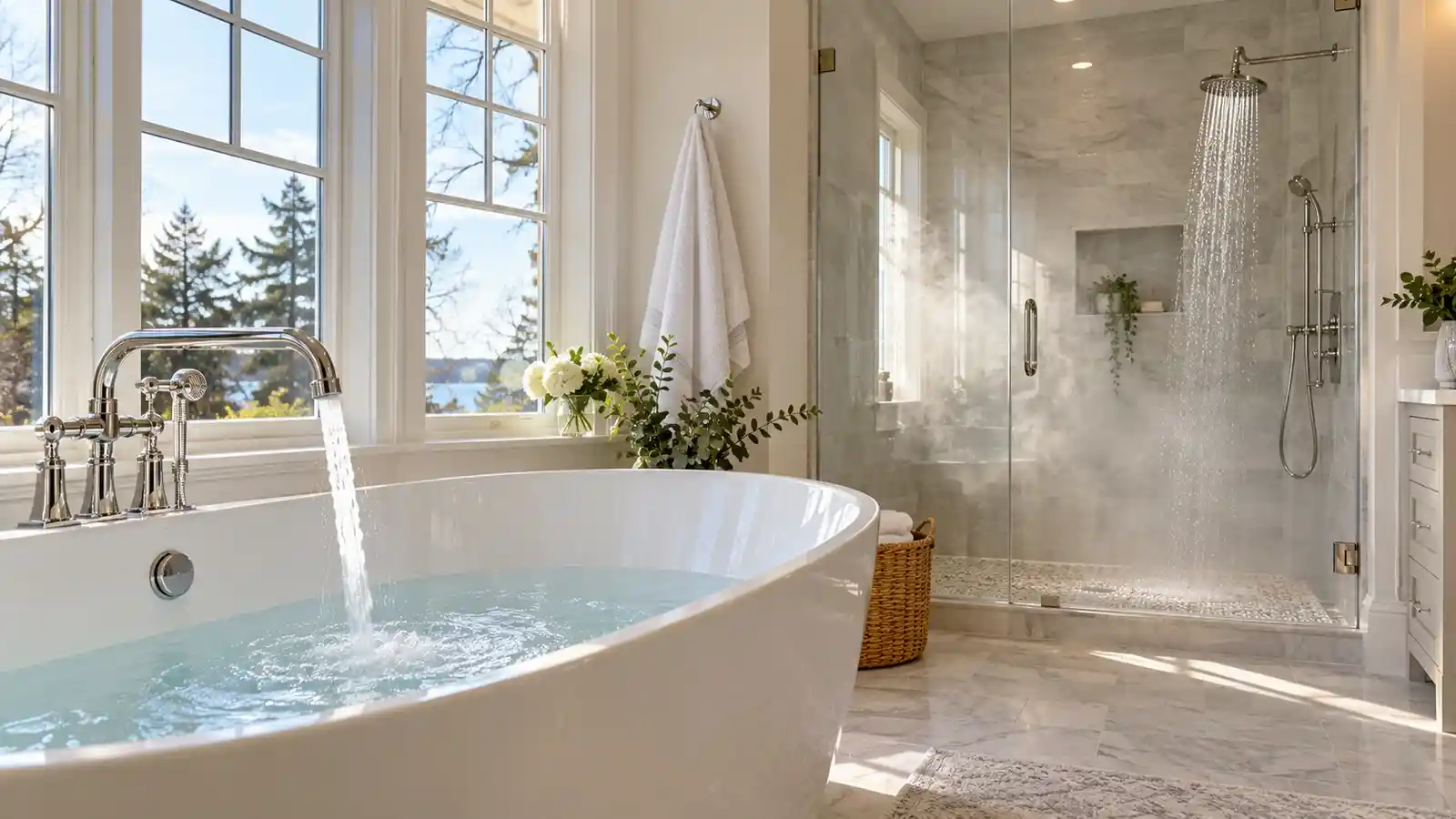
Imagine a household where showers happen one after another, compared with a home where several bathrooms are used together. Both may use a similar total amount of hot water, but the second home creates a larger simultaneous demand. Explain those routines when requesting a recommendation.
Also mention planned changes. A bathroom addition or a larger soaking tub can make today’s demand a poor guide to tomorrow’s needs. Ask the installer to show how the proposed model meets your expected use.
Reading efficiency labels without confusing them with your bill
Uniform Energy Factor, usually shortened to UEF, measures water heater efficiency under standardized testing. Higher values indicate greater efficiency when comparing equipment in the same usage category, sometimes called a usage bin. A UEF number needs that context to be useful.
The yellow EnergyGuide label provides an estimated annual operating cost. Treat it as a comparison tool. The amount you actually pay depends on local energy prices, how much hot water you use, and operating conditions.
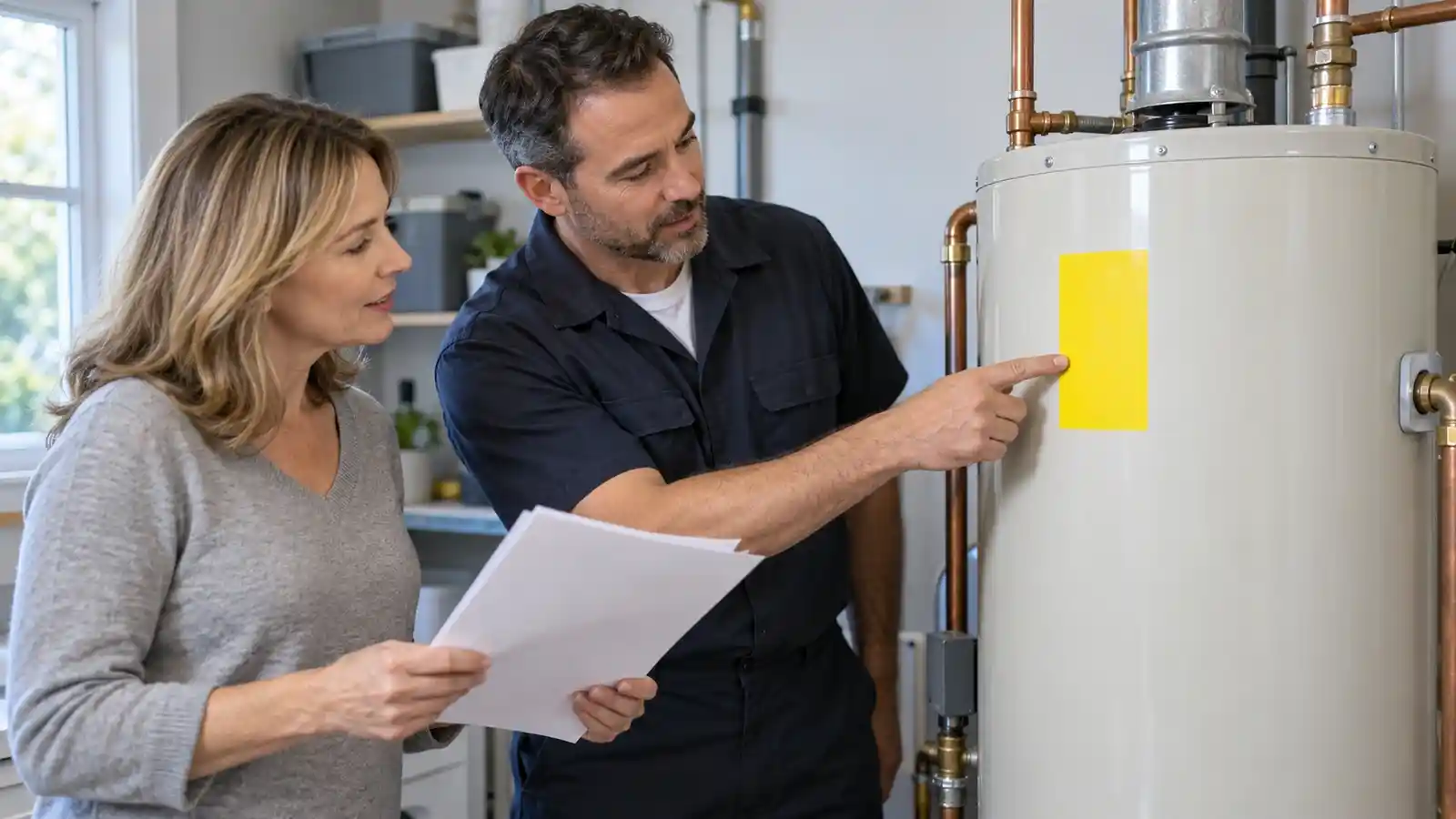
Ask for the exact model numbers when comparing estimates. That lets you check the capacity and efficiency of the equipment being offered instead of comparing broad descriptions such as “high efficiency.”
When changing from gas to electricity, ask for a running-cost comparison using your own utility rates. A higher efficiency rating alone does not establish which fuel will cost less in your home. For a hybrid system, also discuss the operating mode assumed in the estimate.
What goes into the cost of a water heater
A useful water heater estimate separates the equipment from the work required to install it. Access, existing connections, electrical changes, and the installation location can affect the total. That is why the price of a unit on a store shelf is not a complete project budget.

Compare the same scope of work
Request a written estimate that identifies the model and includes the relevant work:
- Removal and disposal of the old equipment.
- Plumbing connections, shutoff valves, and required safety components.
- Gas, venting, electrical, or condensate work needed for the selected system.
- Applicable permits, inspections, and startup testing.
- Equipment warranty terms and any separate labor coverage.
Ask what is excluded. If one proposal includes electrical work and another leaves it to a separate contractor, the totals are not yet comparable.
A current Massachusetts cost example
As of October 20, 2026, Mass Save publishes a heat pump water heater example using a $3,200 installed cost, a $750 rebate, and a $2,450 net project cost. Its installed-cost figure is based on vendor and contractor feedback. This is a program example, not a Foukas Plumbing & Heating quote or a guaranteed price for your home.
Mass Save lists equipment, utility-account, property, installation-date, and other eligibility requirements. Confirm the current terms and your eligibility before counting a rebate in your budget. A particular model or project may not qualify.
Include ownership costs in the comparison
Compare the installed price alongside expected energy use, maintenance, and warranty coverage. Ask what scheduled service the proposed model needs and whether the warranty covers labor as well as parts.
For a fuel conversion, request the complete conversion scope. A proposal that overlooks necessary supply or electrical work can make one option appear cheaper than it will be after installation.
Will a heat pump water heater work in a Massachusetts home
Cold outdoor weather does not automatically rule out a heat pump water heater. For an integrated indoor model, the temperature and conditions in its installation space are central to performance. ENERGY STAR explains that these systems can work in cold climates when the equipment and location are appropriate.
A basement installation should be checked for usable air volume, airflow, temperature, and equipment clearances. The installer also needs a suitable way to handle condensate, the water produced as moisture leaves the air. A confined closet may need an approved airflow arrangement or a different equipment configuration. Follow the selected model’s specifications.
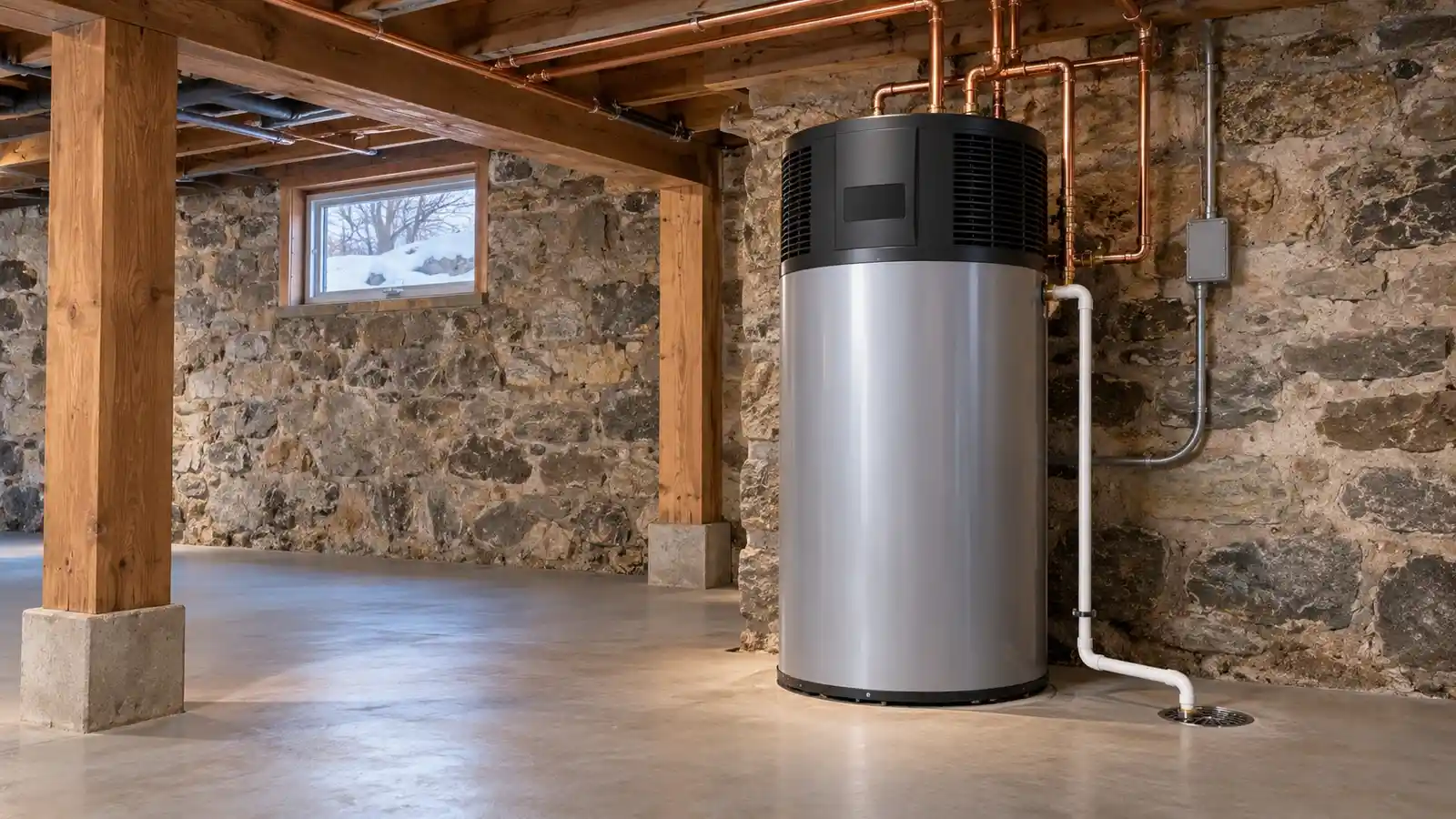
Heat pump equipment can cool the surrounding space. If that space is heated during winter, discuss how the installation interacts with the home’s heating system. Also consider fan noise if the proposed location is close to a bedroom or living area.
Capacity deserves particular attention when switching from a gas tank. Review the selected model’s recovery performance and expected use of backup heating, rather than assuming an identical tank volume will deliver an identical experience.
Foukas’s heat pump water heater services address the space, drainage, electrical supply, and hot-water demand that determine whether this option fits the property.
What common water heater symptoms can tell you
A symptom helps narrow the investigation, but it does not confirm the cause. Record what happens, when it started, and whether the problem affects every hot-water fixture.
Hot water runs out sooner than before
Reduced hot-water availability can involve a failed heating component, control problem, buildup, or demand that exceeds capacity. If the system previously handled the same household routine, describe that change to the technician. If the problem began after adding a bathroom or changing your schedule, mention that too.
Water collects near the equipment
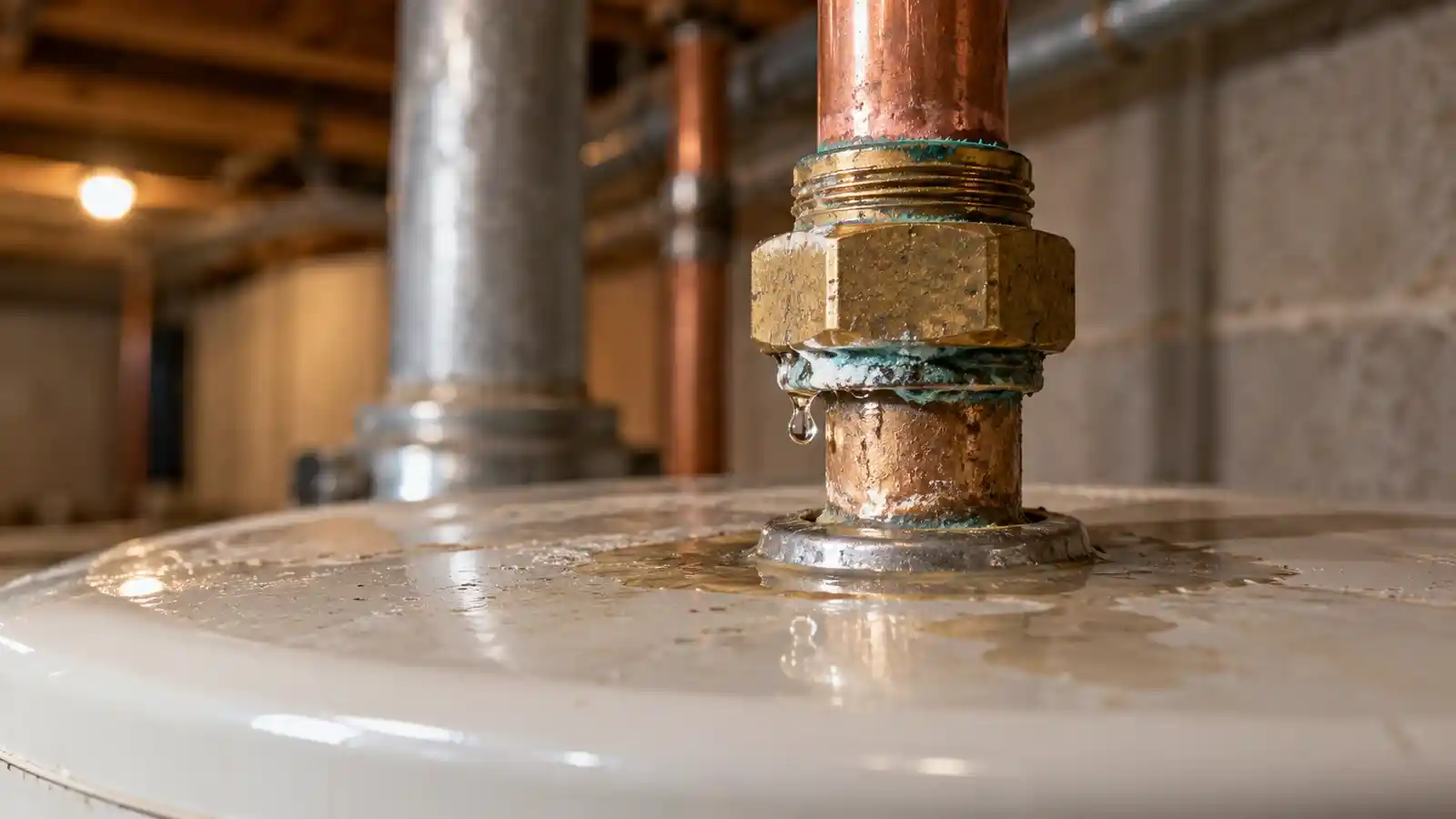
A puddle does not establish that the storage tank has failed. Water may come from a connection, a valve, or a condensate problem on equipment that produces condensate. The source needs to be traced before choosing a repair.
Keep away from standing water near electrical equipment. If there is an active leak, contact a professional promptly and follow their shutdown guidance for the specific installation.
Noises or visible changes develop
New rumbling, repeated error codes, or corrosion around connections deserves attention. Photograph a visible error message or label if you can do so safely, and note whether the sound occurs during heating or water use.
Professional water heater repair can identify the affected component and establish whether a repair is likely to restore normal operation. Avoid repeatedly resetting a unit that keeps shutting itself down.
Deciding between water heater repair and replacement
Repair is worth evaluating when the problem is isolated, the equipment is otherwise sound, and suitable parts are available. Replacement becomes more compelling when the tank itself has failed, the system has repeated major problems, or it no longer meets the property’s needs.
Look beyond the immediate repair price
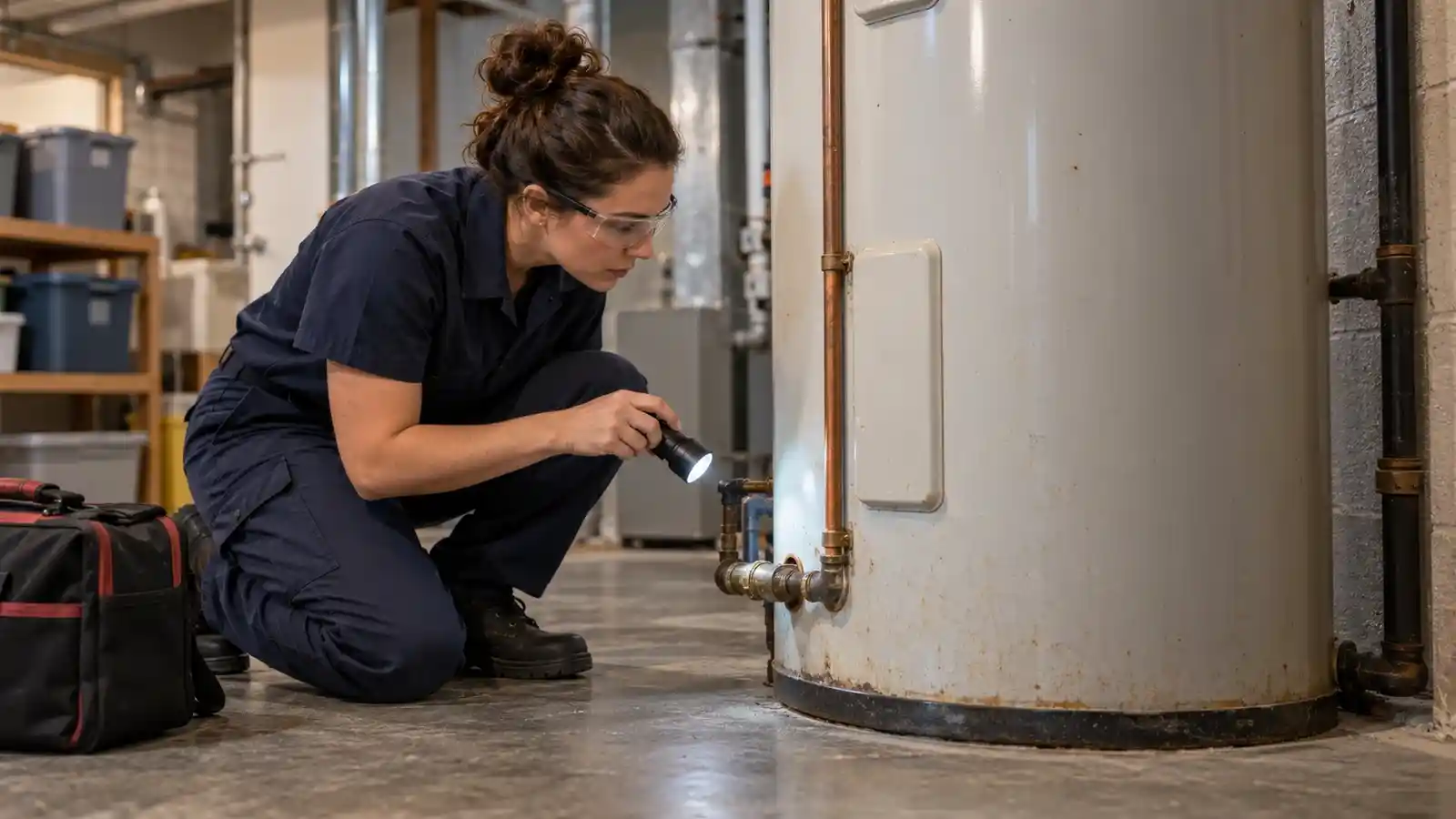
Ask the technician to explain what failed and the condition of the rest of the system. A component replacement may be sensible, but it does not renew an aging tank or resolve an underlying capacity problem.
Compare the proposed repair with a complete replacement estimate. Include any remaining warranty coverage and ask what work would still be needed if the repaired system failed again. The goal is to understand the likely benefit of the repair, not simply choose the smaller bill.
Use age as a planning signal
ENERGY STAR recommends considering replacement planning when a water heater is more than 10 years old. That is a reason to review its condition and options, not a promise that every unit fails at that age. The equipment label and manufacturer’s serial-number guidance can help establish when it was made.
If you are already considering a fuel change or a different system type, planning before failure gives you time to compare the installation requirements. Foukas’s water heater replacement service evaluates the existing equipment and the requirements of its replacement.
What to expect during water heater installation
An installation starts with confirming that the proposed model fits the property and the intended demand. The assessment should cover access, water connections, equipment dimensions, the energy supply, and any venting or drainage requirements.
Changing to a gas model with different input requirements may involve reviewing the existing gas supply. When new fuel piping is needed, gas line installation belongs in the project scope. Electrical capacity also needs checking when changing to an electric system.
In Boston, the city’s published guidance requires a plumbing permit for water heater installation or replacement and an appropriately licensed contractor to carry out the plumbing work. For properties in other municipalities, confirm the applicable permit and inspection arrangements with the local department and your installer.
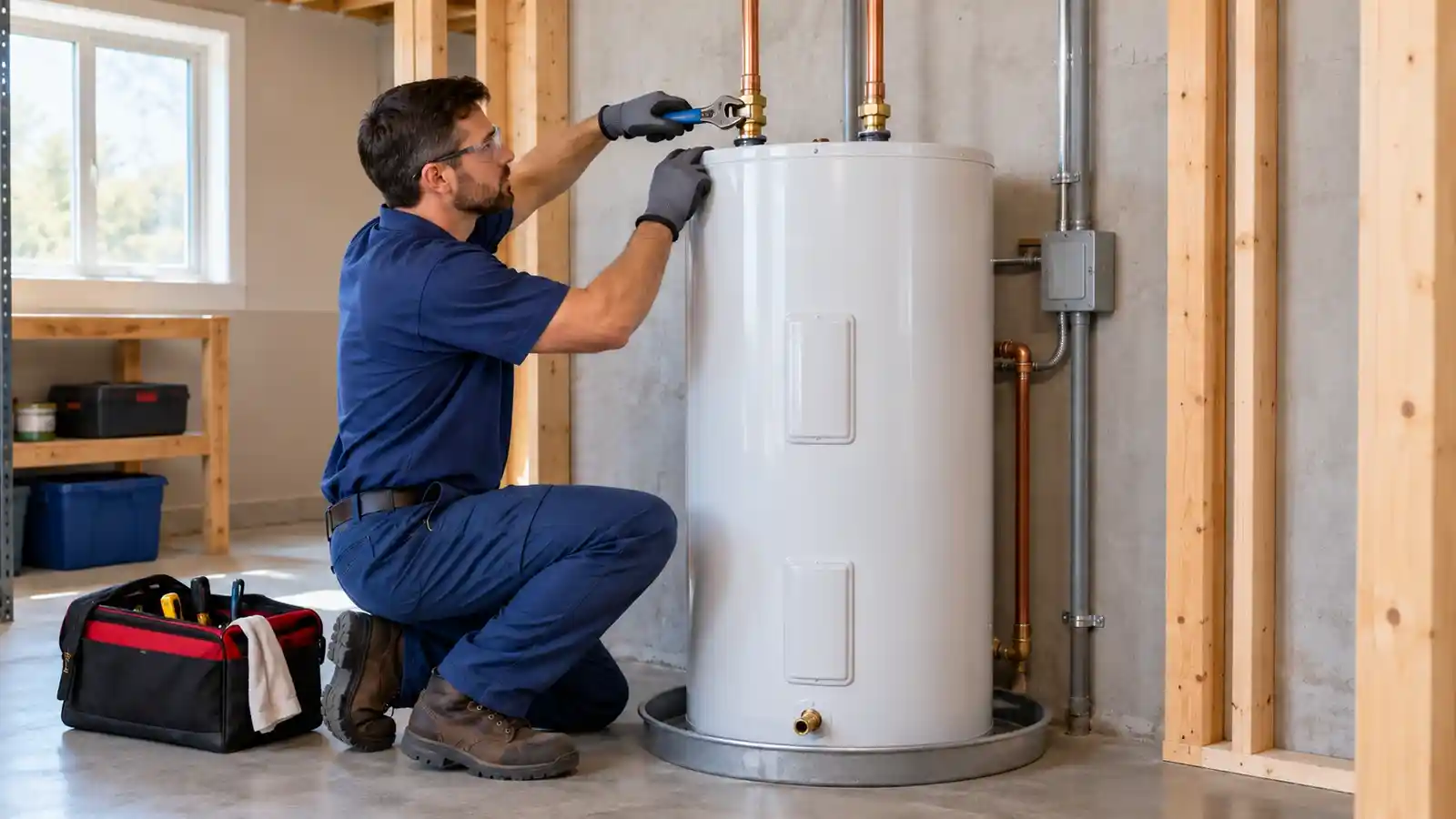
Ask how long the water supply will be interrupted and what needs to happen before the new system can be used. Timing depends on the job, so get a schedule for your installation rather than relying on a generic promise.
Before handover, the installer should test the system and explain its controls, maintenance needs, and warranty documentation. A professional water heater installation should leave you knowing how the equipment is intended to operate and who to contact if its performance changes.
Maintenance needs for tanks and tankless systems
Use the maintenance schedule for your exact model. Rheem recommends annual professional maintenance for its tank and tankless systems, with some tasks varying by model and water conditions. Keep a record of visits, findings, and replaced parts so future decisions are based on the system’s history.
Storage tank maintenance
A service visit may include checking for leaks, inspecting safety components, and flushing sediment as the manufacturer recommends. Many glass-lined tanks have an anode rod that helps protect against corrosion; its condition and replacement requirements need periodic review.
Gas models also need attention to combustion and venting, while standard electric models have heating elements and electrical components to inspect. Have a qualified professional assess the work needed, especially if the heater’s maintenance history is unknown.
Tankless maintenance
Tankless equipment needs care even though it has no large storage tank. Depending on the model, service includes checking filters, inspecting the burner and venting, and descaling the heat exchanger. Water conditions influence descaling intervals.
Ask the technician to check any condensate handling components required by the model. Follow the manufacturer’s instructions for maintenance methods and service products.
Heat pump maintenance
Heat pump systems add airflow and condensate checks to storage-tank care. Keep the area clear and follow the manual’s instructions for inspecting or cleaning the air filter. Report recurring fault codes or a change in operating sound. Electrical and refrigerant-system work belongs with qualified professionals.
For the rest of the home’s plumbing, Foukas’s home plumbing services guide provides a broader reference for household maintenance and common plumbing concerns.
Hot water safety and situations that need urgent help
If you smell gas, leave the building and call the gas utility’s emergency line or 911 from a safe location outside. Do not stay inside to investigate the water heater. If a carbon monoxide alarm sounds, get everyone outside and call 911.
For an active plumbing leak, emergency plumbing assistance can help address the problem. Stay clear of water near electrical components and follow professional guidance about isolating the equipment.

Temperature settings deserve care too. The U.S. Consumer Product Safety Commission recommends 120°F to reduce the risk of tap-water scalds and cautions that prolonged exposure can still cause burns at that temperature.
Have your plumber confirm the appropriate settings and any mixing-valve arrangement for your equipment and building. Avoid raising the temperature simply to compensate for a hot-water shortage. The underlying capacity or performance issue needs attention.
Keep safety devices intact. A temperature-and-pressure relief valve and its discharge pipe must not be capped or blocked to stop a drip. Discharge needs professional investigation.
Questions homeowners ask before choosing a water heater
Will tankless give me instant hot water at every faucet
Not automatically. Water already sitting in the pipe between the heater and the fixture still has to move through. A long wait at a distant bathroom needs a review of the distribution piping as well as the heater. A compatible recirculation arrangement may help, but it adds design and operating considerations.
Does a bigger water heater always solve hot-water shortages
No. Capacity should follow a demand assessment. A faulty component or a performance problem may need repair, and a larger tank may not fit the available space. For storage models, compare delivery and recovery; for tankless equipment, review simultaneous flow at the required temperature rise.
Should I replace a working heater before it fails
Planning can be worthwhile when the equipment is aging, has visible deterioration, or is becoming unreliable. It also gives you time to evaluate a change in technology. An inspection can help distinguish a system that needs replacement soon from one that can reasonably remain in service.
Is a hybrid water heater the same as a tankless heater
Usually not. In residential heat pump discussions, “hybrid” generally refers to a storage water heater that combines heat pump operation with electric resistance heating. A tankless system heats flowing water without maintaining a large stored supply. Check the model description because product terminology can vary.
Planning your next step with Foukas Plumbing and Heating
Before arranging service, gather the model number, a photo of the equipment label, and a short description of the problem or upgrade you are considering. Mention when you run short of hot water, any visible leaks, and planned changes to the home.
Foukas Plumbing & Heating serves Greater Boston and the North Shore. Check the service areas for your location, then request a water heater assessment. A review of the current system can help you choose a repair or plan a replacement with a clear scope of work.