



A plumbing maintenance checklist should help you find small problems, understand what they mean, and decide what to do next. Start with monthly checks for leaks, running toilets, slow drains, and damaged appliance hoses. Add seasonal freeze protection and equipment servicing based on your manufacturer’s instructions and your home’s condition.
You don’t need to take pipes apart to learn something useful. A damp cabinet, a toilet that refills without being flushed, or a change in water use can tell you where to investigate. The key is noticing changes before they become familiar background problems.
For homeowners in Greater Boston and the North Shore, the routine also needs to account for freezing weather and spring thaw. Use the schedule below as a starting point, then adjust it for the equipment your home actually has.
Your Plumbing Maintenance Checklist at a Glance
Separate routine observations from jobs that involve equipment servicing or plumbing repairs. The suggested intervals below help organize your calendar. Product manuals and advice based on an inspection take priority over a general checklist.
| When | What to check | What needs follow-up |
|---|---|---|
| During everyday use | Drain speed, faucet drips, toilet sounds, unusual pipe noises | New or recurring changes |
| Monthly | Under-sink connections, toilet bases, accessible hoses, water heater surroundings, water consumption | Moisture, corrosion, bulging hoses, unexplained use |
| Monthly in unused rooms | Run water in seldom-used fixtures and replenish accessible drain traps | Odors that persist or quickly return |
| Before freezing weather | Outdoor hoses, faucet winterization, vulnerable pipe insulation, reliable indoor heating | Trapped water, exposed piping, previous freeze locations |
| Before wet weather and as the manual requires | Sump pump operation, discharge route, backup system | Failure to start, poor discharge, alarms |
| During an annual maintenance review | Pressure, shutoff condition, service records, equipment maintenance due | Measurements or findings outside the equipment’s requirements |
| After a freeze, leak, or repair | Affected areas and nearby finishes | Fresh moisture, stains, recurring symptoms |
Skip equipment you don’t own. A municipal-water home without a sump pump needs a different checklist from a house with a private well and basement drainage system.
If you’re unsure how the parts fit together, our home plumbing services guide explains the systems behind common household plumbing problems.

Locate Shutoffs and Record What You Have
Make the main water shutoff easy to find
Locate the valve controlling the home’s incoming water supply, often near the service entry. Label it and keep the access route clear. Show other adults in the household where it is, rather than relying on one person to remember during a leak.
Identify fixture shutoffs beneath sinks and beside toilets too. A working fixture valve may let you stop one leak while maintaining water elsewhere.
Do not force a stiff, corroded, or leaking valve. Ask a plumber to inspect it and demonstrate safe operation. A handle that moves does not necessarily mean the valve fully stops water. Shared buildings, wells, and homes with fire sprinklers may require additional instructions about which controls serve which systems.
Create a simple plumbing record
Keep these details together:
- Water heater model, serial number, installation date if known, and manual.
- Locations of shutoffs and accessible cleanouts.
- Previous leaks, recurring clogs, and freeze-prone areas.
- Filter types and equipment service dates.
- Water utility and plumber contact details.
A flashlight, dry paper towel, and phone camera are enough for most observation tasks. Photograph an area when it is dry so you have a useful comparison if staining appears later.
Check for Leaks You Can See and Water Use You Cannot Explain
Inspect while fixtures are running
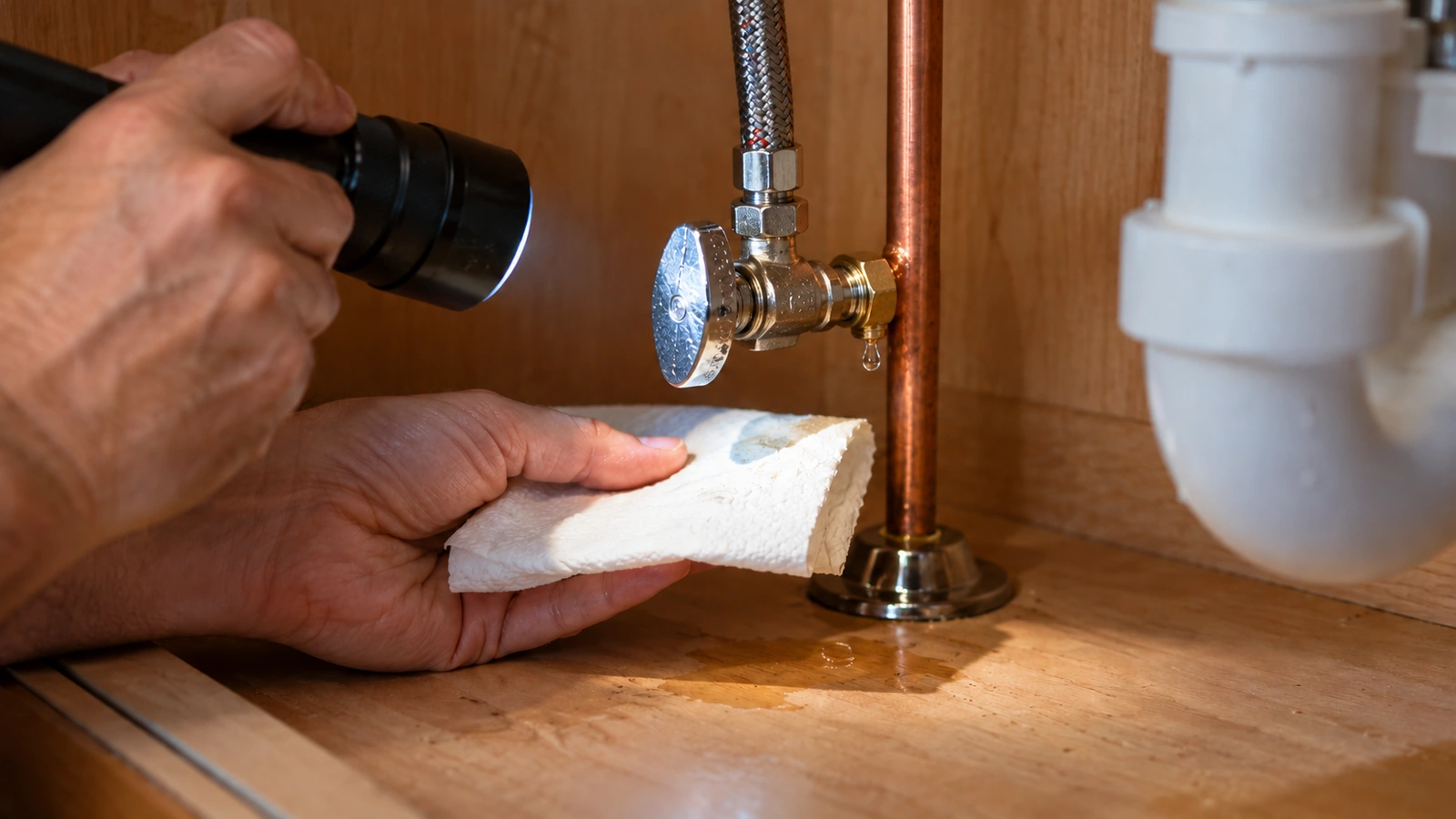
Look beneath each accessible sink before, during, and after normal use. Check supply connectors, shutoff valves, the cabinet floor, and visible drain joints without disturbing them. A dry paper towel can help reveal moisture around an accessible connection.
Timing matters. Moisture that appears during draining suggests a different problem from a connector that stays wet even when the fixture is unused. These observations help a plumber narrow the investigation, but they do not establish the cause on their own.
Also look for peeling cabinet surfaces, new ceiling marks, loose flooring near fixtures, or recurring damp smells. Condensation can resemble leakage, so record where and when moisture appears rather than assuming every wet pipe needs replacement.
Use your meter as a screening tool
EPA recommends checking the water meter during a period when no water is being used, then checking again two hours later. A changed reading suggests a leak. Make sure automatic uses, such as irrigation, an ice maker, or water treatment equipment, are not running during the check. See EPA’s leak-checking guidance.
The test cannot locate a leak, and an unchanged reading does not rule out an intermittent leak or a drain leak. Homes with shared meters may need help from the property manager.
Compare the consumption shown on water bills, not just the amount charged. Different billing periods, rate changes, visitors, and outdoor watering can affect the comparison. If consumption remains unexplained, professional leak detection can help investigate concealed plumbing before you start opening finished surfaces.
Give Toilets, Faucets, and Showers a Closer Look
Check toilets for silent leakage
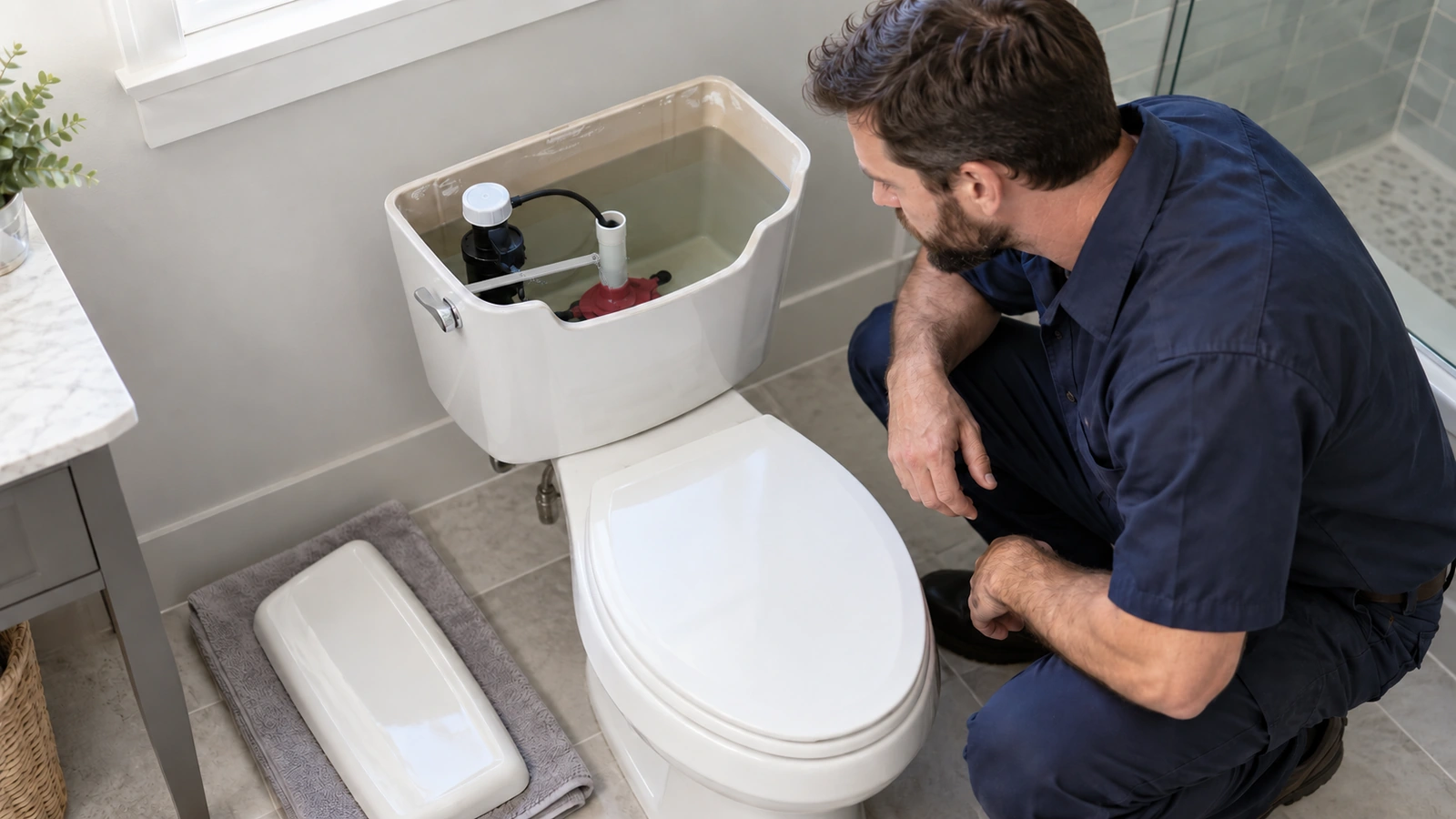
A toilet can leak from its tank into the bowl without leaving water on the floor. Listen for continued running or occasional refilling when nobody has used it.
For a conventional tank toilet, EPA suggests adding a few drops of food coloring to the tank and waiting 10 minutes without flushing. Color appearing in the bowl indicates leakage. Flush afterward to limit staining. Follow the manufacturer’s directions for toilets with specialized tank mechanisms. This method is described in EPA’s toilet leak guidance.
Look around the supply connection and base too. Water on the floor may come from several places, so don’t assume that replacing the floor seal will solve it. Report movement during normal use; do not deliberately rock the bowl or overtighten its bolts.
Distinguish a fixture problem from a house-wide problem
Check whether an uneven faucet stream affects only that outlet. A dirty aerator, the small screen at the spout, may restrict flow. Clean accessible screens and shower spray openings only as the product instructions allow. Some finishes and components require specific cleaners.
Notice whether moisture appears only after showering. Deteriorated seals or splash escaping the enclosure can wet surrounding materials without a supply-pipe leak.
Persistent dripping, repeated toilet refilling, or moisture beneath a fixture deserves plumbing repair. Give the plumber the symptom and its timing instead of purchasing parts based on a guess.

Keep Drains Clear Without Treating Them as Trash Cans
Prevent buildup at the source
Use sink strainers and shower hair catchers, and remove collected debris regularly. Wipe greasy cookware before washing it. Let leftover grease cool in a suitable container for disposal rather than pouring it into a sink.
Keep wipes, paper towels, hygiene products, and dental floss out of toilets. Flush human waste and toilet paper only. A garbage disposal also has limits: follow its manual and avoid treating it as a way to send large quantities of food waste through the plumbing.
These habits matter with both sewers and septic systems. EPA’s septic system care guidance explains how grease, solids, and unsuitable waste affect wastewater systems.
Notice whether one drain or several are affected
An isolated slow sink may have a nearby blockage. Several fixtures draining poorly, or water rising in a shower when a toilet flushes, can indicate a shared drainage problem. Stop adding water if wastewater is backing up.
Avoid making chemical drain openers a scheduled maintenance habit. Never mix cleaning products. If you have already used a drain chemical, tell the plumber what it was before anyone opens the piping or attempts clearing.
Recurring blockages need investigation even if the drain temporarily improves. Drain cleaning services can address an obstruction and help determine whether further inspection is appropriate.
Remember seldom-used drains
The curved trap beneath a fixture holds water that helps block sewer gases. In an unused bathroom or utility area, that water can evaporate. Periodically run water in the fixture and replenish accessible floor-drain traps.
An odor that returns quickly, persists, or accompanies gurgling needs evaluation. Adding water repeatedly is not a diagnosis or a repair.
Measure Water Pressure Instead of Judging the Shower
Water pressure is the force in the supply system. Flow is the amount of water reaching a fixture. A weak stream can result from a local restriction even when the home’s supply pressure is adequate.
EPA WaterSense identifies 45 to 60 pounds per square inch (psi) as a range in which water-using fixtures perform well. This is a practical reference, not a diagnosis or a substitute for equipment specifications and local requirements.
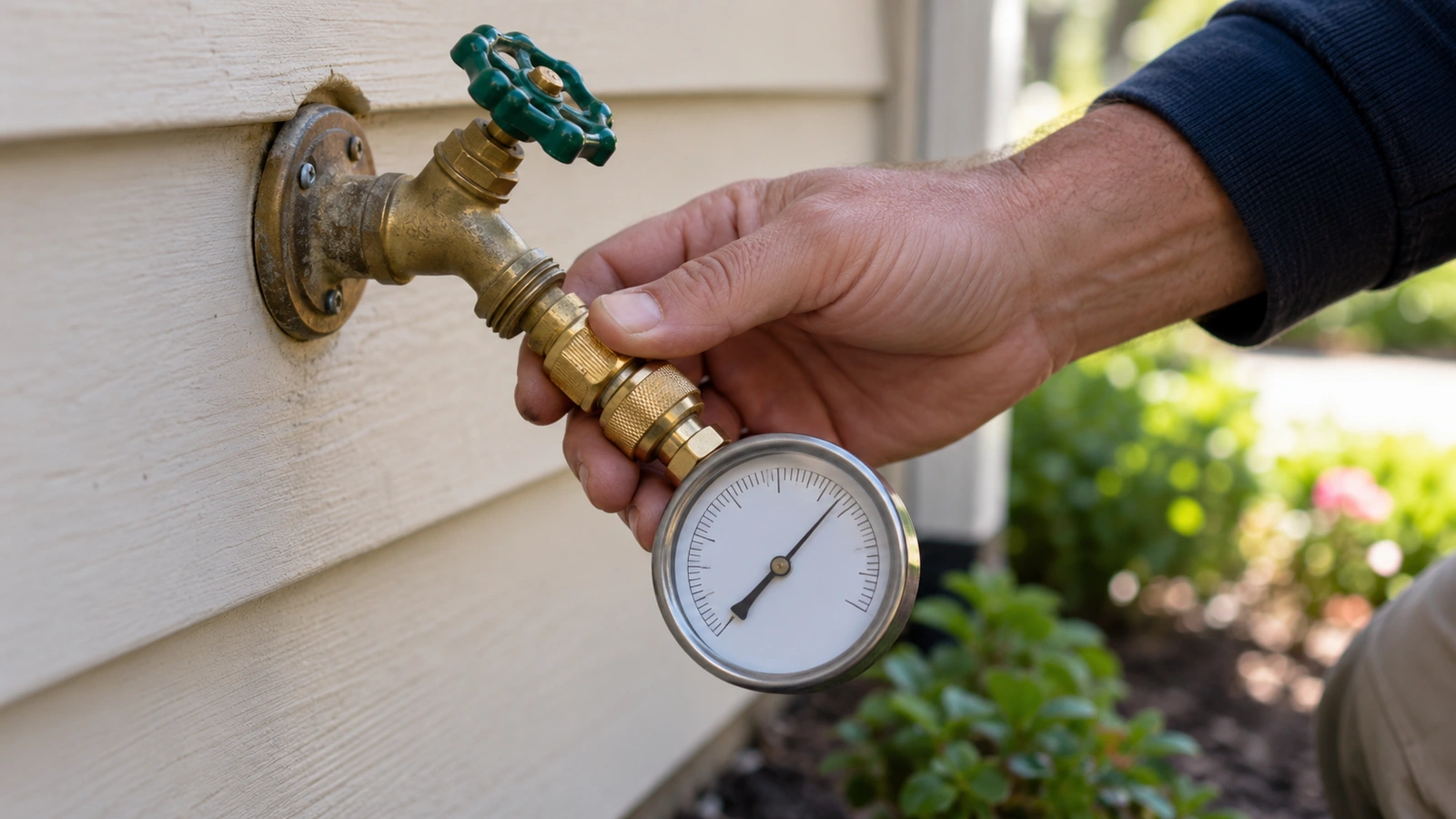
If an accessible hose connection is suitable, a threaded pressure gauge can measure static pressure with other water uses off. Follow the gauge instructions, record the reading, and note which outlet you used. An outdoor outlet may sit upstream of the pressure regulator, so ask a plumber whether it represents indoor pressure.
Report persistent abnormal readings, sudden changes, or repeated pipe banging. A single reading cannot capture every fluctuation, and a low reading does not automatically prove there is a leak.
Do not adjust a regulator blindly to improve one shower. Widespread supply problems may need evaluation of the regulator, valves, or incoming piping through water line services.
Match Water Heater Maintenance to the Equipment
Storage tank water heaters
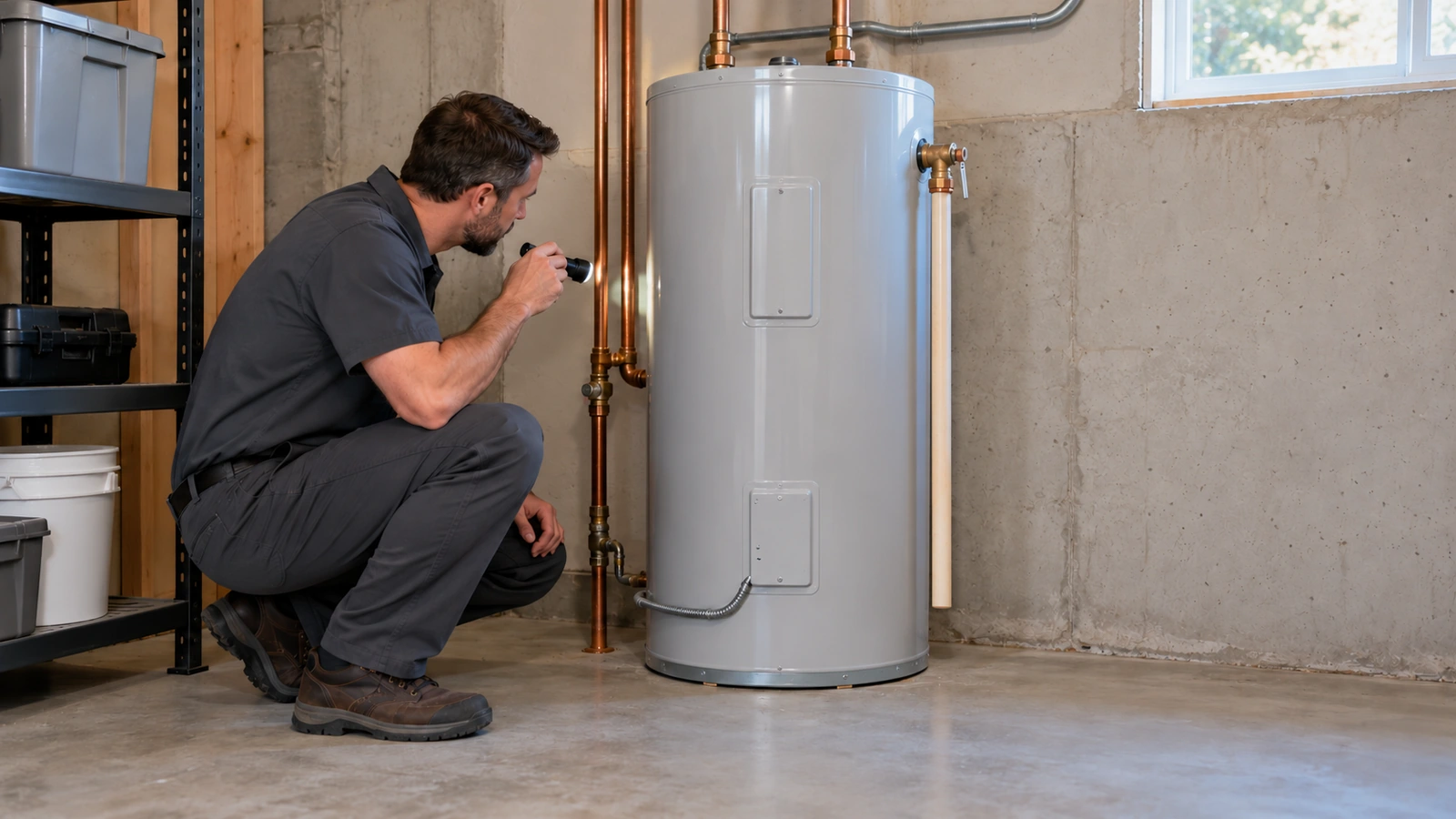
Look around the tank, visible connections, drain valve, and discharge piping for moisture or corrosion. Keep the surrounding space accessible and observe required clearances. A new noise, reduced hot-water supply, or visible leak should be recorded and assessed.
Storage-heater servicing commonly includes sediment removal, inspection of the anode where fitted, and checks of the temperature-and-pressure relief valve. The anode helps protect the tank from corrosion. The relief valve is a safety device, and its discharge must never be plugged or capped.
A. O. Smith’s maintenance guidance explains these components and the precautions involved. Arrange servicing according to the model’s instructions and water conditions. If maintenance history is unknown, have the equipment assessed before attempting a flush.
Flushing and valve testing involve hot water and equipment shutdown. They are not simply extensions of a visual inspection. An electric tank must be completely refilled and air purged before power is restored.
Tankless water heaters
Tankless equipment may need inlet-filter cleaning and descaling, depending on its design and water quality. Use the manufacturer’s schedule rather than assuming every model requires the same treatment.
Keep a record of service reminders and error codes. Repeatedly resetting an error does not address the underlying fault. Our tankless water heater service information can help you plan support for this equipment.
Heat pump water heaters
These units add air-handling components and condensate drainage to storage-tank maintenance. Check the accessible air filter, keep airflow paths clear, and look for condensate leakage. Follow the model’s cleaning directions and leave electrical or refrigerant work to a qualified technician, as explained in Rheem’s maintenance guide.
Foukas also provides information on heat pump water heaters for homeowners maintaining or considering these systems.
The Department of Energy identifies 120°F for most residential applications, while recognizing that some systems need different storage temperatures and mixing arrangements. Have the appropriate setting confirmed for your installation; don’t lower a managed system’s temperature without advice. See DOE’s water heater guidance.
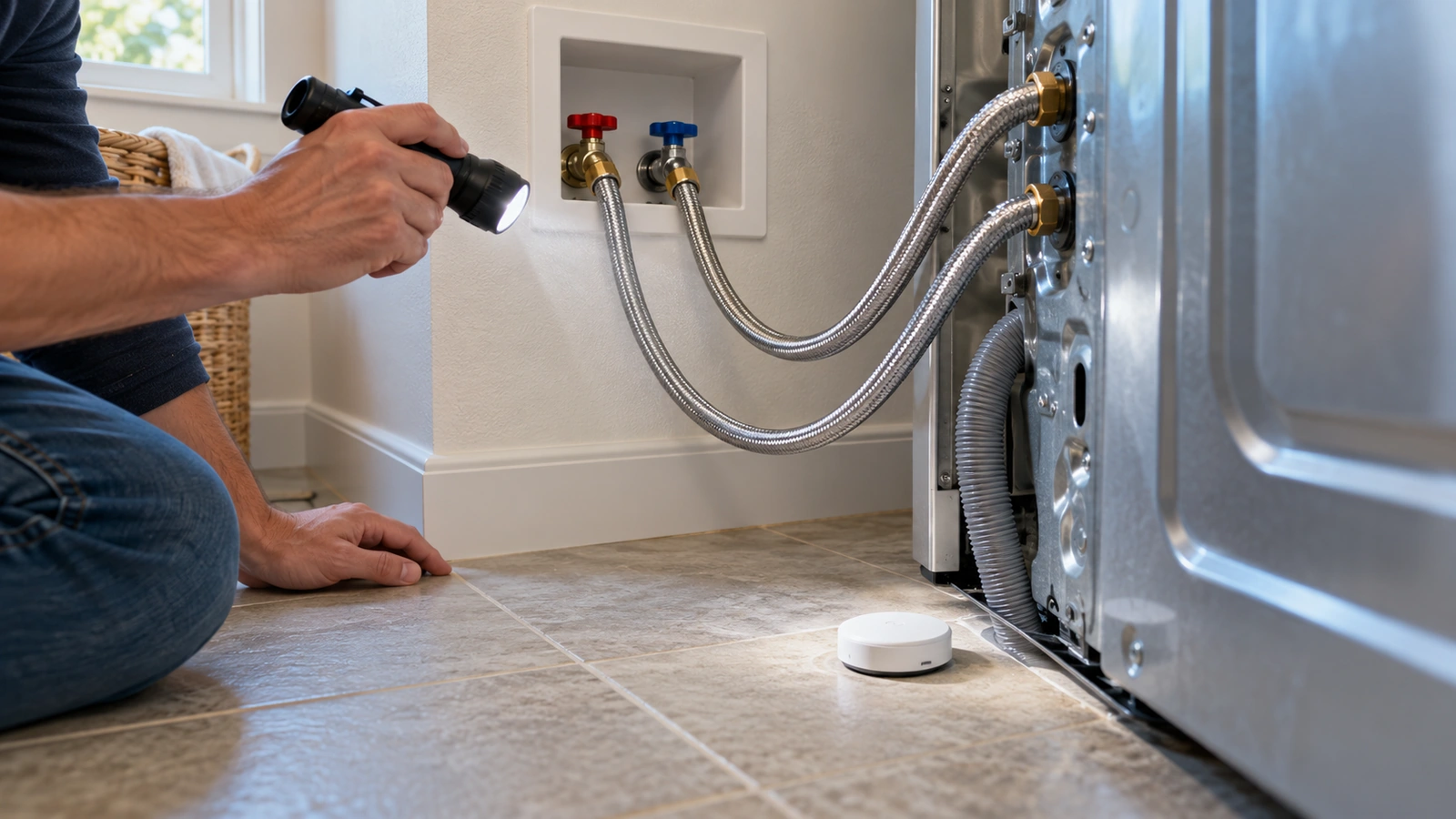
Inspect Appliance Hoses, Filters, and Leak Alarms
Check accessible washing-machine hoses for cracks, bulges, abrasion, corrosion at connectors, and moisture. Look for kinks or a machine pushed tightly against its connections. Inspect visible dishwasher and refrigerator water connections where access is straightforward.
Do not drag out a heavy appliance if doing so could strain tubing, damage flooring, or make it tip. Arrange access during a service visit when necessary. Replace damaged hoses promptly through appropriate service, and follow their manufacturer’s replacement guidance. A braided exterior does not make a connector permanent.
Leak sensors are useful near equipment where moisture may go unnoticed. Test them according to their instructions, check batteries, and verify that alerts reach the person responsible for responding. A sensor that only sounds locally may go unheard in an empty house.
If you have an automatic shutoff system, understand what it controls and how its manufacturer recommends testing it. Ask the installer how it interacts with other systems.
Keep water-filter replacement dates in your maintenance record. Replace cartridges according to the product’s time, usage, and water-quality requirements rather than waiting for taste or flow to change. Follow the manufacturer’s sanitation procedure when servicing a filter.
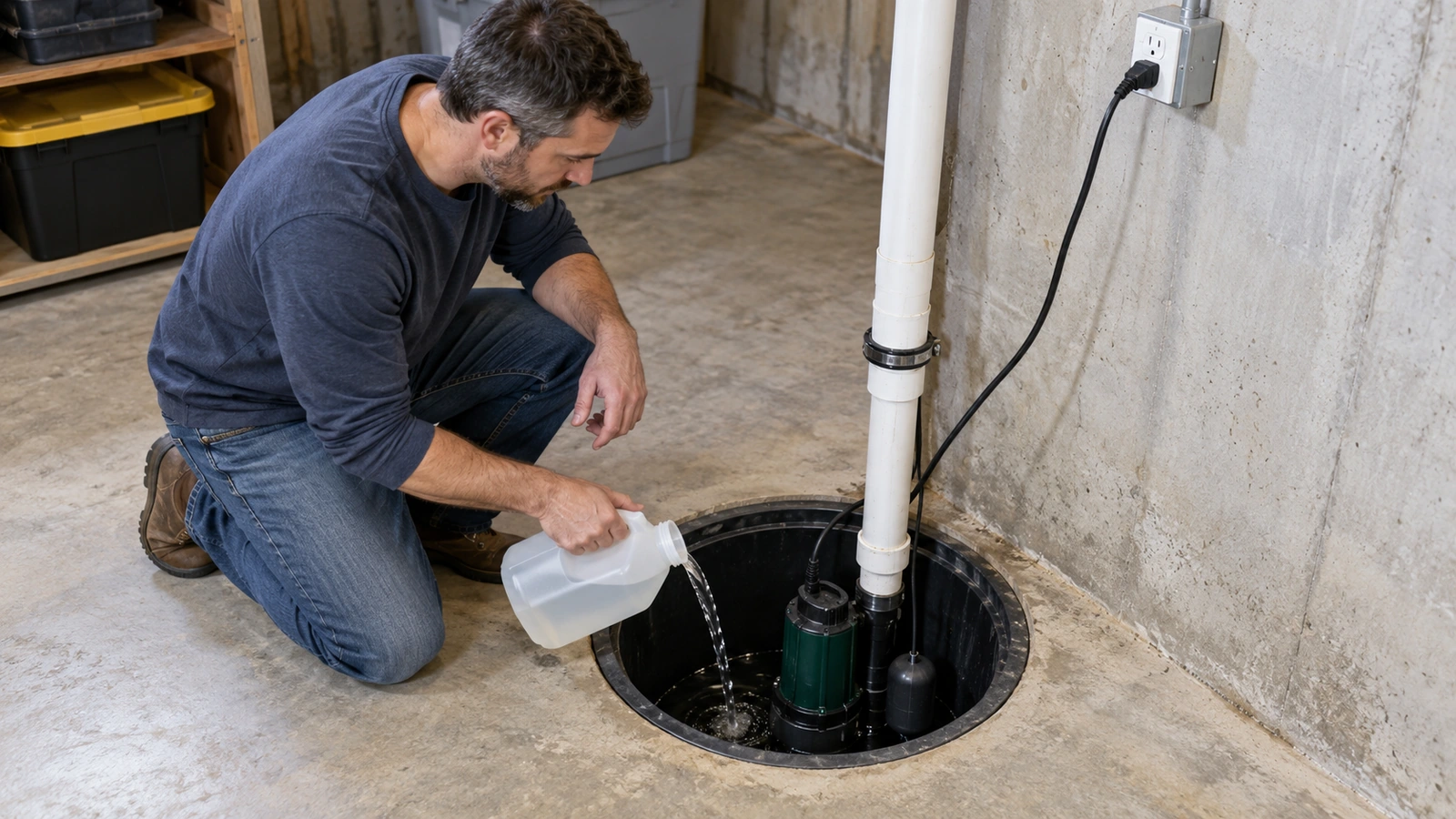
Check Basement Drainage Before You Need It
If your home has a sump pump, check it before the wet season and at the intervals required by its manual. The test should confirm that water is actually discharged, not merely that the motor makes a sound.
Where the instructions permit a water test, add water gradually to the accessible basin and observe whether the pump starts, lowers the water, and stops properly. Stop adding water if it fails to operate. Do not reach into an energized pump or remove sealed covers to improvise a test.
Check the accessible discharge outlet for obstructions and inspect the backup system and alarms according to their manuals. Battery backup requires its own maintenance; the presence of a battery is not proof that it will work during an outage.
Keep clear of standing water around electrical equipment. If basement water appears during rainfall, record that timing. Groundwater entry, drainage problems, and plumbing leaks need different investigations, even when they create similar puddles.
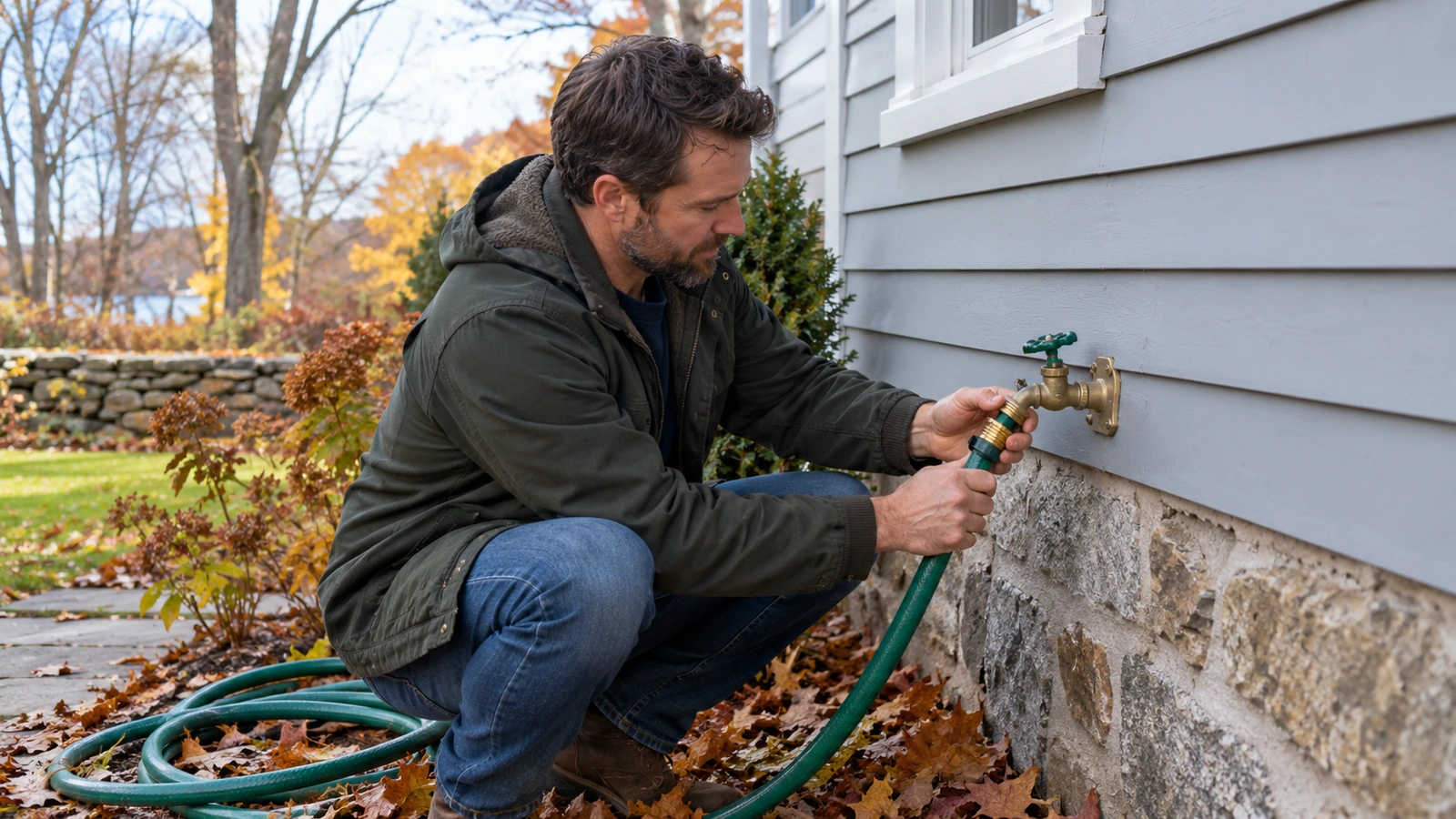
Prepare for Massachusetts Winters and Spring Thaw
Before freezing weather
Disconnect and drain outdoor hoses. Follow the outdoor faucet’s instructions for winterization, including shutting off and draining seasonal branches where applicable. A frost-free faucet still depends on correct installation and drainage; a connected hose can interfere with that protection.
Inspect accessible insulation on vulnerable pipes and have gaps or recurring freeze locations assessed. Pipes in exterior walls, garages, and other unheated spaces need particular attention. Insulation slows heat loss but does not supply heat.
During cold spells and time away
The American Red Cross recommends keeping indoor temperatures steady, opening sink cabinets to admit warmer air where appropriate, and letting a vulnerable cold-water faucet drip during very cold weather. Move household chemicals out of children’s reach when opening cabinets.
For cold-weather absences, its guidance is to leave heat on at no lower than 55°F. That is not a guarantee for poorly protected piping. Arrange property checks and a response plan for heating failure. Never use an open flame to thaw a pipe.
When outdoor fixtures return to use
Run outdoor faucets cautiously and watch accessible indoor areas behind them for leakage. Damage may become apparent only when a faucet is opened.
Recheck basement drainage after thawing weather. Before longer trips, ask how to manage your water supply and heater for your particular system, especially if shared services or water-dependent equipment are involved.
Decide What Needs Routine Service and What Cannot Wait
Finding a problem is only useful if the next step is clear. Use its effect and progression to set priorities.
| Finding | Recommended response |
|---|---|
| Minor fixture drip or intermittent toilet refilling | Arrange repair and monitor for worsening symptoms |
| Repeated clog, returning odor, unexplained consumption, or spreading stain | Book an investigation; record when it happens |
| Uncontrolled leak or burst supply pipe | Close the appropriate water shutoff if safely accessible and request urgent help |
| Sewage rising through fixtures | Stop using connected plumbing, avoid contact, and request urgent service |
| Water near energized equipment | Keep away; obtain emergency help appropriate to the hazard |
| Suspected fuel-gas leak or a carbon monoxide alarm | Leave the building and contact emergency services or the gas utility from a safe location |
For an active plumbing failure, contact emergency plumbing services. Do not postpone a spreading leak until your next scheduled review.
An annual professional review is a useful planning point, particularly when records are incomplete or problems recur. Ask what it includes: accessible piping, shutoffs, pressure, equipment condition, and any maintenance due. A routine visual inspection cannot certify every concealed pipe. Camera work, leak testing, or opening finishes should answer a specific concern.
In Massachusetts, plumbing work is subject to licensing and permit requirements. Use a licensed plumber for repairs and alterations, and confirm the applicable scope with the local inspector. Massachusetts’ consumer guidance explains these requirements.
When arranging professional plumbing services, request written findings that separate immediate repairs from planned maintenance. Ask which work is included in the quoted visit and which requires separate authorization.
Questions That Help You Plan the Next Check
How often should homeowners inspect their plumbing?
Use a monthly visual check, seasonal preparation, and an annual review of service needs as a starting routine. Inspect sooner after a leak, freeze, or noticeable change. Equipment-specific instructions may require more frequent attention than the household checklist.
Should every home have annual sewer cleaning?
Not automatically. Recurring blockages, documented root intrusion, or a known pipe defect may justify a maintenance schedule. Ask what evidence supports cleaning or a camera inspection and how the findings will change the recommended work.
Does this checklist cover wells and septic systems?
Those systems need additional plans. CDC recommends annual testing of private well water, with the test selection informed by local health guidance. EPA recommends inspection of a typical household septic system at least every three years; some alternative systems need annual attention. Pumping depends on the system and household use. See CDC’s drinking-water prevention advice and EPA’s septic care recommendations.
Can maintenance prevent every plumbing emergency?
No. Concealed defects and sudden failures can still occur. Regular observation gives you a better chance of noticing developing problems and helps you respond with useful information when something changes.
What should I tell the plumber when booking?
Explain where the problem occurs, when it started, whether it is constant, and whether other fixtures are affected. Share photographs, pressure readings, equipment details, and any cleaning products already used.
Foukas Plumbing & Heating serves homeowners across Greater Boston and the North Shore. If your checklist reveals a leak, unreliable shutoff, or equipment concern, request a free estimate and describe what you found so the next visit can focus on the right problem.