


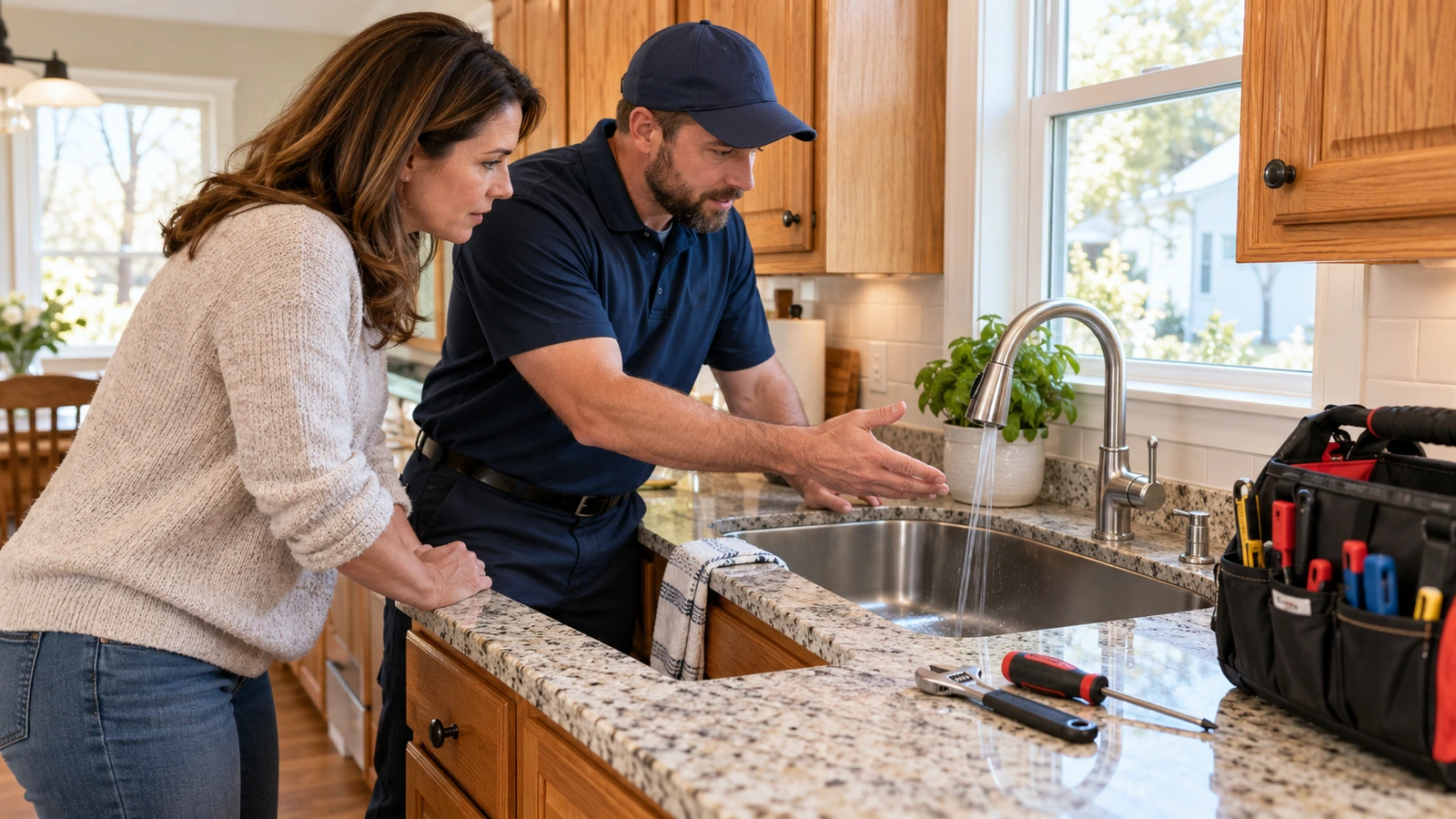
Choosing between DIY plumbing repair vs. calling a licensed plumber starts with three questions: What is actually wrong, what work is legally allowed, and can you prevent damage if something goes wrong? Cleaning a removable drain strainer is very different from disconnecting a supply line, even when both happen under the same sink.
For Massachusetts homeowners, local requirements deserve attention before any repair begins. National tutorials often describe faucet, toilet, and pipe repairs as beginner projects without explaining whether homeowners can legally perform that work where they live.
You can still take useful action yourself. Observing symptoms, checking for leaks, preventing an overflow, and preparing information for a service visit can help resolve a problem. The key is knowing when investigation becomes plumbing work that needs a licensed professional.
DIY Plumbing Repair vs. Calling a Licensed Plumber: A Quick Comparison
Homeowner care is most appropriate when it involves observation, surface cleaning, or a simple blockage that clears without dismantling plumbing. Call a licensed plumber for persistent leaks, replacement fixtures, concealed piping, recurring backups, water heater repairs, or work involving gas. In Massachusetts, confirm the legal scope before relying on a DIY tutorial.
| Problem or task | Useful first action | When professional help is appropriate |
|---|---|---|
| Hair on a removable drain strainer | Remove the visible debris and clean the strainer | Drainage stays slow or the blockage returns |
| One clogged toilet | Stop flushing; consider a toilet plunger if no chemicals are present and there is room to avoid overflow | Plunging fails, the toilet leaks, or other drains react |
| A running toilet | Note whether it runs continuously or refills between uses | Diagnosis or replacement of working parts is needed; confirm local requirements |
| A dripping faucet | Record whether the drip comes from the spout, handle, or connection | The repair requires disassembly or replacement parts |
| A wet cabinet or stained ceiling | Stop using the affected fixture and document the moisture | The source is uncertain, persistent, or concealed |
| Several drains backing up | Stop using water and keep people away from wastewater | Arrange urgent drain or sewer service |
| Water heater leak or recurring fault | Record the model and displayed error from a safe position | Arrange qualified diagnosis and repair |
| Suspected gas leak | Leave immediately and call 911 or the gas utility from outside | Emergency responders or the utility must address the immediate hazard |
This table is a starting point for deciding what to do next. It does not authorize work that state or local rules reserve for licensed trades.
Massachusetts Rules Come Before Your Skill Level
Massachusetts’ plumbers and gas fitters consumer fact sheet says plumbing installation, removal, and repair are restricted to licensed professionals. It also identifies limited minor repairs that do not require a permit. A permit exemption should not be treated as general permission to perform plumbing work yourself.

Public guidance can differ in how it describes minor homeowner tasks. For example, Braintree’s Building Division FAQ describes limited exceptions involving minor leak repairs and clearing clogs. Before replacing an internal part or disconnecting a fixture, ask your own municipal plumbing inspector how the rules apply to that exact task.
Explain the proposed work precisely. “Fixing a sink” could mean cleaning a strainer, repairing a faucet, replacing the fixture, or changing a drain connection. Those are different scopes of work.
For planned replacement, relocation, or installation, bring in a licensed plumber early. Foukas Plumbing & Heating’s professional plumbing installation services are relevant when a project goes beyond routine homeowner care.
Useful Checks You Can Make Without Taking Plumbing Apart
A good first assessment gathers information while leaving the system intact. You do not need to prove the exact cause before calling for help.
Compare the affected fixtures
Does one faucet have weak flow, or do several? Is the problem limited to hot water? Does the toilet gurgle when the washing machine drains? These observations help establish the extent of the problem.
Avoid repeatedly running water to test a drain that is already backing up. For a whole-house loss of water, check your water supplier’s outage notices before assuming the problem is inside your home.
Look for visible moisture and unusual water use
From a dry, accessible position, look beneath sinks and around fixture bases for drips, stains, or damp materials. Photograph what you find without pulling equipment away from walls or disturbing pipework.
The EPA’s leak-checking guidance includes comparing meter readings during a period without water use. Account for appliances, irrigation, and other automatic water users before interpreting movement as a leak.
For a conventional toilet tank, EPA also describes adding a few drops of food coloring and checking whether color reaches the bowl after 10 minutes without flushing. Flush afterward to reduce staining. This identifies leakage into the bowl; it does not identify every possible faulty component.
Locate your water shutoff before an emergency
Know where the fixture shutoffs and main water shutoff are located. Keep access clear, and ask a plumber to explain any valves you cannot identify.
Do not force a seized or badly corroded valve. In a condo or multifamily building, find out whether a valve serves your unit or a shared system before operating it. These simple preparations complement the broader advice in the home plumbing services guide.
Small Fixture Problems Still Need the Right Diagnosis
A small replacement part does not necessarily mean a simple repair. Access, corrosion, fixture design, and local rules can change the decision.
Running toilets
Water passing from the tank into the bowl can involve a worn seal, but a running toilet is not automatically a flapper problem. A fill valve, water-level setting, or another component may need attention.
Describe when the sound occurs and whether the toilet flushes normally. If there is water on the floor, stop treating it as only an internal tank issue. Floor leakage needs a separate assessment.
Dripping faucets and replacement fixtures
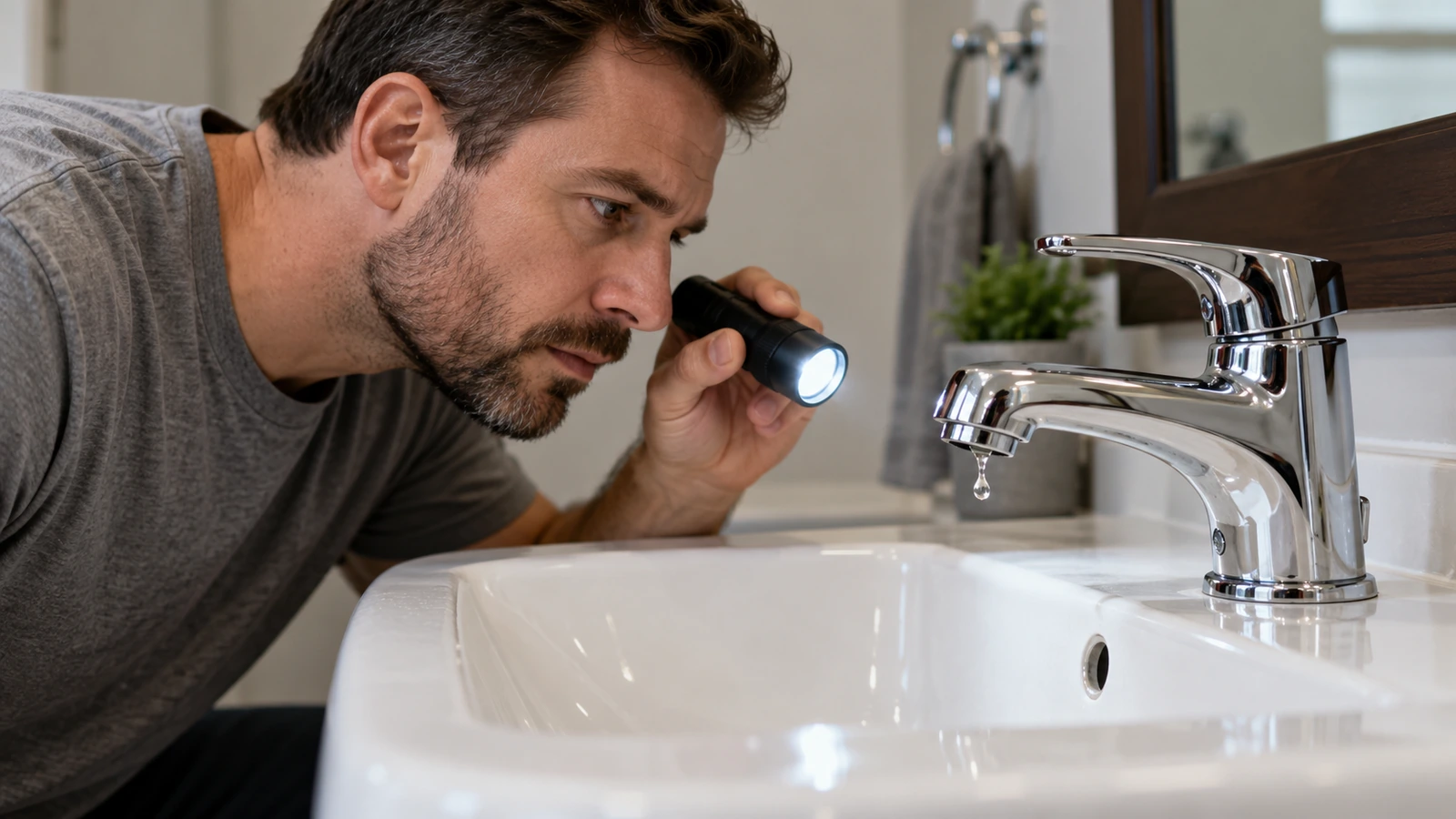
A drip from the spout and moisture around a supply connection may have different causes. Buying a cartridge before identifying the faucet model can leave you with a part that does not fit and a fixture you cannot reassemble.
For a hypothetical example, imagine planning to replace a bathroom faucet and discovering that its old shutoff will not close. The project now includes a water-control problem. Continuing because the new faucet is already unpacked does not make the next step safer.
If a repair requires working on the fixture or its connections, ask about plumbing repair options. When replacement makes more sense, confirm compatibility through fixture installation services before purchasing equipment.
Recurring Clogs Change the DIY Decision
A little hair on a drain strainer and wastewater backing up through several fixtures require different responses. Start by observing where the problem occurs and whether it returns.
A single, isolated blockage
Removing debris from an accessible strainer may restore flow. A suitable plunger can also be a reasonable first attempt for an isolated clog when no drain chemicals are present, the fixture is intact, and the water level allows use without overflow.
Stop if water appears elsewhere, a connection begins leaking, or the attempt does not help. Repeated force is not a diagnosis. Do not escalate automatically to removing a trap or renting a powered drain machine.
Several fixtures or repeated failures
If a toilet flush causes water to rise in a tub, or several drains become slow together, the problem may be in shared drainage piping. The pattern deserves professional assessment rather than separate treatments at every fixture.
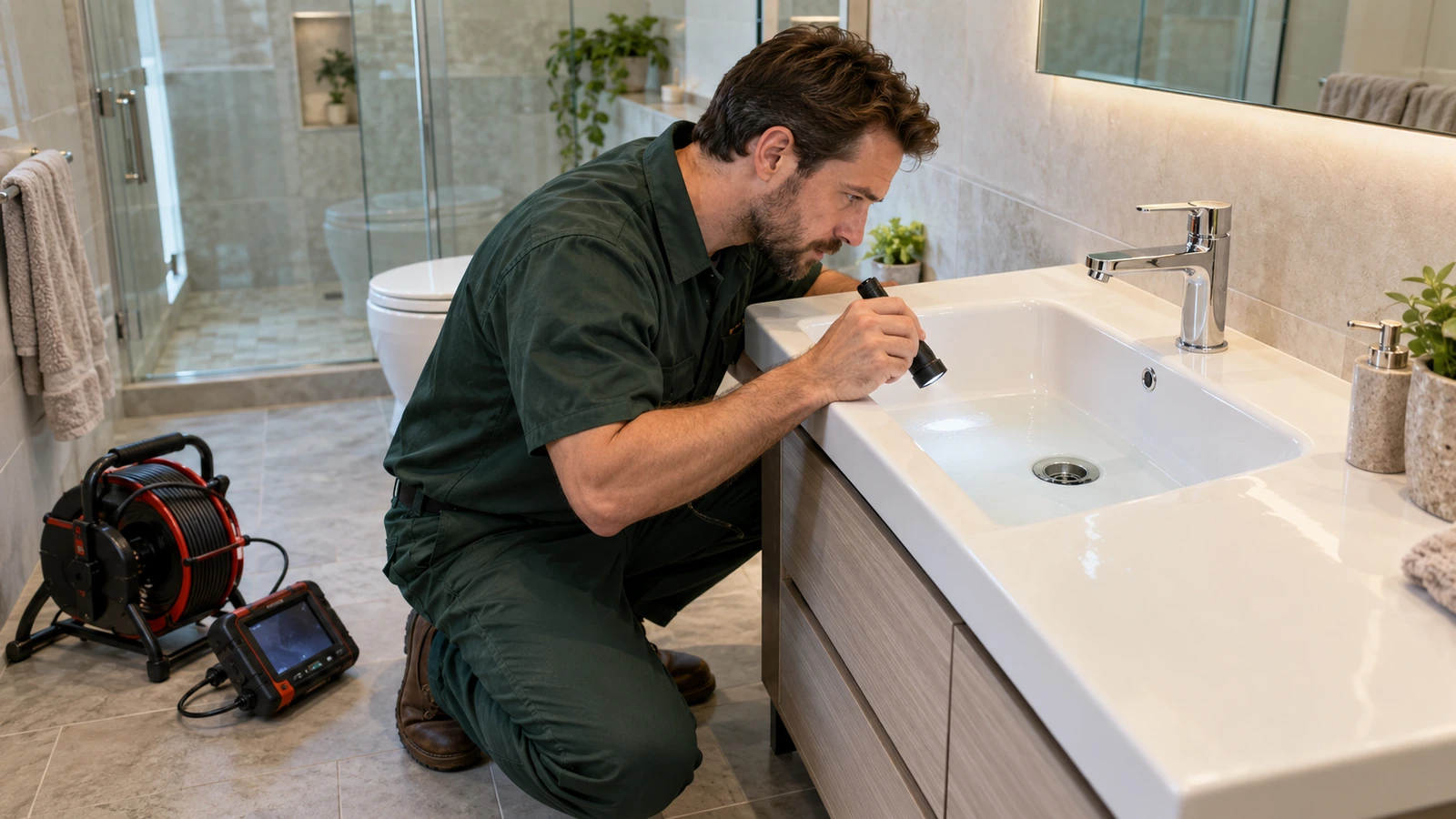
Repeated blockages can also require investigation beyond clearing the immediate obstruction. Ask whether professional drain cleaning is sufficient or whether the findings justify a sewer camera inspection. A camera is a diagnostic option, not a necessary purchase for every slow sink.
Tell the plumber about drain chemicals
If you have already added a cleaner, keep the container or photograph the label. Explain what you used and when.
Do not mix cleaners or improvise a chemical neutralizer. Follow the product’s precautions. For example, Drano’s liquid drain cleaner instructions warn against plunging during or after use because product may remain in an uncleared drain. Disclose that hazard before anyone opens the pipe.
Hidden Leaks and Pipe Damage Need More Than a Patch
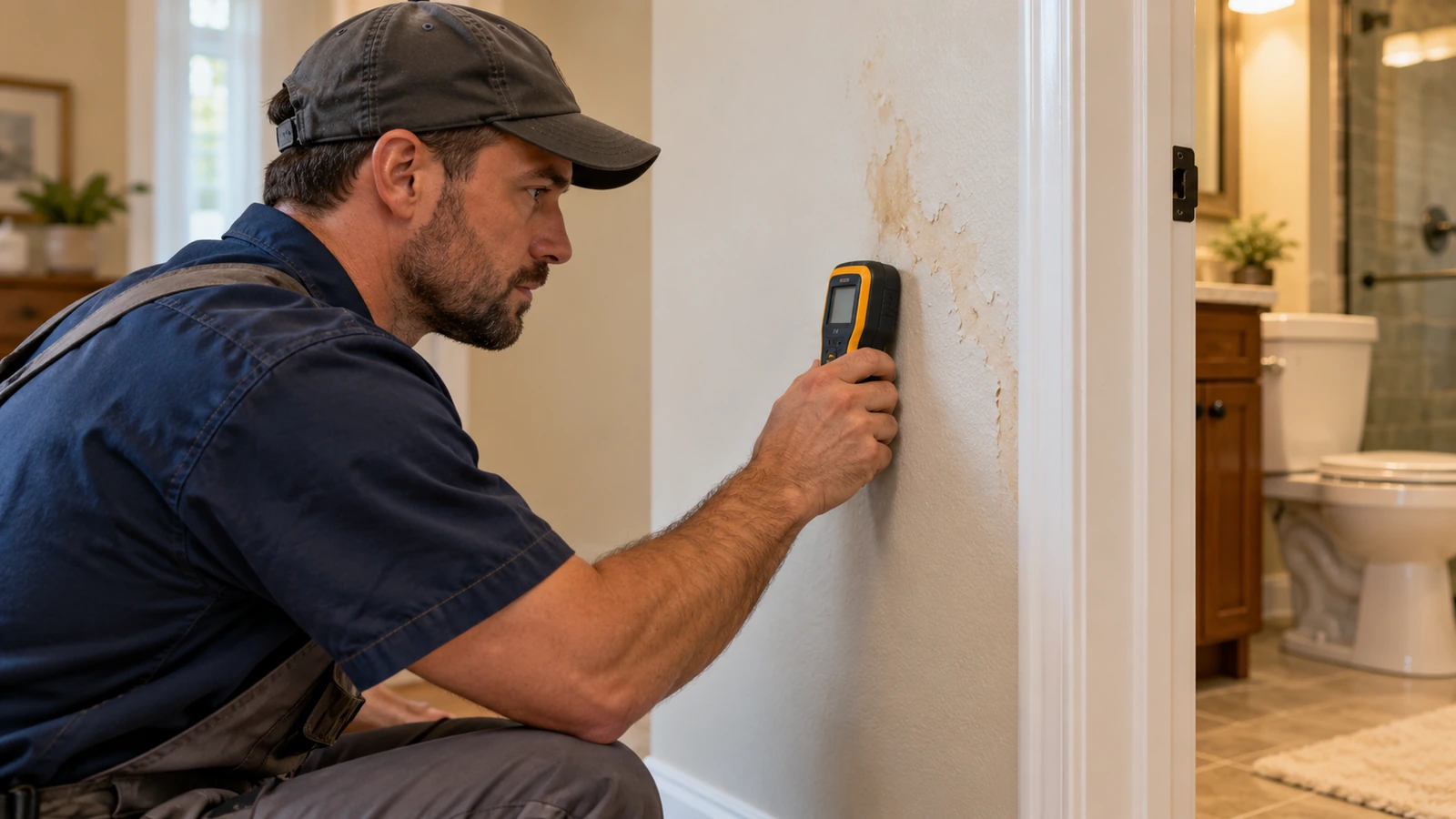
Water can travel before becoming visible. A stain beneath a bathroom may come from a supply connection, drain, fixture seal, or another source. The location of the stain alone does not prove which component has failed.
Arrange an assessment when you notice recurring dampness, unexplained water use, moisture behind a cabinet, or the sound of running water when fixtures are off. Leak detection services can help determine where further investigation is needed before repair work begins.
Temporary tape or a catch bucket does not establish that a pressurized pipe is safe to keep using. If you can safely isolate an active leak, do so and arrange repair. Avoid cutting into walls simply to follow a wet patch, particularly where electrical wiring may be present.
After freezing weather, a loss of flow also deserves prompt attention. Do not use an open flame to thaw piping. A damaged pipe may begin leaking as it thaws, so apparent improvement in flow is not proof that the system is sound.
Ask the plumber to explain the evidence behind the proposed scope. Does one connection need attention, or is the condition of the surrounding pipe relevant? A broader water line assessment should be based on findings, not the age of the home alone.
Water Heater and Gas Work Belong With Qualified Professionals
Water heaters combine plumbing with heat, pressure, and an energy supply. Depending on the equipment, repair can also involve electrical components, combustion, venting, or condensate drainage.
You can record a model number, error display, and when the problem started. Leave internal diagnosis and component replacement to qualified professionals. Do not bypass a safety device, cap a relief discharge pipe, or repeatedly reset equipment that keeps shutting down.
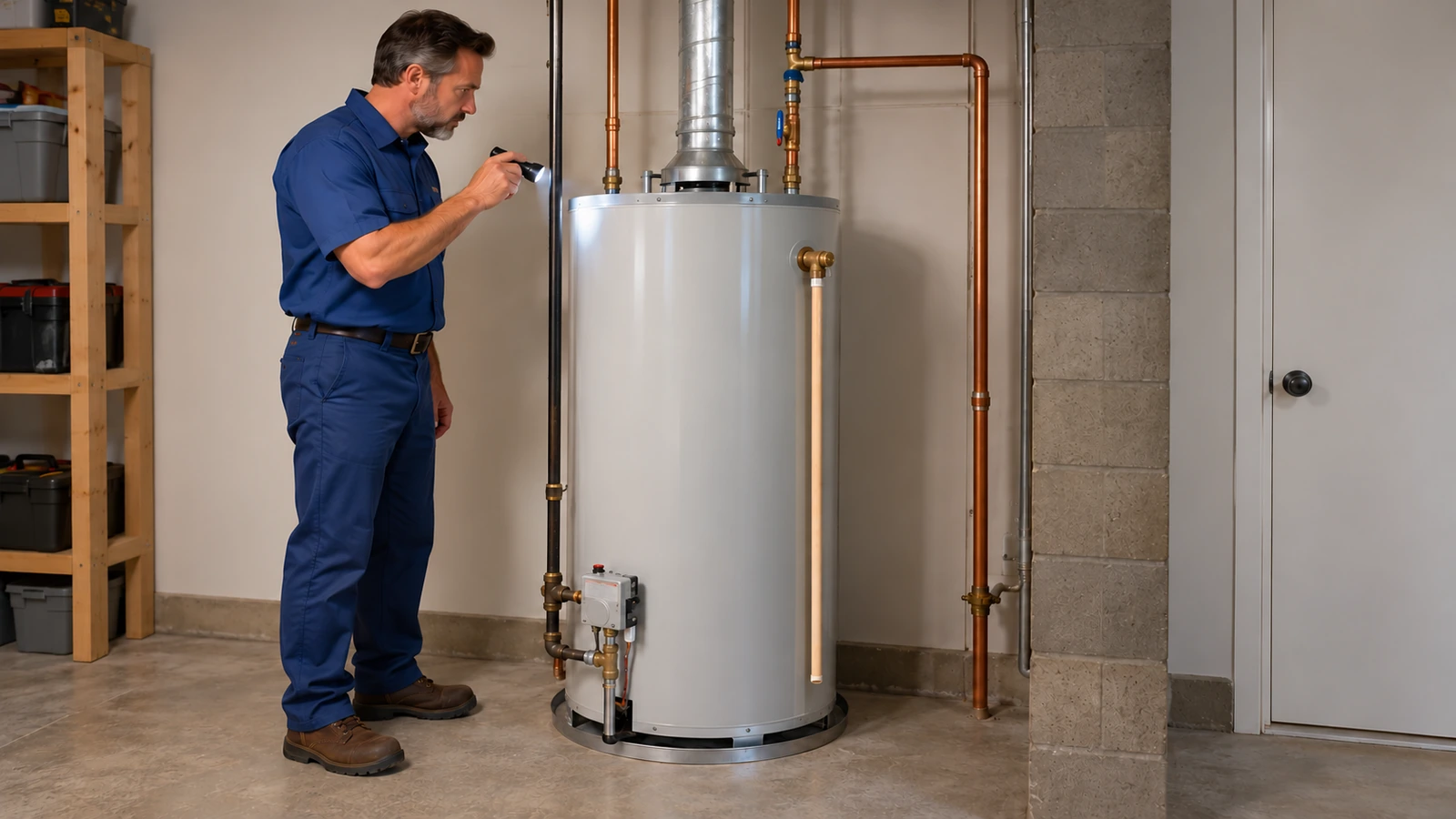
For water heater repair, useful questions include where a leak originates, what testing supports the diagnosis, and whether repair is appropriate for that specific unit. Water near a heater does not establish by itself that the tank has failed.
Gas piping requires separate attention to emergency response and repair qualifications. If you smell gas or suspect a gas leak, leave immediately. Call 911 or the gas utility from outside. Avoid electrical switches, appliances, and phones while inside the affected area. National Grid’s Massachusetts safety guidance explains these precautions.
Once responders or the utility have made the situation safe, arrange any required gas line repair with an appropriately licensed professional. An online estimate request is not the first response to a suspected gas leak.
Know Which Plumbing Problems Cannot Wait
Urgency depends on what the problem is doing now. An isolated drip that can be safely contained differs from water reaching a ceiling, sewage entering a room, or a leak that cannot be shut off.
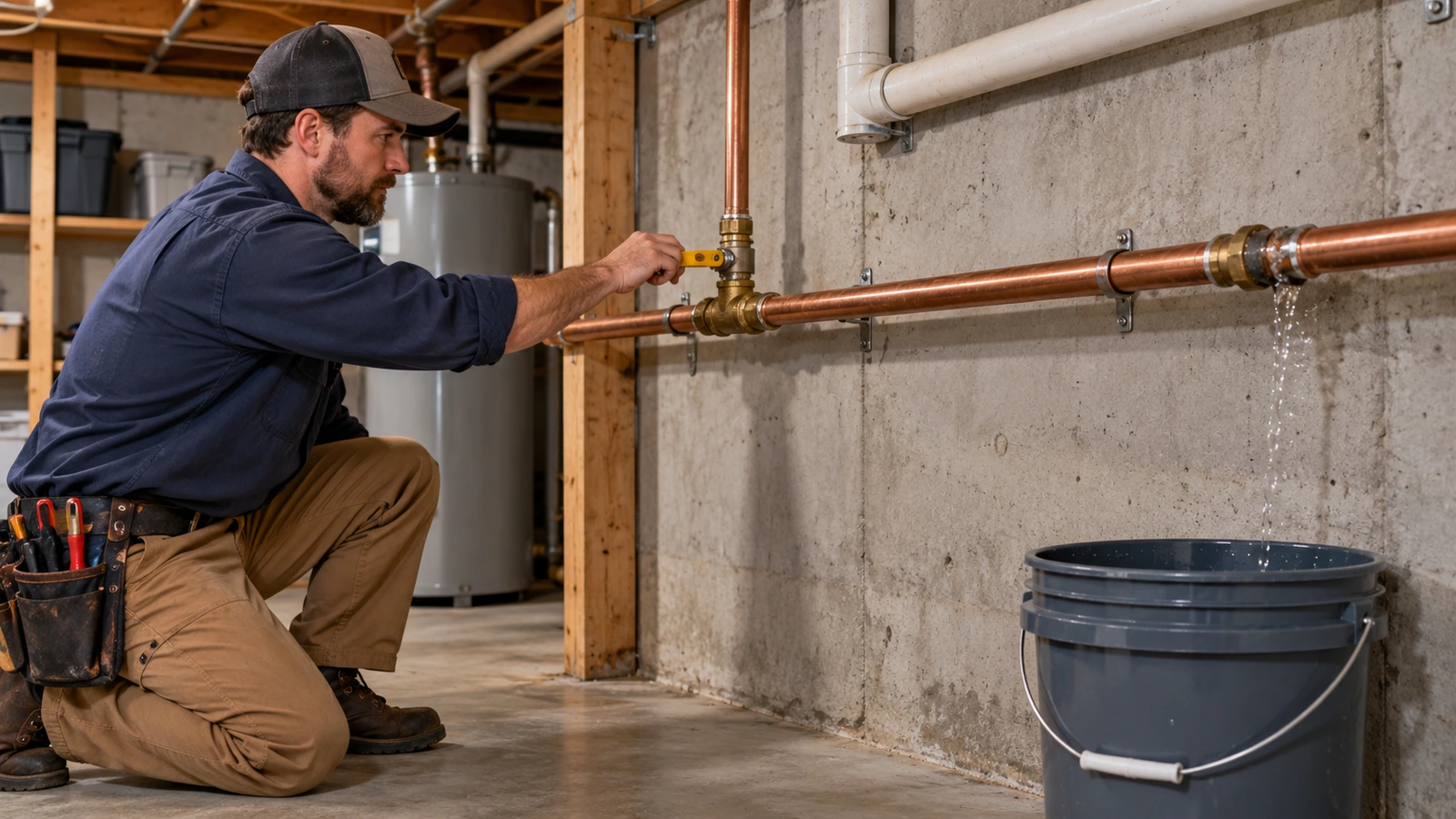
For an active water leak, follow this sequence only where conditions allow:
- Keep people away from water near electrical equipment and from damaged ceilings or unsafe floors.
- Close the affected fixture’s water shutoff, or the known household main, if you can reach and operate it safely.
- Stop using the affected fixture and arrange urgent help.
- Photograph visible damage from a safe location and move nearby belongings only if it is safe.
Do not walk through standing water to reach a breaker panel. Water damage may require electrical or restoration help as well as plumbing repair.
For sewage backing up through drains, stop using sinks, toilets, laundry, and other water-using appliances. Keep children and pets away from contaminated water. Closing your home’s supply does not necessarily stop wastewater arriving from a shared or public sewer.
Contact emergency plumbing services for uncontrolled leaks or active backups. A loss of hot water also warrants service, but the urgency changes if there is an accompanying leak, gas concern, unsafe temperature, or vulnerable person in the home.
Compare the Full Cost, Not Just the Replacement Part
DIY care can save money when it solves an appropriate problem with tools you already own. Professional diagnosis has value when the cause is uncertain, the work is regulated, or failure could damage the home.
A meaningful comparison includes more than a parts receipt:
| Cost factor | What to consider |
|---|---|
| Parts and compatibility | Will the selected component fit the exact fixture or appliance? |
| Tools | Are you buying or renting equipment for a single task? |
| Time without service | Can the household manage if the fixture remains unavailable? |
| Diagnosis | Are you fixing an identified fault or trying several possible solutions? |
| Access and restoration | Who opens and repairs cabinets, walls, tile, or flooring if needed? |
| Permits and inspection | Are required approvals included in the proposed scope? |
| Follow-up responsibility | What happens if the same symptom returns? |
National price ranges cannot reliably quote a particular Greater Boston repair. Access, pipe condition, the actual fault, and appointment timing all affect the scope. Ask whether the company charges a diagnostic fee, uses flat-rate or hourly pricing, and requires authorization before additional work.
Keep insurance and warranty questions separate
A manufacturer’s parts warranty, a contractor’s labor warranty, and your homeowners policy are different agreements. Do not assume every DIY attempt cancels all coverage or that hiring a plumber guarantees payment for resulting damage.
Ask the insurer and manufacturer about your specific circumstances. Obtain the contractor’s written warranty terms, including exclusions and who handles a claim. Keep receipts, photographs, and service records, especially when a problem has already caused damage.
What to Check Before Hiring a Licensed Plumber
Start with the appropriate license, then assess whether the company can explain and document the proposed work. Massachusetts provides plumber and gas fitter licensing resources for checking credentials.
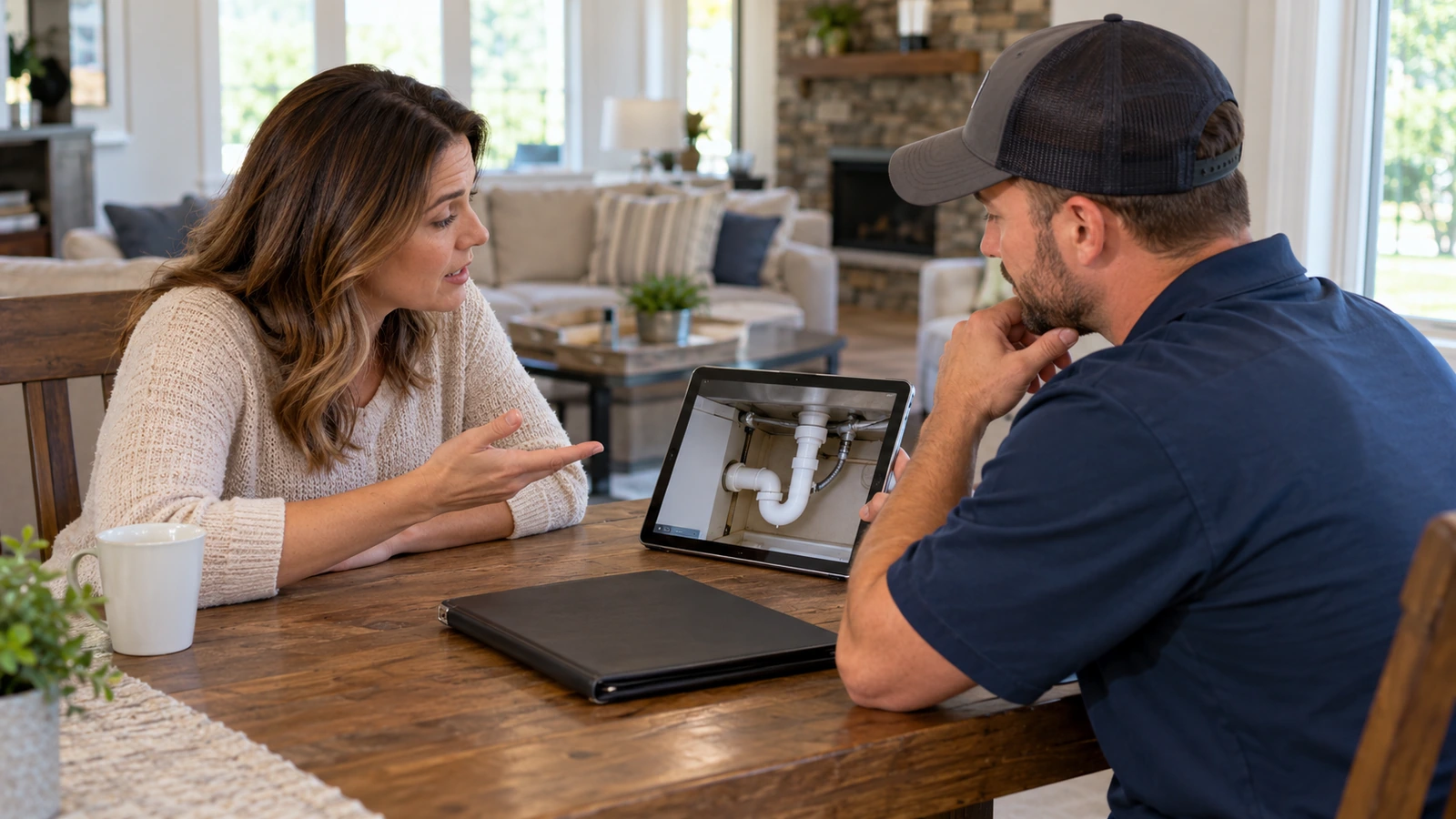
Ask questions that reveal the scope:
- What is the likely cause, and what needs testing before you can confirm it?
- Does this job require a permit or inspection, and who will arrange it?
- What does the estimate include and exclude?
- Will you contact me before expanding the work?
- What testing will be completed before service is restored?
- What written warranty applies, and can you provide evidence of liability insurance?
Prepare a short problem summary before the visit. Include when it began, which fixtures are affected, photographs, equipment model numbers, and any previous repair attempts or chemicals used.
Clear ordinary stored items from the work area, but leave connected equipment and piping in place. For tenants, condos, and shared buildings, involve the responsible owner or manager so access and water interruptions can be coordinated.
If you already started a repair, explain exactly what changed. Save removed parts and packaging. Accurate information helps the next person assess the system; hiding an unsuccessful attempt makes diagnosis harder.
Questions Homeowners Ask Before Starting a Repair
Can I replace a faucet myself in Massachusetts?
Do not assume a national faucet tutorial applies locally. Massachusetts restricts plumbing work to licensed professionals, and replacing a fixture differs from cleaning it or making a limited minor repair. Ask the municipal plumbing inspector about the precise scope before disconnecting the fixture.
Should I call a plumber for one slow drain?
First check for accessible debris on a removable strainer. If a suitable plunger does not resolve an isolated clog, the problem returns, or another fixture reacts, arrange an assessment. Stop immediately if wastewater rises elsewhere or a leak develops.
Does a running toilet need an emergency appointment?
Not automatically. A toilet running into the bowl without overflowing differs from a toilet leaking onto the floor or backing up with sewage. Arrange repair and describe the symptoms. If water is escaping, damage is spreading, or the fixture cannot be isolated safely, seek urgent help.
Is a handyman an alternative to a licensed plumber?
Check the individual’s actual credentials and the work involved. A general repair business name does not establish a plumbing license. For regulated plumbing work, use someone licensed for that work and confirm permit responsibilities.
How do I know when to stop a DIY attempt?
Stop when the work exceeds the confirmed legal scope, you cannot control the water, a fitting requires force, the cause remains uncertain, or new symptoms appear. A repair that requires a second guess at the cause may need diagnosis before another replacement part.
Plan the Next Step With Foukas Plumbing & Heating
Before picking up a wrench, identify whether you are observing a problem, performing basic care, or changing the plumbing system. If the next step involves disassembly, replacement, concealed damage, or an uncertain local requirement, get professional guidance first.
Foukas Plumbing & Heating provides plumbing repairs, installations, water heater services, and gas piping services across Greater Boston and the North Shore. Describe what you are seeing and ask about the appropriate assessment for your home.