



Massachusetts has some of the oldest housing stock in the country. Triple-deckers in Somerville, Capes on the South Shore, Victorians in Salem, colonials in the suburbs. These homes were built to last, and most of them have. Their plumbing, though, was installed with materials and methods that made sense decades ago and are now reaching the end of what they can reasonably do.
If you live in one of these homes, you have probably met at least one of its quirks. A shower that loses pressure when the washing machine runs. A faucet that dribbles brown water first thing in the morning. A basement drain that gurgles after heavy rain. Each of these is your plumbing system telling you something specific. Learning to read those signals is the difference between a planned repair and a 2 a.m. emergency.
This article walks through the problems that show up most often in older Massachusetts homes, why they happen, how to recognize them early, and what your options look like when it is time to act.
Your Home’s Age Is a Clue, Not a Verdict
The year your house was built tells you a lot about what is probably behind the walls, though never the whole story. Renovations and partial replacements over the decades mean many homes now contain a mix of old and new materials. Still, knowing what builders typically installed in each era gives you a useful starting point.
|
Era |
What builders typically installed |
What to watch for now |
|---|---|---|
|
Before 1930 |
Lead or galvanized service lines, brass or galvanized supply pipes, cast iron drains |
Lead risk, heavy corrosion, fragile joints |
|
1930s to 1950s |
Galvanized steel supply lines, cast iron drains, clay tile sewer laterals |
Rust and narrowing supply pipes, root intrusion in sewers |
|
1960s to 1970s |
Copper supply lines becoming common, cast iron or early plastic drains, occasional Orangeburg sewer pipe |
Aging copper joints, deteriorating cast iron, failing fiber pipe |
|
Late 1970s to 1990s |
Copper and PVC/ABS, polybutylene in some homes |
Polybutylene failures, early plastic reaching mid-life |
The sections below explain how to figure out what you actually have.
Galvanized Steel Supply Pipes Are Rusting From the Inside Out
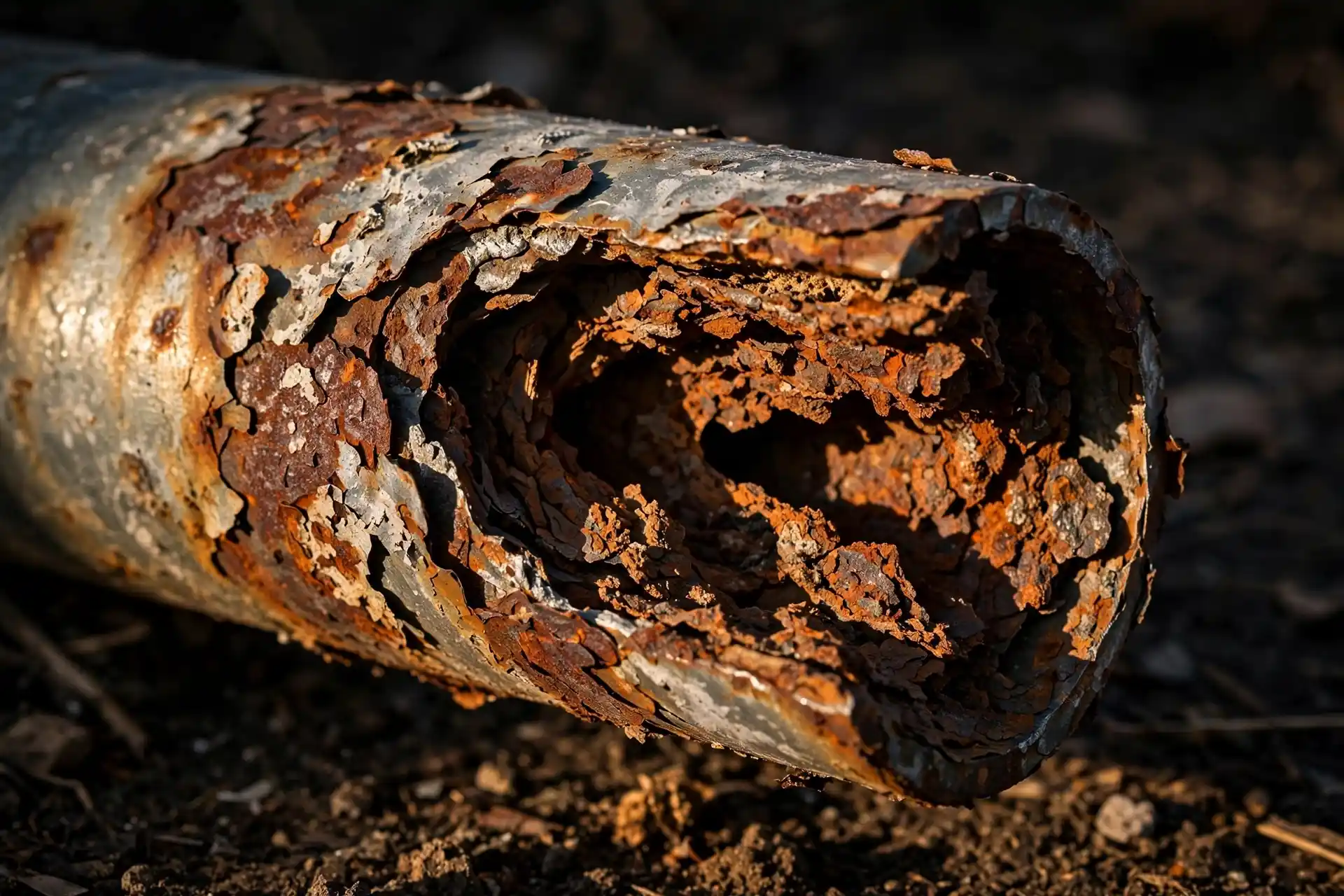
Galvanized steel was the standard water supply pipe in American homes from the early 1900s through the 1960s. Builders dipped steel pipe in molten zinc to hold rust at bay. Then the zinc wore through and the steel began corroding from the inside.
The damage hides well. From the outside, a galvanized pipe looks merely dull and old. Inside, rust scale builds up in rough layers that steadily narrow the opening. Less room means less flow, which is why the classic symptom is pressure that fades over the years rather than failing all at once.
A Two-Minute Check You Can Do in Your Basement
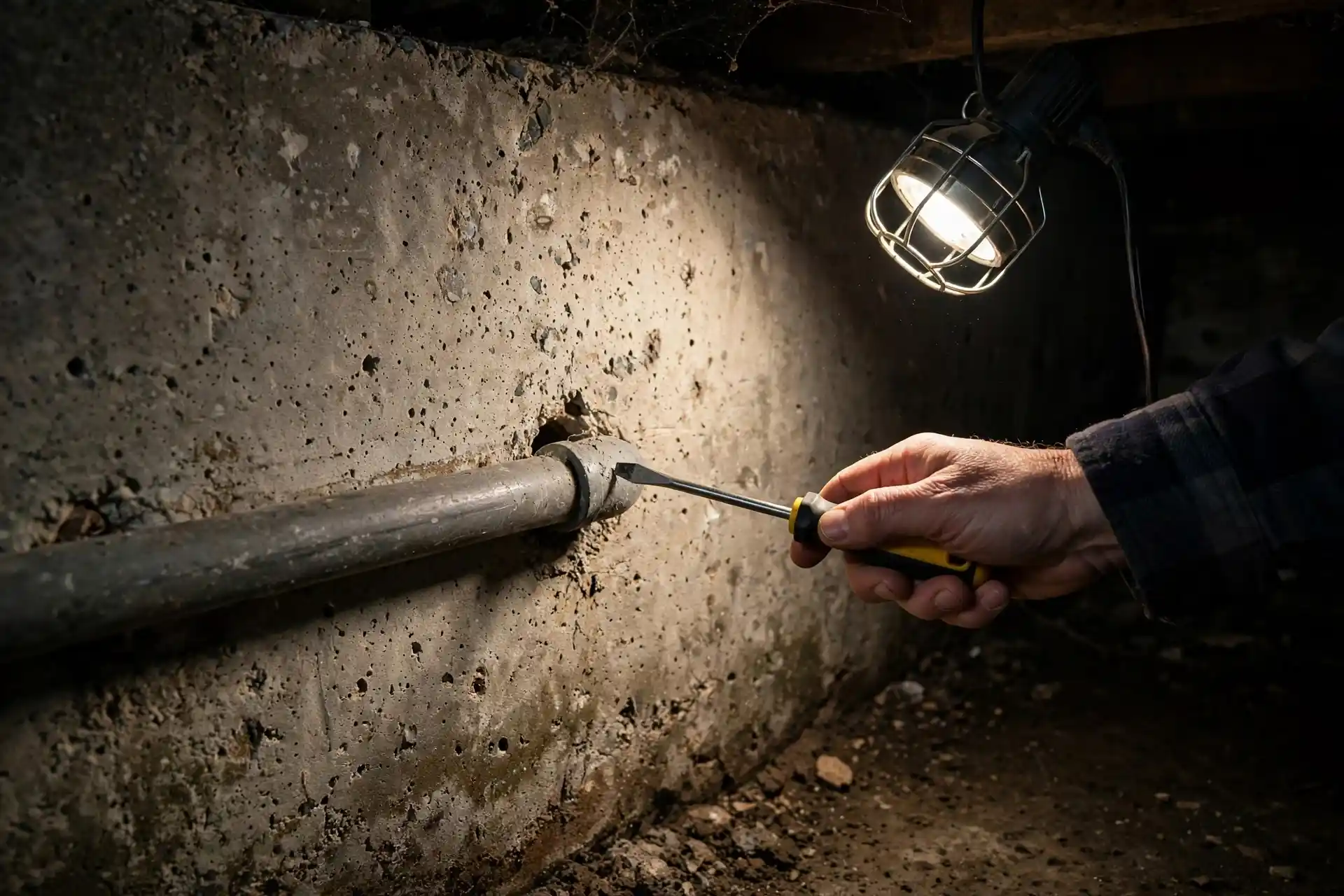
Find where the water line enters your house, usually in the basement near the foundation wall. Take a flathead screwdriver and a refrigerator magnet. Scratch the pipe firmly, then hold the magnet to it.
Copper shows a penny-like shine and will not attract the magnet. Plastic looks ivory or white and ignores the magnet too. Galvanized steel scratches to a silver-gray color and grabs the magnet. Lead, found on very old service lines, scratches to a dull gray, feels soft enough to dent, and will not attract the magnet. Check in more than one spot, since many homes contain a mix of materials from partial replacements.
Why Patching One Leak Rarely Ends the Story
When a galvanized pipe springs its first pinhole leak, the instinct is to cut out the bad section and splice in new pipe. That fixes the spot you can see. Corrosion runs the length of the system, though, so the pipe on either side is in similar condition. Many homeowners pay for a second and third leak repair within a year or two, each one requiring opened walls and drained lines.
There is a health angle worth knowing. The zinc coating applied decades ago sometimes contained lead as an impurity, and galvanized lines in older cities were often connected to lead service lines at the street. Corrosion inside the pipe can trap lead particles and release them into the water over time, even years after the lead service line itself was replaced. Replacing galvanized supply lines is the only way to be certain about what reaches your taps.
For homes where galvanized pipe is failing throughout, A full home repiping with copper or PEX ends the cycle of emergency repairs and restores normal pressure in one project. When leaks hide behind walls or under floors, finding hidden leaks with professional detection equipment beats tearing into drywall on a hunch.
The Lead Question: Service Lines, Solder, and What to Do About Them
Lead in drinking water deserves its own section because the stakes go beyond property damage. The EPA recognizes no safe level of lead exposure, and children and pregnant people face the greatest risk. In Massachusetts, this is not theoretical. Many cities and older towns still have lead water service lines connecting homes to street mains, particularly in houses built before 1950, and lead solder was commonly used on copper joints until the mid-1980s.
The service line runs from the water main in the street to your house. You own the section on your property; the city or water utility typically owns the section from your property line to the main. When either side is lead, drinking water can pick up lead as it passes through, especially after sitting in the pipe overnight.
How to Tell What Your Service Line Is Made Of
Use the scratch-and-magnet test on the pipe where it enters your basement. Lead is soft, dull gray, and non-magnetic, and old lead lines often look slightly bulged at bends. If you are unsure, your water utility may have records of the service line material for your address, and many Massachusetts utilities now publish service line inventories online.
A water test is the other half of the picture. It tells you what actually reaches your tap, which matters because lead levels vary with water chemistry, pipe condition, and how long water sits unused. Until you know, running the tap briefly before drinking or cooking, and never using hot tap water for cooking, are reasonable precautions in a home with a suspected lead line.
Where Massachusetts Homeowners Can Get Help
Several Massachusetts communities run programs to help homeowners replace lead service lines. Boston’s water utility has at various times offered credits and even no-cost replacement of the private side of lead services. Somerville has replaced entire lead service lines, from house to street main, at no cost to participating homeowners. Medford has offered rebates to homeowners who hire licensed contractors for the work.
Programs change from year to year, so call your local water department or check its website for what is currently available. When you are ready to act, replacing a lead water service line is work for a licensed plumber, since it involves excavation, permits, and coordination with the utility.
Cast Iron Drains That Are Past Their Prime
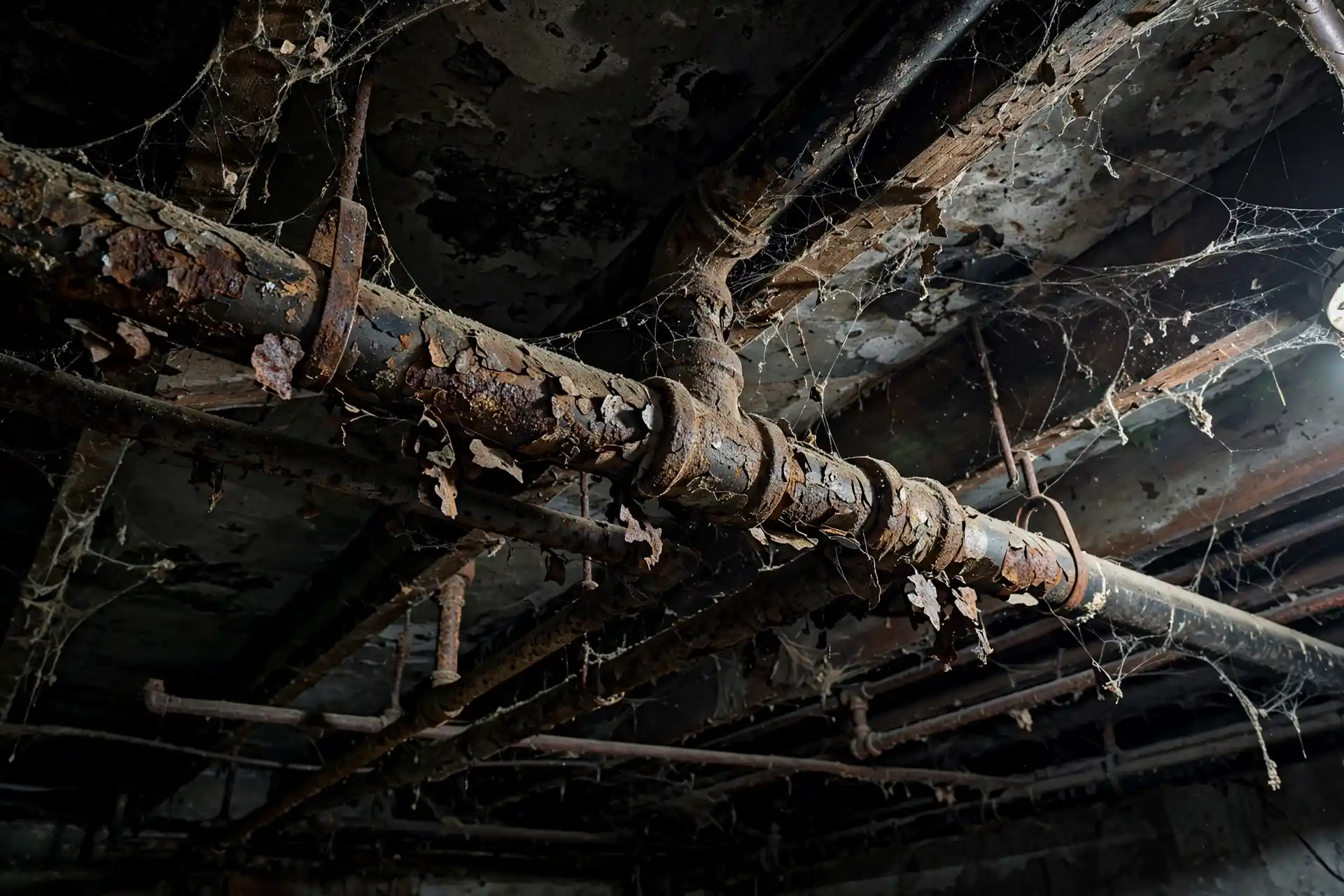
Cast iron drain pipes carry wastewater out, and they fail in their own distinct way. Cast iron was the standard drain material for the first half of the 20th century. Decades of wastewater corrode the interior walls, scale builds up, the walls thin, and eventually the pipe develops cracks, holes, or rough channels that snag everything passing through.
What Failing Cast Iron Sounds and Smells Like
Your drains usually warn you before they fail outright. Slow drainage that keeps returning after clearing points to scale narrowing the pipe rather than a simple clog. Gurgling from tubs or toilets when another fixture drains suggests air trapped by a partial blockage or a sagging section. A persistent sewer odor near floor drains can mean wastewater is escaping through cracks.
Imagine a homeowner who snakes the same bathroom drain every few months. Each time, the drain slows again a little sooner. That pattern is the signature of a pipe whose interior is deteriorating, not a drain with a one-time obstruction.
Why a Camera Tells the Truth Faster Than a Guess
Two homes can have identical drain symptoms, one caused by a soft clog and the other by a collapsed section of pipe, and the correct fix is completely different. A sewer camera inspection removes the guesswork by showing exactly what is happening inside: scale, cracks, bellies where water pools, or sections separated at the joints. For buyers especially, this is one of the highest-value inspections available, since a standard home inspection rarely includes a sewer scope.
Tree Roots Love Old Clay Sewer Lines
The sewer lateral connecting your home to the municipal sewer lives a hard life underground. In homes built before the 1970s, these laterals were often vitrified clay tile laid in short sections. Each joint between sections is a potential entry point, and in Massachusetts neighborhoods with mature maples, oaks, and elms, roots are everywhere underground. A clay joint with even a hairline gap is an invitation they will find.
Once inside, roots grow into a dense mat that catches paper and waste. The first backup often arrives during heavy water use, a load of laundry running while someone showers, when the partially blocked line cannot keep up.

How Roots Find Their Way In
Clay pipe itself resists chemical decay well, which is why some clay laterals last for decades. The joints are the weak link. Freeze-thaw cycles shift sections slightly and open gaps, and old joint material crumbles with age. Roots do not need much. A gap the width of a credit card is plenty for root hairs to enter, and once established, the root mass widens the opening further.
The Warning Signs Before a Backup
Sewer trouble usually announces itself in stages. Multiple fixtures draining slowly at once, especially on the lowest floor, points to a main line problem rather than an individual drain. Toilets that gurgle when the washing machine drains are another classic sign. Sewage odors from basement floor drains, or water backing up into a tub when a toilet flushes, mean the line is close to fully blocked and needs attention soon.
Clearing roots mechanically restores flow, but roots grow back, sometimes within a year or two. Professional drain cleaning can buy time, but a line with repeated root intrusion usually needs repair or replacement of the damaged section through drain and sewer services.
Two Pipe Materials Most Homeowners Have Never Heard Of
Beyond the familiar culprits, two lesser-known materials turn up in Massachusetts homes of certain eras, and both have poor track records.
Orangeburg: The Fiber Pipe That Goes Oval
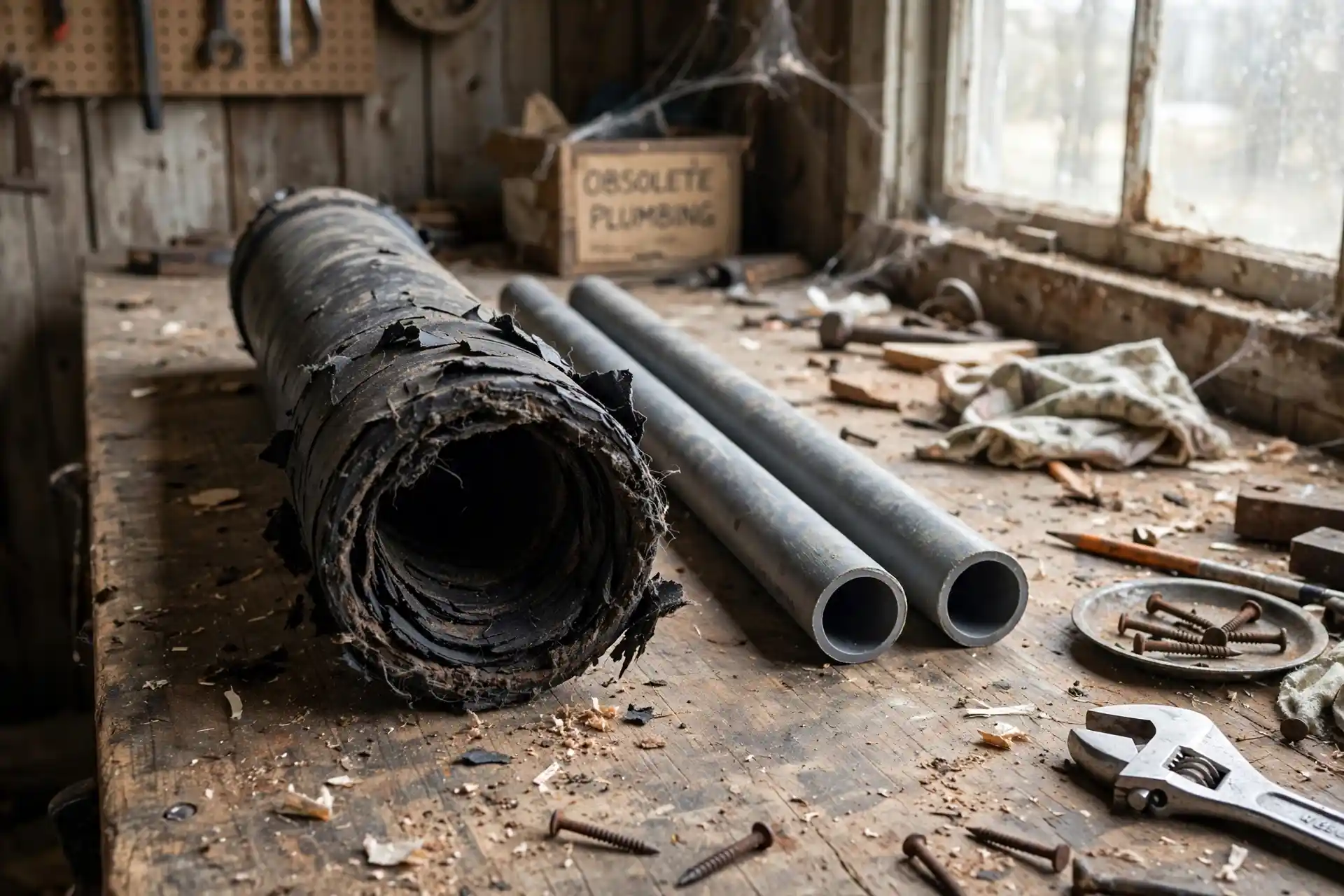
Orangeburg pipe, also called bituminized fiber pipe, was used for sewer lines from the 1940s through the 1970s. Manufacturers layered wood fiber with tar to create a lightweight, inexpensive alternative to clay and cast iron during the post-war building boom.
The problem is structural. Orangeburg softens and deforms under soil pressure and moisture. Instead of staying round, it flattens into an oval, restricting flow, and it can delaminate and collapse entirely. If a sewer camera reveals black, tar-like pipe walls, you are looking at Orangeburg, and replacement is usually a matter of when, not if.
Polybutylene: The Gray Plastic With a Troubled Record
Polybutylene is a gray plastic supply pipe installed in many homes from the late 1970s through the mid-1990s. Chlorine and other oxidants in municipal water cause it to become brittle from the inside, and failures tend to happen suddenly at joints and fittings rather than gradually. Look for dull gray plastic pipe, often stamped with a code like PB2110, in basements and crawl spaces. Unlike galvanized pipe, polybutylene gives little warning before it fails, which is why plumbers generally recommend replacing it proactively.
When Water Pressure Fades, the Pipes Are Usually Talking
Low water pressure is one of the most common complaints in older homes, and one of the most misdiagnosed. The first step is figuring out whether you have a pressure problem or a flow problem.
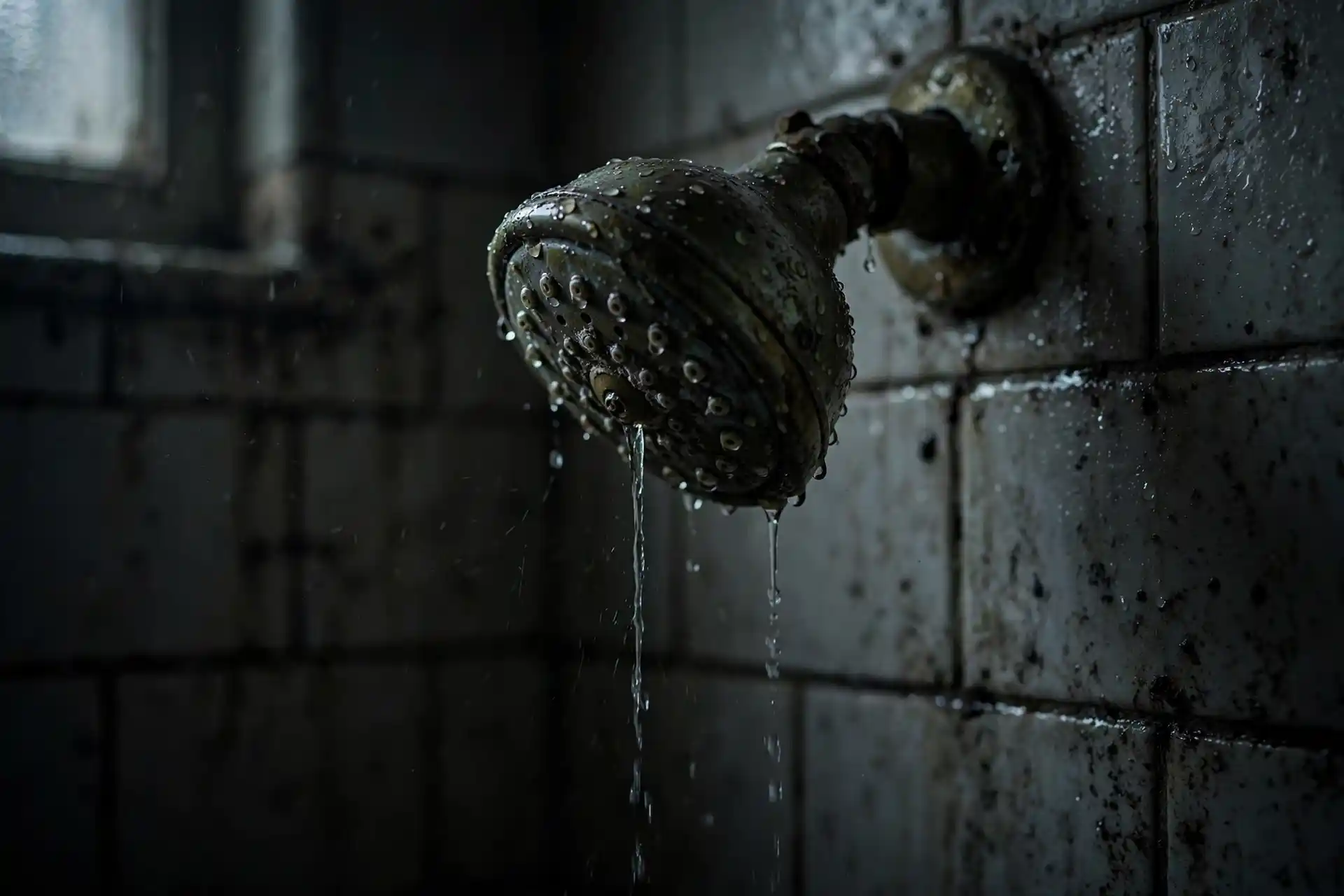
Pressure Problems vs. Flow Problems
True pressure problems affect the whole house equally. If every fixture is weak, the cause is usually near the start of the system: a partially closed main shutoff valve, a failing pressure-reducing valve, or an issue with the municipal supply. Flow problems are more selective. If the upstairs shower is a trickle but the kitchen sink runs fine, something is restricting flow along that particular path, and in an older home that something is often corroded pipe.
A quick test helps. Check whether the problem is hot water only, cold water only, or both. Hot-only weakness often traces to the water heater or the hot supply lines. Weakness at a single fixture points to that fixture’s supply lines or shutoff valves. Whole-house weakness points upstream.
Where the Real Bottleneck Hides
In older Massachusetts homes, the usual suspects line up in a predictable order. Start at the main shutoff and make sure it is fully open; gate-style valves in old homes sometimes get left half-closed after a repair. Next, consider the pressure-reducing valve if your home has one, since these wear out over years of service. Then look at the pipes themselves. Mineral scale and rust inside galvanized lines narrow the flow path gradually, so pressure that was fine five years ago slowly becomes inadequate.
One more possibility deserves mention. A hidden leak can masquerade as low pressure, especially if your water bill has crept upward without explanation. If pressure dropped suddenly rather than gradually, a leak moves to the top of the list.
Fixtures and Valves That Have Earned Their Retirement
Not every plumbing problem in an older home hides inside the walls. Some of the most annoying ones sit right in front of you, wearing out one washer and flapper at a time.
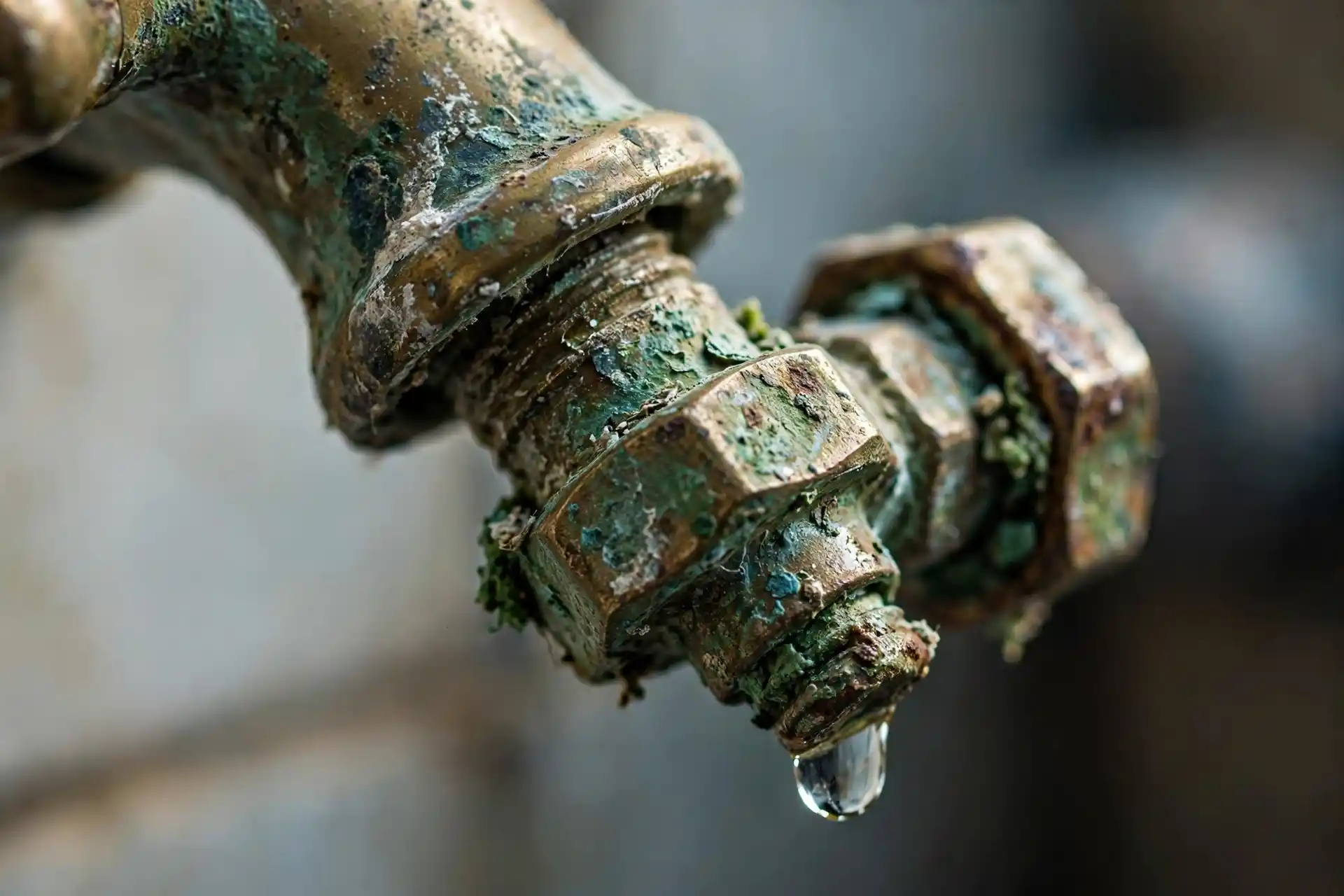
The Shutoff Valve That Won’t Shut Off
Every fixture should have a working shutoff valve, and in older homes, many don’t, at least not working ones. The gate valves common in mid-century plumbing seize with age. The handle turns, or worse, snaps off, while the valve itself stays open. You discover this at the worst possible moment, usually when a supply line starts spraying and you need to stop water to one fixture without killing it to the whole house.
Replacing old gate valves with modern quarter-turn ball valves is a small job with an outsized payoff. The next time something leaks, you will be glad you can isolate it in seconds.
Running Toilets and the Drip That Never Stops
A toilet that runs between flushes is usually a worn flapper or a misadjusted fill valve, both inexpensive parts. Left alone, it wastes a remarkable amount of water and can mask a slow leak at the base. Dripping faucets come down to worn washers, O-rings, or cartridges depending on the design. These are among the few plumbing repairs many homeowners handle themselves, though older fixtures can fight back with corroded screws and seized parts.
There comes a point where repairing a fixture costs more in frustration than replacing it. New fixture installation brings modern water efficiency and reliable shutoffs, and it is often the smarter move for faucets and toilets repaired more than once. For everything short of replacement, from valve swaps to leak repairs, targeted plumbing repairs keep an aging system functional without a full overhaul.
The Water Heater Everyone Forgot About
Water heaters are the appliances homeowners think about least until the morning the shower runs cold. In older homes, the unit is often older than the current owner realizes, sometimes inherited from a previous owner with no maintenance records.
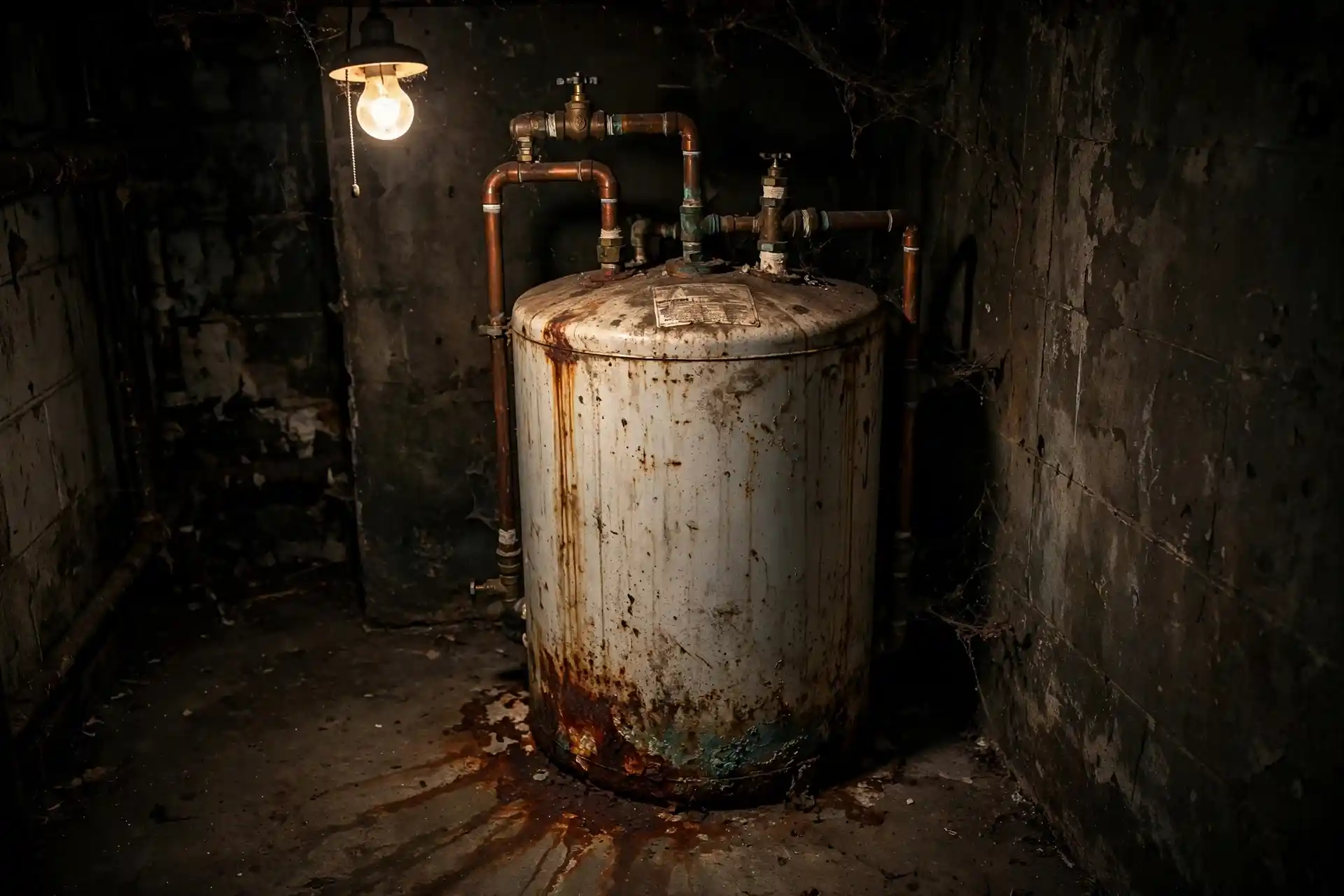
Sediment, Rust, and Lukewarm Mornings
A conventional tank water heater spends its life heating hard Massachusetts water, and minerals settle to the bottom as sediment. That layer thickens over the years, forcing the burner or elements to work harder and making the tank rumble during heating cycles. The anode rod, a metal rod inside the tank that attracts corrosion, eventually dissolves completely. After that, corrosion goes after the tank itself.
Watch for the warning signs. Rust-colored hot water, when the cold runs clear, points to a corroding tank. Moisture or rust streaks around the base suggest a slow leak that will not stay slow. Most tank models give roughly a decade of service, though water quality and maintenance move that number in both directions.
How Plumbers Weigh Repair Against Replacement
The decision usually comes down to age and the nature of the failure. A failed thermocouple or heating element on a younger unit is a straightforward repair. A leaking tank cannot be patched reliably, and neither can a tank with heavy internal corrosion. When the unit is already past its expected life, putting money into repairs rarely pays, since the next component failure is usually close behind.
If your heater needs frequent attention, a water heater repair visit can diagnose if you are dealing with a single bad part or a system in decline. When replacement is the honest answer, water heater replacement is also the moment to consider sizing and efficiency.
Winter Finds Every Weakness in an Old House
Massachusetts winters are the ultimate stress test for old plumbing. Pipes that survive fine from April through November can freeze solid during a January cold snap, and the damage from a burst pipe often costs far more than the pipe repair itself.
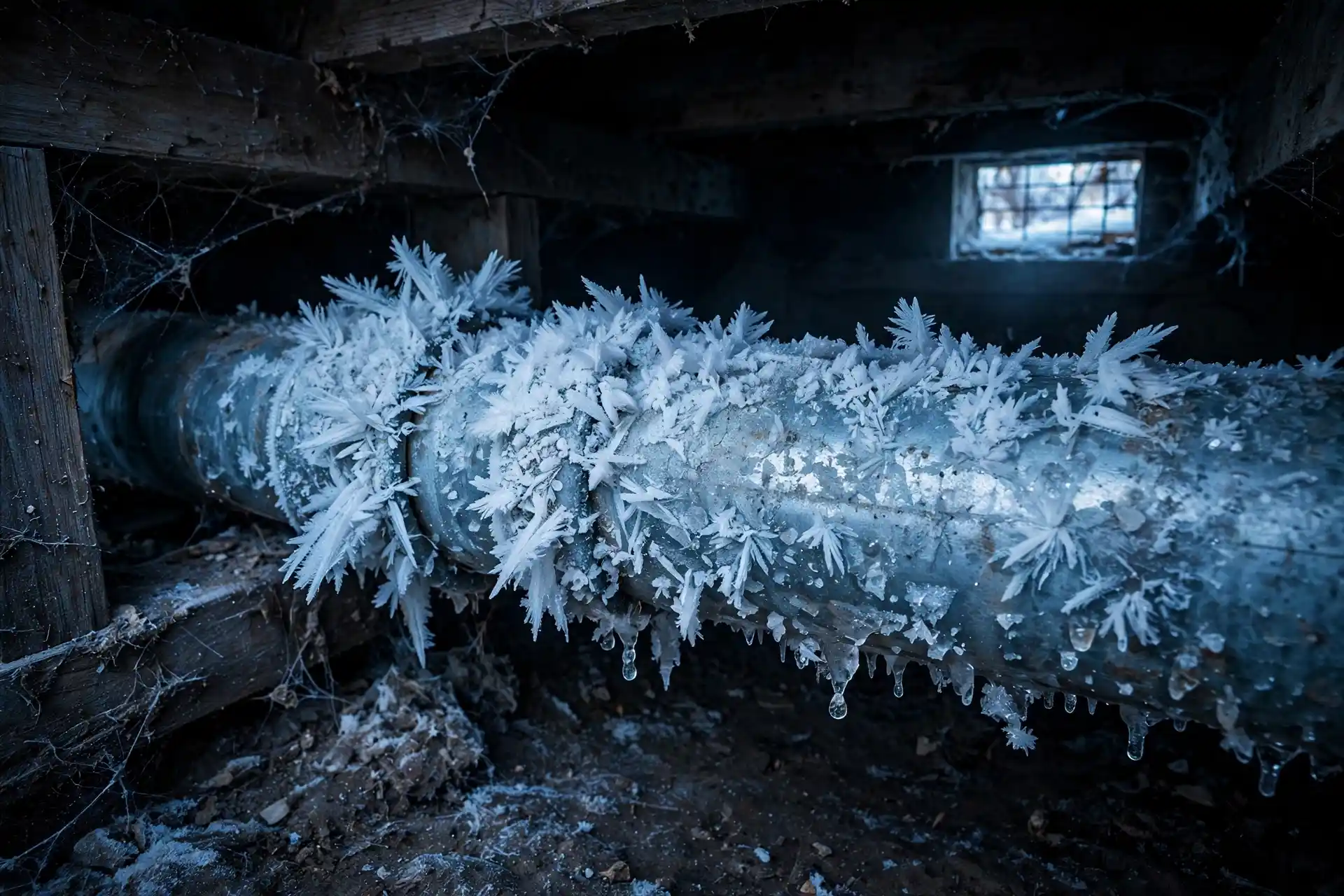
Why Older Massachusetts Homes Freeze First
Newer homes route plumbing through conditioned space with insulation that meets modern codes. Older homes were not built that way. Supply lines run through unheated crawl spaces, along exterior walls with minimal insulation, and through drafty basements and attics. Cape-style homes with knee-wall attics, old farmhouses with stone foundations, and triple-deckers with exposed rear plumbing are all familiar freeze candidates. Age compounds the risk, since a galvanized line thinned by corrosion bursts under ice pressure more readily than sound pipe.
If a Pipe Freezes Tonight, Do This
Prevention starts before the cold arrives. Insulate exposed pipes in unheated areas, seal drafts where cold air reaches plumbing, and keep the thermostat no lower than the mid-50s even when you are away. During severe cold, letting faucets drip slightly keeps water moving, and opening cabinet doors under sinks lets warm air reach pipes in exterior walls. Most importantly, know where your main water shutoff is before you need it in a hurry.
If you suspect a freeze, open the faucet on the affected line to relieve pressure as the ice thaws. Warm the pipe gradually with a hair dryer, working from the faucet end back toward the blockage. Never use an open flame. If you cannot find the frozen section, or if a pipe has already burst, shut off the main water supply and call for emergency plumbing help right away. Fast action is what separates a thawed pipe from a flooded home.
Knowing When the Job Is Bigger Than a Wrench
Plenty of minor tasks suit a handy homeowner: replacing a faucet washer, swapping a toilet flapper, clearing a simple sink clog. The line into professional territory is crossed when the work involves the main water supply, gas lines, sewer lines, anything behind walls, or any problem you have already attempted to fix twice.
Before calling, gather what you know. The age of your home, when the problem started, which fixtures are affected, and photos of anything visible all help a plumber diagnose faster. Ask straightforward questions: Is this a repair or a replacement situation? What will you need to open up? Are permits required? What does the warranty cover? A good plumber answers plainly and puts the important parts in writing.
Foukas Plumbing & Heating is based in Winthrop and serves communities across the Greater Boston area. If you are dealing with any of the problems described here, you can get in touch to schedule a look, browse the areas served, or start with plumbing services in Winthrop to see what is available near you.
A Buyer’s-Eye Checklist for Older Massachusetts Homes
If you are shopping for an older home, or you just bought one, a little detective work now prevents expensive surprises later.
Scope the sewer line. A camera inspection of the sewer lateral is the single most valuable plumbing check a buyer can order. Standard home inspections do not include it, and a failed line is one of the priciest hidden defects in older homes.
Test the water. If the home was built before 1986, test for lead, especially when the service line material is unknown.
Find the main shutoff. Locate it during the walkthrough, not during your first leak. Make sure it actually turns.
Ask about pipe history. Has the house been repiped, and if so, when and with what material? Partial repipes are common; knowing which sections are original tells you what remains.
Check the water heater’s age. The manufacture date is usually on a label on the tank. A unit near or past its expected life belongs in your near-term budget.
Look for polybutylene. Gray plastic supply pipe, especially in homes from the late 70s through the 90s, is a replacement candidate regardless of how it looks today.
Budget honestly. Older homes reward owners who plan for plumbing work the way they plan for roof work: as a when, not an if. A home plumbing maintenance guide can help you set up a routine that catches problems while they are still small.
Old houses earn their character, and their plumbing problems are usually solvable with the right information and the right help at the right time. The goal is never to fear the pipes behind your walls. It is to understand them well enough that they stop surprising you.