


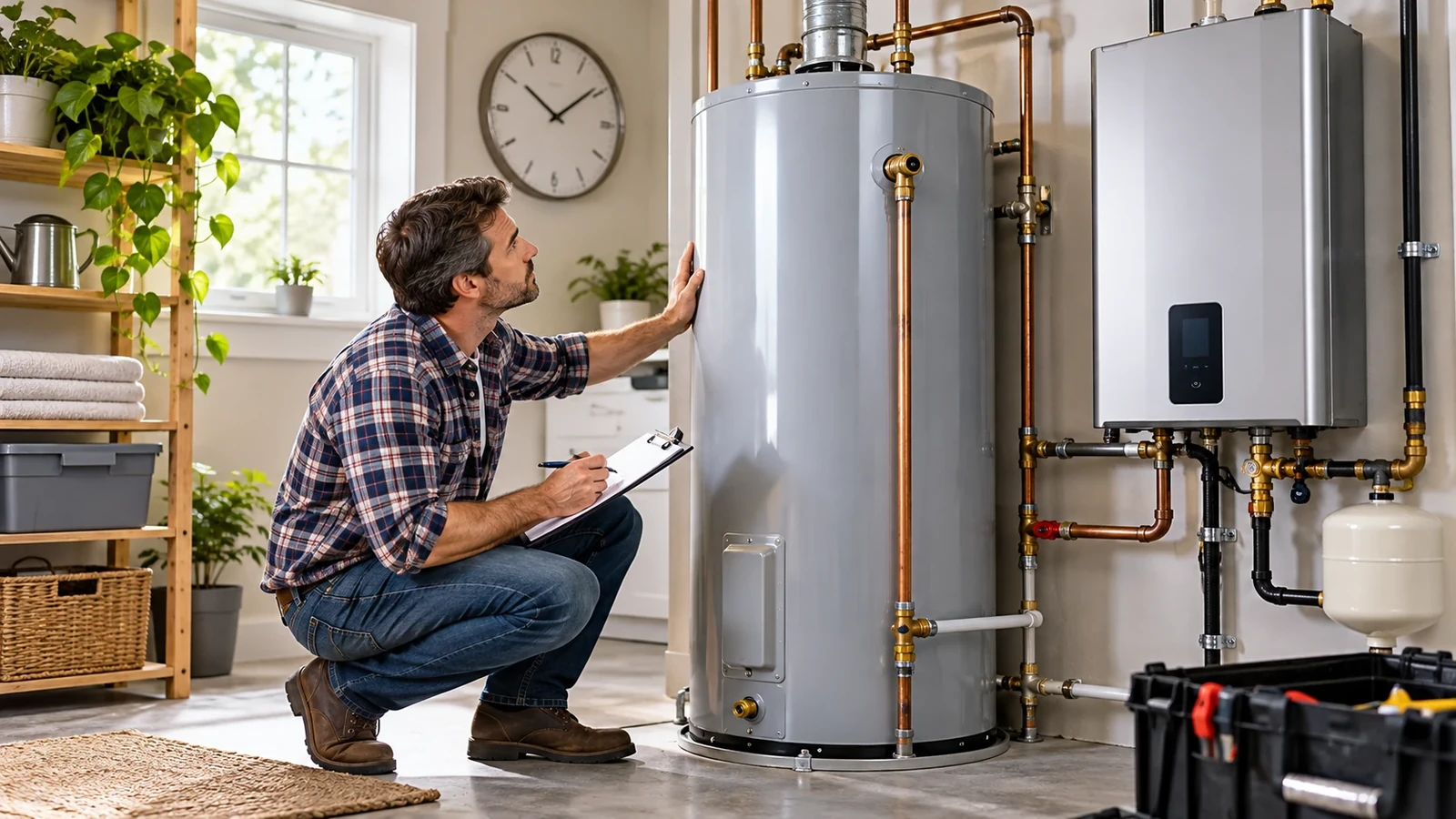
Most traditional water heaters last around 10 to 15 years, while tankless water heaters can last 20 years or longer with proper care. However, the actual lifespan of a water heater depends on its type, water quality, installation, usage, and maintenance history.
A water heater doesn’t necessarily stop working once it reaches a certain age. Some continue providing reliable hot water well beyond their expected lifespan. Others develop leaks, corrosion, or heating problems much earlier.
For homeowners, the more useful question isn’t simply how old the water heater is. It’s whether the equipment can still provide dependable hot water without creating unnecessary repair costs or risking water damage.
Understanding the typical lifespan, recognizing early signs of trouble, and knowing when repairs make financial sense can help you avoid an unexpected breakdown.
How Long Does a Water Heater Usually Last?
The average water heater lifespan varies depending on how the equipment heats and stores water. Traditional storage tank systems generally have shorter service lives than tankless models, although both require maintenance.
Here is a practical comparison of common residential water heaters.
| Water Heater Type | Typical Lifespan | Main Considerations |
|---|---|---|
| Gas tank water heater | 10 to 15 years | Tank corrosion, sediment buildup, and burner condition |
| Electric tank water heater | 10 to 15 years | Tank corrosion, heating elements, and water quality |
| Tankless water heater | Around 20 years, sometimes longer | Mineral scale, heat exchanger condition, and maintenance |
| Heat pump water heater | Approximately 10 to 15 years | Storage tank condition, compressor, airflow, and maintenance |
These are general planning ranges rather than guaranteed replacement dates. Some units fail sooner, while others remain functional for longer.
How Long Does a Gas Water Heater Last?
A conventional gas water heater commonly lasts around 10 to 15 years.
Gas models use a burner to heat water stored inside an insulated tank. Over time, sediment can collect along the bottom, while internal corrosion may weaken the tank itself.
The burner, ignition system, gas controls, and venting components can also develop problems. Fortunately, a failed component doesn’t automatically mean the entire water heater needs replacement.
The condition of the storage tank is often the deciding factor.
How Long Does an Electric Water Heater Last?
An electric water heater generally has a similar lifespan of approximately 10 to 15 years.
Rather than using a gas burner, these systems rely on electric heating elements. Elements and thermostats can fail before the tank wears out, and those components may be replaceable.
However, electric tanks remain vulnerable to corrosion and mineral buildup.
An electric water heater with a sound tank and a failed heating element may still be worth repairing. A tank that has developed a corrosion-related leak is a different situation.
How Long Does a Tankless Water Heater Last?
A properly maintained tankless water heater can last around 20 years, with some systems operating longer.
Tankless water heaters heat water on demand rather than maintaining a large supply of heated water inside a storage tank. Eliminating the conventional storage tank removes one common source of corrosion-related failure.
However, tankless equipment isn’t maintenance-free.
Mineral scale can accumulate inside the heat exchanger, affecting heating performance and restricting water flow. Ignition components, sensors, and controls can also wear out.
A tankless system’s longer potential lifespan is one reason homeowners consider switching from traditional storage equipment.
How Long Does a Heat Pump Water Heater Last?
Heat pump water heaters typically have a service life comparable to conventional electric storage water heaters, approximately 10 to 15 years.
These systems use heat from surrounding air to warm the water, making them an energy-efficient alternative to electric resistance heating.
Because most residential heat pump water heaters include a storage tank, they remain subject to tank corrosion. Fans, compressors, sensors, and other components also require attention.
Proper airflow, suitable installation conditions, and routine maintenance are important for dependable operation.
Why Do Some Water Heaters Last Longer Than Others?
Two water heaters installed in different homes can have noticeably different service lives, even when they’re the same model.
The difference often comes down to operating conditions rather than age alone.
Water Quality and Mineral Buildup
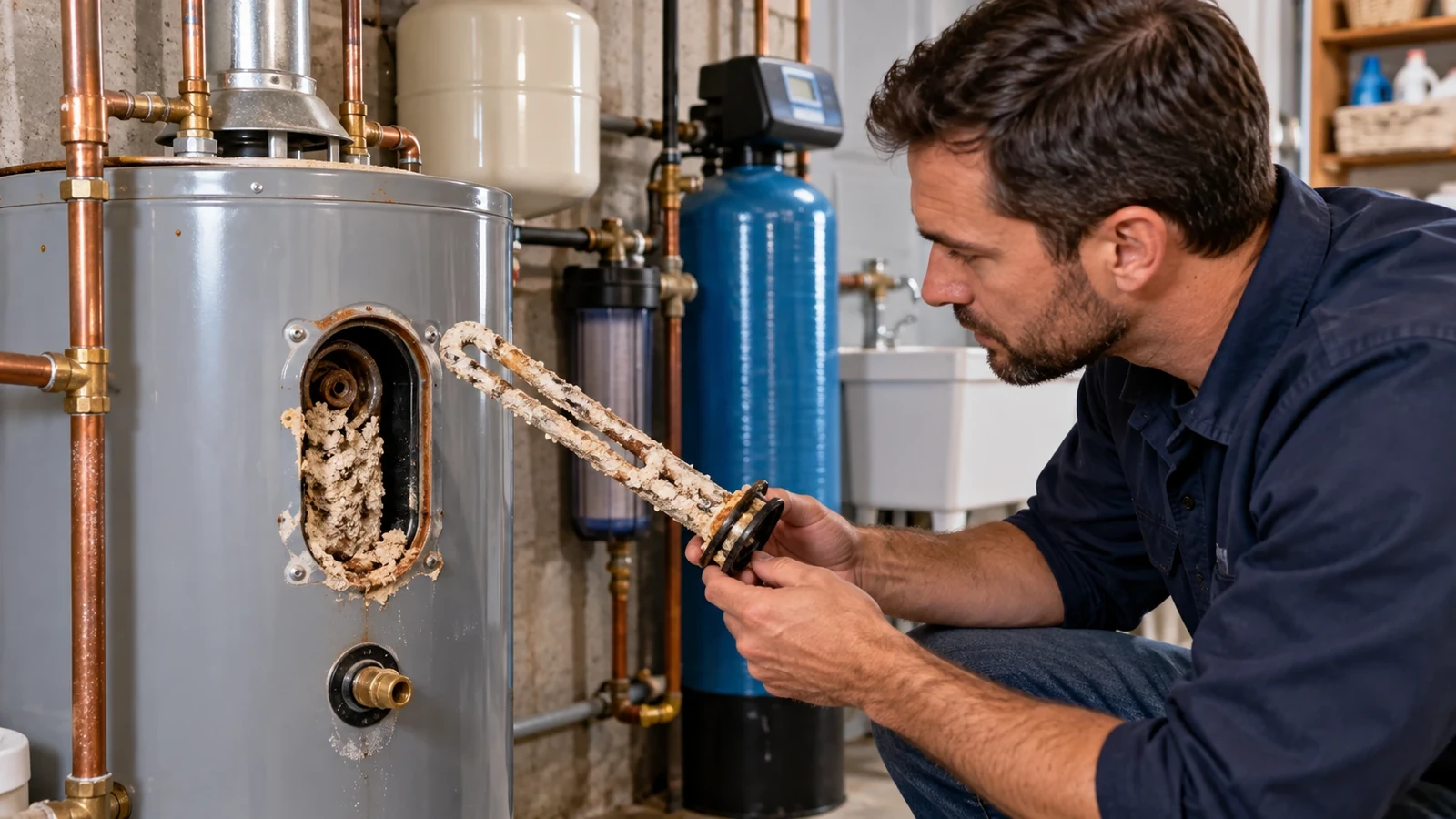
Water contains naturally occurring minerals. Depending on the water supply, those minerals can form deposits inside the tank or heat exchanger.
In storage water heaters, sediment settles near the bottom. Heavy buildup can reduce effective hot water capacity and interfere with heating performance.
Tankless systems face a similar problem when mineral scale accumulates along internal heating surfaces.
Water chemistry also affects corrosion. Hard water can increase scaling, while some softened-water conditions can cause protective anode rods to deteriorate faster.
Maintaining the equipment according to its specific water conditions is more useful than assuming every home needs the same maintenance schedule.
Household Hot Water Demand
A water heater serving a small household may operate under different conditions than one supporting several bathrooms, frequent laundry, and back-to-back showers.
Greater hot water demand increases heating cycles and places additional demands on components.
Sizing matters as well.
An undersized system may struggle to meet household needs, even when the equipment is working correctly. In some situations, what appears to be an aging water heater is actually a capacity problem.
Installation and Operating Conditions
A water heater’s location, connections, water pressure, and installation quality can affect long-term performance.
For example, excessive water pressure or uncontrolled thermal expansion can place additional stress on plumbing connections and safety components.
Proper venting is essential for gas models, while heat pump water heaters need suitable airflow and clearance.
Homeowners who notice pressure or plumbing problems alongside water heater issues may benefit from having their broader residential plumbing system evaluated rather than focusing only on the appliance.
How Can You Tell How Old Your Water Heater Is?
A water heater’s appearance isn’t a reliable way to determine its age. Some older units remain clean on the outside, while newer equipment may show rust around exposed connections.
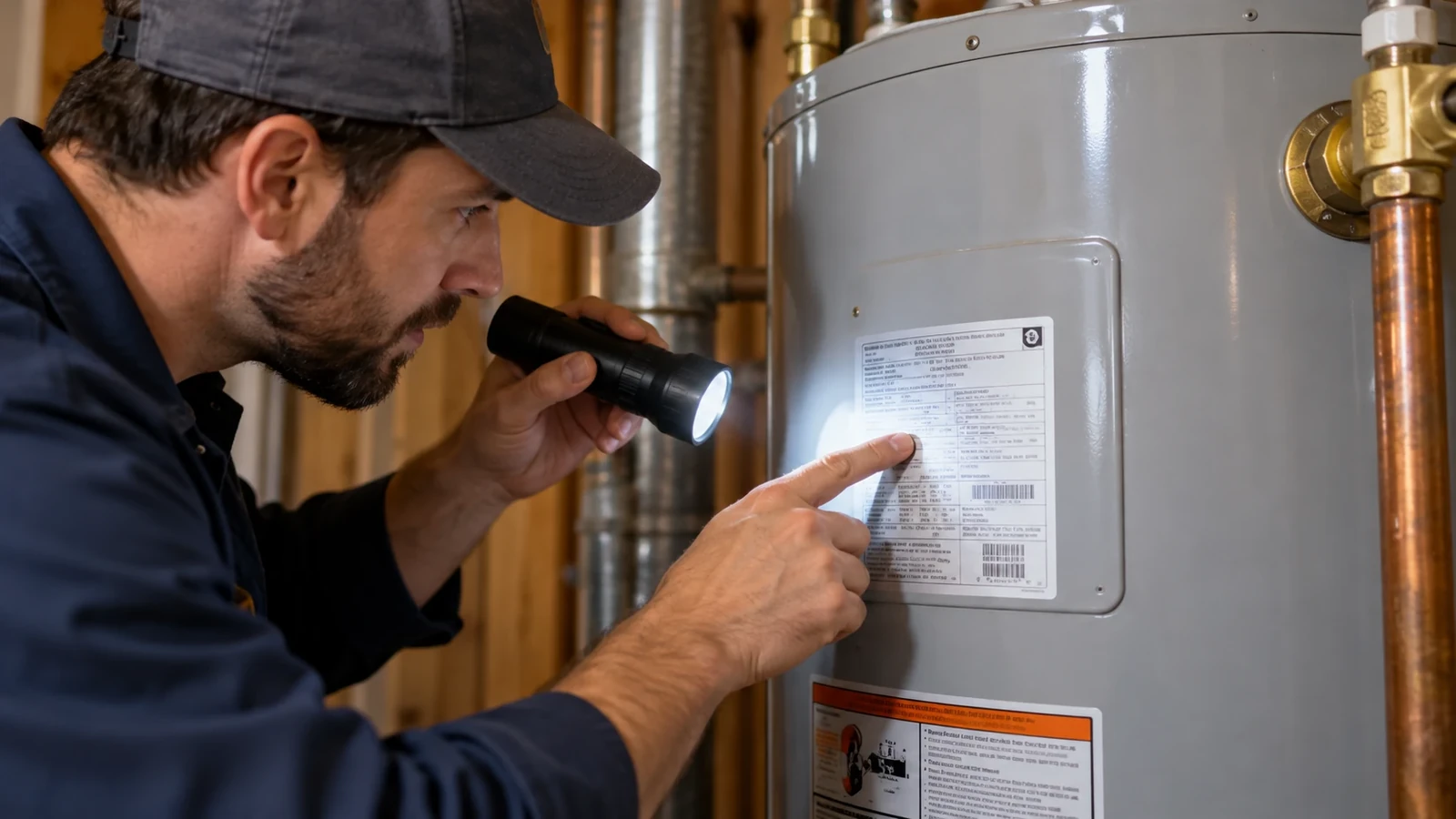
The best starting point is the manufacturer’s information label.
- Find the rating plate. Look for a manufacturer’s sticker or metal plate on the side of the tank or exterior of the unit. It typically displays the brand, model number, and serial number.
- Check for a manufacturing date. Some manufacturers print the date directly on the label. Others encode it within the serial number.
- Use the manufacturer’s serial number lookup. The decoding system varies by brand. Use the manufacturer’s official website or documentation instead of assuming every serial number follows the same format.
- Compare it with installation records. A manufacturing date isn’t necessarily the installation date. An installation invoice, permit, or previous owner’s documentation can help establish when the unit entered service.
If your water heater was manufactured in 2013, for example, it would be approximately 13 years old in 2026.
That places a conventional storage tank in an age range where closer monitoring and replacement planning make sense.
However, its actual condition still determines whether immediate replacement is necessary.
Warning Signs That Your Water Heater May Be Nearing the End of Its Life
Aging alone doesn’t establish that a water heater is failing. Changes in performance and visible deterioration often provide more useful evidence.
Some warning signs indicate a repairable component problem, while others suggest the storage tank itself is deteriorating.
Water Around the Base of the Heater
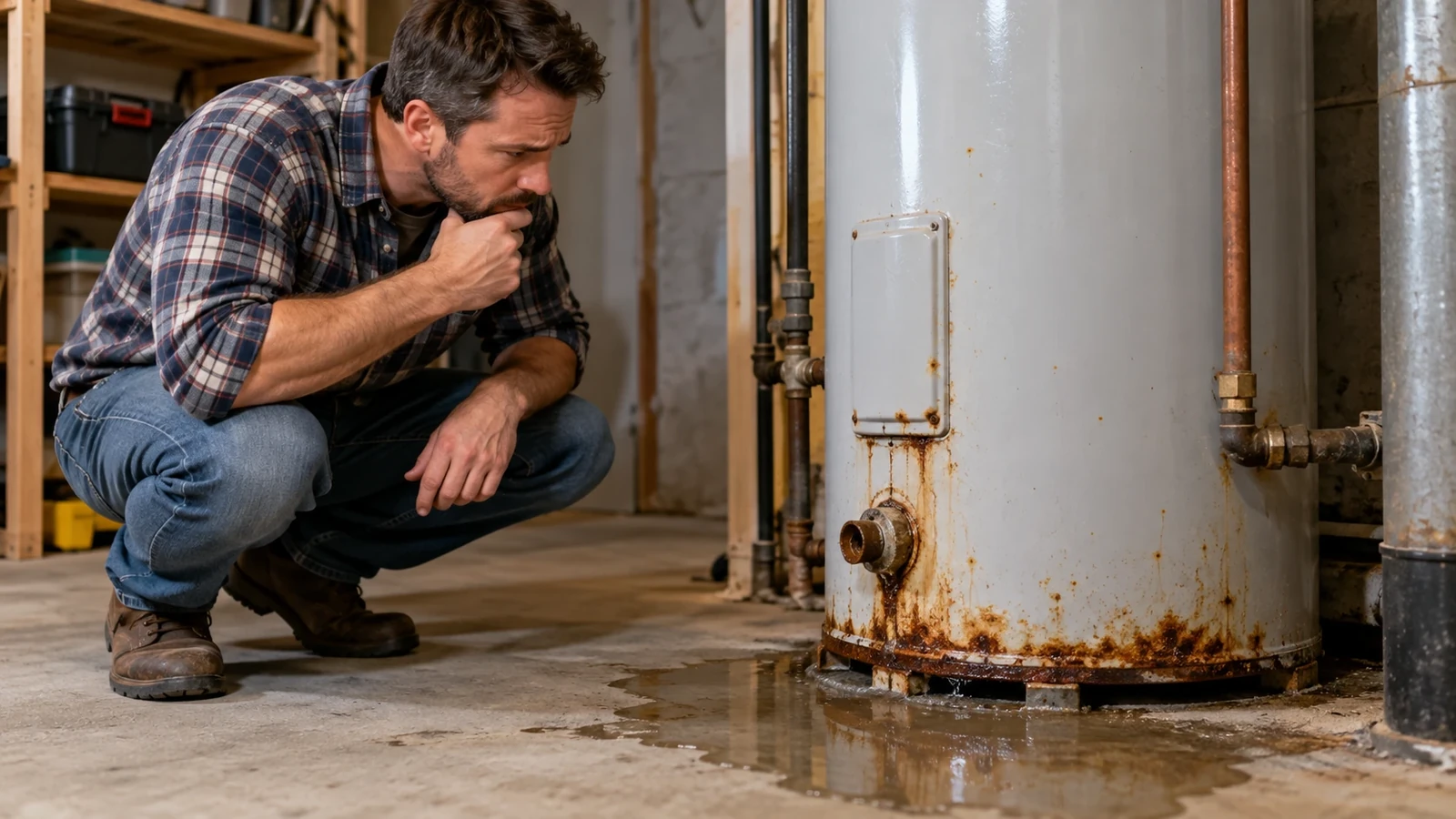
Finding water around a storage water heater deserves prompt attention.
The leak might come from a loose connection, drain valve, relief valve, or nearby plumbing. Some of these problems are repairable.
However, water escaping through the tank body can indicate internal corrosion or structural damage.
A leaking storage tank generally needs replacement because patching a corroded pressure vessel isn’t a dependable long-term repair.
Don’t assume every puddle means the tank has failed, but don’t ignore recurring moisture either.
Rusty or Discolored Hot Water
Brown or reddish water coming from hot water faucets can indicate corrosion somewhere in the hot water system.
A useful first observation is whether the discoloration appears only when using hot water.
If cold water remains clear but multiple hot water fixtures produce discolored water, the water heater becomes one possible source.
Corroded pipes or other plumbing components can cause similar symptoms, so discoloration alone doesn’t prove the tank is failing.
Hot Water Runs Out Faster Than Before
Perhaps your water heater once supported two consecutive showers without trouble. Now the second person gets lukewarm water halfway through.
Possible causes include sediment accumulation, damaged heating elements, thermostat problems, or declining heating performance.
Before assuming the equipment is worn out, consider whether household hot water usage has changed.
If more people are using hot water at the same time, the existing system may simply be undersized.
Rumbling, Popping, or Unusual Sounds
Storage water heaters sometimes develop popping or rumbling sounds when sediment accumulates near heating surfaces.
As water heats beneath mineral deposits, steam bubbles can form and collapse, producing noticeable noise.
These sounds aren’t always evidence of imminent failure, but persistent or worsening noises justify inspection.
Tankless water heaters can produce different sounds related to fans, ignition, circulation, or mineral scale.
Recurring Repairs and Unreliable Temperatures
A single thermostat or heating element failure doesn’t necessarily mean a water heater has reached the end of its lifespan.
Repeated breakdowns are more concerning.
If an aging system keeps losing hot water, shuts down unexpectedly, or needs replacement components frequently, continuing repairs may become less economical.
A professional water heater repair inspection can help determine whether the problem involves a serviceable component or deterioration that makes replacement more practical.
Is a 10-Year-Old Water Heater Too Old?
A 10-year-old water heater isn’t automatically too old to use, but it is old enough to justify evaluating its condition and planning for eventual replacement.
This distinction matters because average lifespan figures aren’t expiration dates.
A 10-year-old tank water heater with no leaks, consistent performance, and a documented maintenance history may continue working reliably.
Conversely, a seven-year-old unit with severe internal corrosion could need replacement sooner.
Age becomes more meaningful when considered alongside other factors.
For example, imagine two homeowners with 12-year-old water heaters.
The first has a functioning system, stable temperatures, and no visible deterioration. A professional inspection may support continued operation with periodic monitoring.
The second has experienced repeated heating problems and recently discovered water collecting around the tank.
Although both heaters are the same age, their circumstances call for different decisions.
As a general planning approach, homeowners with conventional tank water heaters approaching 10 years should begin paying closer attention to their equipment. Once the system moves beyond its expected service range, having a replacement plan becomes increasingly sensible.
Can Regular Maintenance Make a Water Heater Last Longer?
Routine maintenance can help a water heater operate efficiently and reduce avoidable deterioration. It cannot reverse advanced tank corrosion or guarantee a particular service life.
The exact maintenance procedures and intervals should follow the manufacturer’s instructions.
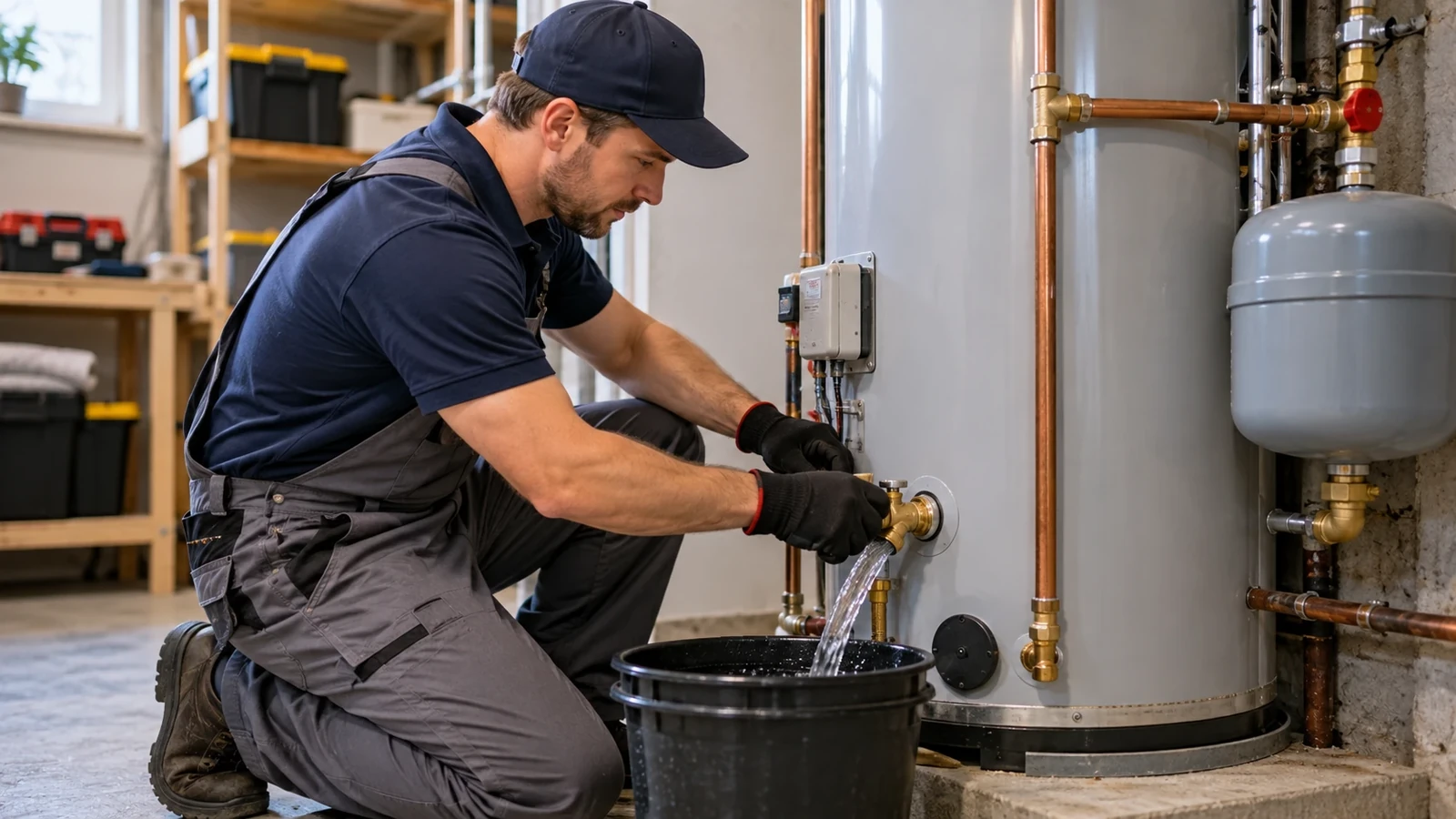
Control Sediment Inside the Tank
Sediment flushing removes accumulated mineral deposits from a storage water heater.
Depending on water quality and the manufacturer’s recommendations, tank flushing may be appropriate annually or more frequently.
Homeowners should be cautious with older equipment that has never been maintained. Drain valves may be difficult to operate, and hot water can cause serious burns.
A plumber can assess the tank’s condition and perform appropriate maintenance without creating unnecessary problems.
Inspect the Anode Rod
Many conventional steel storage tanks contain a sacrificial anode rod.
This metal rod helps protect the tank against corrosion by deteriorating in place of the tank’s exposed steel surfaces.
Eventually, the rod becomes depleted.
Once it can no longer provide adequate protection, corrosion may accelerate.
Inspecting the anode rod and replacing it when necessary can help preserve the tank. Inspection frequency depends on the manufacturer’s instructions and local water chemistry.
Check Safety Components and Operating Conditions
Water heaters include safety devices, including temperature and pressure relief valves on applicable systems.
These components require periodic inspection.
A professional may also evaluate water pressure, thermal expansion, electrical connections, combustion and venting conditions, and signs of leakage.
Tankless systems require model-specific inspections and descaling when appropriate. Heat pump models may need air filter cleaning and condensate drainage checks.
For homeowners wanting to understand other household maintenance priorities, our home plumbing services guide covers common residential plumbing considerations.
Proper care helps reduce avoidable wear, but maintenance should never be treated as a substitute for replacing an unsafe or leaking unit.
When Is It Worth Repairing an Older Water Heater?
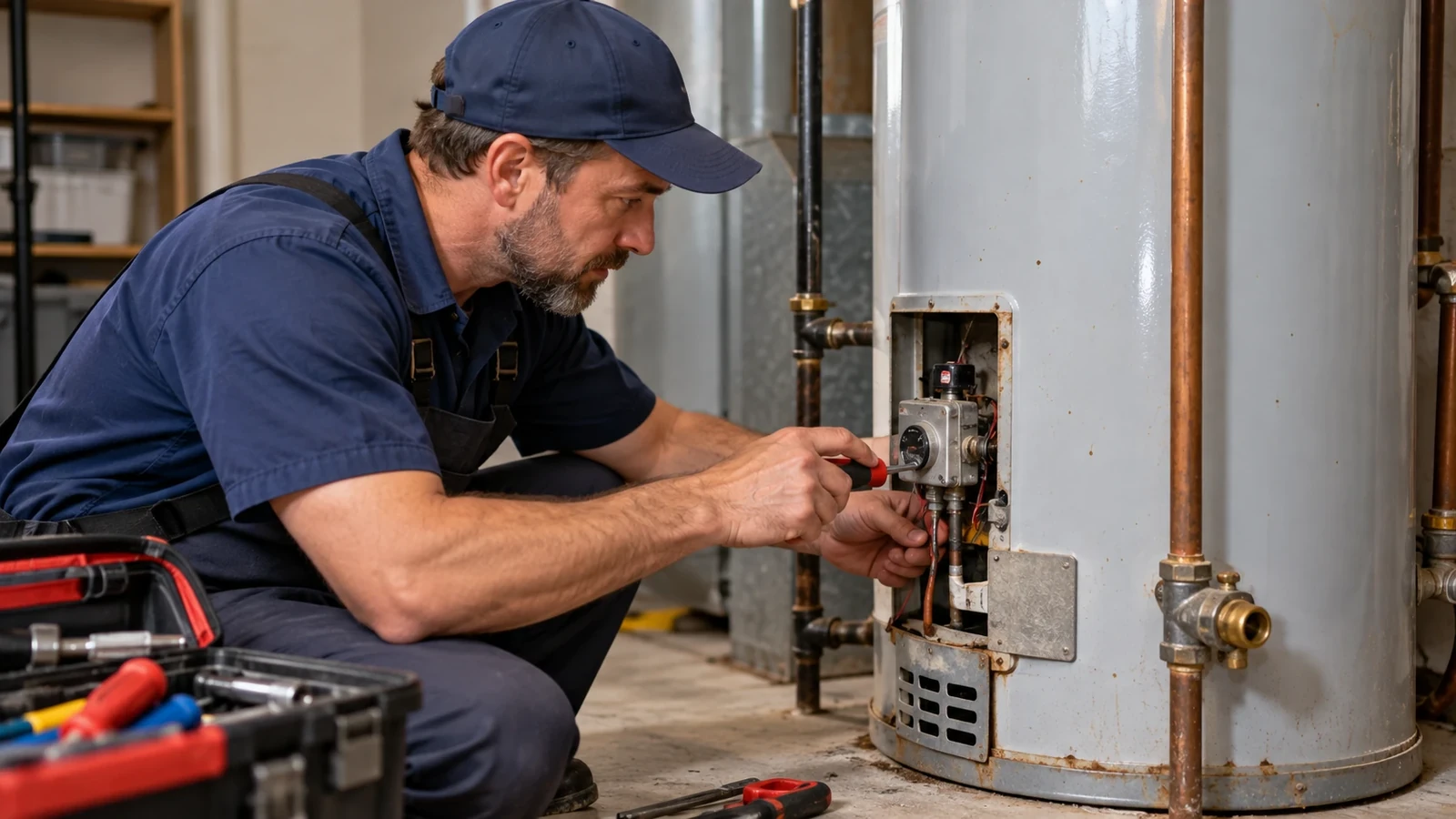
Repairing a water heater can make sense when the storage tank remains sound and the problem involves a replaceable component.
An electric water heater with a failed heating element, for example, may need a straightforward component replacement rather than an entirely new appliance.
Similarly, a gas water heater experiencing an ignition or thermostat issue may be repairable after the underlying problem has been diagnosed.
Several questions can help guide the decision.
How old is the equipment?
A relatively new water heater with an isolated problem is generally a stronger repair candidate than an older system experiencing repeated failures.
Is the storage tank still in good condition?
The condition of the tank is critical. Replacing a thermostat won’t solve corrosion that has compromised the tank.
What does the repair cost compared with replacement?
A relatively minor repair may provide reasonable value. A major component replacement on equipment already approaching the end of its service life deserves closer consideration.
Have similar problems happened before?
Recurring service calls can indicate that more components are deteriorating.
The goal should be to restore dependable service, not simply keep an aging appliance running through one temporary repair after another.
When Should You Replace Your Water Heater Instead?
Replacement becomes a stronger option when the water heater has an unrecoverable tank problem, repeatedly breaks down, or no longer meets household demand.
The following situations illustrate how to approach the decision.
| Situation | Practical Next Step |
|---|---|
| Newer heater with a faulty thermostat | Investigate component repair |
| Water heater with sediment-related performance issues | Evaluate maintenance and tank condition |
| Older heater needing repeated costly repairs | Compare repair costs with replacement |
| Storage tank leaking through its body | Plan for replacement |
| Reliable older heater with no major problems | Arrange inspection and monitor condition |
| Household has outgrown the heater’s capacity | Evaluate properly sized replacement options |
A leaking or internally corroded storage tank is one of the clearest reasons to consider a new unit.
Repeated major repairs also deserve scrutiny, particularly when the heater is already within or beyond its expected lifespan.
Homeowners can explore professional water heater replacement to understand how an aging system is evaluated and what should be considered before installing new equipment.
A replacement isn’t always necessary simply because the equipment has become old. The strongest decision combines age, condition, safety, maintenance history, and the expected cost of keeping it operational.
Should You Choose a Tankless or Heat Pump Water Heater Next?
Replacing a water heater presents an opportunity to reconsider the type of equipment installed in your home.
You don’t necessarily need to replace your existing system with an identical model.
However, a different technology isn’t automatically the right choice.
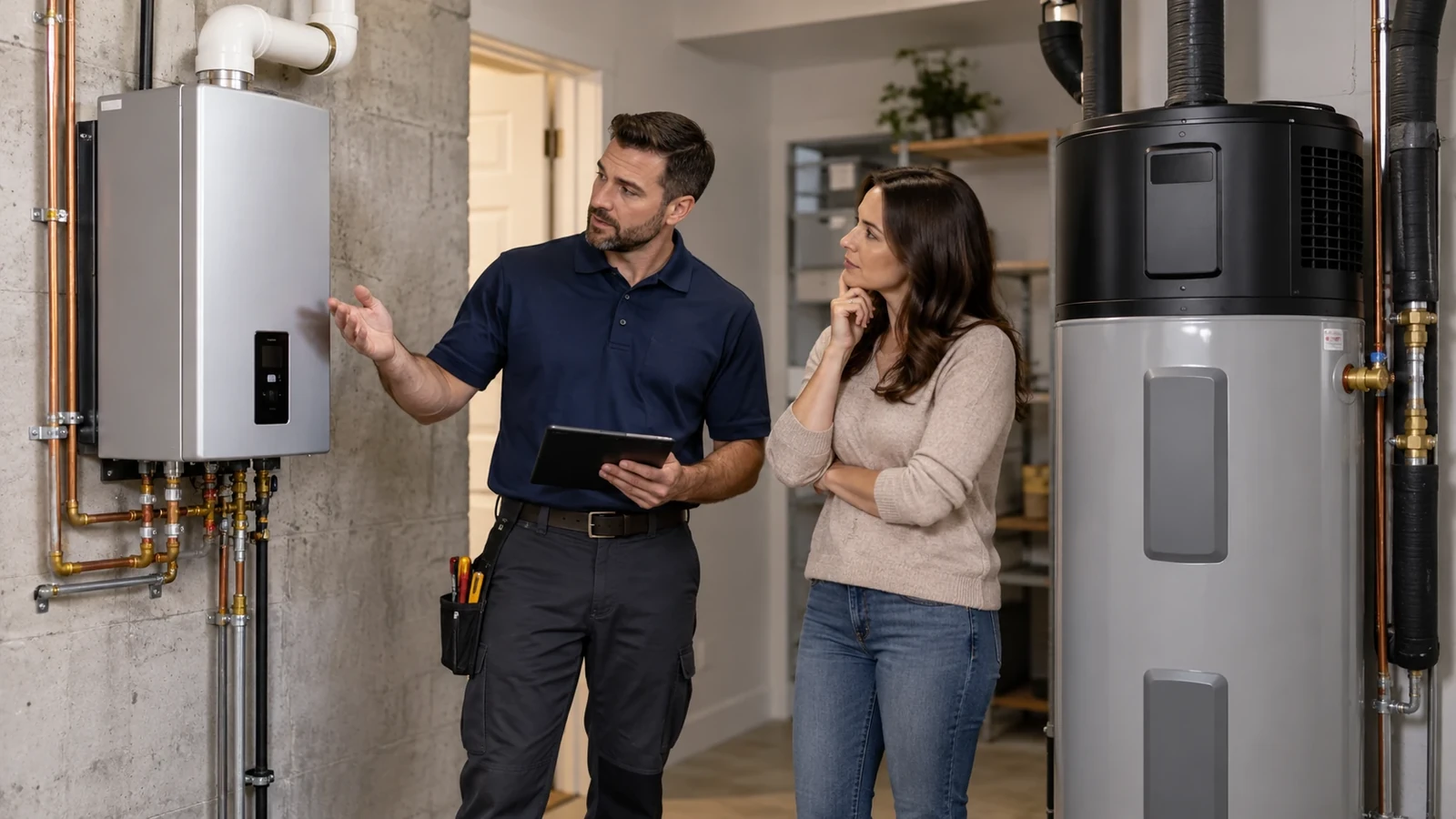
Traditional Tank Water Heaters
Storage tank water heaters remain a practical choice for many households.
They are available in gas and electric configurations, offer familiar operation, and can often replace an existing unit without major changes when the installation conditions are compatible.
The main limitation is that the stored hot water supply can be depleted during heavy use.
Traditional tanks also experience standby heat loss and are vulnerable to tank corrosion.
Tankless Water Heaters
Tankless water heaters provide hot water as needed and generally offer a longer potential service life.
Their compact design can also free up floor space.
However, switching from a conventional tank may require gas piping, venting, electrical, or plumbing changes.
Tankless equipment must be sized for the required flow rate and temperature rise. In colder climates, including Massachusetts, incoming winter water temperatures can affect how much hot water a particular unit can deliver at once.
Homeowners considering an upgrade can review tankless water heater options to better understand installation requirements, maintenance, and system capacity.
Heat Pump Water Heaters
Heat pump water heaters use surrounding air to heat stored water rather than relying entirely on electric resistance heating.
They can use significantly less electricity than conventional electric resistance storage models under suitable operating conditions.
However, installation space, ambient temperature, airflow, condensate drainage, and electrical requirements need to be evaluated.
A heat pump model may be particularly worth considering when replacing an existing electric tank.
Our heat pump water heater services explain the equipment and installation considerations for Greater Boston properties.
The right replacement depends on household hot water demand, available utilities, equipment costs, operating expenses, and the installation environment.
What Should You Do if Your Water Heater Starts Leaking?
A water heater leak should be addressed promptly, even if the equipment continues producing hot water.
A small leak from a connection may remain manageable, while a damaged storage tank can release enough water to harm floors, walls, and nearby belongings.
Start by keeping people away from standing water and any exposed electrical equipment.
If it is safe to do so, shut off the water supply using the appropriate isolation valve. Follow the manufacturer’s instructions for shutting down the appliance, or have a professional handle it.
Do not reach electrical controls through standing water or attempt to operate damaged electrical equipment.
If you smell gas, leave the area immediately and contact your gas utility’s emergency number or emergency services from a safe location. Do not operate switches or attempt to investigate the gas connection yourself.
Never cap, plug, or obstruct a temperature and pressure relief valve discharge pipe.
If you cannot identify or safely control the source of the leak, arrange professional assistance.
For urgent plumbing problems, Foukas Plumbing & Heating provides emergency plumbing services across its service area.
Addressing a leak early can help limit property damage and establish whether the problem requires a component repair or complete replacement.
Planning Your Next Water Heater Before an Emergency
An aging water heater doesn’t always provide much warning before it fails.
Waiting until the household has no hot water can leave little time to compare equipment types, assess installation requirements, or evaluate long-term operating costs.
Planning ahead gives homeowners more control.
A professional inspection can help establish the current system’s condition, identify maintenance concerns, and determine whether continued operation makes sense.
If replacement is appropriate, the next step is selecting equipment that matches the property’s requirements.
The installer should consider hot water demand, fuel source, recovery rate, venting, electrical capacity, available space, water connections, and drainage.
Proper water heater installation also helps ensure that the new equipment operates as intended and meets applicable safety requirements.
Foukas Plumbing & Heating provides water heater inspection, repair, installation, and replacement services for residential and commercial properties throughout Greater Boston and the North Shore.
If your water heater is getting older, producing inconsistent hot water, or showing signs of deterioration, contact Foukas Plumbing & Heating to discuss an inspection or replacement options.
The goal isn’t to replace a functioning water heater unnecessarily. It’s to understand its condition before a small problem becomes a major interruption.
Common Questions About Water Heater Lifespan
Can a Water Heater Last 20 Years?
Yes, although it depends heavily on the type of equipment.
Tankless water heaters can provide around 20 years of service or longer under suitable operating and maintenance conditions.
Some conventional storage tanks also remain functional for 20 years, but this exceeds their typical service-life range and shouldn’t be assumed.
An older unit should be evaluated for corrosion, leakage, safety, and overall performance rather than kept solely because it continues producing hot water.
Should I Replace My Water Heater After 10 Years?
Not necessarily.
Ten years is a reasonable point to begin monitoring a conventional tank water heater more closely and planning for eventual replacement.
If the tank is sound and the equipment works reliably, immediate replacement may not be necessary.
However, leaks, repeated repairs, severe corrosion, or ongoing performance problems can make replacement appropriate.
Does a Water Heater Warranty Tell You How Long It Will Last?
No. Warranty length and actual equipment lifespan are different.
A warranty explains which failures or defects the manufacturer may cover under specified conditions.
It doesn’t establish an exact date when the water heater will stop working.
Some systems operate beyond their warranty period, while others develop covered problems before the warranty expires.
Check the manufacturer’s documentation for the specific tank, component, labor, and maintenance terms.
Do Gas Water Heaters Last Longer Than Electric Ones?
Neither fuel type consistently outlasts the other in every installation.
Conventional gas and electric storage water heaters have broadly similar expected lifespans.
Water quality, tank construction, maintenance, and operating conditions can matter more than the fuel source alone.
Electric models use heating elements, while gas models have burners and combustion-related components. These systems can experience different repair needs even when the tanks have similar service lives.
How Do I Know Whether My Water Heater Needs Maintenance or Replacement?
Start with the nature of the problem.
Sediment buildup, a faulty thermostat, or a replaceable heating component may justify maintenance or repair.
Water leaking through the tank body, severe corrosion, and repeated expensive failures are stronger indications that replacement may be necessary.
A qualified plumber can inspect the equipment, identify the actual cause, and explain which option is appropriate.
Is It Safe to Keep Using an Old Water Heater?
Age by itself doesn’t make a water heater unsafe.
However, an older system with active leaks, combustion or venting problems, damaged safety components, electrical hazards, or severe corrosion shouldn’t simply be left operating without professional evaluation.
A functioning water heater can still have problems that aren’t obvious from the temperature of the water.
Regular inspection becomes particularly valuable as equipment ages.