


Low water pressure in a house can come from something as simple as a clogged faucet aerator or as serious as a leaking water line, corroded plumbing, or a problem with the main water supply. The location and timing of the pressure loss often provide the first clues.
If one faucet has weak flow, the problem is usually close to that fixture. If every sink, shower, and outdoor faucet has suddenly lost pressure, the cause may be farther upstream in the home’s plumbing system or the municipal water supply.
Before replacing pipes or adjusting equipment, it helps to figure out whether you’re dealing with low water pressure or restricted water flow. They can feel almost identical, but they aren’t always caused by the same problem.
Low Water Pressure and Low Flow Are Not Always the Same Problem
Water pressure describes the force pushing water through the plumbing system. Flow describes how much water actually comes through an outlet during a given period.
A home can have acceptable pressure entering the building while still producing a weak stream at a faucet because something is restricting the water.
For example, mineral deposits inside a showerhead may reduce flow even though the rest of the plumbing system is operating normally. Corroded piping can create a similar problem on a larger scale.
A homeowner may describe either situation as “low water pressure,” which is why diagnosis should start by determining where the problem occurs.
Check More Than One Fixture
Turn on several fixtures individually rather than assuming the first weak faucet represents the entire house.
Check:
- Kitchen faucets
- Bathroom faucets
- Showers
- Bathtubs
- Utility sinks
- Outdoor hose connections
- Hot and cold water separately
If most fixtures behave normally, the problem is probably localized. When every fixture has weak flow, a whole-house plumbing issue becomes more likely.
Homeowners dealing with several plumbing symptoms at once may find the broader plumbing services available through Foukas Plumbing & Heating useful when determining which type of service applies.
A Clogged Faucet Aerator or Showerhead Can Restrict Water Flow
One weak faucet doesn’t necessarily mean the entire house has a pressure problem.
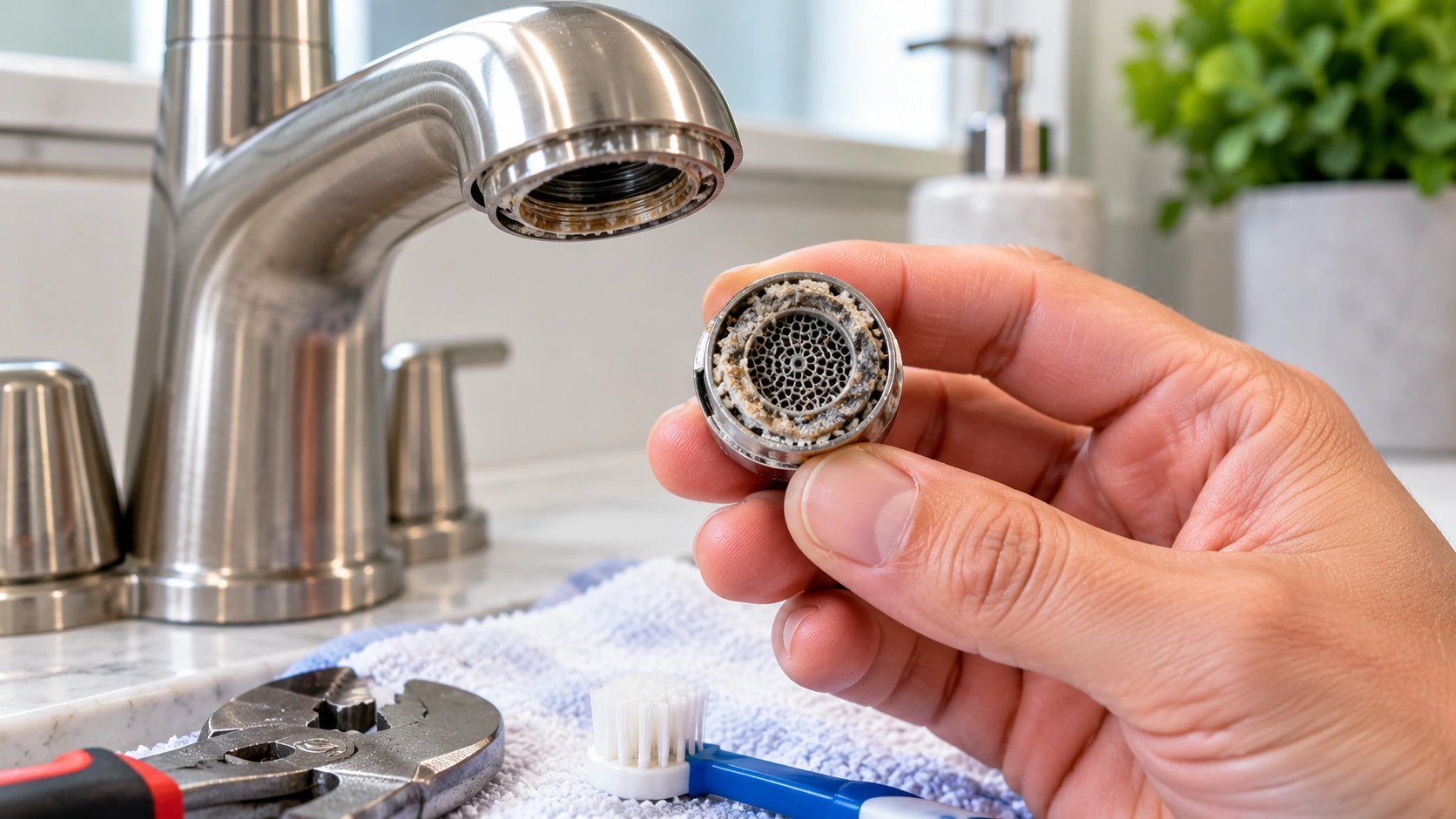
Faucet aerators contain small screens that regulate the water stream. Sediment, mineral deposits, rust particles, and debris can collect inside those openings over time. Showerheads can develop similar restrictions.
Signs the Problem Is at the Fixture
A localized restriction becomes more likely when:
- One faucet runs slowly while nearby fixtures are normal
- Only one shower has weak flow
- Water sprays unevenly from the faucet
- Flow improves after removing the aerator
- Hot and cold water are equally weak at the same fixture
Cleaning the removable aerator or showerhead may restore normal flow when buildup is the cause.
If the fixture itself is damaged, worn, or unsuitable for continued use, professional fixture installation and replacement may make more sense than repeatedly cleaning or repairing it.
Partially Closed Valves Can Reduce Pressure Throughout the Home
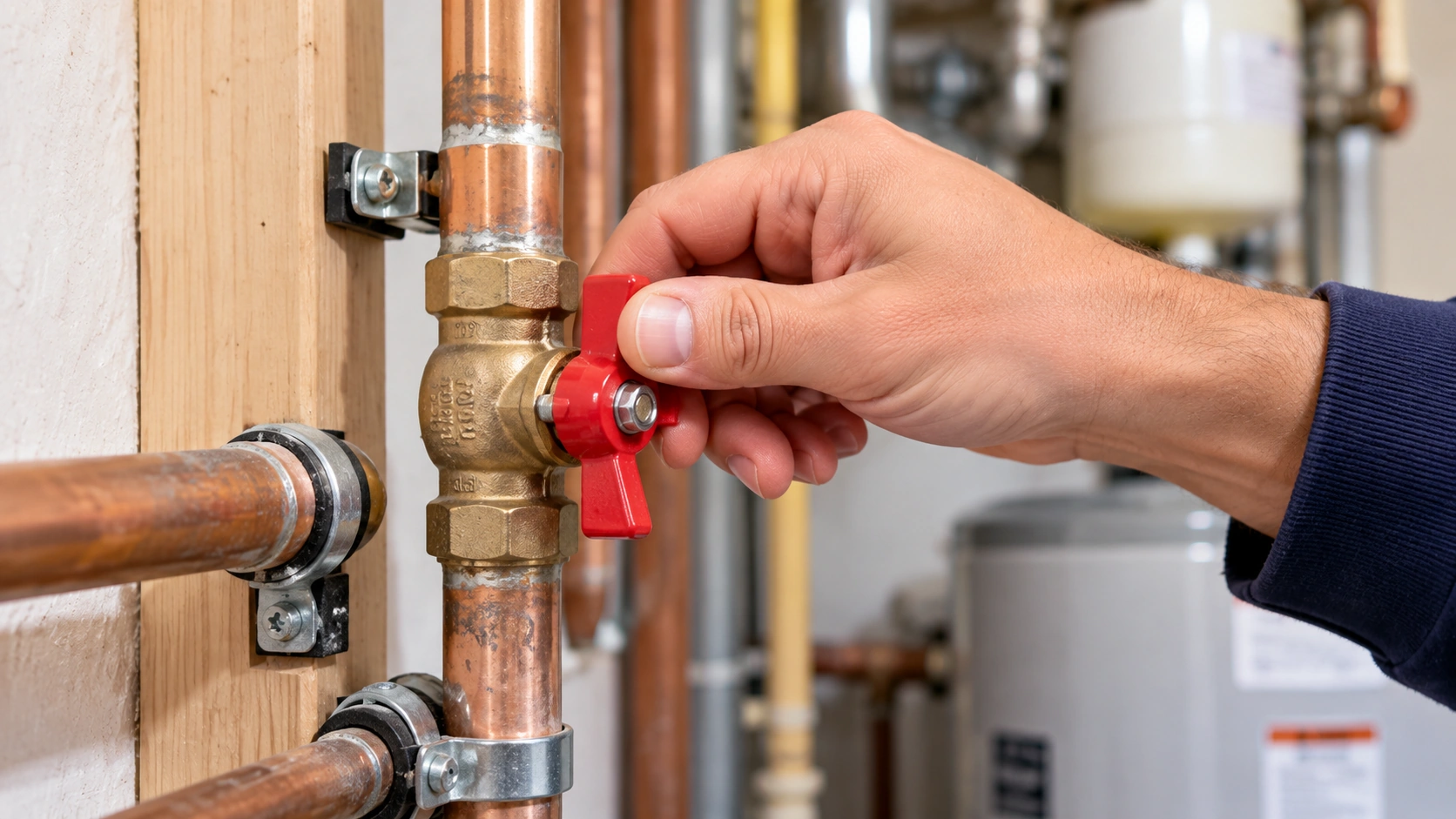
Water must pass through several valves before reaching your faucets. If an important valve isn’t fully open, the restriction can affect multiple fixtures.
The main shutoff valve is especially important. It may have been partially closed during previous plumbing work and never reopened completely.
Check Accessible Shutoff Valves
Without forcing or dismantling anything, homeowners can visually check accessible valves around:
- The main water entrance
- The water meter area
- Individual sinks
- Toilets
- Water heaters
- Other supplied fixtures
A valve that is damaged, difficult to operate, leaking, or heavily corroded should be evaluated by a plumber rather than forced.
Older valves can fail internally. The handle may appear to be in the correct position even though the valve isn’t allowing full flow.
This is one reason professional plumbing repairs focus on finding the actual restriction before replacing unrelated components.
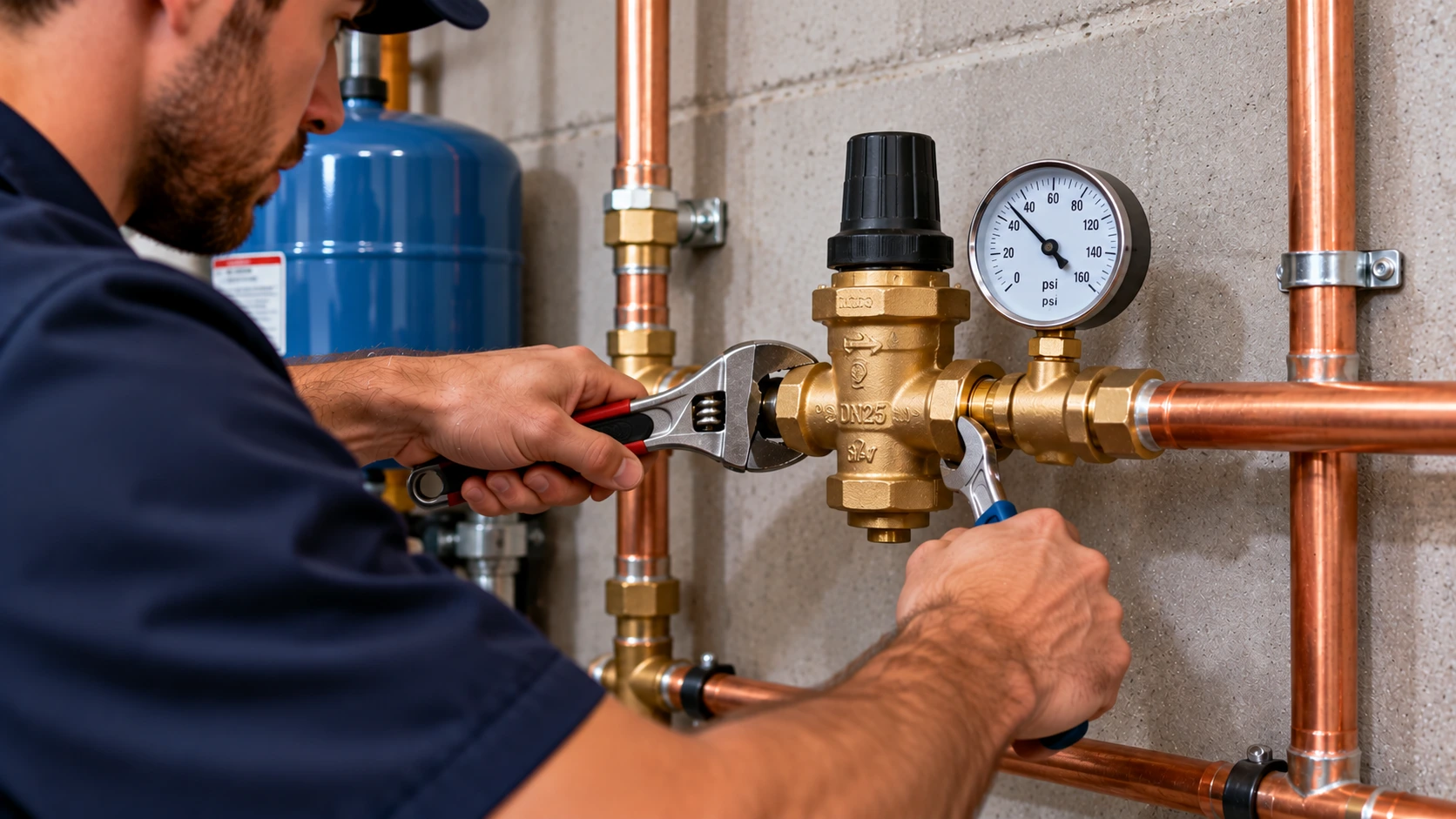
A Failing Pressure Reducing Valve Can Affect the Entire House
Some homes have a pressure reducing valve, commonly called a PRV, installed near the point where the water service enters the building.
Its job is to control incoming pressure before water moves through the home’s plumbing.
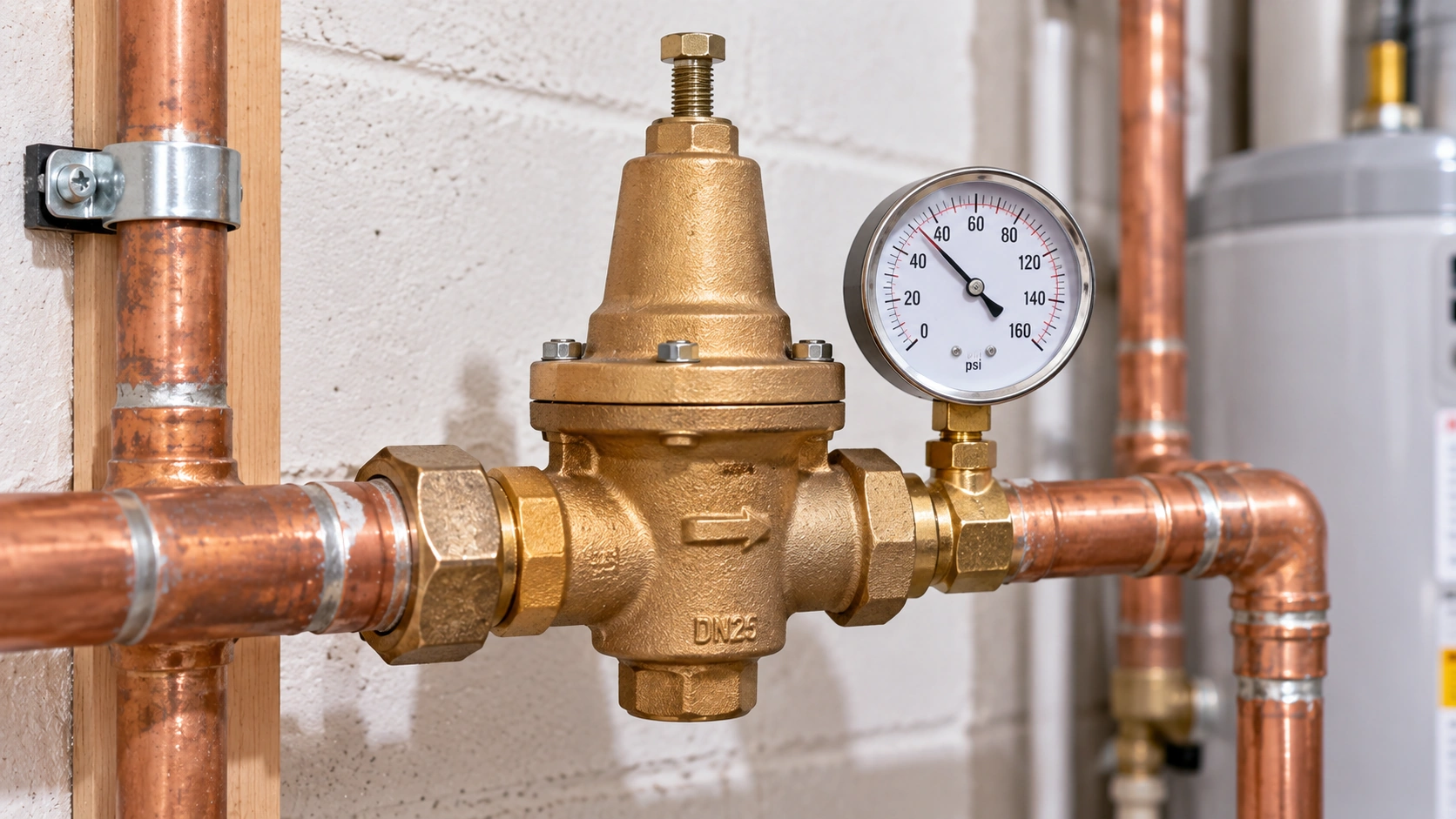
When a PRV wears out, becomes obstructed, or stops regulating correctly, homeowners may notice:
- Weak pressure throughout the house
- Pressure that changes unexpectedly
- A noticeable difference when several fixtures are used
- Pressure that is unusually high at some times and low at others
A regulator problem isn’t the same as a clogged faucet because it can influence much of the plumbing system at once.
Massachusetts plumbing requirements address both minimum fixture flow pressure and excessive incoming pressure. The state requires a pressure reducing valve when the building’s incoming water service exceeds 80 PSI, unless specific exceptions apply.
Should You Adjust the Pressure Regulator Yourself?
Changing a regulator setting without confirming the incoming pressure and condition of the valve can create another problem instead of solving the existing one.
Higher pressure isn’t automatically better.
Excessive pressure can place unnecessary stress on valves, fixtures, appliance connections, and other plumbing components. A plumber can measure the pressure and determine whether adjustment, repair, or replacement is appropriate.
Hidden Plumbing Leaks Can Cause a Drop in Water Pressure
Water can’t reach your fixtures normally if part of the supply is escaping through a damaged pipe or connection.
Some leaks are obvious. Others remain behind walls, below floors, inside ceilings, or underground.
A leak should move higher on the list of possible causes when low pressure appears suddenly.
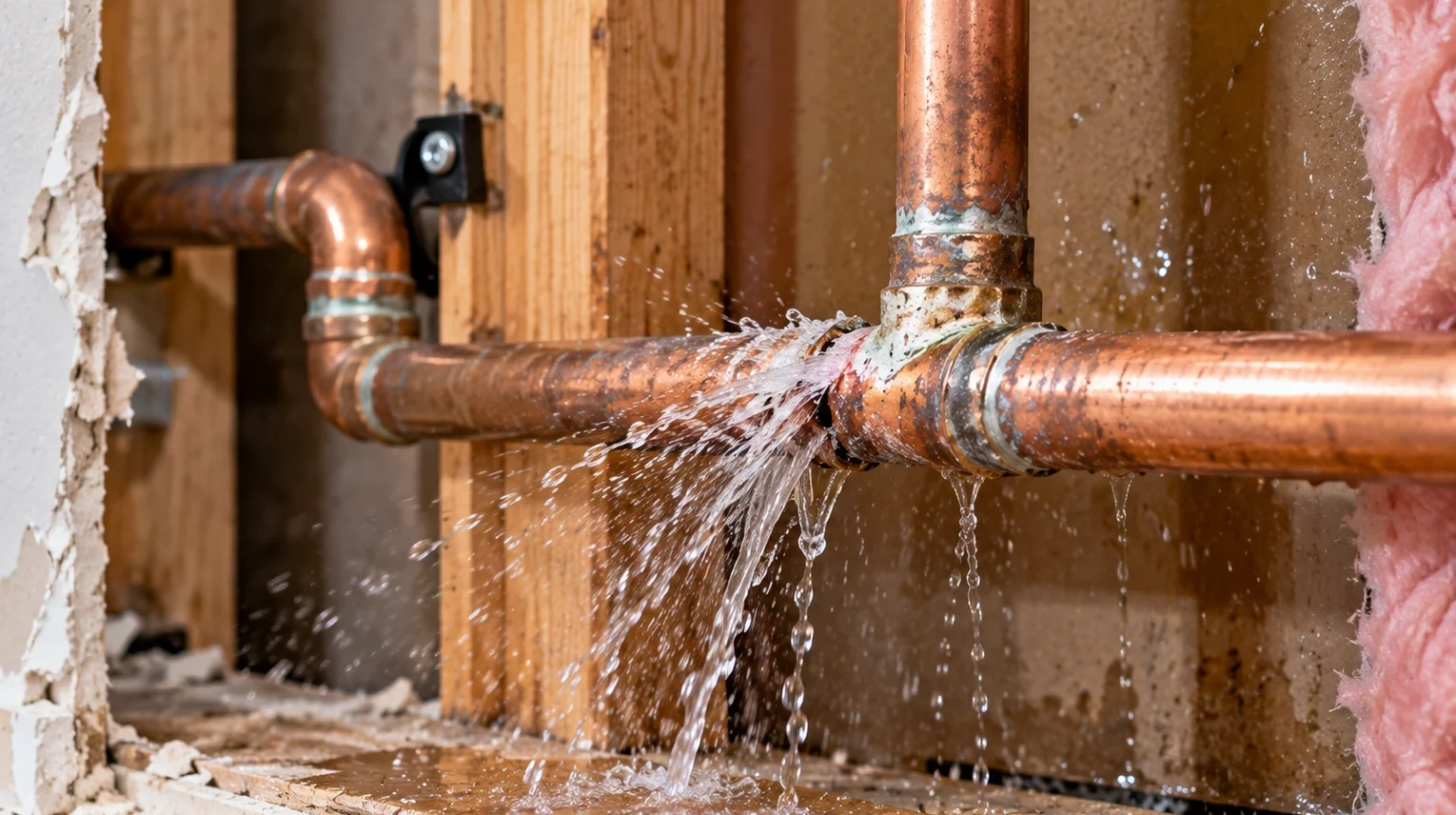
Warning Signs That May Point to a Leak
Look for symptoms such as:
- Damp walls or ceilings
- Water stains
- Unexplained moisture
- Musty smells
- Sounds of running water when fixtures are off
- Unusually wet areas outdoors
- Sudden changes in water pressure
- An unexplained increase in water use
Not every hidden leak produces visible water immediately.
Professional leak detection services can help locate concealed problems before walls, flooring, or other materials are disturbed unnecessarily.
If a major leak, burst pipe, or uncontrolled water release accompanies the pressure loss, the situation should be treated differently from ordinary weak faucet flow.
Problems With the Main Water Line Can Affect Every Fixture
The water service line carries water from the public supply or another source into the house. Damage, restriction, deterioration, or leakage along this line can reduce the amount of water available throughout the property.
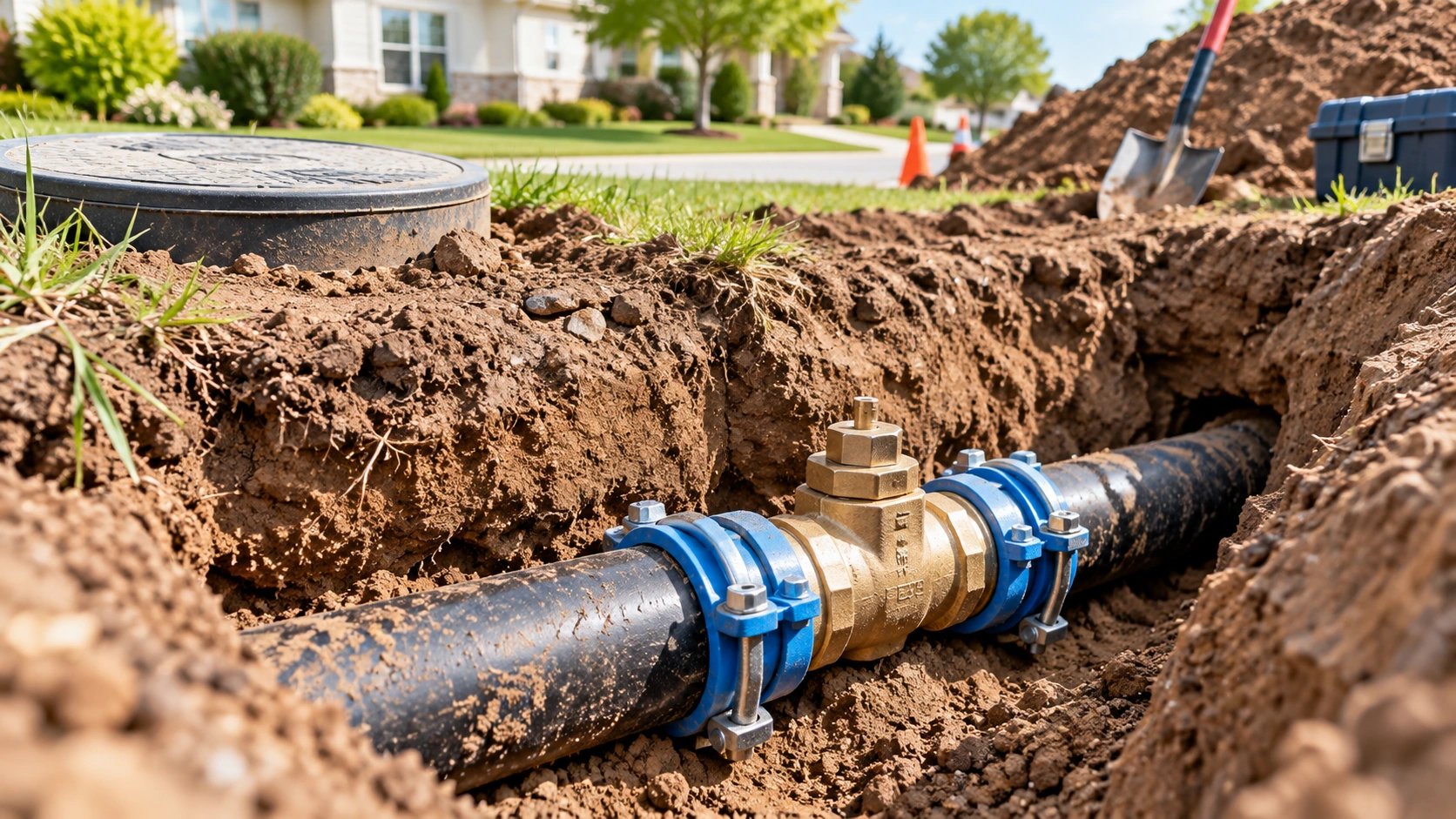
A service-line problem becomes more likely when:
- Pressure is weak throughout the entire home
- The change occurred suddenly
- No individual fixture appears responsible
- The main valve is fully open
- A pressure regulator isn’t causing the restriction
- Signs of underground leakage are present
A professional inspection may be needed to determine whether the line requires repair or replacement.
Foukas Plumbing & Heating provides water line services for problems involving the water supply piping serving a property.
What if the Problem Is Outside Your Property?
Sometimes the home’s plumbing isn’t responsible at all.
Municipal water main work, a water main break, utility maintenance, unusually high neighborhood demand, or another distribution-system issue can temporarily reduce pressure.
A useful first check is to ask a nearby neighbor whether they’re experiencing the same change.
If several surrounding properties lost pressure at approximately the same time, contact the local water utility before assuming the house needs plumbing repairs.
Water utilities also note that water pressure can vary according to elevation, system conditions, and local distribution characteristics.
Aging and Corroded Pipes Can Slowly Restrict Water Flow
A gradual pressure decline often points toward a different group of causes than a sudden loss of pressure.
Older metal supply piping may corrode internally. As corrosion and deposits accumulate, the inside diameter available for water becomes smaller.
Think of the pipe as a roadway. Water may still be entering at normal pressure, but if the available path becomes increasingly narrow, the amount reaching fixtures can fall.
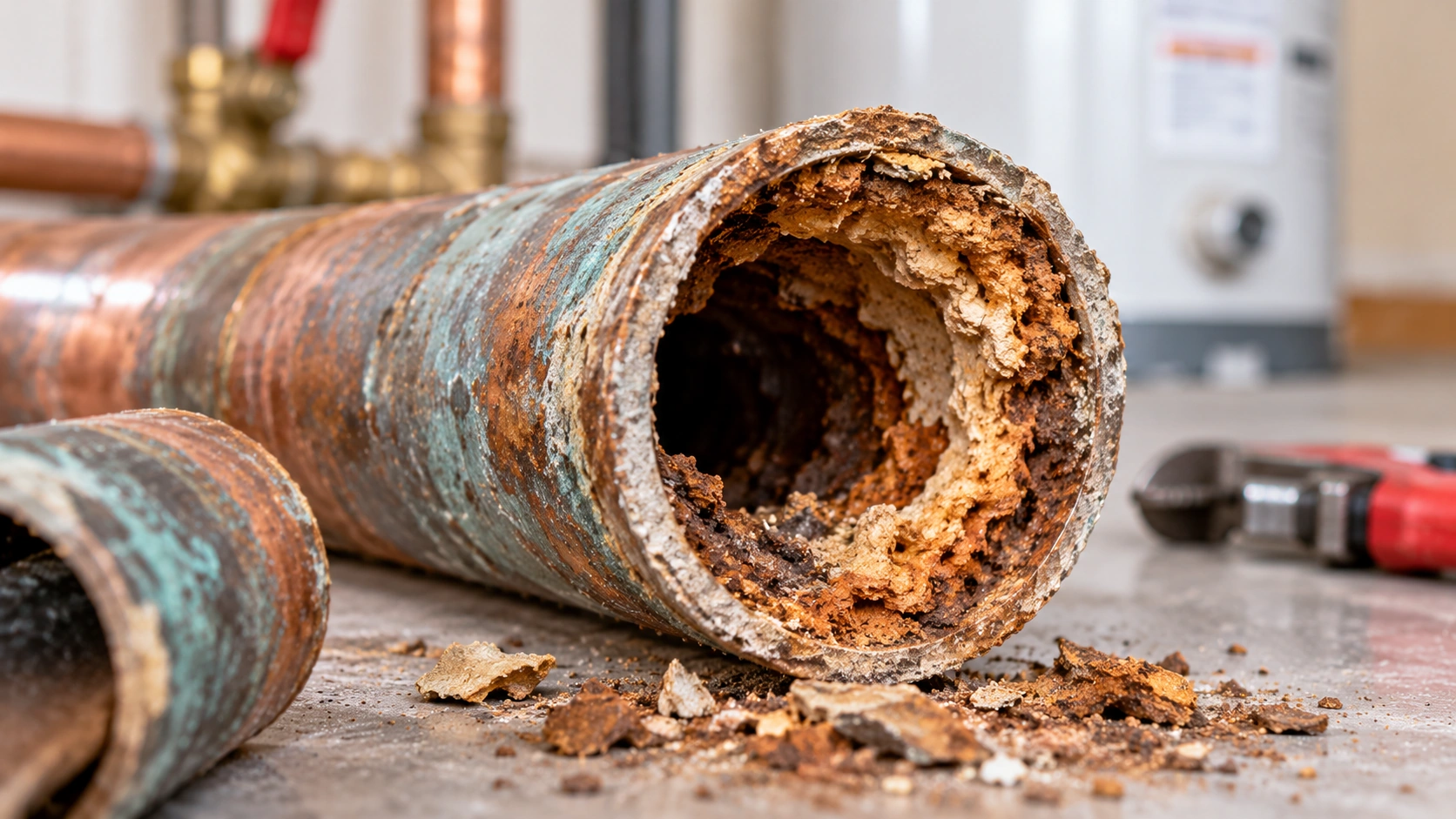
Common Clues of Restricted Older Piping
Homeowners may notice:
- Pressure has worsened slowly over months or years
- Several fixtures are affected
- The problem is worse when multiple fixtures run
- Older sections of piping remain in the home
- Rust-colored water occasionally appears
- Certain branches of the house perform worse than others
Cleaning a faucet won’t correct a restriction located deeper inside the water distribution piping.
A plumber can inspect the system and determine whether isolated repairs are reasonable or whether deteriorated piping should be addressed through professional plumbing replacement.
Replacing an entire plumbing system shouldn’t be the first assumption. The appropriate scope depends on where the restriction is located and how much of the piping is affected.
Why Water Pressure Drops When Several Fixtures Run at Once
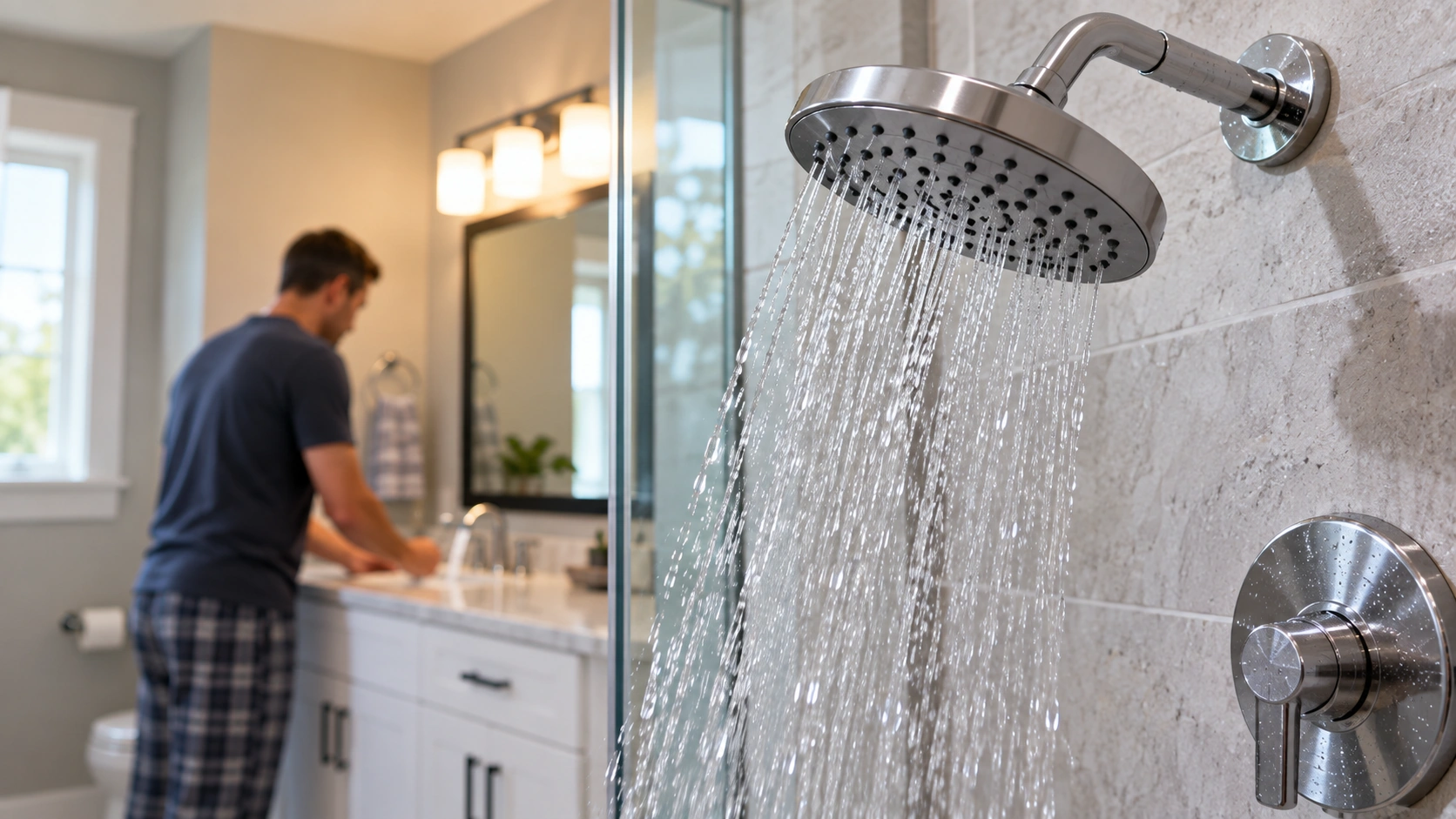
Some homeowners have acceptable pressure until someone starts the washing machine, runs a shower, or turns on another faucet.
A small pressure change during simultaneous use can happen because several fixtures are requesting water from the same supply system.
A dramatic drop deserves closer attention.
Possible Reasons Include
- Undersized supply piping
- Corroded or restricted pipes
- A partly closed valve
- A weak incoming supply
- An incorrectly operating pressure regulator
- Excessive demand for the plumbing configuration
- Problems with the main service line
This issue sometimes becomes noticeable after remodeling.
Imagine a home that originally had one bathroom. A second bathroom, larger shower, additional appliances, and new fixtures are later added while much of the original supply piping remains unchanged. The system may now be asked to deliver more water at the same time than the existing layout comfortably supports.
Major renovations may require planned professional plumbing installations so pipe sizing, fixture demand, valves, and water distribution can be considered together.
Low Hot Water Pressure Points to a Different Set of Problems
Comparing hot and cold water is one of the easiest ways to narrow down a pressure complaint.
If both hot and cold water are weak, look toward the fixture, supply piping, main valve, regulator, or incoming service.
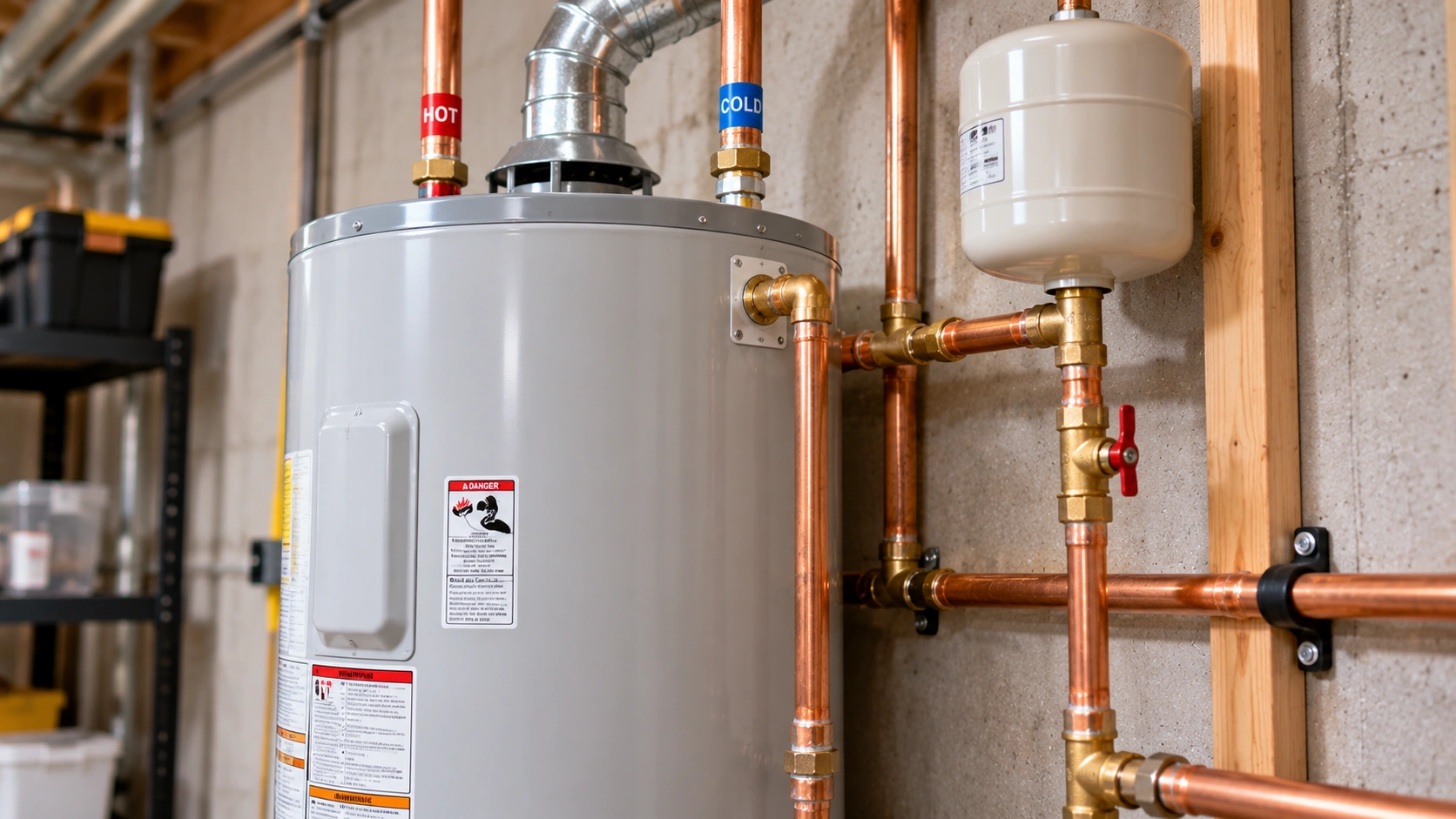
If cold water is normal but hot water is weak, the problem is more likely related to the hot water side of the plumbing system.
Possible Hot Water Flow Restrictions
Depending on the system, possible causes include:
- A partly closed water heater valve
- Sediment or mineral buildup
- Restricted hot water piping
- A damaged valve or connection
- Problems inside or around the water heater
A plumber can determine whether the pressure complaint is actually connected to the equipment.
Foukas Plumbing & Heating’s water heater repair services address water heater problems and connected plumbing components that can interfere with normal hot water service.
Tankless Water Heaters Require Their Own Diagnosis
Tankless equipment responds to water flow differently from a traditional storage tank.
Restricted inlet filters, mineral buildup, excessive simultaneous demand, equipment sizing, or flow-related controls may contribute to weak hot water delivery.
Homeowners using these systems can review common tankless water heater problems and service options when the issue occurs only on the hot water side.
Low Pressure in Only the Kitchen or Bathroom Usually Means the Problem Is Localized
Sometimes an entire room has poor flow while the rest of the house works properly.
This can point toward a branch line, shutoff valve, fixture, or plumbing connection serving that area.
When the Kitchen Has Weak Water Flow
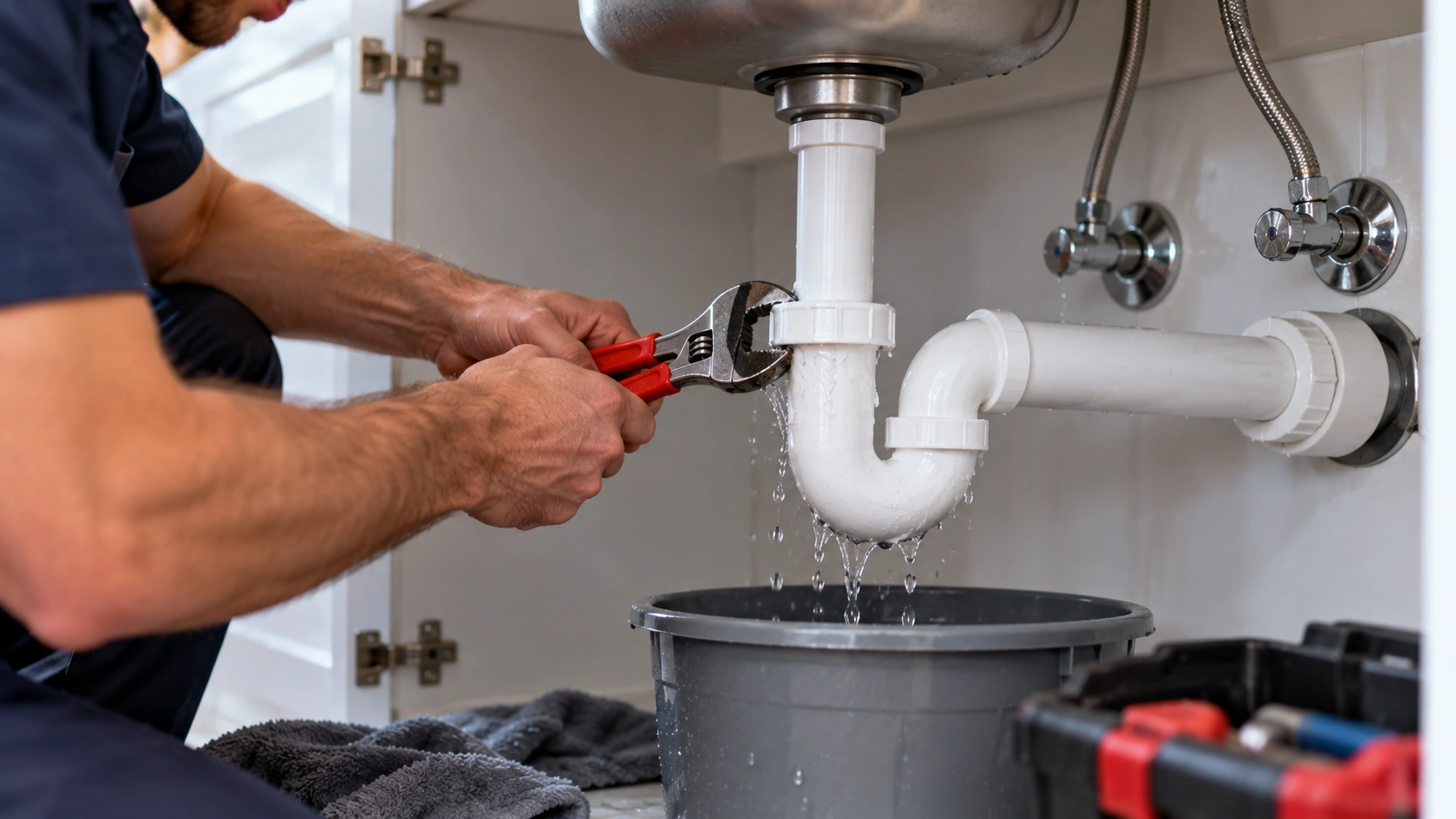
Possible causes include:
- A clogged faucet aerator
- A restricted faucet cartridge
- Partially closed sink valves
- Debris in supply connections
- A problem with the kitchen branch piping
Homeowners dealing with repeated sink, faucet, or water-line problems can review kitchen plumbing services rather than treating the issue as a whole-house pressure failure.
When the Bathroom Has Weak Water Flow
Bathroom pressure problems may involve:
- Showerhead buildup
- Faucet aerators
- Shower valves
- Fixture shutoff valves
- Aging supply lines
- Restricted branch piping
Low pressure that appears after changing fixtures or remodeling may also indicate that the existing piping configuration needs further evaluation.
Professional bathroom plumbing services can address fixture and supply-side problems when the issue is limited to bathrooms.
How to Narrow Down the Cause Before Calling a Plumber
Homeowners don’t need to dismantle plumbing equipment to gather useful information.
A few simple observations can make professional diagnosis easier.
Step 1: Determine How Much of the House Is Affected
Test multiple faucets and showers.
One fixture suggests a localized restriction. Every fixture points toward a system-wide issue.
Step 2: Compare Hot and Cold Water
Run hot and cold separately.
If only hot water has poor flow, the water heater or hot water distribution side deserves attention.
Step 3: Think About When the Problem Started
A sudden change may indicate a valve issue, leak, regulator failure, or utility problem.
A gradual decline is more consistent with buildup, corrosion, aging piping, or a developing restriction.
Step 4: Ask Whether Neighbors Have the Same Problem
This simple question can prevent unnecessary troubleshooting inside the house.
Several homes losing pressure together may indicate a water utility issue.
Step 5: Inspect for Visible Leaks
Check accessible areas around:
- Sinks
- Toilets
- Water heaters
- Exposed piping
- Basement plumbing
- Utility areas
- Outdoor water connections
Don’t open walls or excavate piping simply to search for a suspected leak.
Step 6: Check Accessible Valves
Confirm that obvious fixture and main valves haven’t been partially closed.
Avoid forcing old, seized, corroded, or leaking valves.
Step 7: Note What Happens During Simultaneous Use
Run one fixture and then briefly turn on another.
If the first fixture loses most of its flow, tell the plumber. That behavior can help narrow the diagnosis.
For homeowners looking at their plumbing system more broadly, the home plumbing services guide covers other common household plumbing concerns and maintenance considerations.
When Low Water Pressure Needs Professional Plumbing Service
Cleaning an aerator is one thing. Diagnosing hidden leaks, pressure regulators, deteriorated water lines, and restricted piping is another.
Professional evaluation becomes more appropriate when:
- Every fixture has low pressure
- Pressure suddenly dropped without explanation
- You suspect a hidden leak
- Water damage is visible
- Hot water pressure remains consistently poor
- Pressure changes significantly throughout the day
- Older plumbing appears corroded
- A pressure regulator may be failing
- The main water service may be damaged
- Simple fixture cleaning doesn’t solve the problem
The objective isn’t simply to make the water come out faster. The cause should be identified before changes are made to the plumbing system.
Increasing pressure without addressing a weak pipe, damaged fitting, or faulty regulator can create additional stress on the system.
Fix the Cause of Low Water Pressure, Not Just the Symptom
Low water pressure in a house doesn’t have one universal cause.
A weak bathroom faucet may only need a clogged aerator cleaned. Whole-house pressure loss could involve a shutoff valve, pressure regulator, leak, deteriorated piping, water service line, or municipal supply. Weak hot water alone can point toward the water heater or hot water plumbing.
Start by identifying where the problem occurs, compare hot and cold water, and pay attention to whether the change happened suddenly or gradually. Those details can rule out several possibilities before any repair begins.
If the problem continues, Foukas Plumbing & Heating can inspect the affected plumbing, determine what’s restricting normal water delivery, and recommend the appropriate repair or replacement based on the condition of the system.