

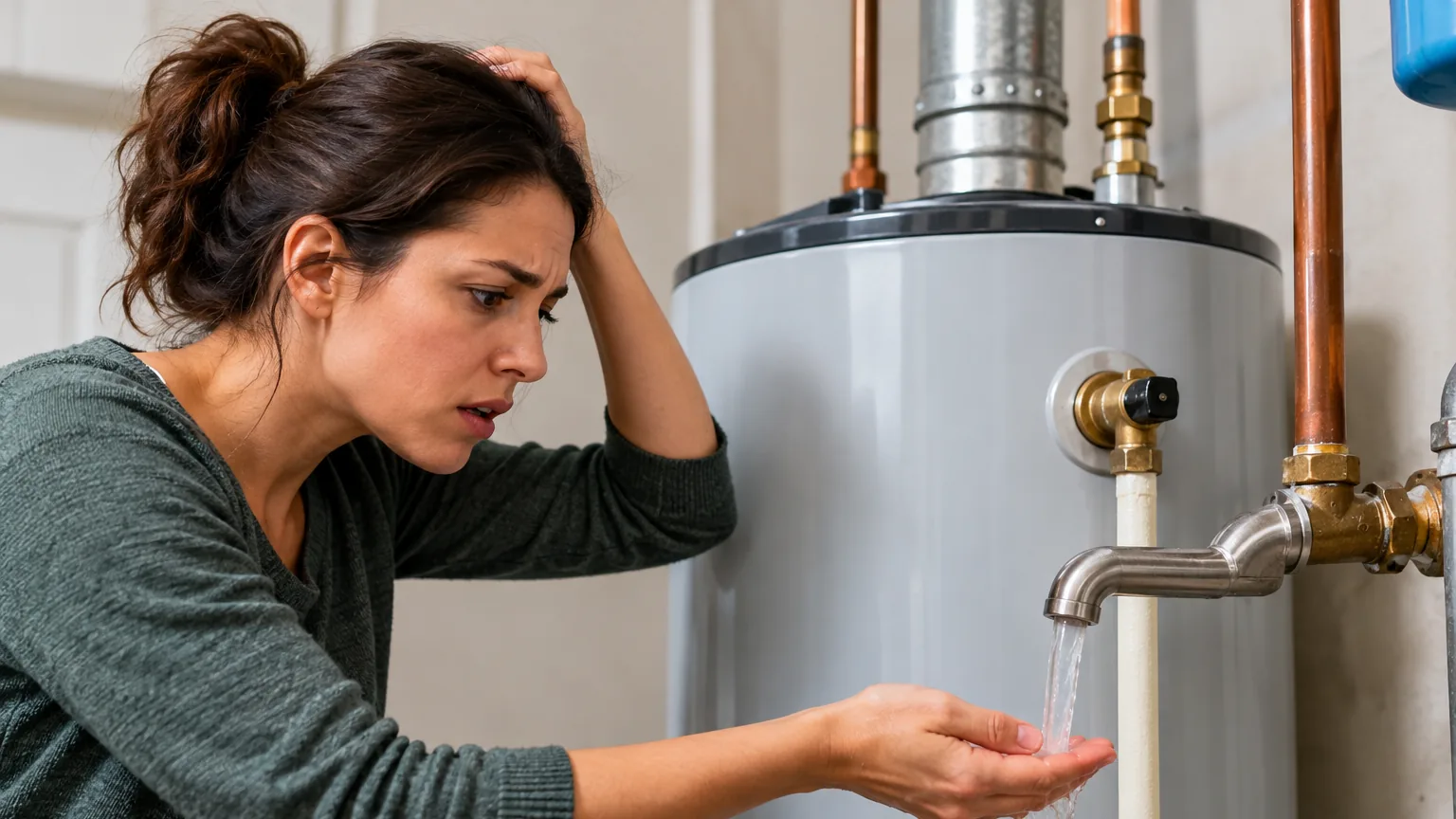
You turn on the shower, wait for the water to warm up, and nothing happens. Maybe the water stays completely cold. Maybe it gets warm for a minute before turning cold again. Either way, something isn’t working as expected.
If your water heater is not producing hot water, the cause may be a tripped circuit breaker, faulty heating element, gas ignition problem, thermostat failure, or malfunctioning mixing valve. In some cases, the water heater itself is working, but a problem elsewhere in the plumbing system prevents hot water from reaching the faucets.
The symptoms matter. A gas water heater with a working pilot light can still fail to heat water. An electric water heater can lose power without an obvious problem at the breaker panel. Even a recently installed water heater can have trouble caused by an incorrectly connected pipe or damaged component.
Before paying for a repair or replacing the entire unit, it helps to understand what the problem actually looks like.
1. Start by Identifying What Happens When You Turn on the Hot Water
The first step isn’t taking apart the water heater. It’s figuring out whether the system has stopped heating completely or is simply delivering less hot water than usual.
Run the hot water at two or three fixtures, preferably a bathroom sink, kitchen sink, and shower. Pay attention to how the water temperature changes.
| What You Notice | What It Could Mean |
|---|---|
| Every faucet produces completely cold water | Power interruption, failed heating element, burner problem, or safety shutdown |
| Hot water lasts only a few minutes | Reduced heating capacity, high demand, or damaged dip tube |
| Water is lukewarm everywhere | Low temperature setting, mixing valve failure, or heating problem |
| Kitchen sink gets hot but the shower stays cold | Shower cartridge, temperature limit stop, or mixing valve problem |
| Pilot light is on but water stays cold | Main burner is not operating, thermostat setting, or gas control problem |
| Water heater repeatedly shuts off | Electrical fault, overheating, ignition problem, or activated safety control |
| Tankless unit only works with some faucets | Insufficient water flow, fixture restriction, or system control problem |
These observations won’t identify a defective part with certainty, but they can prevent unnecessary repairs.
For example, replacing a water heater won’t solve a faulty shower cartridge. Likewise, replacing a thermostat without checking the electrical supply may leave the original problem unresolved.
If the problem affects the entire house, the next step is to identify what type of water heater you have.
2. Five Things You Can Safely Check Before Calling a Plumber
Some hot water problems have straightforward explanations. You may be able to identify them without opening the equipment or working with electricity and gas.
Check the Temperature Setting
Look at the accessible temperature controls on the water heater.
Has the setting been lowered recently? Is the system in vacation mode? Did someone adjust the controls while cleaning or working near the unit?
A water heater set too low may produce water that feels barely warm, especially when incoming cold water temperatures drop.
The U.S. Department of Energy commonly recommends approximately 120°F as a residential water heater temperature setting, although individual household needs and manufacturer requirements can differ.
Avoid raising the temperature excessively because hotter water increases the risk of scalding.
Look at the Circuit Breaker
If you have an electric water heater, locate its labeled circuit breaker.
An interrupted electrical supply can stop the heating elements from operating. A breaker that has tripped may explain why the hot water suddenly disappeared.
If the breaker trips again or won’t remain on, don’t keep resetting it. An electrical fault may be present.
Check the Water Heater Display
Many newer water heaters have a display, status indicator, or flashing diagnostic light.
Look for an error code and record it exactly as displayed.
These codes are specific to the manufacturer and model. A blinking light on one unit may indicate normal operation, while a similar pattern on another can indicate a fault.
The equipment manual provides the appropriate interpretation.
Look for Water Around the Tank
Check the floor around the water heater and the visible plumbing connections.
Water leaking from a fitting, valve, or tank may indicate a separate problem requiring attention.
If the leak is near electrical connections or controls, do not touch the equipment.
Consider Recent Water Usage
Was someone taking a long shower? Has the washing machine or dishwasher been running? Have several people used hot water consecutively?
A storage water heater needs time to recover after much of its heated water has been used.
If the hot water returns after normal recovery time, demand may be part of the problem. If it stays cold or the issue happens even with light usage, the heating system needs closer inspection.
3. Why an Electric Water Heater Stops Producing Hot Water
Electric tank water heaters commonly use heating elements and thermostats to maintain the water temperature.
If one of these components stops functioning, the result depends on which component has failed.
A Failed Upper Heating Element Can Leave the Entire Tank Cold
Many conventional electric water heaters contain two heating elements, one near the top of the tank and another near the bottom.
On common dual element designs, the upper element heats the upper portion of the tank first. Once that section reaches the required temperature, the controls allow the lower element to heat the remaining water.
If the upper element fails, the water heater may stop delivering hot water entirely.
A failed lower element can produce a different symptom. The heater may still deliver some hot water, but the supply runs out sooner than expected.
That difference is useful when diagnosing the problem.
For example, if a shower used to stay hot comfortably but now becomes cold much sooner, a lower heating element problem is one possibility.
A Faulty Thermostat May Prevent Heating
Thermostats determine when the heating elements need to operate.
A malfunctioning thermostat can interrupt the heating process even when electrical power is available.
The water heater may remain cold, produce inconsistent temperatures, or fail to recover after normal use.
Replacing a thermostat without confirming the fault may not solve the problem. The thermostat, heating elements, wiring, and available power should be evaluated together.
The High Temperature Safety Control May Have Tripped
Electric water heaters have safety controls designed to stop heating when certain unsafe conditions occur.
One is the energy cutoff, also called the ECO or high temperature limit control.
If it activates, the water heater may stop heating even though the circuit breaker remains on.
Some units have a reset button behind an access panel. However, a tripped safety control can indicate overheating or an electrical problem.
Do not repeatedly reset it or open electrical access panels without the required qualifications and safety procedures.
What If the Breaker Keeps Tripping?
Repeated breaker trips are not a normal part of water heater operation.
Possible causes include damaged wiring, a grounded heating element, faulty electrical connections, or a problem with the breaker or circuit.
The correct repair depends on testing. A plumber qualified to service electrical water heating components or an electrician may be needed.
Foukas Plumbing & Heating provides electric water heater repair for problems involving heating elements, thermostats, controls, and connected plumbing components.
4. Why a Gas Water Heater Has No Hot Water Even When the Pilot Is Lit
A gas water heater can have a visible pilot flame while the main burner isn’t heating the water.
This is an important distinction because homeowners sometimes assume that a lit pilot means the water heater is operating normally.
The Pilot Light and Main Burner Have Different Jobs
On a conventional gas water heater with a standing pilot, the pilot provides the flame used to ignite the main burner.
The main burner supplies the heat needed to raise the water temperature.
If the pilot is lit but the main burner doesn’t activate when heating is required, the tank may remain cold.
Possible reasons include a faulty gas control valve, thermostat problem, or an activated safety device.
A qualified technician can determine whether the burner is receiving the proper signal and whether the gas control system is operating safely.
The Temperature Control May Be Set Too Low
Sometimes the explanation is less complicated.
The heater may be operating, but its thermostat has been left on a low temperature or vacation setting.
Check the visible control and consult the manufacturer’s instructions to understand the setting.
Don’t assume that settings labeled A, B, C, or Hot represent the same temperatures across different brands.
The Pilot Light Keeps Going Out
If the pilot won’t remain lit, the problem may involve a thermocouple, thermopile, flame sensing component, gas supply, or another safety control.
Some failures also involve inadequate combustion air or venting problems.
Repeated relighting is not a substitute for diagnosing the cause. If the pilot goes out again, arrange professional inspection.
Poor Ventilation Can Shut the Water Heater Down
Gas water heaters need suitable combustion air and properly functioning exhaust venting.
Certain models include safety controls that shut down the burner if dangerous operating conditions are detected.
Blocked air openings or damaged venting can create serious safety concerns, including carbon monoxide exposure.
Do not bypass thermal switches, combustion safety devices, or gas controls.
A suspected gas supply or piping problem may also require professional gas line repair.
5. Why Hot Water Lasts Only a Few Minutes Before Turning Cold
A water heater that produces hot water initially but runs out unusually quickly presents a different problem from a completely cold tank.
The heater may still be working, but something is reducing the usable hot water supply.
The Lower Heating Element Isn’t Working
In many electric tank water heaters, a defective lower element allows a limited quantity of hot water to remain available near the top of the tank.
Once that water is used, colder water reaches the fixtures.
This can explain why the first part of a shower feels normal before the temperature drops.
The Dip Tube Is Damaged
Inside many storage water heaters is a component called a dip tube.
It directs incoming cold water toward the bottom of the tank, allowing hotter water near the top to flow toward the household fixtures.
If the dip tube cracks or breaks, incoming cold water may mix with hot water near the outlet.
The result can be a noticeably shorter supply of hot water even when the heating system is operating.
This isn’t just a theoretical possibility. In a public homeowner discussion about a recently installed water heater, the homeowner described persistent short showers and later reported that a technician had identified a broken dip tube.
That individual report does not establish how frequently dip tubes fail, but it illustrates why a hot water problem shouldn’t automatically be blamed on the thermostat or heating element.
Household Demand Exceeds the Heater’s Capacity
A water heater may also be too small for the amount of hot water being used.
For instance, a household may begin experiencing shorter showers after adding another bathroom or changing daily routines.
A unit that performed well under previous conditions may struggle when several fixtures demand hot water at the same time.
Before replacing the heater, compare normal household demand with the equipment’s rated performance.
Sediment Can Affect Heating Performance
Mineral deposits can accumulate in storage water heaters over time.
These deposits may interfere with heat transfer and contribute to longer recovery times, unusual noises, or reduced performance.
However, sediment buildup should not be treated as the automatic explanation for every hot water problem.
A sudden complete loss of heating is more directly associated with issues such as interrupted electrical power, failed heating components, or burner problems.
6. What If the Water Heater Is Hot but Your Faucets Are Cold?
Sometimes the water heater is producing hot water, but it isn’t reaching the fixtures at the expected temperature.
This can happen because of a faulty mixing valve, an unintended connection between hot and cold plumbing, or a problem at an individual fixture.
A Mixing Valve Can Dilute Hot Water
Some homes have a thermostatic mixing valve installed near the water heater.
The valve combines hot and cold water to deliver a controlled outlet temperature.
If it malfunctions, excessive cold water may enter the hot water supply.
The homeowner may experience lukewarm water at several fixtures, even when the water inside the heater is hot.
This type of problem requires evaluating the plumbing connections and valve operation, not automatically replacing the heating system.
A Shower Cartridge May Be the Actual Problem
If the kitchen sink gets consistently hot water but the shower doesn’t, the water heater may be functioning correctly.
A shower cartridge controls water movement and mixing inside the fixture.
A defective cartridge, incorrect temperature limit setting, or failed shower valve can prevent the shower from receiving adequately heated water.
Compare the water temperature at the bathroom sink and shower before assuming that the heater is responsible.
A problem isolated to the shower may require bathroom plumbing repair rather than water heater service.
Hot and Cold Water Can Mix Through Another Fixture
Certain plumbing faults allow cold water to cross into the hot water distribution system.
This is sometimes referred to as a plumbing crossover.
The issue can be difficult to identify because several fixtures may be affected at once.
A plumber can isolate sections of the plumbing system and test for unwanted mixing without replacing a functioning water heater.
7. Why a New Water Heater Might Not Produce Hot Water
A newly installed water heater should not be assumed to have a manufacturing defect simply because hot water isn’t available.
Installation and startup conditions can affect its operation.
The Electric Heater Was Energized Before the Tank Was Full
Electric heating elements must operate under the conditions specified by the manufacturer.
If an element is energized while not properly submerged, it can overheat and fail. This is commonly called dry firing.
A. O. Smith specifically identifies dry firing of the upper element as a possible cause of no hot water following a new electric water heater installation.
If the problem appeared immediately after installation, have the installer check the startup procedure and heating components.
The Water Connections Are Incorrect
Hot and cold supply connections must be installed according to the equipment’s instructions.
Reversed connections can interfere with the intended movement of water through certain tank designs.
A failed mixing valve, incorrect plumbing arrangement, or a valve left closed can also create problems after installation.
The Heater Hasn’t Completed Its Initial Heating Cycle
A storage tank needs time to heat its water supply.
The required time varies with the system’s capacity, heating output, initial water temperature, and operating conditions.
If the equipment has power and is operating normally, insufficient startup time may explain why the water isn’t hot immediately.
However, if the water remains cold after the expected recovery period, installation and component problems should be investigated.
For newly installed equipment, contact the installer before changing internal settings or attempting repairs.
8. Why Tankless Water Heaters Produce Cold or Inconsistent Hot Water
Tankless water heaters work differently from conventional storage tanks.
They heat water in response to demand, using sensors and controls to determine when heating should begin.
The Water Flow Is Too Low to Activate Heating
Tankless systems have minimum water flow requirements.
If the flow through the heater drops below the necessary level, the unit may not activate or may stop heating.
This can occur when a faucet is barely open, a fixture is restricted, or the system detects insufficient flow.
For example, Rinnai identifies minimum activation and operating flow requirements for its gas tankless equipment. These values depend on the equipment design and should not be applied to every manufacturer.
If the heater works with one faucet fully open but not when the faucet is opened slightly, the flow requirement may be relevant.
The System Has an Ignition or Sensor Problem
Gas tankless heaters rely on several components working together, including flow sensors, ignition systems, burners, and electronic controls.
If the system detects an ignition failure or another operating fault, it may shut down heating.
Record any displayed error code rather than repeatedly attempting to restart the unit.
Mineral Scale Restricts Performance
Scale can accumulate within the heat exchanger of a tankless water heater.
Depending on the severity, mineral buildup may affect water flow, heating performance, or system operation.
Maintenance should follow the manufacturer’s recommendations for the specific model.
Too Many Fixtures Are Running at Once
Tankless systems don’t store a large reserve of heated water, but they still have limits on how much water they can heat at the requested temperature.
Running multiple showers or appliances simultaneously may exceed the unit’s rated heating capacity.
Cold incoming water can also affect the amount of hot water the heater can deliver.
Proper sizing depends on the simultaneous flow requirements and the temperature increase needed.
If your system frequently shuts down or delivers inconsistent temperatures, tankless water heater service can help determine whether the problem involves maintenance, controls, or system capacity.
9. Why a Heat Pump Water Heater Isn’t Heating Properly
Heat pump water heaters move heat from the surrounding air into stored water. Many models also include electric resistance elements for supplemental heating.
Because of this design, their performance can be affected by operating modes, airflow, and heat pump components.
The Unit Is in an Incorrect Operating Mode
Heat pump water heaters may offer modes such as efficiency, hybrid, electric, and vacation.
Some modes prioritize energy savings and may recover more slowly under certain conditions.
If the heater has recently been adjusted, verify that the mode matches the household’s needs.
Airflow Is Restricted
Heat pump units require suitable airflow to transfer heat.
Dirty filters or blocked air openings may reduce their performance.
Check the equipment manual for filter cleaning instructions and required clearances.
Sensors or Backup Heating Components Have Failed
A faulty temperature sensor, electric resistance element, or another control component can affect hot water production.
A display error may help a technician identify the fault.
Foukas Plumbing & Heating also provides heat pump water heater services for problems involving operating modes, heating performance, and equipment controls.
10. When No Hot Water Becomes a Safety Concern
Losing hot water is frustrating, but not every problem requires emergency service.
Certain warning signs, however, should never be ignored.
Gas Smell Near the Water Heater
If you smell natural gas or suspect a gas leak, leave the building immediately.
Do not attempt to relight the pilot, operate electrical switches, or inspect gas connections.
Contact the gas utility’s emergency service or local emergency responders from a safe location.
Repeated Electrical Shutdowns
A circuit breaker or internal safety control that repeatedly trips can indicate an underlying electrical or overheating problem.
Do not bypass safety controls or keep restoring power simply to obtain hot water.
Water Leaking Near Electrical Equipment
Water around electrical connections creates a potential shock hazard.
Avoid touching the equipment and contact a qualified professional.
Suspected Carbon Monoxide Exposure
Fuel burning water heaters must have proper combustion and ventilation.
Carbon monoxide is odorless and can be dangerous.
If a carbon monoxide alarm sounds, leave the building and contact emergency services. Seek medical attention if exposure is suspected.
The CDC recommends regular professional servicing of fuel burning appliances, including gas water heaters, along with appropriate carbon monoxide alarms.
For urgent plumbing problems, Foukas Plumbing & Heating provides information about its emergency plumbing services.
11. Should You Repair or Replace a Water Heater That Isn’t Producing Hot Water?
A water heater that stops heating doesn’t necessarily need to be replaced.
The correct decision depends on the specific fault, the condition of the equipment, and the cost of restoring reliable operation.
When Repair Is Usually Worth Considering
Repair may be appropriate when the tank is structurally sound and the problem involves a replaceable component.
Examples include:
- A failed electric heating element
- A defective thermostat
- A malfunctioning temperature sensor
- A repairable ignition or control problem
- A faulty external mixing valve
- A damaged plumbing connection
The exact repair should be based on a diagnosis rather than the symptom alone.
When Replacement May Be More Practical
Replacement should be considered when the storage tank is leaking, significant corrosion is present, repairs are becoming frequent, or major component repairs are economically impractical.
The unit’s condition matters more than age alone.
A relatively newer water heater may need replacement if its tank has failed, while an older unit with a serviceable component problem may still be repairable.
If the existing heater cannot meet normal household demand even when working correctly, choosing a properly sized replacement may also make sense.
A professional can compare water heater replacement options based on hot water usage, equipment type, installation requirements, and available energy sources.
What Should a Plumber Check Before Recommending Replacement?
A useful inspection should determine whether the problem originates in the heater or elsewhere in the plumbing system.
Depending on the equipment, this may include evaluating the power supply, controls, heating elements, burners, temperature settings, water flow, mixing valves, leaks, and visible safety conditions.
Ask for an explanation of the failed component and whether repair is reasonable before approving a complete replacement.
12. Frequently Asked Questions About Water Heaters Not Producing Hot Water
Why Is My Water Heater Running but the Water Is Still Cold?
A water heater may have power or a working pilot light without actually heating the water. Faulty heating elements, thermostats, burners, controls, and mixing valves are possible causes. The equipment should be tested to determine whether heat is being produced and reaching the fixtures.
Why Do I Have Hot Water in the Kitchen but Not the Bathroom?
If the kitchen faucet produces hot water normally, the bathroom fixture may have a defective shower cartridge, mixing valve, or temperature limit control. Compare the bathroom sink and shower temperatures to help isolate the problem.
Can Sediment Cause a Water Heater to Stop Producing Hot Water?
Sediment can interfere with heating performance and contribute to slow recovery or reduced efficiency. However, complete heating failure may involve a separate electrical, ignition, or control problem. Sediment should not be assumed to be the cause without inspection.
Why Does My Hot Water Run Out After Five Minutes?
Possible reasons include a failed lower heating element, damaged dip tube, high household demand, or reduced heating capacity. A plumber can determine whether the water heater is producing its rated hot water supply.
Can I Reset My Water Heater to Restore Hot Water?
Some water heaters have reset procedures, but they depend on the manufacturer and model. A safety control that trips repeatedly may indicate overheating or another fault. Follow the equipment manual and do not repeatedly bypass or reset a safety shutdown.
How Long Should I Wait for Hot Water After Resetting the Heater?
The heating time depends on the water heater’s type, capacity, power output, and starting water temperature. Consult the model’s recovery specifications. If the system does not begin recovering as expected, a component or supply problem may still be present.
How Can I Reduce the Risk of Future Hot Water Problems?
Follow the manufacturer’s maintenance schedule, watch for leaks, monitor changes in water temperature, and address unusual noises or error codes.
Electric, gas, tankless, and heat pump systems have different maintenance requirements. Regular inspection can help identify problems, although it cannot prevent every equipment failure.
Get Your Hot Water Working Again With Foukas Plumbing & Heating
When a water heater stops producing hot water, guessing which part has failed can lead to unnecessary repairs.
An electric heater may have a damaged element, a gas heater may have an ignition problem, or a working heater may be supplying hot water through a faulty mixing valve. The symptoms may look similar, but the repairs are very different.
Foukas Plumbing & Heating provides water heater repair, replacement, and installation services throughout Greater Boston and surrounding service areas. The company works with conventional tank, gas, electric, tankless, and heat pump water heating systems.
If your water heater isn’t heating properly, contact Foukas Plumbing & Heating to arrange a professional inspection and discuss the next steps.