

A water heater rarely gets much attention until the morning shower turns cold, the hot water starts looking rusty, or a puddle appears beneath the tank. By then, a problem that began with a worn component or mineral buildup may have become more serious.
Knowing the signs your water heater needs to be replaced can help you avoid unexpected breakdowns, repeated repair bills, and water damage. However, not every unusual noise, temperature change, or small leak means you need a new unit. Some problems can be resolved with maintenance or a straightforward repair.
The important part is understanding what the symptoms are telling you. Whether you have a traditional storage tank or a tankless system, the condition of the equipment, its age, and its repair history all matter.
Here are seven warning signs to watch for, along with practical guidance on when to repair your existing system and when to consider a replacement.
1. Your Water Heater Is More Than 10 Years Old
Age is one of the first things to consider when evaluating a water heater. Traditional storage tank water heaters often last around 10 years, although the actual lifespan depends on water quality, maintenance, equipment design, and daily usage.
A water heater that has reached its tenth year isn’t necessarily ready for the scrap yard. Some continue working reliably beyond that point. Others develop corrosion or performance problems earlier, particularly when maintenance has been neglected or water conditions are hard on the tank.
Over time, the protective components inside a storage water heater deteriorate. One of these components is the anode rod, which helps protect the steel tank against corrosion. As it wears away, the tank can become more vulnerable to rust.
Sediment can also collect at the bottom of the tank. If it isn’t addressed, the accumulation may affect heating performance and contribute to deterioration.
How to Find Out How Old Your Water Heater Is
Look for the manufacturer’s label on the side of the unit. Some labels show the manufacturing date directly. Others contain a serial number that identifies when the water heater was made.
Because serial number formats vary by manufacturer, check the manufacturer’s website or product documentation rather than assuming the numbers represent a particular date.
If the unit is approaching or beyond its expected service life, consider having it inspected. An older heater that’s performing well may not need immediate replacement, but knowing its condition gives you time to plan before a failure occurs.
2. You’re Running Out of Hot Water Faster Than Before
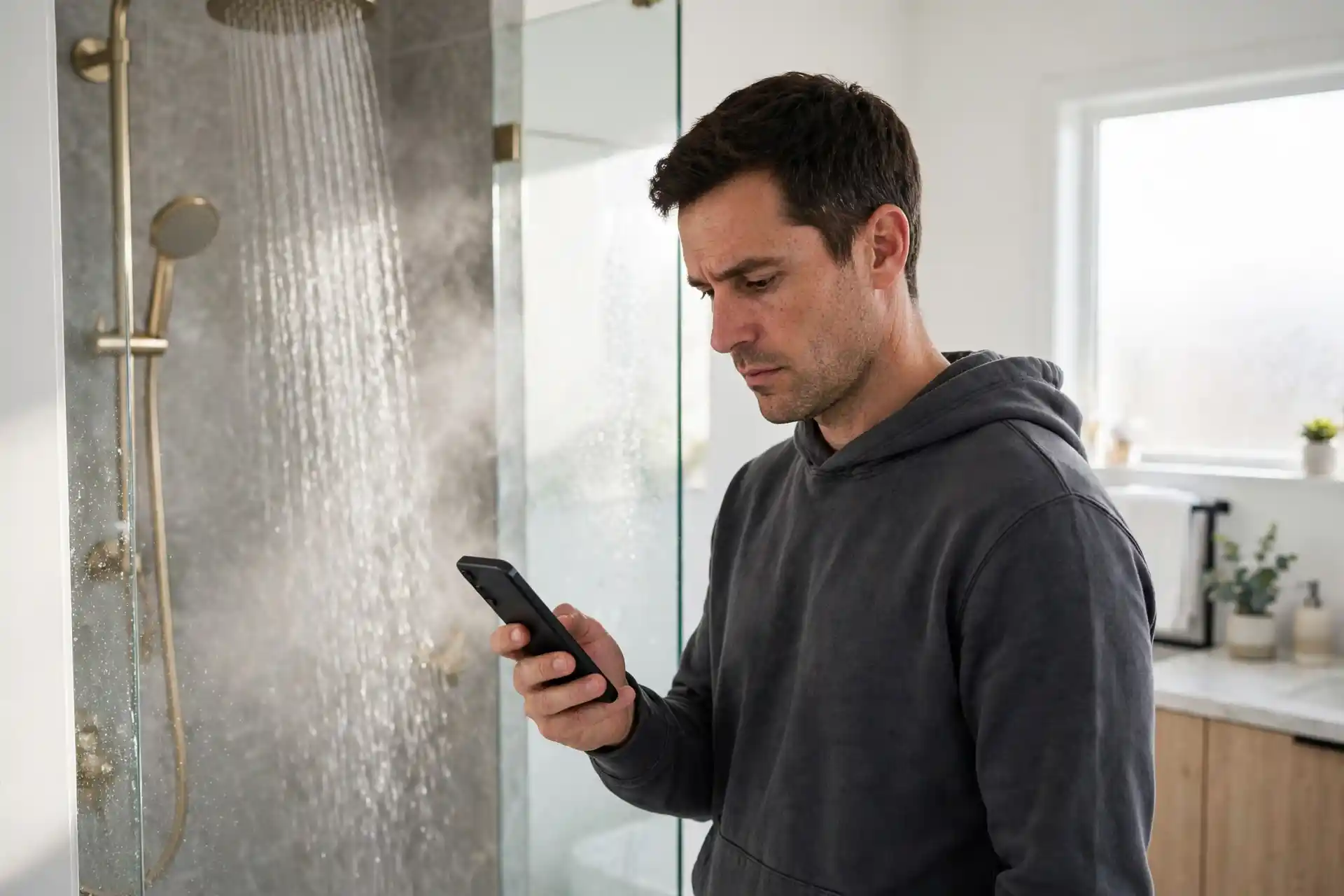
Remember when several people could shower without anyone running out of hot water? If the last person now gets lukewarm water after only a few minutes, something may have changed inside the system.
Reduced hot water capacity is one of the more noticeable signs of water heater trouble. The cause, however, isn’t always a failing tank.
Traditional storage water heaters hold a fixed amount of heated water. As hot water is used, cold water enters the tank and the system needs time to recover. If the heating process becomes less effective, the available supply may run out sooner.
Several problems can produce this symptom:
- Sediment collecting inside the tank
- A damaged heating element in an electric water heater
- Thermostat or temperature control problems
- A deteriorated dip tube that allows incoming cold water to mix improperly
- Increased household demand that exceeds the system’s capacity
Temperature fluctuations can provide another clue.
For example, if the water suddenly switches between hot and cold at several fixtures, the problem may involve the water heater or its controls. If it happens only in one shower, a faulty shower mixing valve could be responsible instead.
When Is It a Repair Rather Than a Replacement?
A relatively new water heater with a defective thermostat or heating element may only need a component replacement.
On the other hand, if an older tank has lost capacity, requires repeated repairs, and struggles to meet normal household demand, replacing it may provide better long-term value.
Professional water heater repair services can help identify whether the problem involves a replaceable part, mineral buildup, or deterioration of the equipment itself.
3. Rusty or Discolored Water Comes From Your Hot Water Taps
Hot water should normally run clear. If you begin noticing a reddish, brown, or yellow tint, corrosion or sediment may be affecting the water supply.
One possible cause is deterioration inside the water heater. Many traditional storage tanks are made from steel with a protective lining. They also contain an anode rod designed to reduce corrosion of exposed metal.
When the anode rod becomes depleted or the tank lining deteriorates, corrosion can begin affecting the tank’s interior.
However, discoloration doesn’t automatically mean the water heater has failed.
Check Whether the Discoloration Affects Hot Water Only
There is a useful distinction homeowners can make before requesting service.
If both hot and cold water are discolored, the cause may involve the incoming water supply or household plumbing.
If the discoloration occurs consistently with hot water but not cold water, the water heater or hot-water piping becomes a more likely source.
Rusty water can also result from aging galvanized pipes, which is why the source should be confirmed rather than assuming the tank needs replacement.
Can a Rusty Water Heater Be Repaired?
That depends on where the corrosion has developed.
If the problem is a deteriorated anode rod and the tank remains structurally sound, replacing the rod and performing appropriate maintenance may help.
If corrosion has damaged the tank itself, replacing the entire unit is generally necessary. Once a pressurized storage tank develops a corrosion-related leak, replacing individual external components won’t restore the damaged tank.
Persistent discoloration deserves professional attention, particularly when it occurs alongside leaks, unusual noises, or declining hot water performance.
4. You Notice Water Leaking Around the Heater
Finding water near a water heater can be alarming, especially when the equipment is installed in a finished basement, utility closet, or another area where moisture could damage surrounding materials.
A leak should always be investigated promptly. Still, it’s important to determine where the water is coming from before deciding the heater needs replacement.
Water may escape from several locations, including the supply connections, drain valve, temperature and pressure relief valve, or storage tank.
Leaks from fittings and certain external components may be repairable. A leaking tank is a different situation.
The temperature and pressure relief valve is an important safety component designed to release water when unsafe pressure or temperature conditions develop. Water discharging from this valve may indicate a valve problem or an underlying pressure or temperature issue.
Never plug, cap, or obstruct its discharge pipe to stop the water.
Why a Leaking Storage Tank Usually Needs Replacement
Corrosion can gradually weaken the tank’s metal walls. Once water begins escaping through a damaged section of the tank, replacing a valve or tightening a fitting won’t correct the structural failure.
Water damage can also develop before a leak becomes obvious. Moisture may spread beneath flooring, enter wall cavities, or affect nearby stored belongings.
For a heat pump water heater, it’s also worth distinguishing normal condensate drainage from a water leak. A blocked or disconnected condensate line may create puddles without indicating tank failure.
If the source isn’t apparent, professional leak detection services can help identify the problem and determine the appropriate next step.
A suspected tank leak is not something to postpone until the next scheduled maintenance visit.
5. Your Water Heater Makes Popping, Rumbling, or Banging Noises
A water heater makes some noise during normal operation, but unfamiliar sounds can indicate developing problems.
Popping and rumbling are particularly associated with mineral buildup inside traditional storage water heaters.
As water is heated, dissolved minerals can separate and settle at the bottom of the tank. Over time, those deposits may form a hardened layer.
During heating, water trapped around or beneath the sediment can create popping or rumbling sounds. The buildup may also interfere with heat transfer and contribute to higher operating temperatures near the tank’s heating surfaces.
Not every sound comes from sediment, though.
Banging may sometimes originate from water hammer in the plumbing system. Tankless equipment can develop scale buildup that affects water flow or heat transfer. Heat pump water heaters contain fans and compressors, so their normal operating sounds are different from those of conventional electric tanks.
Will Flushing the Water Heater Fix the Noise?
If the problem is caused by manageable sediment buildup, maintenance may improve the situation.
Flushing a tank can help remove loose sediment when performed according to the manufacturer’s instructions. Heavily hardened deposits, however, may not be removed easily.
Older equipment requires additional care because valves and other components may already be deteriorated.
If the noise persists after appropriate maintenance, or if the heater also has corrosion, leaks, or reduced performance, a professional should evaluate whether further repairs are worthwhile.
Strange noises alone don’t establish that replacement is necessary. The condition of the tank and the cause of the sound matter more.
6. Your Energy Bills Keep Increasing Without a Clear Reason
An inefficient water heater can consume more energy than necessary to provide the hot water your household uses.
This may happen gradually enough that the change goes unnoticed until you compare several utility bills.
Traditional storage water heaters lose some heat while storing hot water. Depending on the equipment type, age, insulation, maintenance history, and operating condition, energy losses can become a significant consideration.
Sediment accumulation may interfere with heat transfer. Faulty controls can affect heating cycles, while an undersized system may struggle to keep up with regular demand.
Before blaming the water heater, check for other explanations.
Utility rate increases, seasonal changes, additional occupants, greater hot water use, or a hidden hot water leak can all affect energy costs.
A useful comparison is your energy consumption over several billing periods, rather than simply the amount charged.
Could a New Water Heater Reduce Operating Costs?
Potentially, especially if the existing system is inefficient or no longer performing as intended.
The savings depend on the current unit, the proposed replacement, local energy prices, household demand, and installation conditions.
For example, a properly installed heat pump water heater uses electricity to transfer heat into stored water rather than relying entirely on electric resistance heating. That can make it substantially more efficient than a conventional electric resistance model.
An increase in energy use isn’t enough to justify immediate replacement by itself. It is a reason to investigate the system’s performance, particularly when other warning signs are present.
7. You’re Paying for Water Heater Repairs Too Often
One repair doesn’t mean your water heater has reached the end of its life. Heating elements, thermostats, valves, and other components can fail while the rest of the equipment remains in good condition.
The situation changes when problems keep returning.
Imagine repairing a thermostat, replacing a faulty valve several months later, and then experiencing another loss of hot water. Each repair might be reasonable on its own, but the combined expense raises an important question: How much useful life is left in the equipment?
Frequent repairs can indicate age-related wear, recurring operational problems, or broader deterioration.
A practical replacement decision should consider more than the price of the next repair.
Ask whether the repair addresses the underlying problem, whether other major components are approaching failure, and whether the equipment is still appropriately sized for the property.
Warranty coverage also matters. A repair covered by an existing warranty may make better financial sense than replacing an otherwise dependable unit.
When repeated breakdowns are accompanied by advanced age, declining efficiency, or structural deterioration, professional water heater replacement becomes a reasonable option to consider.
Can Your Water Heater Be Repaired Instead of Replaced?
The difference between a repairable problem and a failing water heater isn’t always obvious from the symptoms.
A loss of hot water could be caused by a relatively inexpensive component. The same symptom could also appear in an older unit with extensive corrosion or multiple failing parts.
A professional inspection helps separate those situations.
| Water Heater Condition | Repair May Be Appropriate | Replacement May Be Better |
|---|---|---|
| Equipment age | Relatively young and otherwise reliable | Near or beyond expected service life with other problems |
| Water leaks | Faulty connection, valve, or replaceable fitting | Corroded or leaking storage tank |
| Heating problems | Failed thermostat, heating element, or control | Multiple recurring failures or major internal damage |
| Unusual noises | Manageable sediment or minor component issue | Persistent problems combined with severe deterioration |
| Hot water supply | Repairable fault or incorrect settings | Equipment cannot meet household demand |
| Repair history | Isolated issue with reasonable repair cost | Repeated repairs with limited remaining equipment life |
A common industry rule of thumb is to compare a repair estimate against the installed cost of a suitable replacement. If the repair approaches a substantial portion of that replacement cost, it’s worth examining the remaining lifespan and warranty before proceeding.
That comparison isn’t a universal rule. A costly repair may still make sense on a relatively new, high-value system, while an inexpensive repair may not be worthwhile on a severely corroded tank.
The goal is to avoid both unnecessary replacement and repeated spending on equipment that is no longer dependable.
What Should You Check Before Calling a Plumber?
You don’t need to dismantle your water heater to gather useful information.
A few observations can help a professional diagnose the issue more efficiently.
- Check the equipment label. Find the brand, model, and serial number. These can help identify the unit’s age and specifications.
- Observe where the problem occurs. Does every hot water fixture have the same issue, or only one faucet or shower?
- Look for visible moisture. Without removing panels or touching electrical components, see whether water is collecting near a pipe connection, valve, or the tank.
- Notice any unusual sounds or error codes. Record the type of sound or the displayed code if it is safe to do so.
- Review the repair history. Previous service records and recurring symptoms can help determine whether replacement makes financial sense.
When a Water Heater Problem Needs Urgent Attention
A significant leak, suspected tank failure, or water collecting near electrical equipment should be treated as urgent.
If it is safe to do so and you know the correct procedure for your equipment, follow the manufacturer’s instructions for isolating the water supply and shutting down the unit. Avoid touching wet electrical equipment or attempting repairs yourself.
If you suspect a gas leak, leave the building immediately. Do not operate switches, appliances, or the gas shutoff. Call 911 from outside the building.
For urgent plumbing problems that don’t involve an immediate gas or electrical emergency, emergency plumbing services can help identify the source of the failure and address the water-related problem.
Choosing the Right Replacement Water Heater for Your Home
Once replacement becomes the practical decision, the next question is what type of water heater will best meet your household’s needs.
Replacing the existing unit with the same size and technology isn’t necessarily the right choice. Your household may use more hot water than it did when the original system was installed, and equipment options may have changed.
The main considerations include hot water demand, available installation space, energy source, operating cost, and equipment compatibility.
Traditional Storage Tank Water Heaters
Conventional tanks store a set quantity of heated water for use throughout the day.
They can be a practical replacement when the existing installation is suitable and the household’s hot water demand is predictable.
Tank size alone doesn’t tell the whole story. The first-hour rating, which describes how much hot water a storage system can deliver during a high-demand hour, is an important sizing factor.
Tankless Water Heaters
Tankless systems heat water as it flows through the equipment instead of maintaining a large stored supply.
They can be a good option for properties where installation requirements and hot water demand make them suitable.
However, tankless does not mean unlimited hot water at every flow rate. Each unit has a maximum heating capacity. If too many fixtures require hot water simultaneously, the system may not be able to maintain the desired temperature.
When considering tankless water heaters, compare flow rate, incoming water temperature, fuel requirements, venting, and anticipated simultaneous use.
Heat Pump Water Heaters
Heat pump water heaters use electricity to move heat from surrounding air into the water stored in the tank.
They can substantially reduce energy consumption compared with conventional electric resistance water heaters, but they also have installation considerations.
Adequate surrounding air, equipment clearance, condensate drainage, electrical compatibility, and expected hot water demand all affect suitability.
Homeowners exploring heat pump water heaters should consider both energy savings and the physical requirements of the installation location.
Why Proper Installation and Sizing Matter
The right equipment still needs to be installed correctly.
A replacement may require changes to plumbing connections, venting, electrical service, drainage, or the installation area. Local permit and code requirements may also apply.
Professional water heater installation helps ensure that the selected system is compatible with the property and appropriately sized for its expected use.
Common Questions About Water Heater Failure
Can a Water Heater Stop Working Without Any Warning?
Yes. Some failures happen suddenly, including problems involving electrical components, controls, or internal parts.
Other failures develop gradually and produce noticeable changes such as reduced hot water, leaks, corrosion, or unusual sounds.
Routine inspections and paying attention to small changes can help identify developing issues, but they cannot guarantee that every failure will be predicted.
Does Low Hot Water Pressure Mean I Need a New Heater?
Not necessarily.
If the cold water pressure is normal but hot water flow is weak, mineral buildup, valves, piping restrictions, or a tankless system issue may be involved.
When only one fixture is affected, inspect that fixture before assuming the heater is responsible.
A professional familiar with residential plumbing services can assess the hot water distribution system and identify whether the restriction is in the heater, pipes, or fixtures.
Does a Rotten Egg Smell Mean the Water Heater Is Failing?
It depends on where the smell is coming from.
A sulfur-like odor in hot water may result from bacterial activity or chemical reactions inside the water heater and plumbing system. It doesn’t automatically mean the tank needs replacement.
A gas odor in the room surrounding a gas water heater is a different and potentially dangerous situation. Leave the building and contact emergency services from outside.
Identifying the source of the odor is essential before attempting any treatment or repair.
Should I Replace a Water Heater That Still Works After 10 Years?
Not automatically.
A well-maintained water heater that operates reliably and has no evidence of corrosion or leakage may still have useful service life.
However, around this age, it makes sense to check the equipment’s condition, review warranty coverage, and begin planning for eventual replacement.
The decision should be based on the entire condition of the system, not its age alone.
Is It Better to Replace a Water Heater Before It Breaks?
In some situations, yes.
If a storage tank shows advanced corrosion, an active tank leak, or multiple signs of deterioration, replacing it before a major failure may reduce the risk of unexpected water damage.
For equipment that remains in good working condition, professional maintenance and periodic inspection may be appropriate instead.
Planning ahead also gives homeowners more time to compare equipment and installation options.
Don’t Wait for a Major Failure to Make a Replacement Plan
A leaking storage tank is a much clearer reason to replace a water heater than a single unusual noise or a temporary temperature problem. In between those situations, the right decision depends on equipment age, condition, repair costs, and the likelihood of continued reliable operation.
If you’ve noticed several of these warning signs, having the system evaluated can help you understand what is actually happening before spending money on another repair.
Foukas Plumbing & Heating provides water heater services for homeowners and businesses throughout Greater Boston and nearby communities, including repairs, replacements, and installation of traditional, tankless, and heat pump systems.
If your existing unit is leaking, struggling to supply hot water, or becoming increasingly expensive to maintain, contact Foukas Plumbing & Heating to schedule an evaluation and discuss the most practical next step for your property.