


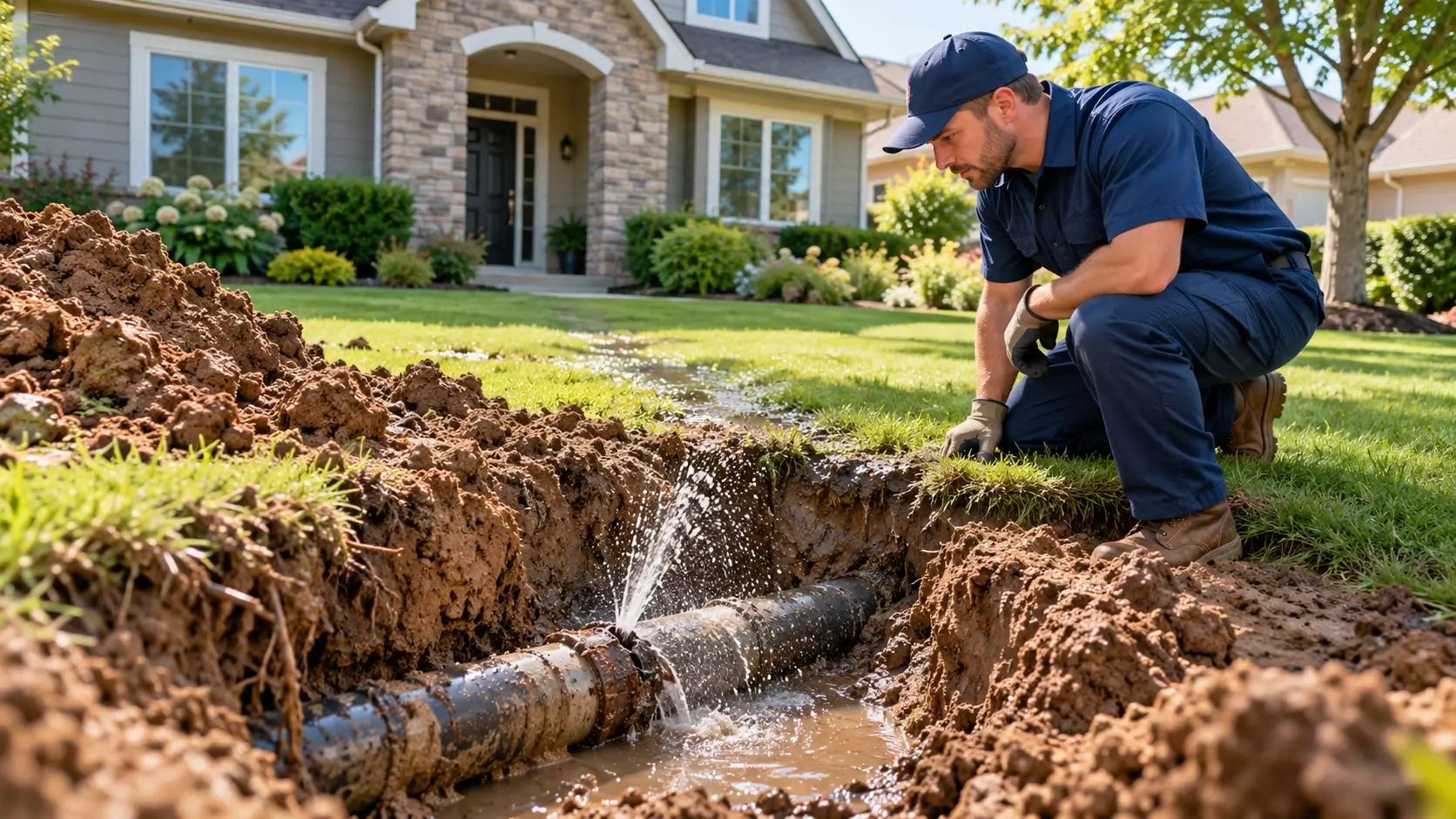
Your main water line quietly supplies water to the entire house, so problems with it can affect several fixtures at once. A sudden drop in water pressure, unexplained water use, soggy areas in the yard, or water appearing where it shouldn’t can all point to a problem somewhere along the incoming water line.
Some symptoms are easy to mistake for a leaking faucet, faulty fixture, or another plumbing issue. That is why identifying the pattern matters before deciding what needs to be repaired.
If you suspect a problem with the pipe supplying your home, professional water line services can help determine where the problem is located and whether repair or replacement makes sense.
First, Know Which Water Line You’re Dealing With
People often use the term “water main” for several different pipes.
The public water main is generally part of the municipal distribution system. Your home’s water service line connects the property to that supply and carries water toward the building. Inside the home, smaller supply pipes distribute water to faucets, toilets, showers, appliances, and other fixtures.
That distinction matters because a problem affecting one bathroom faucet is very different from a problem affecting the main supply to the entire property.
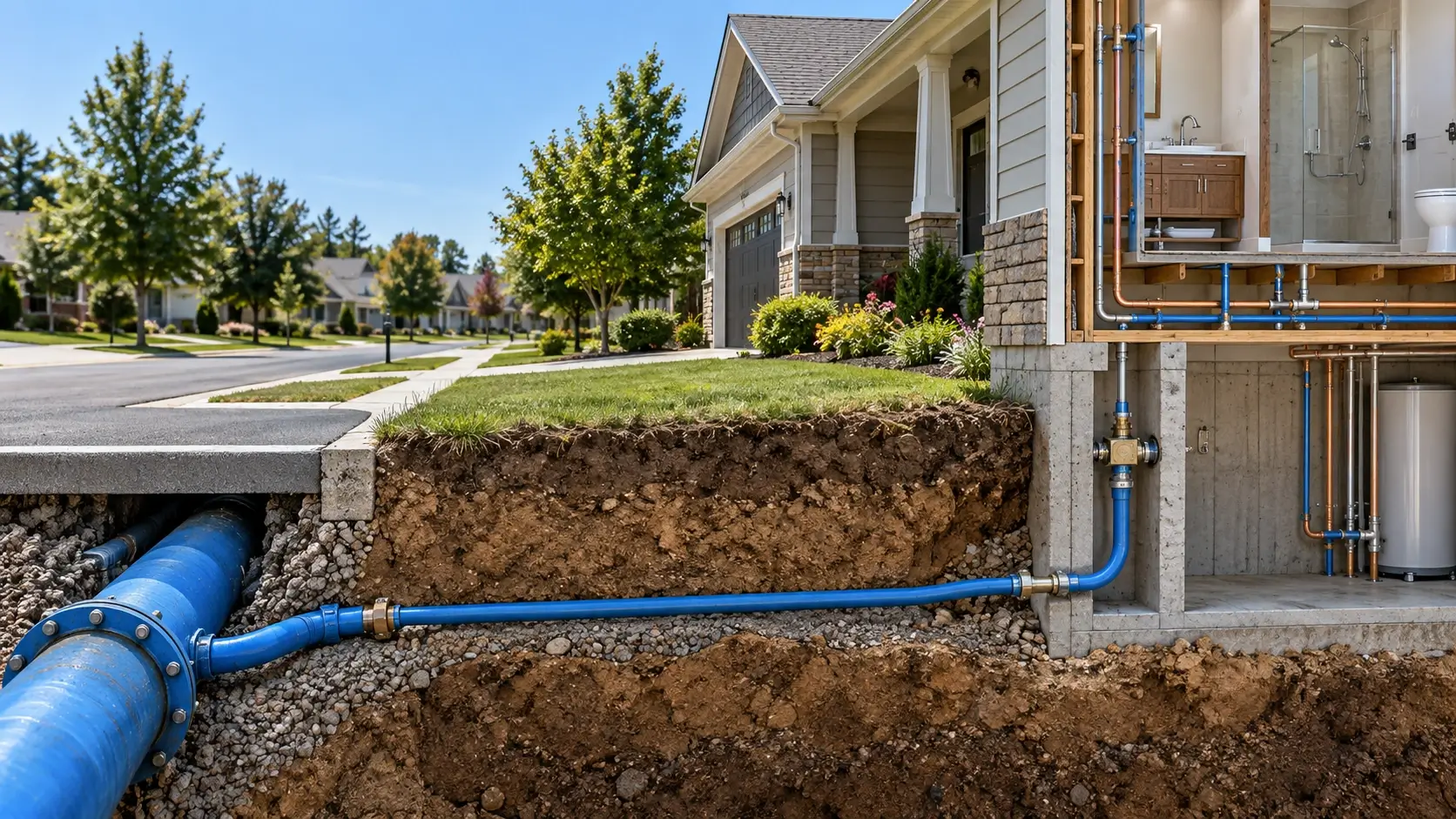
A main water line problem becomes more likely when symptoms appear throughout the house or when there are signs of leaking between the water source and the point where the line enters the building.
For plumbing problems that extend beyond the main line itself, residential plumbing services can help identify whether the source is the incoming supply, interior piping, or a specific fixture.
Signs Your Main Water Line May Need Repair
A damaged water line does not always produce an obvious stream of water. Small underground leaks can develop gradually, which means homeowners may notice secondary symptoms before they ever see the damaged pipe.
Several warning signs are especially worth paying attention to.
Water Pressure Has Dropped Throughout the House
A noticeable reduction in water pressure is one of the more recognizable signs of a possible supply problem.
You might notice that:
- Showers feel weaker than usual
- Faucets produce less flow
- Multiple fixtures experience reduced pressure
- Pressure becomes noticeably worse when more than one fixture is running
EPA guidance notes that unusually low service pressure can be associated with leaks, although pressure problems can have several other causes.
One low-pressure faucet usually suggests a local fixture problem rather than a damaged main line. When several fixtures are affected at the same time, the issue deserves a broader investigation.
A plumber can use leak detection services to help distinguish between a hidden water leak and other possible causes of reduced pressure.
Unexplained Wet or Soggy Areas Appear Outside
An underground water line leak may eventually saturate the soil above it.
You may find a section of the yard that remains unusually wet even though there hasn’t been recent rain or irrigation. Depending on the location and severity of the leak, you could notice:
- Persistent puddles
- Soft or muddy soil
- Damp areas along the expected water line route
- Water collecting near the foundation
- Unusual moisture close to the meter or service entrance
EPA guidance on water distribution leaks identifies unexpected moisture and discolored wet areas near water mains or service lines as possible signs of leakage.
One wet patch does not automatically confirm a broken water line. Drainage conditions, irrigation systems, downspouts, groundwater, and other plumbing can produce similar symptoms. The location and persistence of the moisture provide important clues.
Your Water Bill Rises Without an Obvious Reason
A leaking main water line can allow water to escape continuously.
If household habits haven’t changed but water consumption has increased, the extra usage deserves investigation.
Before assuming the main line is responsible, check easier sources first. Toilets, faucets, outdoor spigots, irrigation equipment, water heaters, and appliances can all leak.
EPA WaterSense recommends comparing water bills and checking the meter when unexpected consumption appears.
If common household leaks aren’t responsible, the incoming water line becomes another possibility worth checking.
For a broader look at household plumbing problems that may increase water consumption, the home plumbing services guide provides additional information about common residential issues.
Your Water Meter Moves When Everything Is Off
The water meter can provide a useful clue when you’re trying to determine whether water is escaping somewhere in the plumbing system.
Turn off faucets, appliances, irrigation equipment, and anything else that intentionally uses water. Then check the meter.
EPA guidance recommends taking a meter reading when no water is being used and checking it again later. If the reading changes, water may be flowing somewhere in the system.
A changing meter confirms that water is being used or lost somewhere, but it does not tell you exactly where.
The leak could be:
- Inside the home
- Beneath the building
- At a fixture
- In an outdoor plumbing system
- Along the service line
Further testing is needed to isolate the source.
You Hear Water Running When No Fixture Is Open
Water moving through plumbing can sometimes be heard even when the source isn’t visible.
If every faucet, toilet, appliance, and outdoor water source is off but you still hear a steady rushing, hissing, or running sound, investigate it instead of assuming it is normal pipe noise.
Check accessible plumbing first.
If nothing inside explains the sound, a hidden supply leak may be responsible. Professional testing can help locate leaks that aren’t visible from the surface.
Water Appears Near the Foundation or Where the Service Line Enters
Pay attention to unexplained moisture around the point where the main supply enters the building.
Water collecting in a basement, crawl space, utility area, or around the exterior foundation can come from many sources, including drainage problems and interior plumbing leaks. Still, moisture concentrated near the incoming water service deserves attention.
The surrounding area may need to be inspected along with accessible piping before the source can be confirmed.
If active plumbing damage is already affecting the building, plumbing repair services can address related issues after the source has been identified.
The Problem Keeps Returning
Repeated repairs in the same section of water line may indicate that the issue is no longer isolated.
Imagine repairing one leak, only to have another failure develop a short distance away later. The individual repair may have been successful, but repeated failures can suggest that the surrounding pipe is also deteriorating.
At that point, continuing to patch individual sections may not always be the most practical long-term approach.
A plumber can evaluate the condition of the line and determine whether another localized repair or a broader plumbing replacement is more appropriate.
Why Main Water Lines Develop Problems
Understanding the cause helps determine what type of repair is reasonable.
Water lines can develop leaks or fail for several reasons.
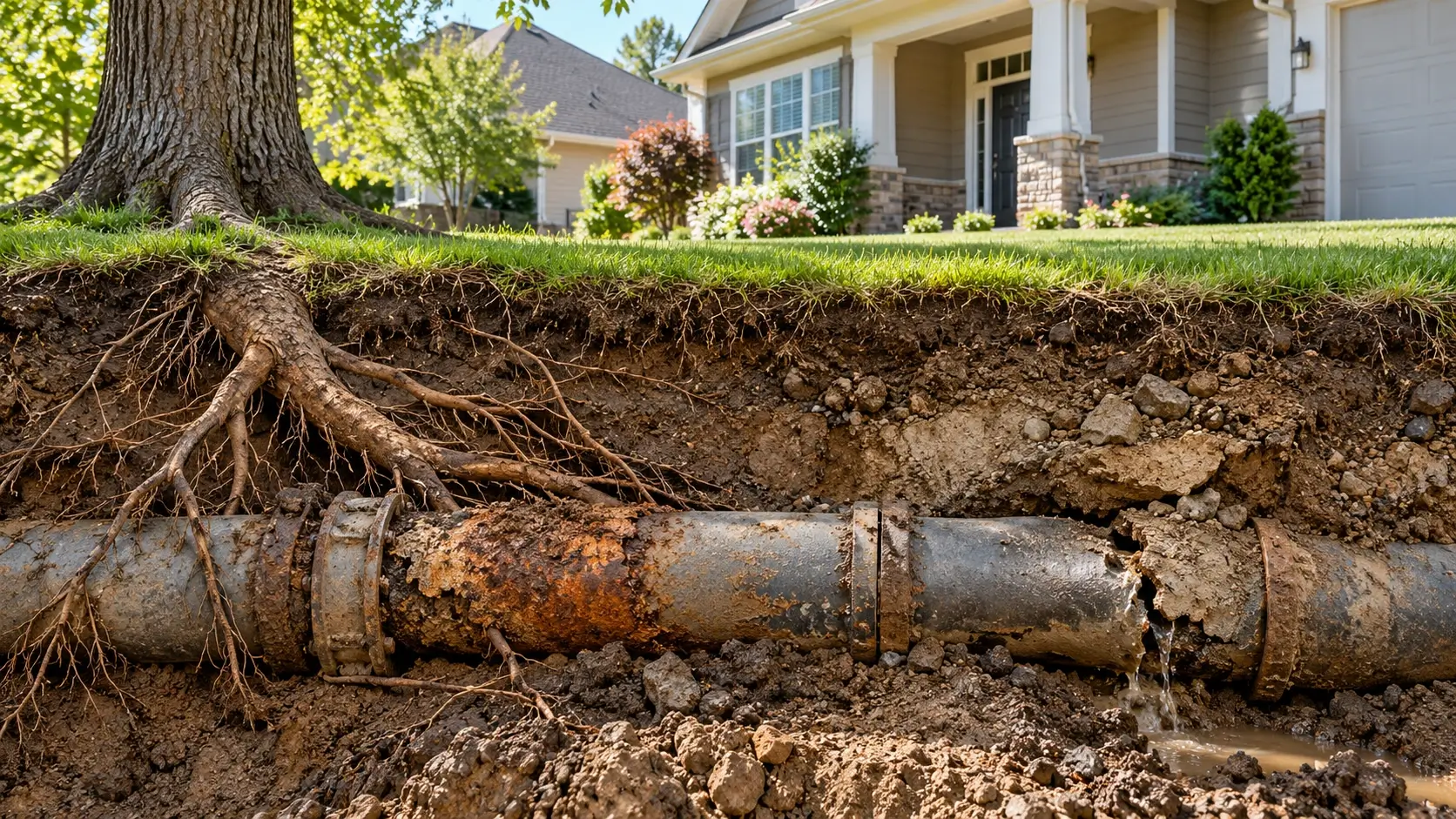
Aging Pipe Materials
Pipes do not remain in the same condition forever.
Over time, corrosion, mineral buildup, joint deterioration, or material fatigue may weaken portions of a water line. The actual condition depends heavily on pipe material, installation quality, soil conditions, water characteristics, and previous repairs.
Age alone does not prove that a pipe needs replacement. A professional evaluation should focus on the condition of the line rather than assuming failure based only on how old the property is.
Ground Movement and Soil Conditions
Underground pipes are affected by the soil surrounding them.
Settlement, shifting ground, erosion, and changing soil conditions can place stress on buried water lines. Movement may affect joints or eventually contribute to cracks in weakened piping.
Freezing Conditions
Water expands when it freezes.
Pipes exposed to sufficiently cold conditions can be damaged when water freezes inside them, particularly when lines are inadequately protected or positioned where freezing is possible.
The damage may not become obvious until water begins flowing normally again.
Corrosion
Some metal piping can deteriorate through corrosion.
Depending on the material and surrounding conditions, corrosion may gradually weaken the pipe wall and make leaks more likely.
Poor Installation or Previous Damage
A relatively new line can still develop problems.
Improper bedding, stressed connections, unsuitable materials, accidental damage during excavation, or installation problems can contribute to premature failure.
The age of the water line is therefore only one part of the diagnosis.
Main Line Leak or Interior Plumbing Leak?
Several symptoms of a damaged main water line also occur with ordinary household plumbing leaks.
For example, a higher water bill could come from a leaking toilet. Low pressure at one sink might simply be caused by a clogged aerator. Moisture near the house could be coming from a drain, irrigation line, or exterior drainage problem.
Look at the pattern.
A problem isolated to one fixture usually points toward that fixture or its nearby piping. Problems affecting several fixtures or unexplained water flow when everything inside is shut off may justify investigating the main supply.
Professional plumbing services can help narrow down the source instead of replacing parts based only on symptoms.
How to Check for a Possible Main Water Line Leak
Homeowners can perform a few basic checks before scheduling service.
Start inside the home.
Check toilets, faucets, exposed piping, water-using appliances, outdoor spigots, and other visible plumbing for obvious leaks. Make sure irrigation equipment isn’t operating.
Next, stop all intentional water use and observe the water meter.
EPA WaterSense recommends checking the meter during a period when no water is being used. Continued meter movement can indicate that water is still flowing somewhere in the plumbing system.
Then walk around the property.
Look for unusual wet areas, pooling water, or soil that appears saturated without an obvious explanation.
These checks can help confirm that something is wrong, but they usually cannot determine the exact underground location or condition of the pipe.
Avoid unnecessary digging based only on where the ground looks wet. Underground water can travel through soil before becoming visible at the surface.
How Plumbers Find Hidden Water Line Problems
Finding a suspected underground leak usually involves narrowing down where water is escaping before deciding how much of the line needs attention.
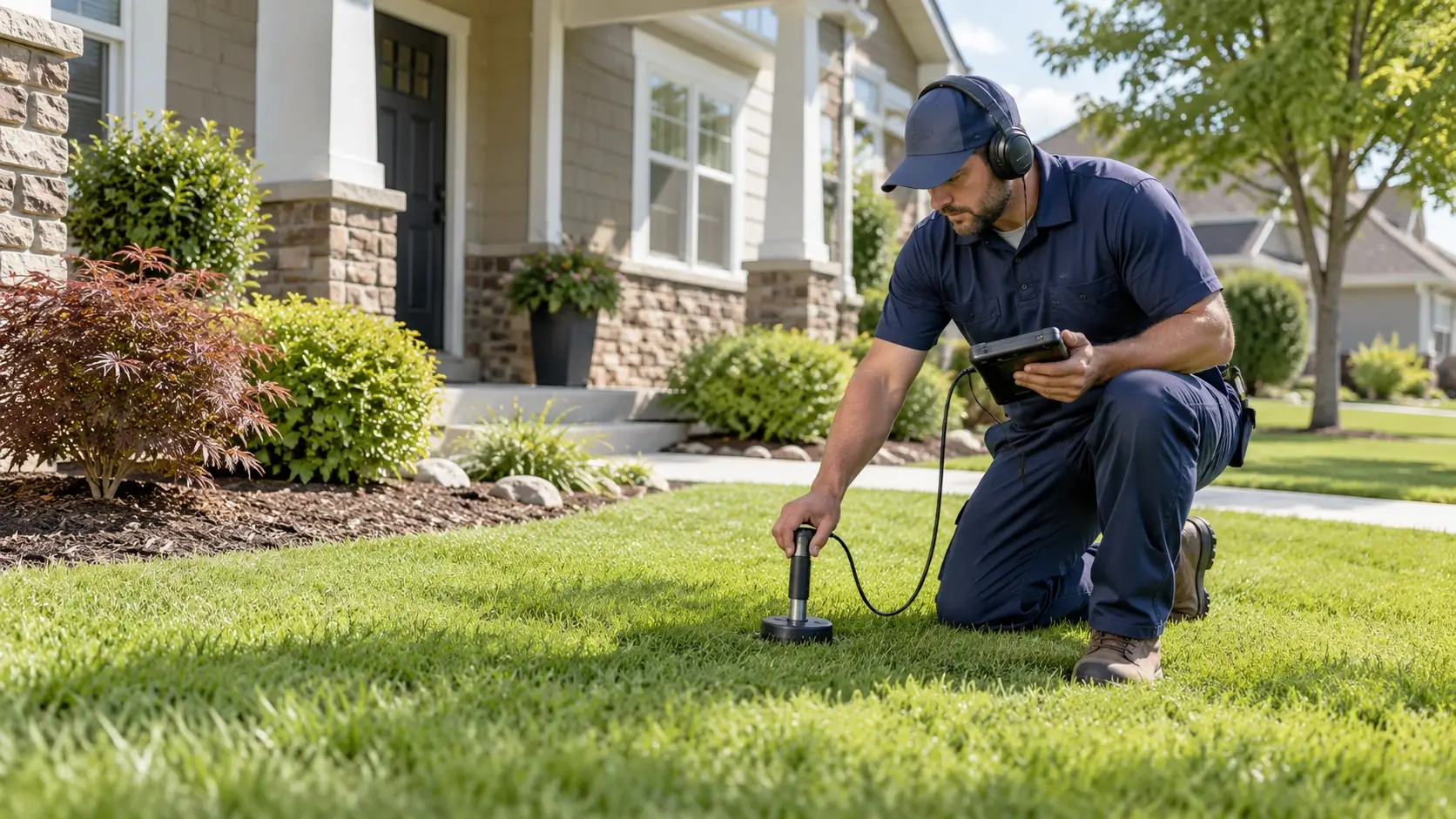
Depending on the property and symptoms, a plumber may evaluate:
- Meter activity
- Water pressure
- Accessible supply piping
- Shutoff valves
- Visible moisture patterns
- Plumbing fixtures
- The location of the service line
- The history of previous leaks or repairs
Specialized leak detection equipment may also be appropriate.
EPA materials describe several methods used for locating hidden water leaks, including flow monitoring and specialized leak detection equipment.
The goal is not simply to establish that water is being lost. It is to determine where the leak is occurring so unnecessary excavation or repairs can be avoided.
Does a Leaking Main Water Line Always Need Replacement?
No.
Some water line problems can be addressed with a targeted repair, while other situations may justify replacing a larger section or the entire service line.
Repair may be reasonable when:
- Damage is limited to one accessible area
- The surrounding pipe remains in usable condition
- There is no pattern of repeated failures
- The problem involves a connection or isolated damaged section
Replacement may deserve consideration when:
- Leaks continue appearing in different areas
- The pipe is extensively deteriorated
- Multiple previous repairs have already been performed
- Damage affects a substantial portion of the line
- The existing material or condition makes future failures a continuing concern
There is no universal answer based on one symptom.
The condition of the pipe, location of the damage, access requirements, repair history, and expected reliability of the remaining line should all factor into the decision.
What Can Happen If a Water Line Leak Is Ignored?
A small underground leak may seem less urgent than water pouring through a ceiling, but continuous leakage can create problems over time.
Water loss can continue even when nobody is using a fixture. The surrounding soil may remain saturated, and the original damaged section can become worse.
Possible consequences include:
- Increasing water use
- Expanding wet areas
- Reduced water pressure
- Damage around the leak location
- Soil erosion or movement
- A larger pipe failure
- Water entering areas of the property where it shouldn’t
The exact consequences depend on where the pipe is located and how much water is escaping.
Taking action early gives a plumber a chance to evaluate the line while the issue is still manageable.
What to Do If You Think the Water Line Is Leaking Right Now
If you notice signs of a possible main water line leak, first determine how severe the situation appears.
A minor unexplained meter movement and a major stream of water entering the property require different responses.
If water is actively causing damage, locate the appropriate shutoff valve if you know where it is and can reach it safely. Avoid digging around utility lines or attempting an underground repair yourself.
For significant active leaks, sudden loss of water service, rapidly spreading water, or other urgent plumbing failures, emergency plumbing service may be appropriate.
If the situation isn’t actively damaging the property, arrange an inspection so the source can be confirmed before repair decisions are made.
How to Reduce the Chance of Future Water Line Problems
You cannot prevent every underground pipe failure, but paying attention to changes in your plumbing can help you catch problems sooner.
Know what normal water pressure feels like throughout the house. Review water usage periodically so an unexplained increase is easier to notice. Keep the area around accessible shutoff valves clear and know where the main water shutoff is located.

Watch for recurring moisture outdoors, especially when the weather has been dry.
If repairs have already been made to the main line, keep records of where the problem occurred and what work was completed. That history can become useful if another leak develops later.
Leak detection or flow monitoring devices can also help identify unusual water use. EPA WaterSense notes that whole-building monitoring devices can track flow entering a home and alert occupants to patterns that may indicate leakage.
When to Have Foukas Plumbing & Heating Inspect the Problem
One warning sign does not necessarily mean your entire water line needs to be replaced. Several plumbing problems can create similar symptoms, which is why confirming the source should come before deciding on a repair.
Contact Foukas Plumbing & Heating if you are dealing with unexplained pressure loss, unusual meter activity, persistent wet areas, recurring supply leaks, or another symptom that suggests water may be escaping from the main service line.
A proper inspection can determine whether the issue involves the water line, an interior plumbing component, or another part of the system and help establish the appropriate next step.
For suspected main line problems, request professional water line service or contact Foukas Plumbing & Heating to have the plumbing system evaluated.