


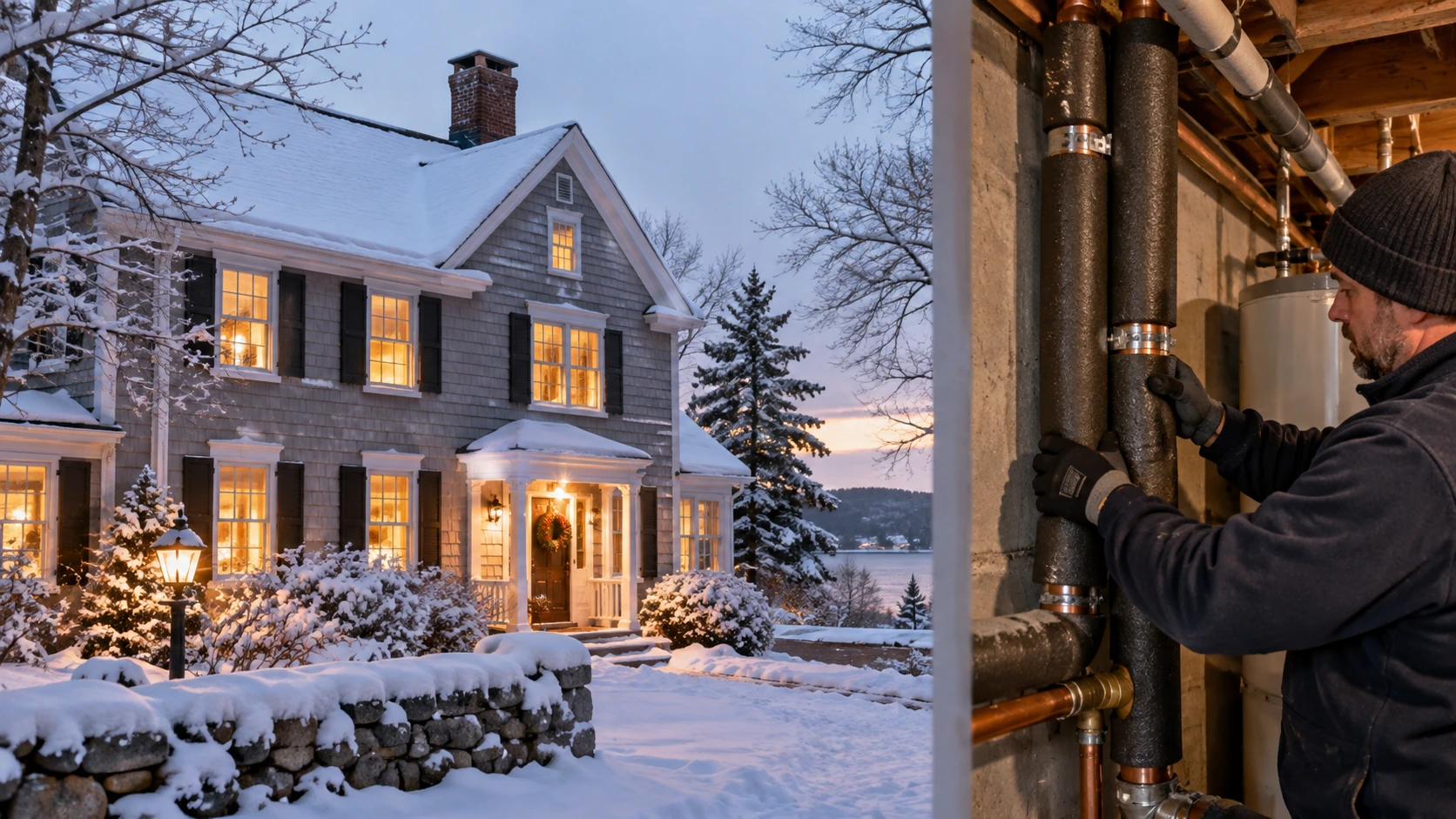
A Massachusetts winter can put residential plumbing under serious stress. A few hours of extreme cold may be enough to freeze water inside an exposed pipe, and once that happens, the problem can move quickly from reduced water flow to a cracked pipe and significant water damage.
The risk is more than theoretical. The Massachusetts Division of Insurance reported that 48.6% of homeowners insurance claims in the state in 2024 involved non-flood water losses and freezing-related damage. The agency recommends insulating and maintaining pipes before freezing conditions arrive.
Preventing frozen pipes is usually much easier than dealing with the aftermath of a burst line. The most effective approach combines insulation, steady indoor heat, protection from drafts, careful preparation of exterior plumbing, and a plan for responding quickly when something doesn’t seem right.
Homeowners who want to understand how winter preparation fits into broader plumbing maintenance can also review this home plumbing services guide before cold weather settles in.
Why Pipes Freeze During a Massachusetts Winter
Water expands when it freezes. When water becomes trapped inside a pipe and turns to ice, that expansion creates pressure within the plumbing system. Enough pressure can eventually cause a pipe, fitting, valve, or connection to fail. Both metal and plastic piping can be damaged by freezing conditions.
The most vulnerable plumbing is usually located where the home’s heated air cannot easily reach it. That includes pipes in garages, crawl spaces, unfinished basements, cabinets along exterior walls, and other areas exposed to cold drafts.
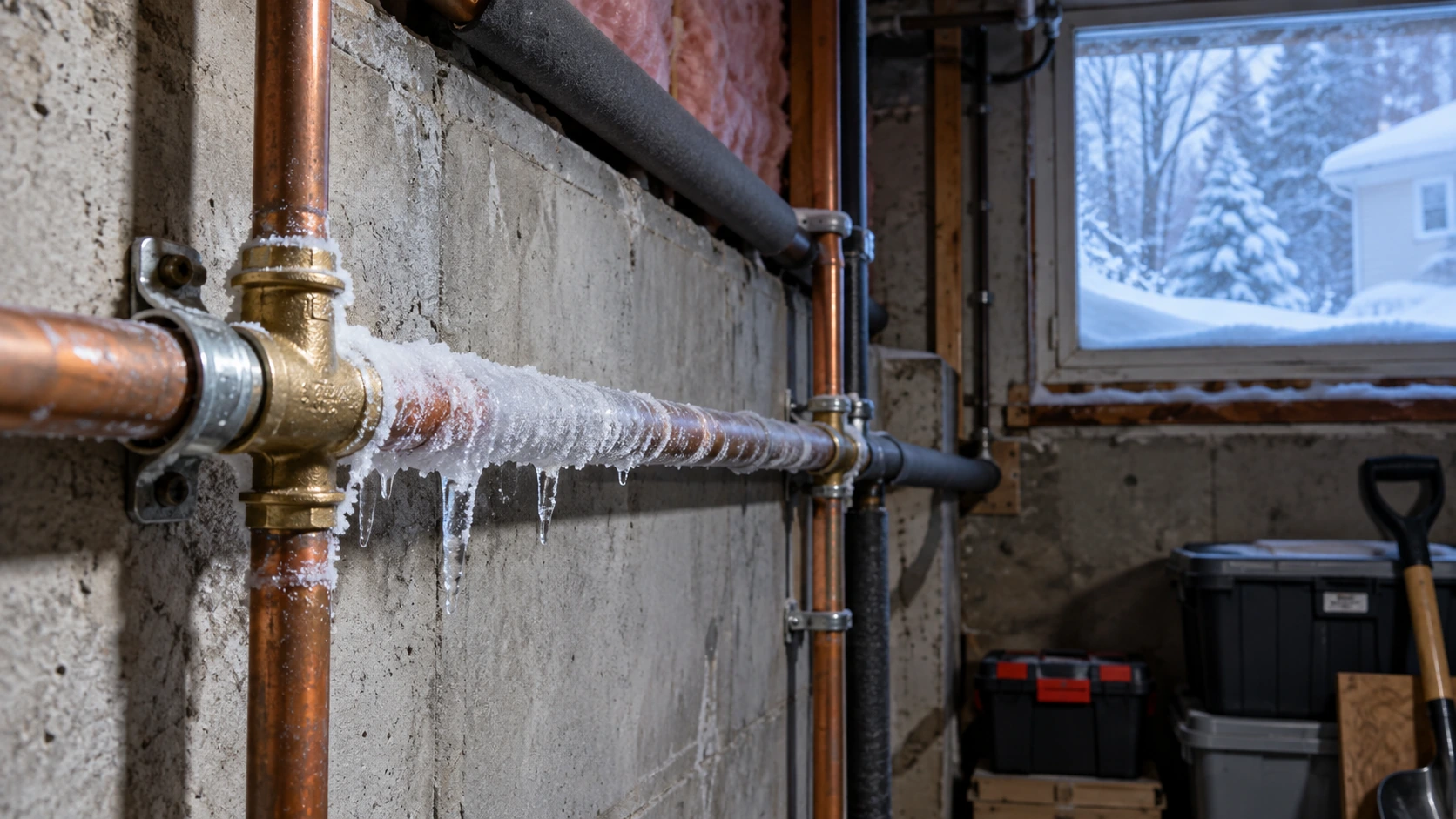
Outdoor hose connections and seasonal water lines deserve attention too. A garden hose left connected to an exterior faucet can leave water trapped where temperatures may fall below freezing.
Even a home with otherwise reliable plumbing can develop a problem when an unusually cold night exposes one poorly insulated section of pipe.
That’s why winter pipe protection shouldn’t focus only on visible plumbing problems. The real goal is to identify the parts of the system most likely to become cold before ice has a chance to form.
For homes that need a broader plumbing inspection or maintenance work before winter, residential plumbing services can address issues that may make a plumbing system more vulnerable during cold weather.
Find the Vulnerable Pipes Before the First Deep Freeze
One of the most useful things a homeowner can do is walk through the property before severe winter weather arrives and identify where water lines travel.
Start in the basement. Look along foundation walls, near basement windows, around utility penetrations, and anywhere a pipe passes into an exterior wall.
Then check garages, crawl spaces, utility rooms, cabinets beneath sinks, laundry areas, and spaces beneath bathrooms or kitchens located along the outside of the house.
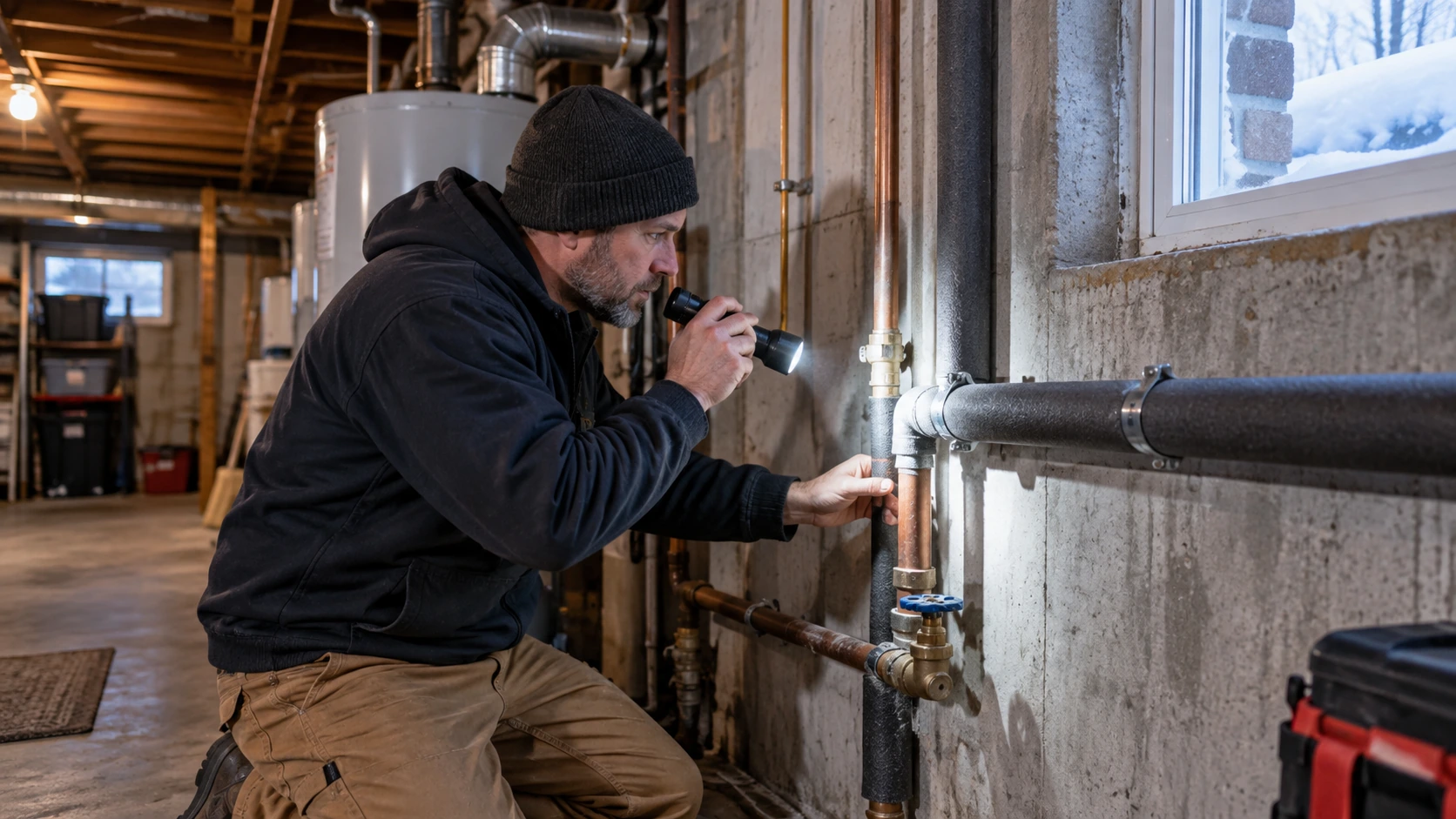
A pipe doesn’t need to be outdoors to freeze. Indoor plumbing can still become dangerously cold when it’s separated from heated living space by an uninsulated wall or exposed to a persistent draft.
Pay particular attention to pipes that have frozen before. A previous freeze often tells you something important about insulation, pipe placement, air leakage, or heat distribution in that part of the house.
If you’re unsure which visible line supplies a particular fixture or whether a vulnerable section of plumbing needs repair, a professional inspection through plumbing services can help identify the sections that deserve attention before temperatures fall.
Look for Cold Air, Not Just Cold Pipes
Cold air entering through gaps can create a highly localized freezing risk.
A basement may feel reasonably warm while a pipe running directly beside a foundation opening becomes much colder. Check around utility penetrations, sill areas, exterior wall openings, damaged weather stripping, basement doors, and windows.
Boston’s winter guidance specifically recommends checking for open windows, air vents, and drafts near plumbing and sealing basement foundation leaks where cold air may enter.
The lesson is simple: pipe insulation works better when you also reduce the amount of freezing air reaching the pipe.
Know Where Your Main Water Shutoff Is
Don’t wait until water is spreading across the floor to look for the shutoff valve.
Every household member who may need to respond to a plumbing emergency should know where the main water valve is located and how it operates. Boston officials specifically recommend locating and learning to use the valve because shutting it quickly after a pipe bursts can reduce flooding and property damage.
Make sure the valve is accessible. Boxes, storage containers, shelving, and other household items shouldn’t block it.
If the valve is old, difficult to operate, corroded, or leaking, addressing the issue before winter is far better than discovering the problem during an emergency.
Insulate Exposed Water Lines Before Cold Weather Arrives
Pipe insulation creates a barrier between the plumbing and colder surrounding air. It is especially valuable in unheated or partially heated spaces.
Massachusetts emergency guidance recommends wrapping vulnerable pipes with insulation before freezing weather develops.
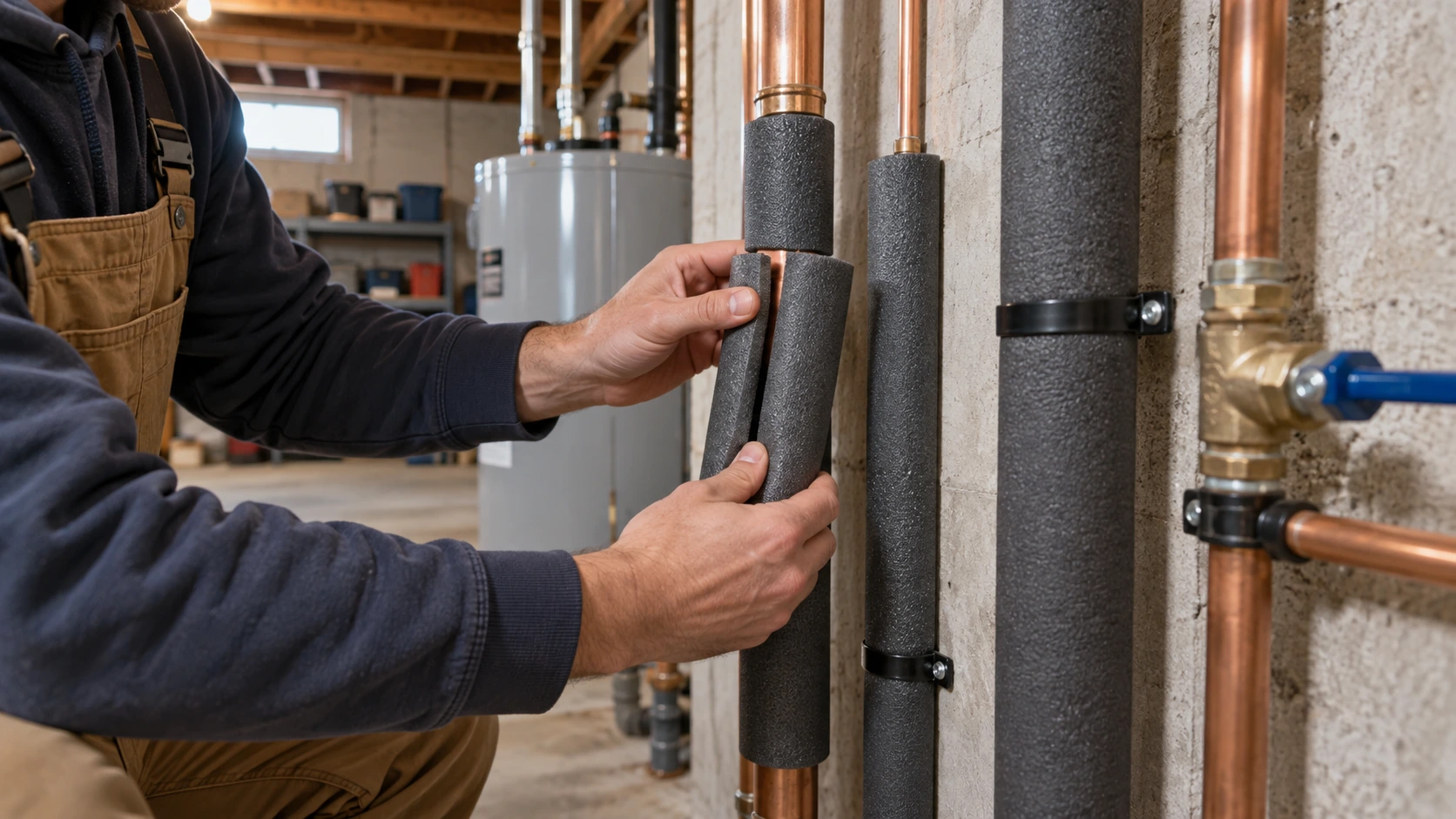
Common pipe insulation materials include foam sleeves and other products designed for plumbing applications. The right option depends on the location, pipe diameter, accessibility, and surrounding conditions.
Insulation should fit properly around the pipe rather than leaving large exposed gaps. Pay attention to bends, valves, joints, and sections where the pipe passes through framing.
Simply insulating a straight, easy-to-reach section while leaving nearby fittings exposed may leave the system vulnerable.
Check Water Lines Along Exterior Walls
Plumbing running inside an exterior wall can be more difficult to inspect because the vulnerable section may not be visible.
Warning signs can include a sink or fixture that repeatedly develops low flow during severe cold, unusually cold cabinets beneath a sink, or a history of frozen plumbing in the same room.
Sometimes the best long-term solution involves changing insulation or addressing the way the pipe is routed.
When a water supply line itself appears damaged, deteriorated, or poorly positioned, water line services may be appropriate for evaluating the condition of the line.
Don’t Assume a Finished Basement Eliminates the Risk
Finished walls can hide plumbing, drafts, and poorly insulated spaces.
A basement that feels comfortable in the center of the room may still contain cold cavities near the foundation. Plumbing concealed behind drywall can therefore freeze without being visible.
Recurring winter problems in the same area deserve investigation rather than repeated temporary fixes.
If a section of plumbing consistently freezes despite insulation and adequate heat, professional plumbing installations may provide a path toward correcting the underlying pipe placement or installation problem.
Keep Indoor Heat Consistent During Freezing Weather
Your home’s heating system is also part of your frozen-pipe prevention strategy.
When outside temperatures fall sharply, lowering the thermostat too aggressively overnight can allow already vulnerable plumbing areas to become colder.
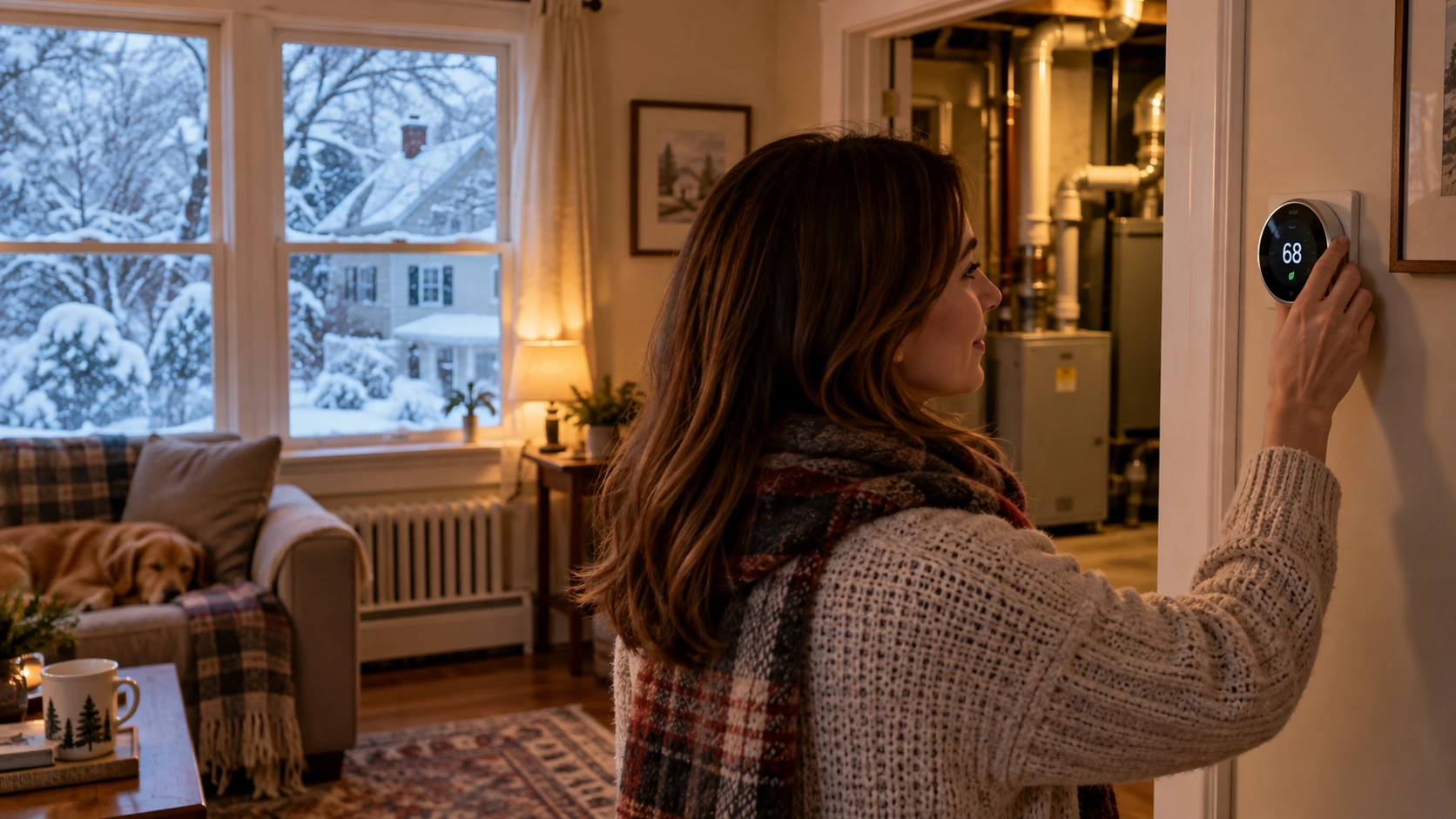
The American Red Cross recommends keeping the thermostat at the same temperature during the day and night during very cold weather. For people leaving home during cold weather, the organization recommends leaving the heat on and setting the thermostat no lower than 55°F.
That doesn’t mean every pipe will automatically remain safe at a particular thermostat setting. Plumbing location, insulation, drafts, construction, and outdoor conditions all affect the actual temperature around a pipe.
The broader principle is to maintain enough indoor heat so cold parts of the house don’t fall into freezing conditions.
A Heating Failure Can Quickly Become a Plumbing Problem
A furnace, boiler, or other heating system that fails during mild weather is inconvenient. The same failure during a Massachusetts cold snap can place plumbing at risk.
Massachusetts winter guidance recommends maintaining heating equipment before winter, including servicing furnaces or boilers.
If the home’s heating performance has become inconsistent, schedule service before severe cold arrives. Foukas Plumbing & Heating provides heating services for homeowners dealing with heating system concerns.
Homes with boiler systems can address performance problems through boiler repair services, while homes relying on forced-air heating can have suspected problems evaluated through furnace repair services.
For properties using heat pump technology, understanding the system before the coldest part of the season arrives is equally important. Information about heat pump systems can help homeowners determine when professional service may be appropriate.
Use Moving Water Strategically During Extreme Cold
During periods of severe cold, allowing a small amount of water to move through a vulnerable pipe can help reduce freezing risk.
Massachusetts and Boston winter guidance both recommend allowing a trickle of water to run through plumbing during extreme cold conditions.
The important word is “trickle.”
The faucet doesn’t need to run at normal washing or bathing pressure. The purpose is simply to maintain some movement through plumbing that is particularly vulnerable.
This step is most useful when a pipe has a known history of freezing or runs through a cold area.
It should complement insulation and proper heating rather than replace them.
If you have to leave faucets running every time temperatures fall because the same plumbing continues freezing, there’s probably an underlying issue worth investigating.
Open Sink Cabinets So Warm Air Can Reach Plumbing
Pipes beneath kitchen and bathroom sinks may be located against exterior walls. Closed cabinet doors can isolate those pipes from the warmer air circulating through the room.
Opening the cabinet allows heated room air to reach the plumbing more easily.
Boston and American Red Cross guidance both recommend opening kitchen and bathroom cabinet doors during severe cold when vulnerable plumbing is located inside.
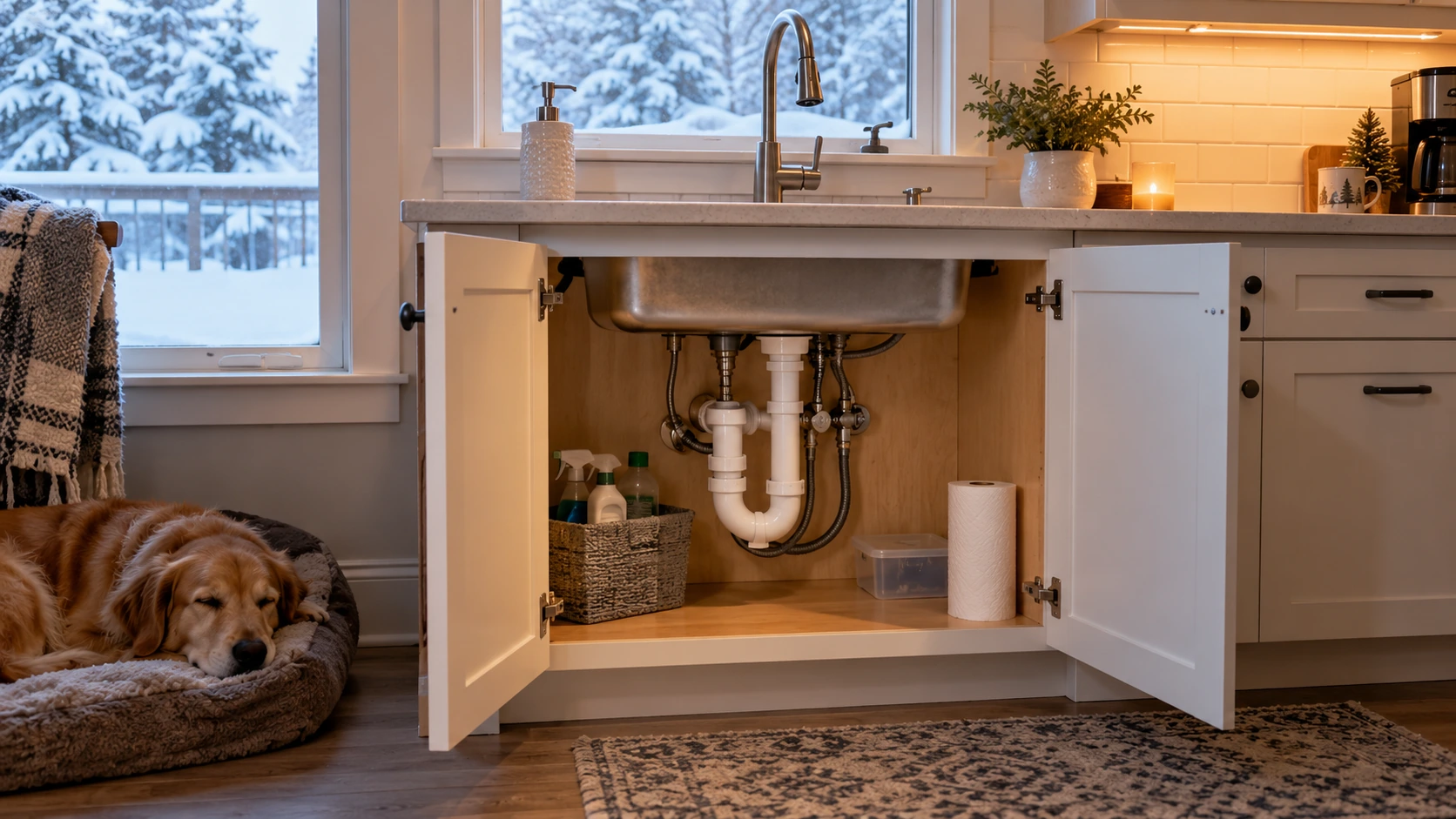
This simple step can be particularly useful overnight during an extreme cold snap.
Homes with children or pets should make sure cleaning products and other hazardous materials stored beneath sinks remain safely out of reach when cabinet doors are open.
While the doors are open, take a moment to look beneath the sink. Moisture, corrosion, staining, swollen cabinet material, or dripping connections may indicate a plumbing problem that deserves attention.
Small leaks can become more complicated when freezing temperatures arrive. If a fixture or connection already needs attention, scheduling plumbing repairs before winter conditions intensify can prevent one issue from becoming several.
Protect Exterior Faucets, Hoses, and Seasonal Water Lines
Outdoor plumbing is directly exposed to winter conditions, so preparation should happen before temperatures remain below freezing for extended periods.
Disconnect garden hoses from exterior faucets before winter.
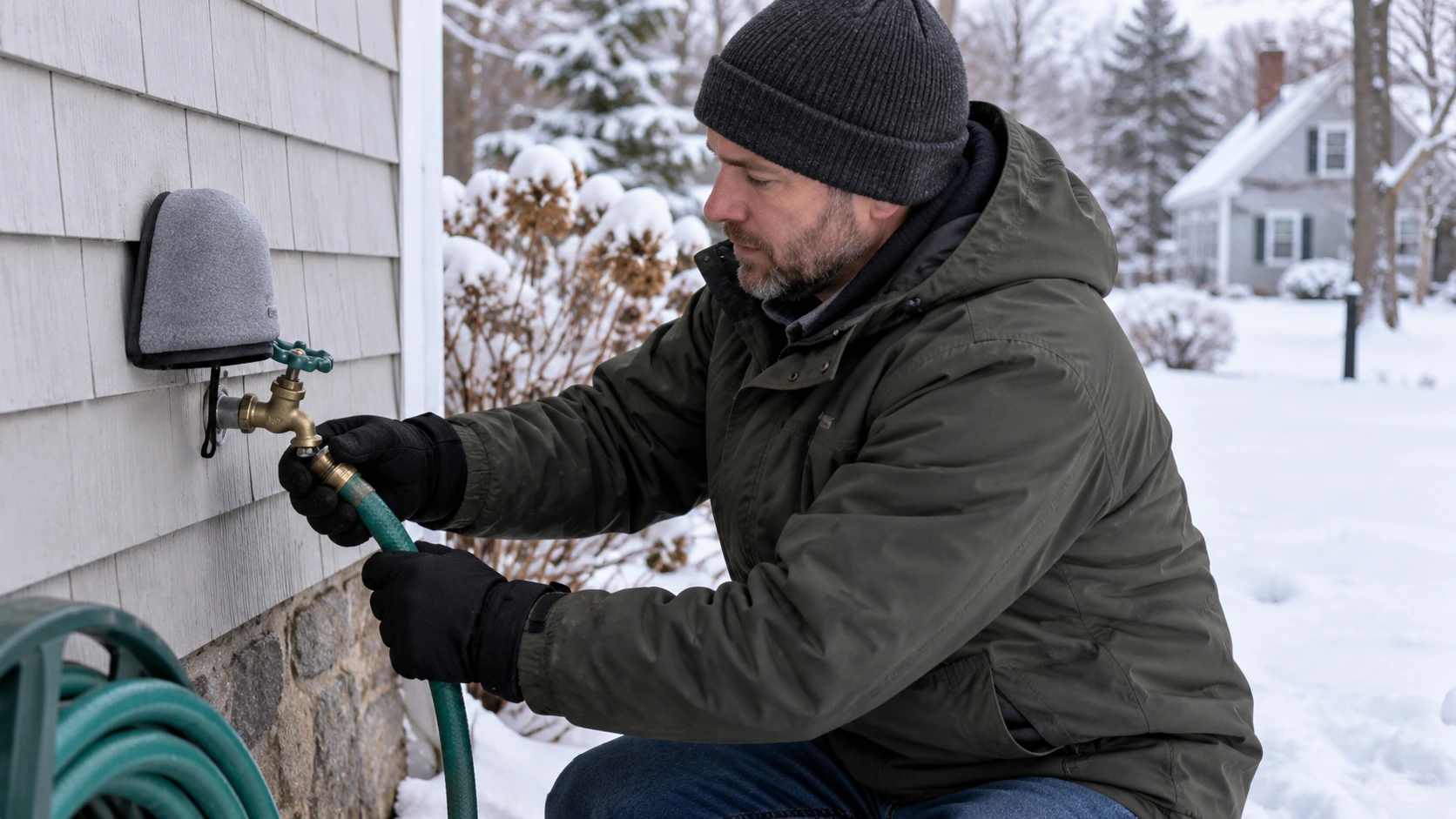
Massachusetts officials specifically recommend detaching garden hoses and irrigation lines from the home and protecting exterior plumbing as part of winter preparation.
A connected hose can hold water near the faucet and interfere with proper drainage. If the trapped water freezes, pressure may affect plumbing further inside the wall.
Exterior faucets should be examined for leaks or damage before cold weather arrives. Where the plumbing system includes an interior shutoff for an exterior faucet, use it according to the home’s plumbing configuration and drain the exposed section when appropriate.
Irrigation systems, seasonal supply lines, pool-related plumbing, and other outdoor systems may require their own winterization procedures.
Follow the manufacturer’s instructions for those systems rather than assuming every exterior line should be handled the same way.
Prepare Your Plumbing Before Leaving Home in Winter
A house doesn’t stop being vulnerable because no one is there.
In fact, a plumbing leak can become much more damaging when nobody is present to notice the first warning signs.
Before leaving a Massachusetts home during winter, confirm that the heating system is operating normally. Don’t switch the heat off.
The American Red Cross recommends maintaining a temperature of at least 55°F when leaving a home during cold weather.
Check that vulnerable basement doors and windows are closed, exterior hoses are disconnected, and pipes in cold areas remain protected.
Know where the water shutoff valve is before leaving, and consider whether someone should periodically check the property during a longer absence.
The Massachusetts Division of Insurance also advises homeowners to understand their insurance policy. The agency notes that coverage for sudden and accidental water damage from burst pipes may depend on the home being properly heated and not left unoccupied without appropriate precautions. Individual policies differ, so homeowners should review their own coverage.
Taking pictures of the plumbing and utility areas before an extended winter trip can also make it easier to compare conditions if something appears different when you return.
Recognize the Early Signs of a Frozen Pipe
A frozen pipe does not always announce itself with a dramatic burst.
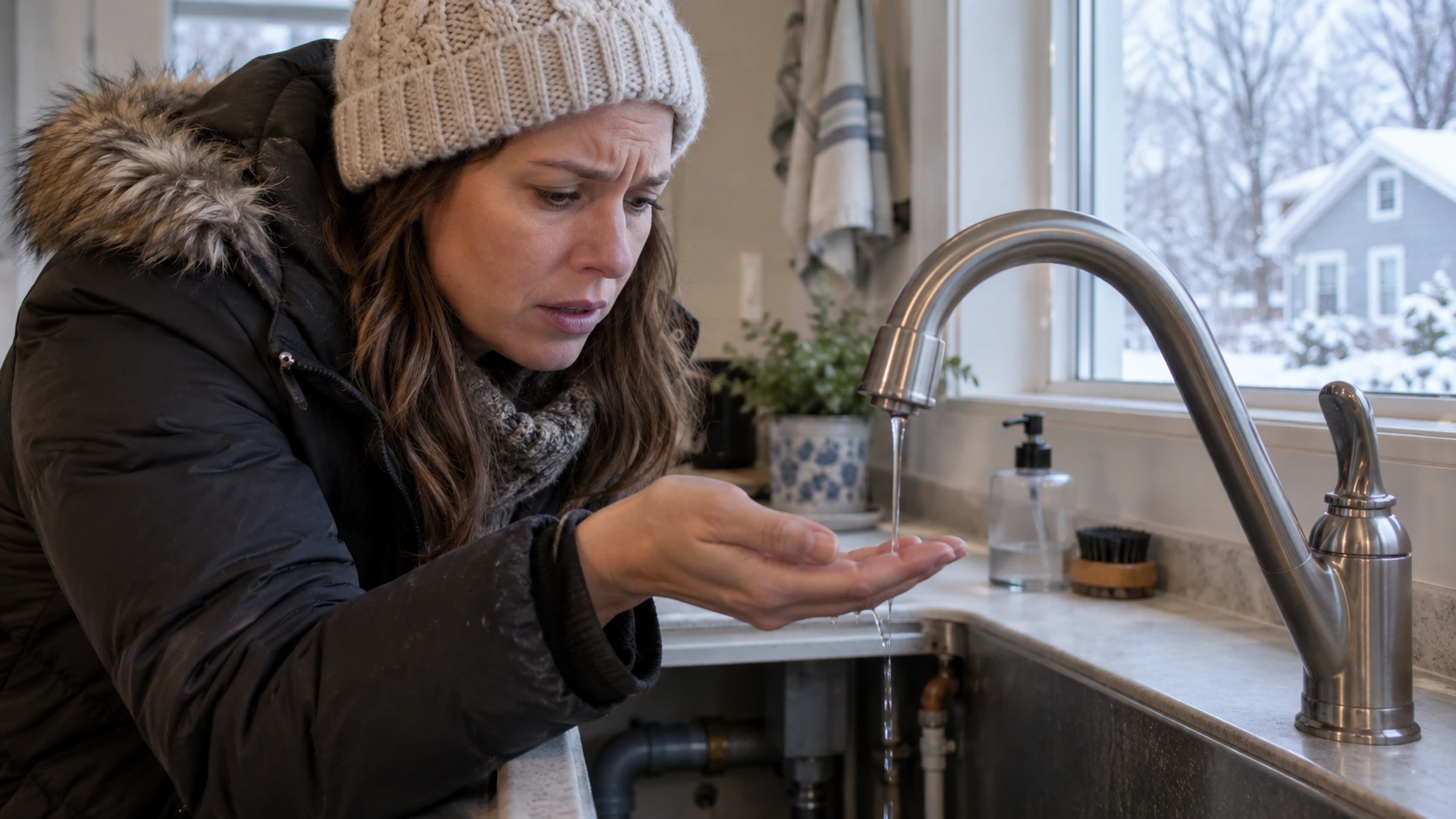
Sometimes the first sign is simply a faucet behaving differently.
If you turn on a faucet and only a trickle comes out during very cold weather, the American Red Cross advises treating a frozen pipe as a possibility.
No water at all can be another warning sign, especially if other fixtures in the home still work normally.
You may also notice one fixture has normal cold water but unusual hot-water flow, or that one section of the house behaves differently from another.
Don’t immediately assume the faucet itself is broken.
Consider where the supply pipe travels and whether it passes through an exterior wall, basement, garage, crawl space, or other cold location.
A visible pipe may also feel extremely cold or show frost, although many frozen sections are hidden behind walls or ceilings.
If one pipe appears frozen, check other faucets in the house. The same cold conditions affecting one vulnerable line may be affecting another. The Red Cross specifically recommends checking other faucets after discovering a frozen pipe.
When the cause isn’t clear, professional leak detection services can help identify hidden plumbing problems when signs of water damage or leakage begin appearing.
What to Do If a Pipe Has Already Frozen
Finding a frozen pipe does not automatically mean it has burst, but the situation should be handled carefully.
Start by locating the home’s main shutoff valve so you can act quickly if the pipe begins leaking.
Open the affected faucet. As the ice starts melting, an open faucet gives water somewhere to move.
If the frozen section is visible and accessible, apply gentle heat.
Massachusetts and Boston guidance recommends methods such as a hair dryer or towels soaked in hot water.
Never use a blowtorch, open flame, or similar device to thaw a frozen pipe. Fire risk is one concern, and excessive localized heat can also damage plumbing materials. Official Massachusetts, Boston, and Red Cross guidance specifically warns against using open flames.
Continue applying gentle heat until normal water pressure returns.
If you cannot identify where the pipe is frozen, the affected section is hidden inside a wall, the pipe appears damaged, or you’re uncomfortable thawing it safely, stop and contact a plumber.
Trying to force a solution can turn a manageable freeze into a damaged fitting or uncontrolled leak.
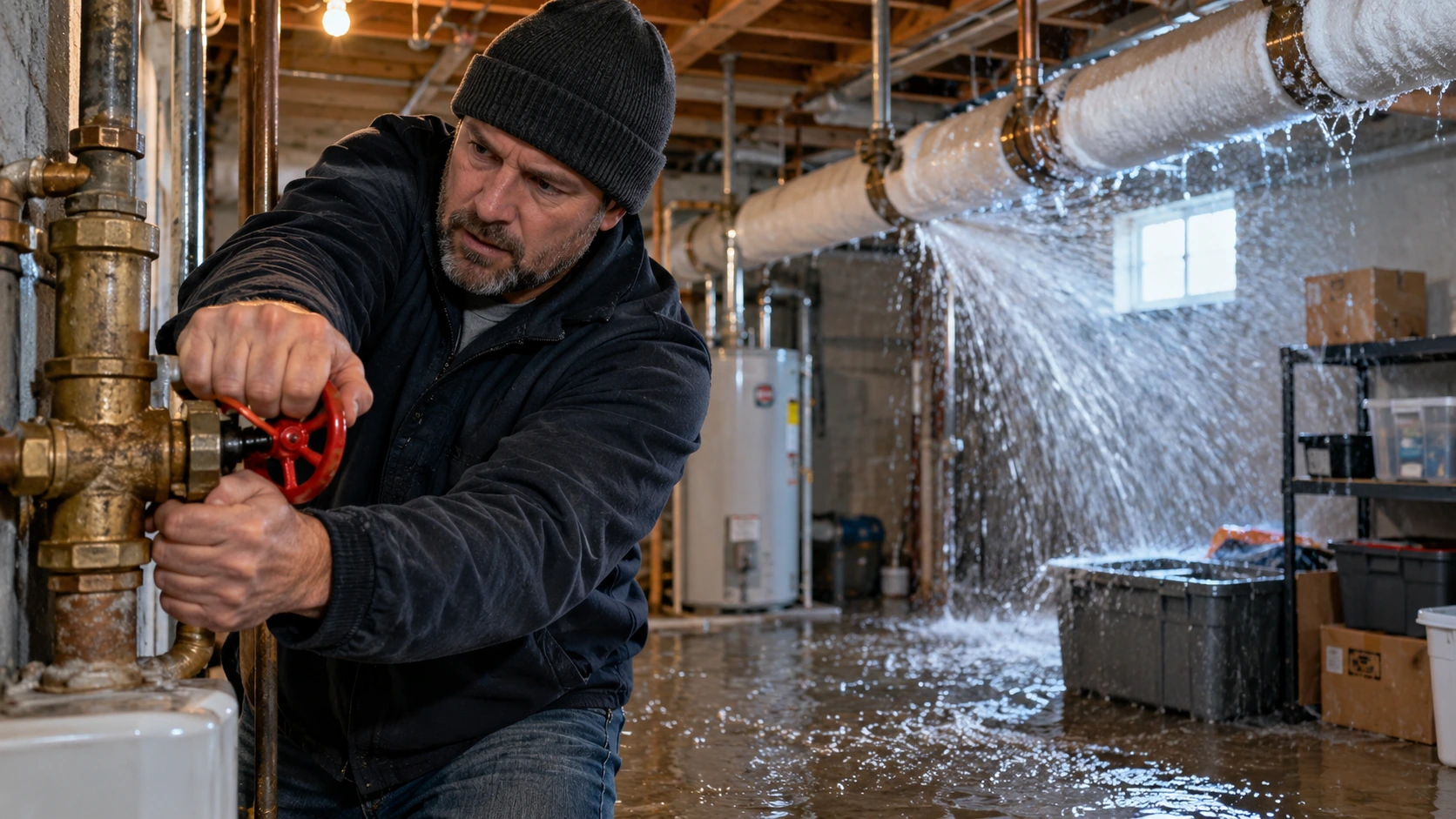
What to Do If a Frozen Pipe Bursts
A burst pipe changes the priority immediately.
The first goal is not repairing the pipe. The first goal is stopping additional water from entering the damaged plumbing.
Shut off the home’s main water supply.
Next, keep people away from areas where water is approaching electrical outlets, appliances, panels, or wiring.
Once the water supply is controlled, contact a plumber to locate the break and determine how much of the surrounding plumbing has been affected.
For urgent failures, emergency plumbing services can address burst pipes and other plumbing problems that cannot reasonably wait for normal scheduling.
Don’t assume the visible break is the only damaged area.
One frozen section can place stress on nearby fittings and piping. Additional frozen pipes may also exist elsewhere in the house.
After repairs are completed and the system is restored, inspect surrounding walls, ceilings, insulation, cabinets, and flooring for signs of moisture.
Depending on how much damage occurred, the affected section may need a simple repair or more substantial work. Pipes with extensive deterioration, repeated freeze damage, or installation problems may require professional plumbing replacement rather than another temporary repair.
Build a Winter Pipe Prevention Routine Before Every Cold Snap
Frozen-pipe prevention works best when it becomes part of the household’s winter routine rather than something done once in November and forgotten.
Before a stretch of extremely cold weather, use this quick check:
- Confirm the heating system is operating normally.
- Keep indoor heat steady.
- Inspect vulnerable basement, garage, crawl-space, and exterior-wall plumbing.
- Make sure pipe insulation remains secure.
- Close basement windows and reduce cold drafts.
- Disconnect outdoor hoses.
- Protect exterior faucets and seasonal plumbing.
- Open cabinets around vulnerable sink plumbing.
- Use a slight water trickle where a pipe is known to freeze.
- Confirm the main water shutoff remains accessible.
- Check faucets for sudden reductions in flow.
- Look for leaks, moisture, staining, or unusual plumbing sounds.
- Make sure someone can check the property if the house will be empty.
None of these steps is particularly complicated. Their value comes from doing them before the plumbing freezes.
A five-minute inspection when the forecast calls for extreme cold can reveal a basement window that was left open, insulation that fell off a pipe, a hose that was never disconnected, or a heating problem that deserves attention.
Those small discoveries can prevent much larger problems later.
When It Makes Sense to Call a Plumber Before Winter
Not every home needs professional plumbing work before winter. Plenty of prevention tasks can be handled by homeowners.
Professional help becomes more valuable when the house has a history of frozen pipes, recurring winter leaks, inaccessible plumbing, poorly insulated pipe runs, deteriorated valves, damaged exterior faucets, unreliable water pressure, or an aging plumbing system.
Repeated freezing deserves particular attention.
If the same pipe freezes every winter, thawing it each time doesn’t correct the reason it keeps freezing. The pipe may be too close to an exterior surface, exposed to a draft, inadequately insulated, or routed through a space that doesn’t receive enough heat.
A plumber can examine the larger plumbing layout instead of treating each freeze as a separate event.
The same principle applies to a shutoff valve that doesn’t operate properly. The time to discover that problem is during routine maintenance, not while a burst pipe is flooding a room.
Foukas Plumbing & Heating provides plumbing and heating assistance across its listed Massachusetts service areas, allowing homeowners to address potential winter problems before they become emergency repairs.
Protect Your Plumbing Before the Next Massachusetts Cold Snap
Preventing frozen pipes during a Massachusetts winter comes down to controlling a few important conditions.
Keep cold air away from vulnerable plumbing. Keep appropriate heat moving through the home. Insulate exposed lines. Disconnect exterior hoses. Pay attention to pipes that have frozen before. Let a slight amount of water move through vulnerable plumbing during periods of extreme cold. Most importantly, know where the main water shutoff is before you need it.
If a faucet suddenly loses pressure or stops flowing during severe cold, don’t ignore the change. A partially frozen pipe is much easier to address before it cracks.
And if your home has plumbing that freezes repeatedly, leaks during winter, or runs through difficult-to-protect areas, solving the underlying problem can be more useful than repeating temporary fixes every year.
For help inspecting, repairing, or preparing your plumbing for winter, contact Foukas Plumbing & Heating before the next period of severe Massachusetts cold.