

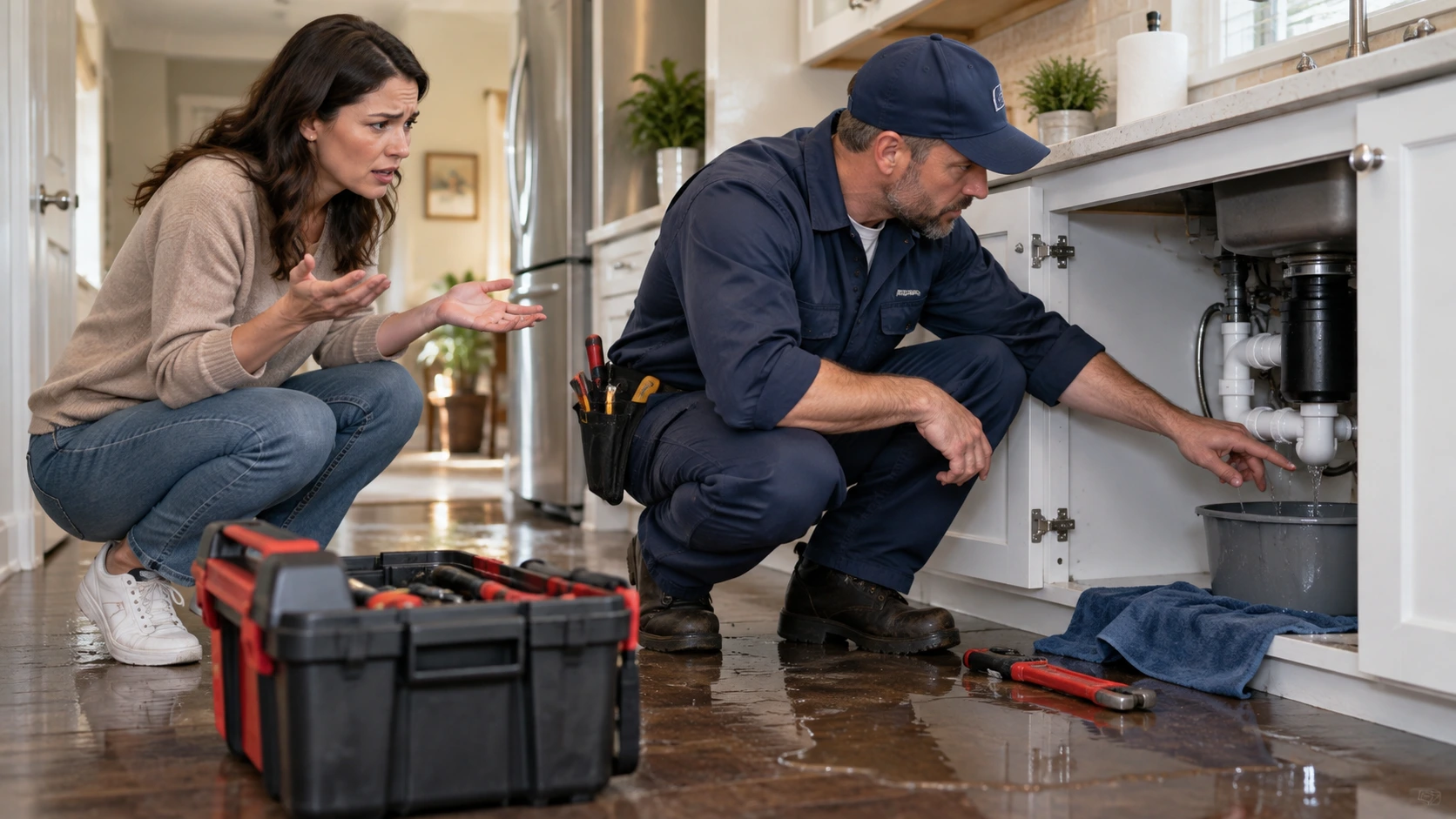
A plumbing problem is generally considered an emergency when waiting for a normal service appointment could allow serious property damage, sanitation problems, loss of essential water service, or a safety hazard to continue.
A slowly dripping faucet can usually wait. A burst pipe sending water across the floor cannot.
The difficult situations fall somewhere between those two extremes. A toilet may be clogged, but is it an emergency? A water heater may be leaking, but does it need immediate attention? A drain may be backing up, but can you safely wait until tomorrow?
The answer depends less on the fixture involved and more on what the problem is doing right now.
If water is actively spreading, sewage is entering the property, plumbing cannot be safely used, a gas-related problem is suspected, or the damage will continue until something is repaired, contacting an emergency plumbing professional is usually appropriate.
Understanding those warning signs can help homeowners respond faster without treating every plumbing inconvenience as a crisis.
What Makes a Plumbing Problem a True Emergency?
The word “emergency” can mean different things depending on the situation.
From a plumbing standpoint, urgency usually comes down to four questions:
- Is the problem creating a safety concern?
- Is water or sewage actively damaging the property?
- Have essential plumbing fixtures become unusable?
- Will delaying the repair make the situation substantially worse?
A problem does not need to look dramatic to deserve immediate attention.
Imagine a small stream of water running behind a finished wall. You may see only a damp patch near the baseboard, but the leak can continue affecting drywall, insulation, framing, flooring, or nearby cabinetry while you wait.
In contrast, a visible leak beneath a bathroom sink may look alarming at first, but if closing the fixture shutoff valve completely stops the water, the immediate damage may already be contained.
Both situations need repair. Their urgency is different.
Homeowners who are unsure what type of service they need can also review available residential plumbing services to better understand how household plumbing problems are typically addressed.
The Difference Between an Emergency and an Urgent Plumbing Repair
Not every problem that needs prompt attention requires emergency service.
An emergency usually involves an active threat that cannot reasonably be left alone.
An urgent repair may need to be scheduled soon but can often wait until regular service hours because the problem has been contained.
For example, consider three leaking pipes.
In the first home, water is spraying from a broken supply line and the homeowner cannot locate the shutoff valve. That is an emergency.
In the second home, a pipe beneath the sink is dripping steadily, but the fixture’s shutoff valves stop the water completely. That still requires repair, but the immediate threat has been reduced.
In the third home, the homeowner notices an occasional drop forming around a connection without water collecting below it. The fitting should be checked, but emergency service may not be necessary.
Thinking in terms of active risk helps make the decision clearer.
If the plumbing problem is still causing damage while you are deciding whether to call, waiting is usually the riskier choice.
Burst Pipes Are One of the Clearest Plumbing Emergencies
A burst pipe can release water continuously until the affected supply is shut off.
The damage does not stay limited to the pipe. Water can move through flooring, wall cavities, ceilings, insulation, cabinets, and other building materials.
Upstairs leaks may also affect rooms below.
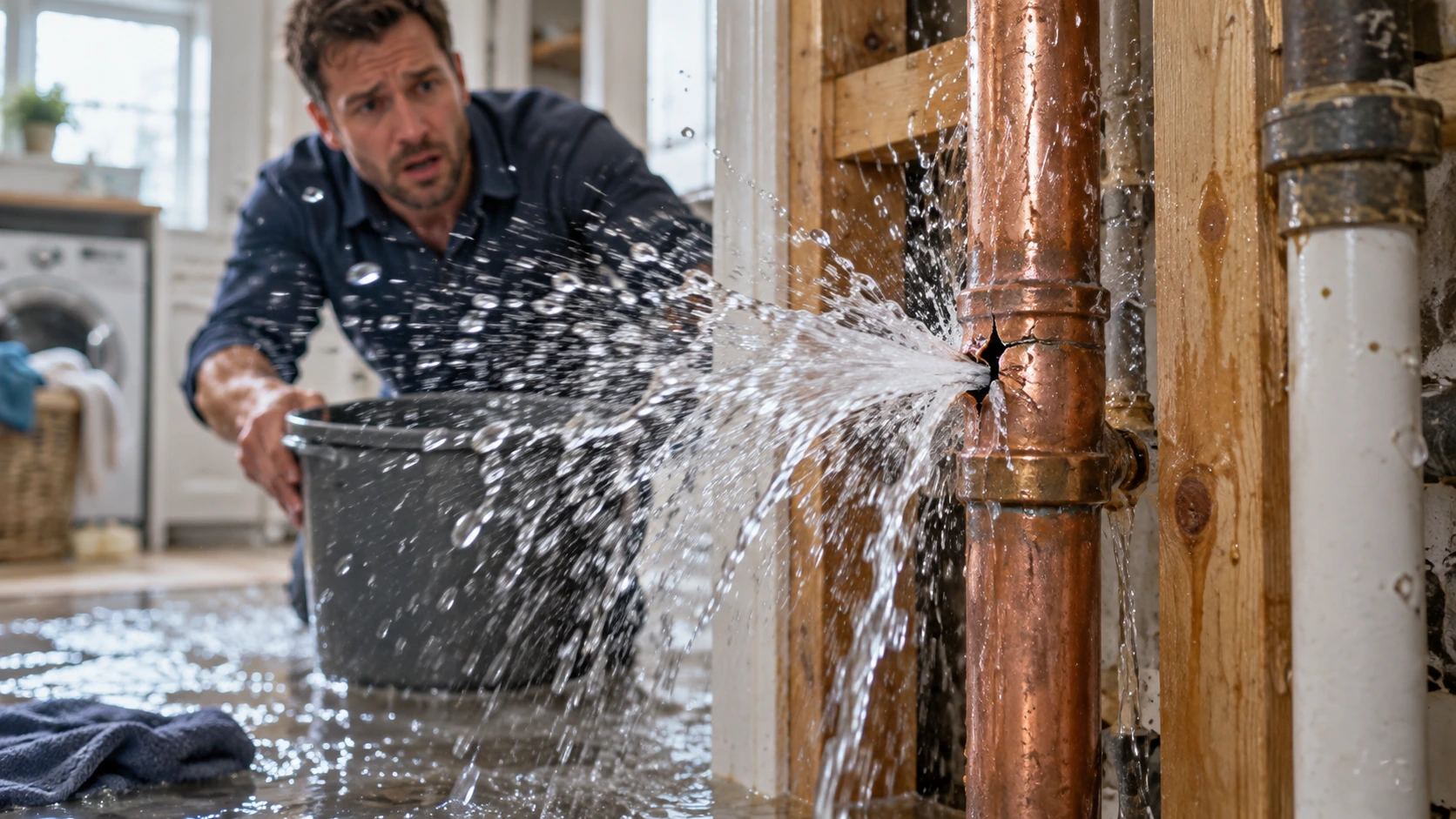
If you discover a burst pipe, the first practical step is usually to stop the water supply if you can safely access the appropriate shutoff valve.
A fixture or branch shutoff may be enough for some leaks. Other situations require shutting off the home’s main water supply.
Once the flow has stopped, the damaged section still needs professional attention before normal use resumes.
Professional plumbing repairs can determine what failed, which section needs repair, and whether related piping should also be inspected.
A burst pipe should not be treated as a small repair simply because the visible crack appears short. The more important questions are why the pipe failed and whether the surrounding plumbing has also been affected.
Active Water Leaks Can Become Emergencies Even Without a Burst Pipe
Not every serious leak comes from a pipe that has visibly split open.
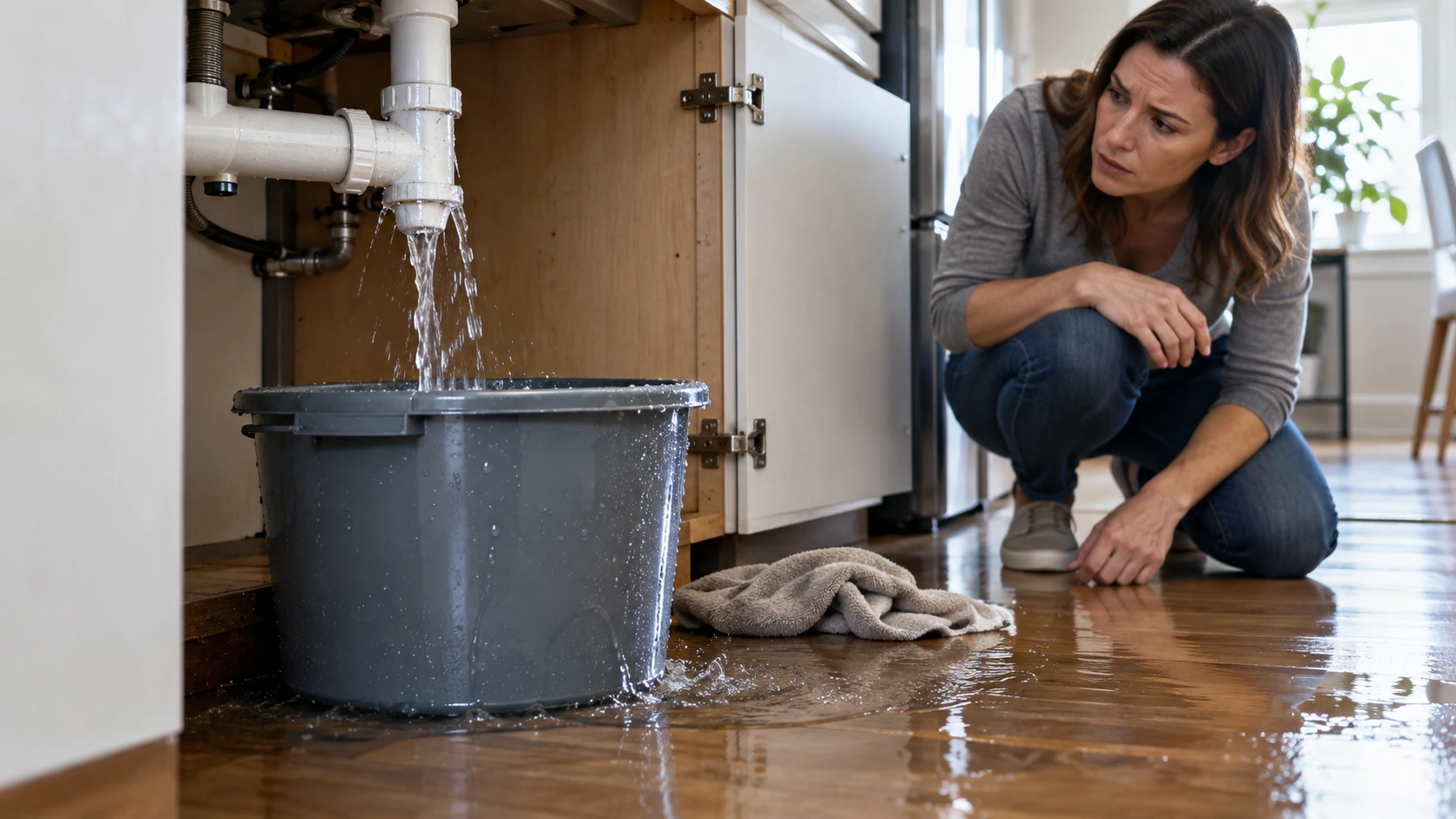
Water may escape from:
- Supply line connections
- Pipe joints
- Appliance connections
- Faucet supply lines
- Toilet connections
- Water heater piping
- Shower plumbing
- Hidden pipes inside walls
- Plumbing beneath floors or ceilings
The severity depends on the amount of water, where it is traveling, and whether you can stop it.
A slow leak into a bucket beneath an accessible pipe may be manageable for a short period. A similar leak disappearing into a wall cavity may deserve faster attention because the actual extent of the moisture is difficult to see.
Signs of a hidden plumbing leak can include:
- Damp drywall
- Ceiling stains
- Bubbling paint
- Warped flooring
- Water appearing around baseboards
- Cabinet swelling
- Persistent moisture
- The sound of running water when fixtures are off
When the source cannot easily be identified, leak detection services can help locate the affected area before unnecessary repairs are made elsewhere.
The key point is simple: visible water volume does not always tell you how serious the problem is.
Where the water is going matters just as much.
Sewage Backups Should Be Treated Differently From Ordinary Drain Clogs
A slow bathroom sink is usually inconvenient.
Sewage coming back into the house through a drain is a different situation.
Wastewater entering a toilet, shower, bathtub, floor drain, or other fixture creates a sanitation concern and may indicate a blockage or failure deeper in the drainage system.
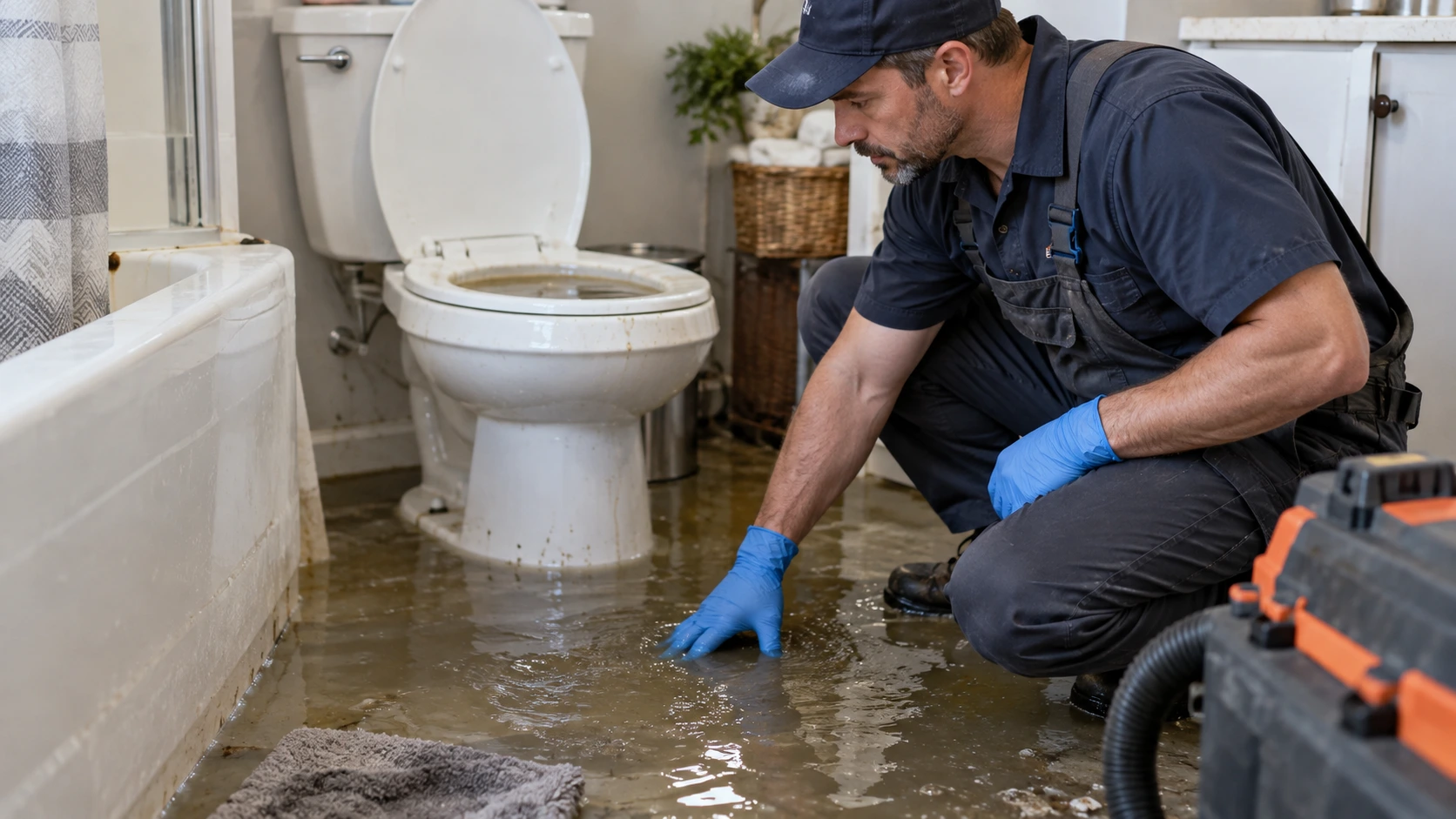
When several fixtures start behaving strangely at the same time, the problem may extend beyond one individual drain.
Warning signs can include:
- Multiple slow drains
- Toilets bubbling when another fixture is used
- Water appearing in a bathtub when a toilet flushes
- Wastewater backing up through a floor drain
- Repeated backups after temporary clearing
- Unusual drainage sounds from multiple fixtures
- Sewage entering lower-level plumbing fixtures
If wastewater is actively backing into the building, continuing to run sinks, showers, washing machines, or toilets may send additional water into a system that is already unable to drain correctly.
Professional drain and sewer services can help determine where the problem is occurring.
Depending on the cause, the solution may involve drain cleaning or a sewer camera inspection to examine areas of the line that cannot be inspected from the surface.
Repeated backups deserve particular attention. Clearing the immediate obstruction may restore drainage temporarily, but recurring problems can indicate that the underlying cause has not been resolved.
When Does a Clogged Toilet Become a Plumbing Emergency?
A single clogged toilet is not automatically an emergency.
The situation becomes more urgent when the toilet is overflowing, cannot be isolated, affects other plumbing fixtures, or leaves the property without a usable bathroom.
Suppose a toilet begins to clog but the water level remains stable. You stop using it and another bathroom is available. In that situation, scheduling service may be reasonable.
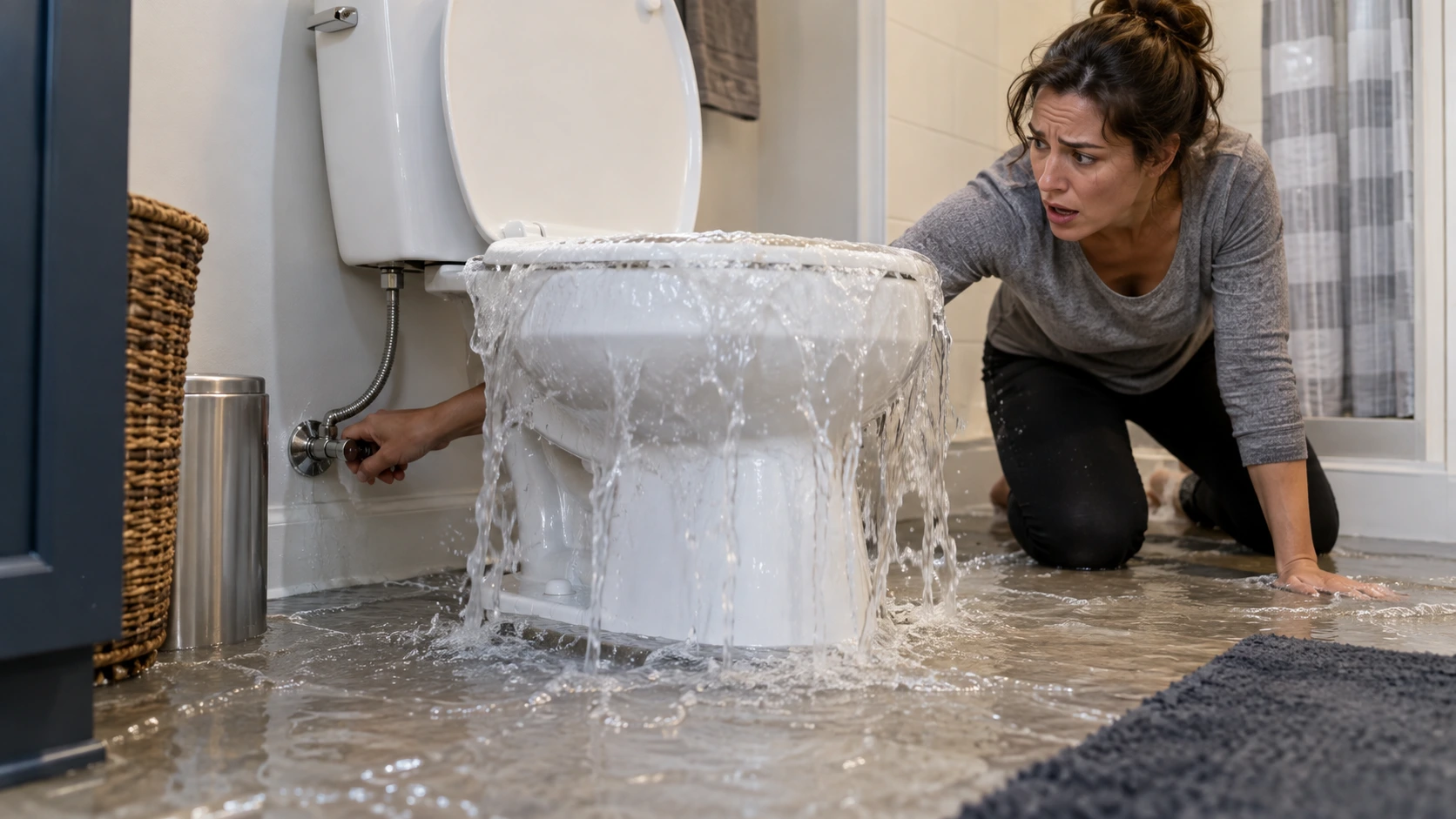
Now imagine the bowl continues filling and wastewater begins spilling onto the floor. The problem is no longer simply that the toilet cannot flush. The home is now dealing with contaminated water and potential property damage.
You should stop flushing immediately.
If accessible, closing the toilet’s supply valve can prevent more clean water from entering the tank. However, if wastewater is being pushed back through the drain, shutting off the toilet supply may not stop the underlying backup.
Another warning sign is when flushing one toilet causes water to rise in another fixture.
That often points to a drainage problem rather than a simple obstruction inside the toilet itself.
Homeowners dealing with toilet, shower, sink, or other bathroom fixture problems can also review professional bathroom plumbing services.
A Complete Loss of Water Can Require Immediate Plumbing Attention
Losing hot water is inconvenient.
Losing all water to the house can become a much bigger problem.
Before assuming the plumbing inside your home has failed, determine whether the interruption affects nearby homes as well.
A neighborhood-wide outage may involve the municipal supply rather than your private plumbing system.
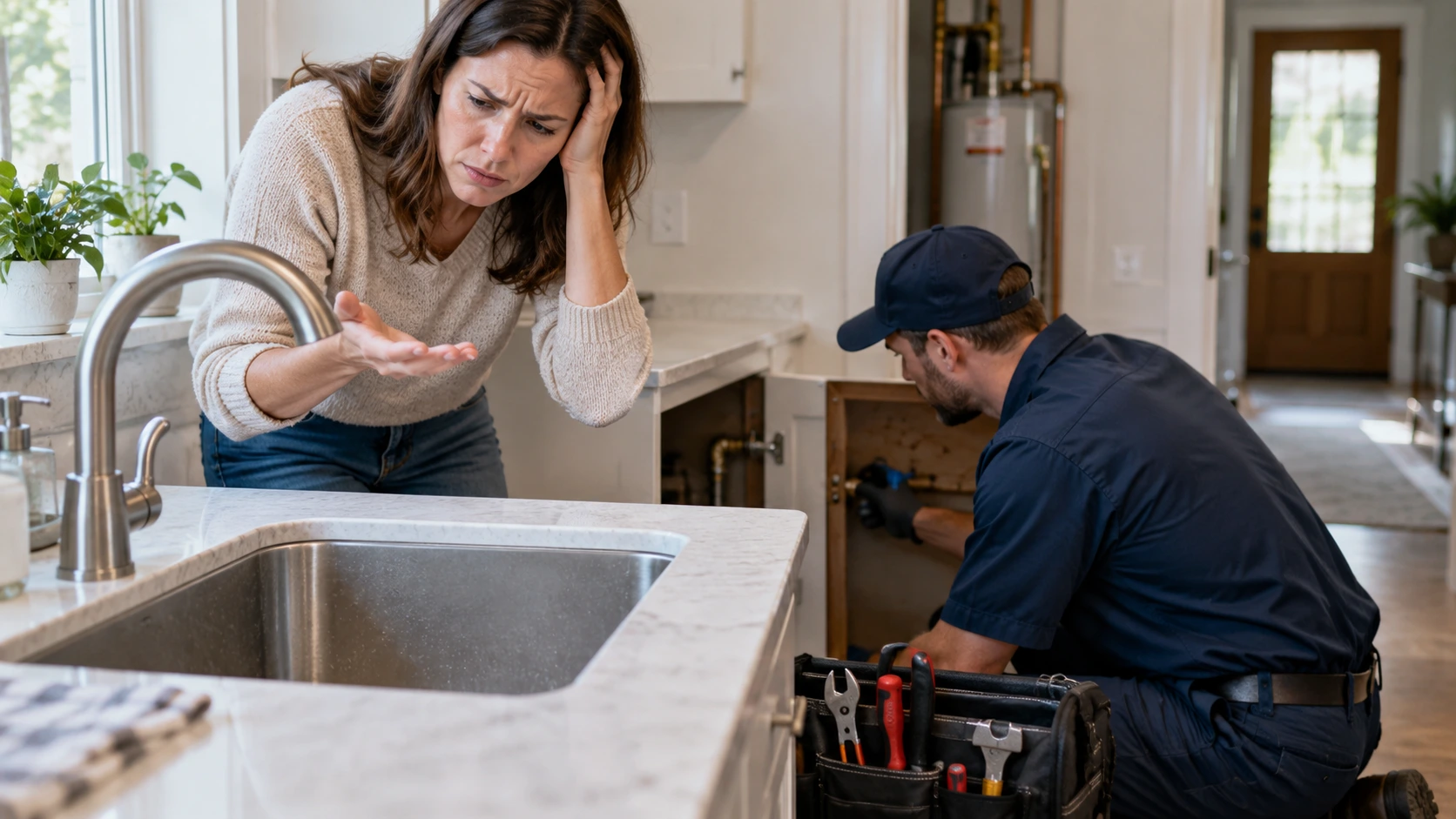
If surrounding properties have normal water service but your home does not, possible causes may involve:
- The main shutoff valve
- Water service piping
- Frozen pipes
- A damaged supply line
- Pressure-related issues
- A localized plumbing failure
Losing the household water supply affects more than convenience.
Without running water, toilets, sinks, showers, laundry, cooking, and basic sanitation can become difficult or impossible.
A failure involving the home’s incoming supply may require professional water line services.
Visible water outside the house, unusually wet soil around a service line, or water flowing where no irrigation is operating can also indicate a supply-line problem that needs investigation.
When Is a Water Heater Problem an Emergency?
Water heater problems vary widely.
No hot water by itself does not always require emergency service. A leaking tank, uncontrolled water release, or another condition that threatens the surrounding property deserves much faster attention.
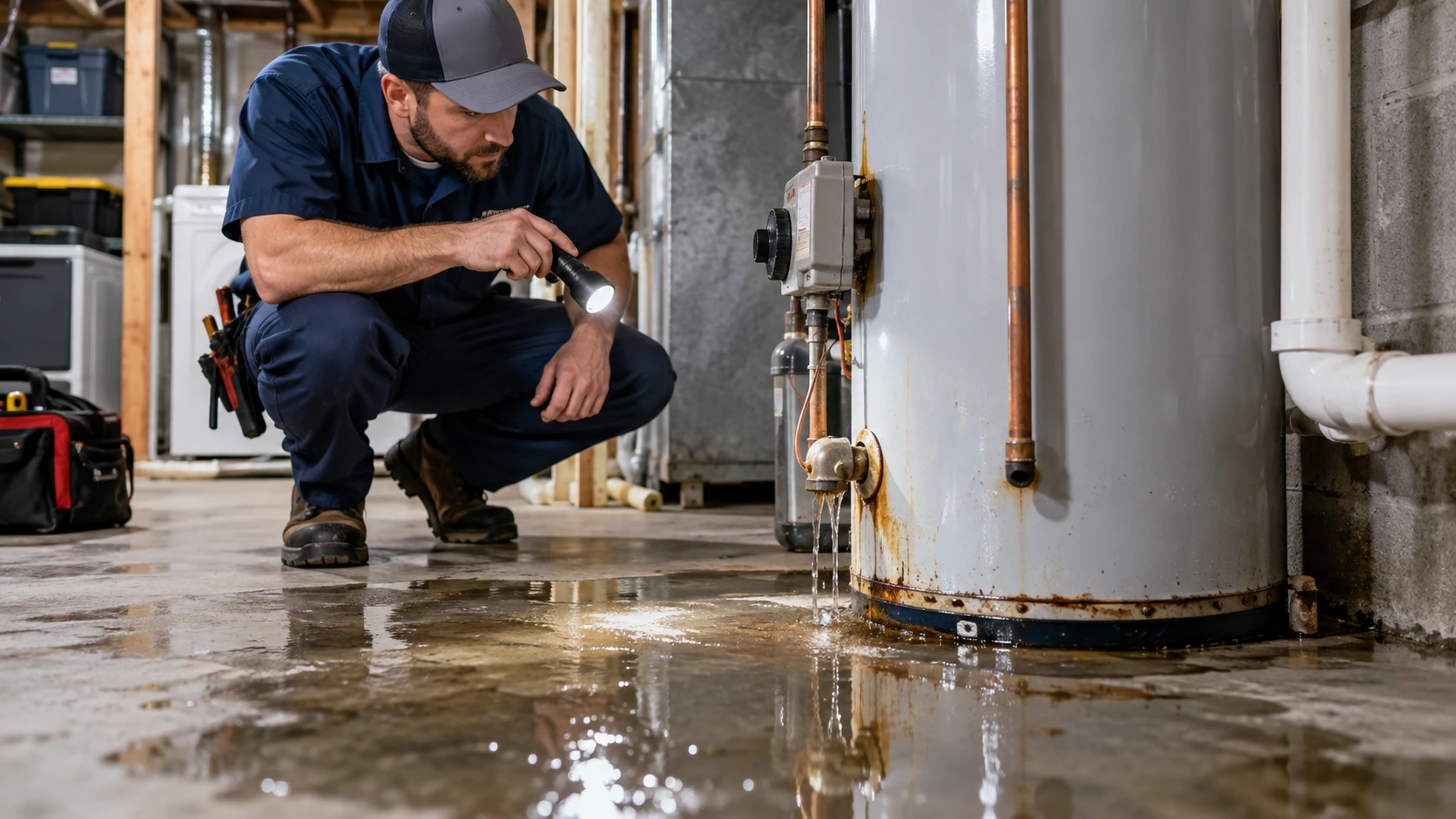
Water heater problems that may require prompt professional service include:
- Water actively leaking around the unit
- Water spreading across the floor
- A visibly damaged tank
- Leaking connections that cannot be isolated
- Unusual sounds combined with other signs of failure
- Water near electrical components
- A problem involving gas-fired equipment that raises a safety concern
Avoid approaching electrical equipment while standing in water.
If the unit is leaking significantly, limiting the water supply may help reduce additional damage when this can be done safely.
A technician can then determine whether water heater repair is appropriate.
Repair is not always the final answer. A failed or significantly deteriorated tank may instead require water heater replacement.
The distinction should be based on the actual condition of the equipment rather than automatically assuming every leak requires a new unit.
Gas-Related Plumbing Problems Require a Different Response
Plumbing and heating systems can sometimes involve gas piping, appliances, and related connections.
A suspected gas leak should not be handled like an ordinary water leak.
If you smell gas or otherwise suspect a gas leak, leave the building and contact the appropriate emergency service or gas utility from a safe location.
Do not remain inside trying to locate the source yourself.
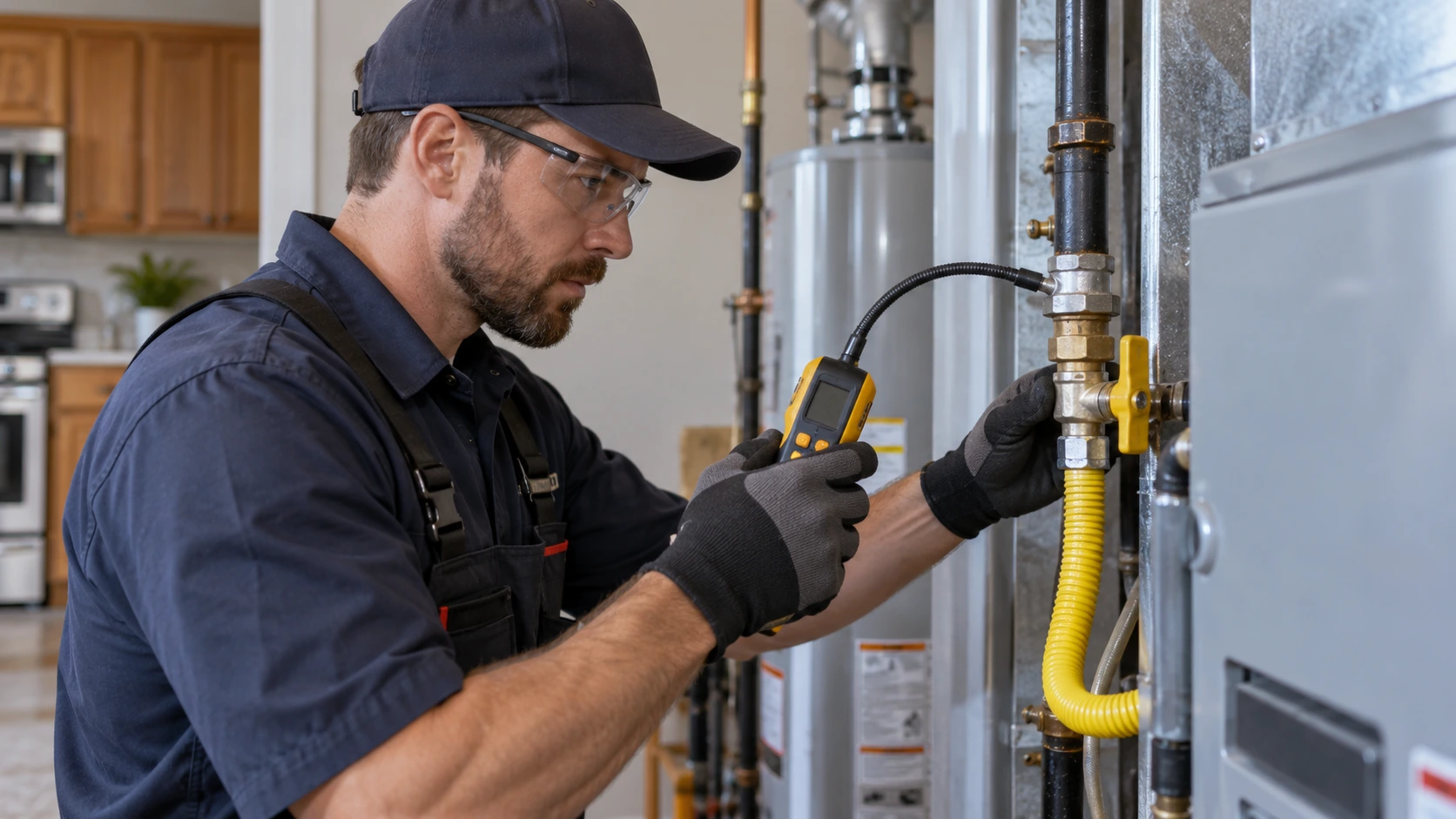
The immediate priority is personal safety, not determining which fitting or appliance caused the problem.
After the situation has been made safe and the source has been identified, professional gas line repair may be required before the affected piping or equipment is returned to service.
This is one situation where the first call may not be to a plumber. Emergency responders or the utility may need to address the immediate hazard before repair work begins.
Frozen Pipes Can Become Emergencies Once the Pipe Starts Leaking
Cold weather can create plumbing emergencies even before water appears on the floor.
A frozen pipe often first becomes noticeable when little or no water comes from a faucet.
The larger concern is that expanding ice may damage the pipe.
A pipe can remain frozen without visibly leaking because the ice itself restricts the water. Once temperatures rise and the blockage begins to thaw, damage to the pipe may become apparent.
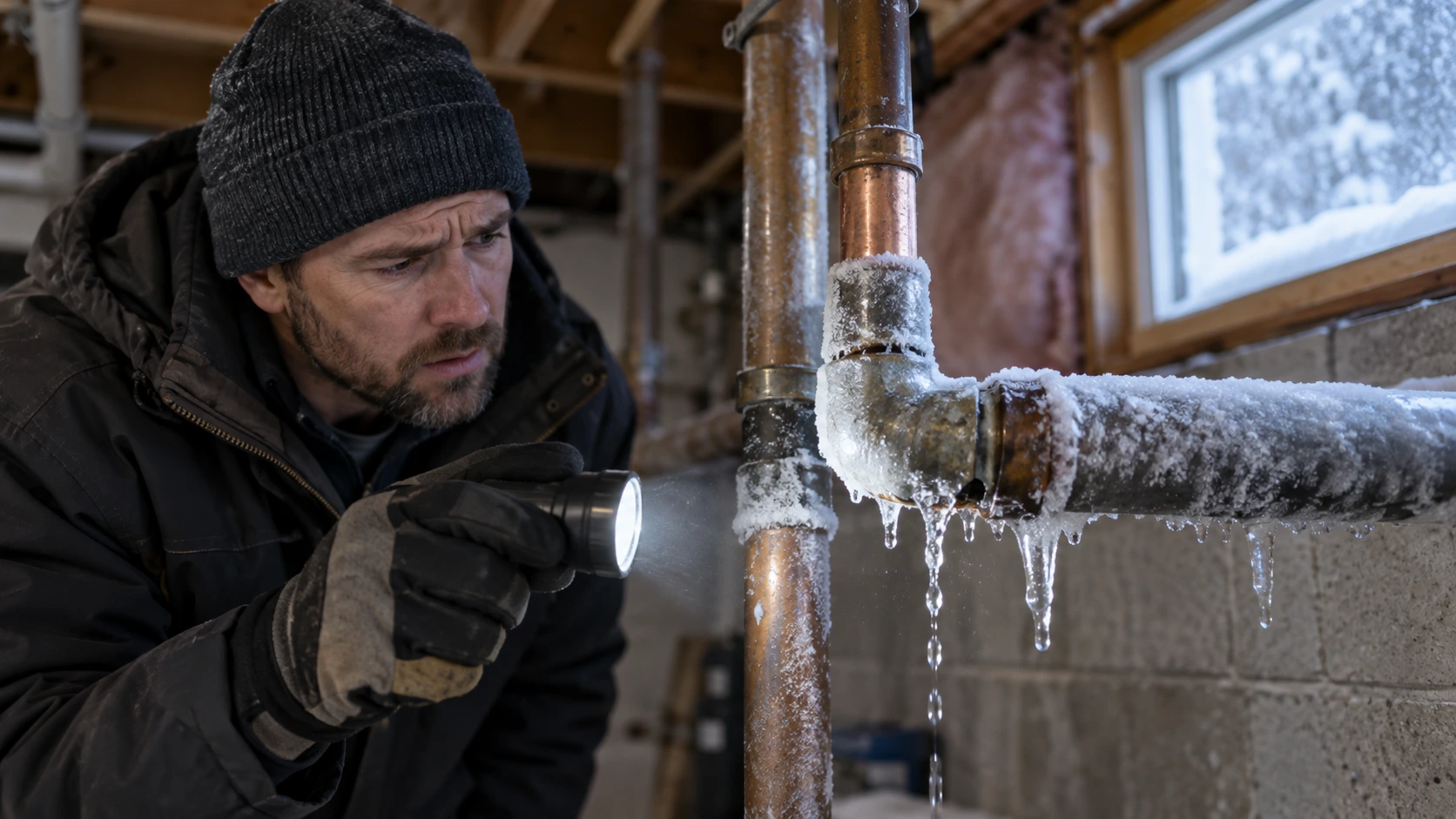
That means a homeowner can go from “no water at the faucet” to an active leak fairly quickly.
If you suspect freezing, watch for:
- Little or no water from a fixture
- Frost on accessible piping
- Unusually cold exposed plumbing
- Water appearing after temperatures rise
- Cracks or swelling in accessible pipe sections
Avoid using an open flame to thaw pipes.
If a frozen pipe has already cracked or begins leaking, shutting off the appropriate water supply can limit damage until the pipe is repaired.
Repeated freezing also deserves investigation. Repairing the failed section fixes the immediate leak, but it does not necessarily address why that pipe is repeatedly exposed to freezing conditions.
Ceiling Leaks May Be Plumbing Emergencies Even When the Source Is Upstairs
Water appearing through a ceiling should be taken seriously.
The water you see may be several feet away from the actual plumbing failure because moisture can travel along joists, pipes, or other structural materials before becoming visible.
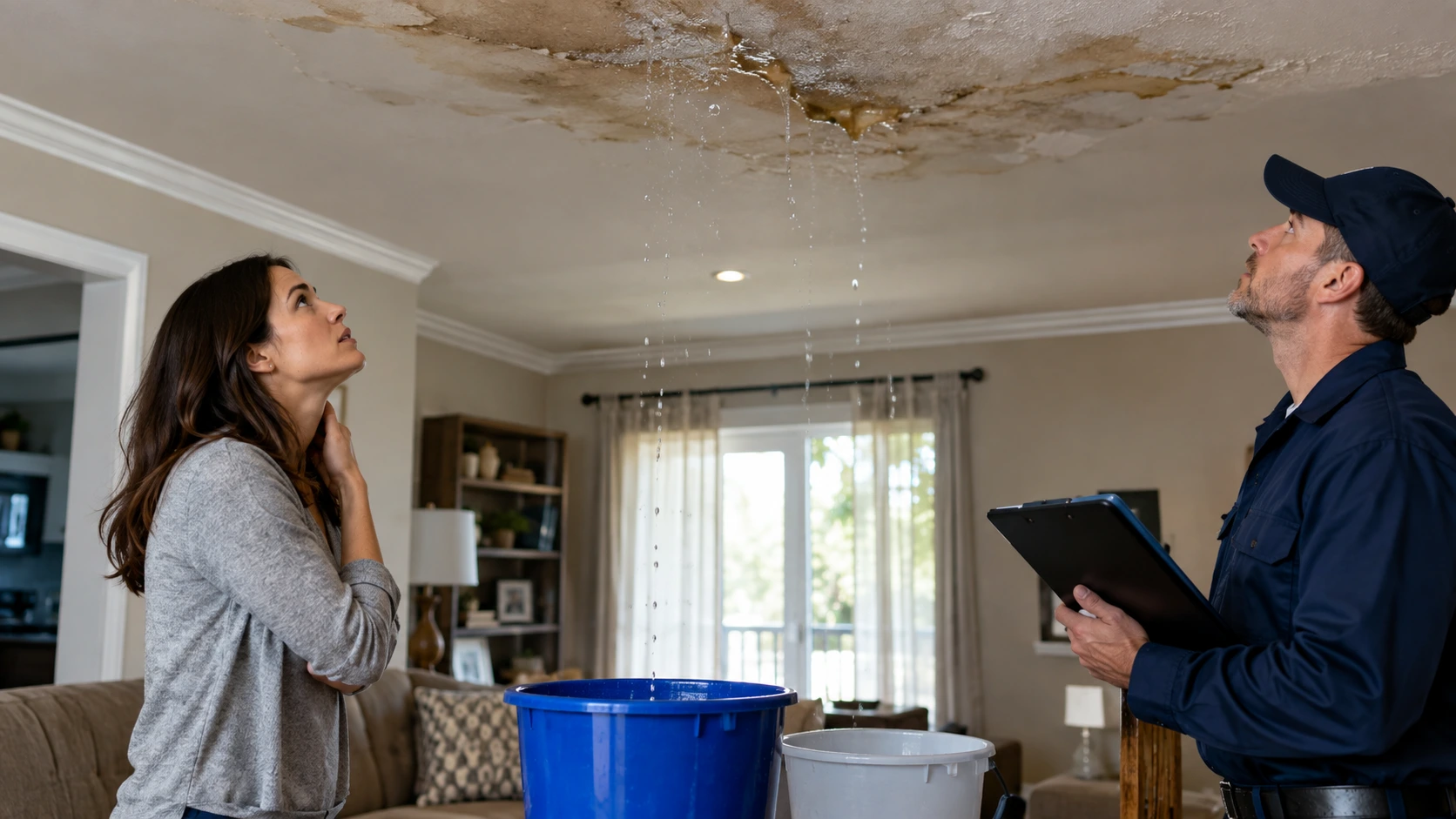
A ceiling leak beneath a bathroom may originate from:
- Toilet plumbing
- Tub or shower plumbing
- Sink supply lines
- Drain connections
- Hidden supply pipes
- Water heater piping
- Plumbing running through the floor system
Avoid assuming the fixture directly above the stain is automatically responsible.
For example, a water stain below a bathroom may appear after a shower, but that does not necessarily mean the shower drain is leaking. A nearby pipe could be releasing water into the same floor cavity.
If water is actively dripping through a ceiling, reducing or stopping water use in the area above can help until the source is identified.
If the ceiling begins sagging or appears heavily saturated, keep people away from the affected area.
This is another situation where professional leak diagnosis can prevent guesswork from leading to repairs in the wrong place.
Overflowing Sinks, Bathtubs, and Fixtures Can Cause Rapid Interior Damage
An overflowing fixture may seem less serious than a burst pipe because the plumbing itself might not be broken.
The resulting damage can still be significant.
Water from an overflowing tub or sink can quickly move beyond the bathroom or kitchen, especially if it reaches doorways, cabinets, flooring joints, or penetrations around plumbing fixtures.
An overflow becomes more urgent when:
- Water continues entering the fixture
- The drain cannot keep up
- The shutoff does not work
- Water spreads beyond the immediate room
- The overflow affects the floor below
- The backup appears connected to another drainage problem
Stopping the incoming water is the priority.
Once the overflow is controlled, determine whether the event happened because someone accidentally left a fixture running or because the drain itself cannot carry water away properly.
That distinction matters.
An isolated accident may require cleanup but no plumbing repair. An overflowing sink caused by a blocked drain needs the drainage problem addressed before normal use resumes.
Can a Slow Drain Ever Become an Emergency?
Most slow drains are not emergencies.
A single sink draining slowly can usually wait for scheduled service.
The situation becomes more concerning when several fixtures slow down at once or when a slow drain develops into a complete backup.
Several affected fixtures can suggest that the restriction is located farther downstream.
For example, if the bathroom sink, toilet, and bathtub all start draining poorly at approximately the same time, treating each fixture as a separate clog may miss the larger issue.
Changes that make a slow drain more urgent include:
- Water stops draining completely
- Wastewater returns through another fixture
- Several drains are affected
- Sewage becomes visible
- Toilets begin bubbling
- Water backs up into lower fixtures
At that stage, the problem may be better suited to professional drainage or sewer diagnosis than repeated use of household drain-clearing methods.
When Is Low Water Pressure an Emergency?
Low water pressure is usually not an emergency by itself.
A gradual reduction at one faucet can result from a fixture-specific problem.
Sudden pressure loss throughout the house deserves more attention.
If water pressure drops dramatically without an obvious reason, consider whether there are other symptoms such as:
- Water stains
- Damp walls
- Unexplained sounds of running water
- Wet areas outside
- Complete loss of water at some fixtures
- A recent plumbing failure
Pressure loss combined with signs of leaking can point to a problem in the supply system.
The urgency increases when water is escaping somewhere you cannot control.
If the issue affects only one faucet or shower, the problem may be local and suitable for a regular service appointment.
When Is a Leaking Faucet Actually an Emergency?
A dripping faucet is one of the most common examples of a non-emergency plumbing problem.
If the faucet drips slowly into the sink and the drain is working normally, immediate emergency service usually is not necessary.
A faucet problem becomes more urgent if:
- Water cannot be shut off
- The fixture breaks and releases water continuously
- Water leaks below the sink instead of into the basin
- A supply connection fails
- Water reaches surrounding cabinets or flooring
- The faucet suddenly separates from its connection
The location of the water changes the situation.
Water dripping into a functioning sink is controlled. Water running into a cabinet, floor, or wall is not.
Some fixture problems may eventually require repair or fixture installation if damaged components can no longer be reliably restored.
Kitchen Plumbing Problems That May Need Immediate Attention
Kitchens contain several water connections in a relatively small area.
The sink, faucet, dishwasher, refrigerator water line, disposal, and drain system can all create plumbing problems.
Potential kitchen emergencies include:
- A burst dishwasher supply line
- Water pouring from beneath the sink
- A broken faucet connection
- A refrigerator supply line leaking behind cabinetry
- A sink backup that will not drain
- Water reaching electrical appliances
- A drain backup involving contaminated wastewater
Leaks behind cabinets deserve particular attention because damage may continue out of sight.
If you can safely stop the water with a nearby shutoff valve, do so before inspecting the surrounding area.
Professional kitchen plumbing services can address problems involving kitchen fixtures, supply lines, sinks, and related plumbing.
Plumbing Emergencies in Bathrooms Can Spread Beyond the Bathroom
Bathrooms are designed to handle water inside tubs, showers, sinks, and toilets.
They are not designed for uncontrolled water beneath the floor or inside walls.
A relatively small bathroom leak may affect:
- Vanity cabinets
- Flooring
- Subflooring
- Adjacent bedrooms
- Hallways
- Ceilings below
- Wall cavities
- Trim and baseboards
Toilets deserve particular attention because leaks can involve either clean supply water or wastewater.
Water coming from the toilet supply connection is different from sewage leaking from the bowl or drainage connection.
Both require repair, but the cleanup and sanitation concerns are not the same.
Persistent moisture around the base of a toilet also deserves investigation even when there is no dramatic overflow.
Repeatedly wiping up water without identifying the source can allow hidden damage to continue.
Plumbing Emergencies in Multi-Story Homes Can Affect More Than One Floor
Water follows gravity.
A plumbing failure upstairs can quickly become a problem downstairs.
This can make upper-floor bathrooms, laundry rooms, and water heaters particularly important during an active leak.
Imagine a washing machine supply connection fails on the second floor.
The visible water around the appliance may only be the first part of the problem. Moisture may travel beneath flooring and begin appearing through the ceiling below.
The same can happen with bathroom plumbing or an upstairs water heater.
When water is actively moving between floors, stopping the source quickly is more important than immediately identifying every damaged surface.
After the plumbing problem has been controlled, the surrounding areas can be evaluated.
What Plumbing Problems Can Usually Wait Until Regular Business Hours?
Knowing what is not an emergency can prevent unnecessary panic.
Problems that can often wait include:
- A slowly dripping faucet
- A toilet that runs intermittently
- A single slow drain
- Minor fixture leaks that are completely isolated
- Low pressure at one faucet
- A loose faucet handle
- Minor fixture repair
- Reduced hot water without active leakage
- A clogged fixture when another working fixture is available
“Can wait” does not mean “ignore.”
A small problem can worsen if it continues long enough.
The important distinction is whether the condition is stable.
For example, a leaking sink connection may be safe to schedule for the next available appointment if the sink’s shutoff valves completely stop the leak.
If the valves do not stop it, the same problem may require immediate assistance.
Homeowners looking for broader guidance on common household systems can review the home plumbing services guide for additional information about residential plumbing problems and maintenance.
How Can You Tell Whether a Plumbing Problem Is Getting Worse?
Plumbing problems often provide warning signs before becoming major failures.
Watch for changes rather than focusing only on the initial symptom.
A situation may be worsening if:
- A drip becomes a steady flow
- A damp area becomes visibly wet
- A stain grows
- Additional fixtures stop draining
- Water begins appearing in another room
- Pressure continues dropping
- A leak returns after being temporarily contained
- New sounds develop in the plumbing system
- A toilet begins affecting nearby drains
- Water reaches electrical equipment or finished surfaces
A problem that was reasonable to schedule earlier in the day may require a different response if conditions change overnight.
That is why homeowners should periodically check contained leaks rather than assuming the problem will remain stable until the appointment.
What Should You Do Before the Emergency Plumber Arrives?
The goal before professional help arrives is to reduce additional damage without creating another hazard.
Stop the Water When It Is Safe to Do So
If you know which valve controls the affected fixture, closing it may stop the leak.
For larger failures, the main water shutoff may be necessary.
Homeowners benefit from knowing where the main shutoff is located before an emergency occurs.
Trying to find it for the first time while water is spreading across the floor adds unnecessary stress.
Stop Using Affected Drains
If sewage or wastewater is backing up, avoid running additional plumbing fixtures.
More water entering the drainage system can worsen the backup.
Keep Away From Electrical Hazards
Water and electrical equipment create a dangerous combination.
Do not enter standing water if electrical equipment, outlets, cords, panels, or appliances may be affected.
Move Belongings When Safe
Furniture, rugs, stored items, and other belongings can sometimes be moved away from a clean-water leak if the area is safe to enter.
Personal safety takes priority over protecting property.
Describe the Problem Clearly
When contacting a plumber, useful information includes:
- Which fixture is affected
- Where the water is appearing
- Whether the main supply is shut off
- Whether sewage is involved
- How long the problem has been occurring
- Whether several fixtures are affected
- Whether the problem is getting worse
- Whether the plumbing can still be used
A clear description can help the plumber understand what type of situation they are responding to.
What Will an Emergency Plumber Usually Look For?
Emergency plumbing work begins with identifying and controlling the immediate problem.
The visible symptom may not be the actual source.
Water dripping from a ceiling, for example, tells you where the water finally became visible. It does not necessarily reveal where the plumbing failed.
A professional evaluation may involve checking:
- Supply piping
- Shutoff valves
- Fixture connections
- Drain lines
- Sewer piping
- Water heater connections
- Toilet components
- Hidden piping
- Water service lines
- Gas piping when appropriate
The immediate repair may involve isolating a damaged line, replacing a failed component, clearing a blockage, repairing a connection, or stopping water until a more extensive repair can be completed.
The next question is why the problem happened.
A single failed fitting may be isolated.
Repeated failures in older or deteriorated plumbing can point to a broader problem.
When sections of a plumbing system are repeatedly failing, professional plumbing replacement may eventually be worth discussing instead of continuing to repair individual weak points.
Should You Attempt an Emergency Plumbing Repair Yourself?
Some homeowner actions are appropriate during an emergency.
Shutting off an accessible water valve is very different from cutting into a pressurized pipe.
Temporary containment may help reduce damage, but attempting a permanent repair without understanding the plumbing system can sometimes create additional problems.
Be particularly cautious around:
- Gas piping
- Water heaters
- Electrical equipment near water
- Sewage backups
- Pressurized supply lines
- Plumbing hidden inside walls
- Main water service piping
A homeowner may be able to stop the water. Determining why the problem happened and restoring the system reliably is a different task.
When Repeated Plumbing Emergencies Point to a Larger Problem
One plumbing failure can happen unexpectedly.
Repeated failures deserve more attention.
If the same property experiences frequent pipe leaks, recurring drain backups, repeated water heater problems, or ongoing fixture failures, treating each incident separately may not address the larger cause.
Patterns can develop because of:
- Aging plumbing materials
- Deteriorated connections
- Recurring drainage obstructions
- Damaged sewer piping
- Water supply problems
- Improper earlier repairs
- Repeated freezing in vulnerable pipes
- Equipment nearing the end of its usable condition
That does not automatically mean the entire plumbing system needs replacement.
It does mean the pattern is worth discussing with a plumber.
A broader inspection can help distinguish between unrelated repairs and a plumbing system that is beginning to fail in multiple areas.
How Homeowners Can Prepare Before a Plumbing Emergency Happens
You cannot prevent every plumbing failure, but knowing a few basic details about your home can make an emergency easier to control.
Know where the main water shutoff is located.
Know which valves control toilets, sinks, and other major fixtures.
Pay attention to small leaks instead of waiting for them to become large ones.
Investigate recurring drain problems.
Do not ignore ceiling stains, damp cabinetry, or unexplained water.
Have plumbing problems repaired when warning signs first appear.
These steps are less about predicting every possible failure and more about reducing the amount of time water is allowed to run uncontrolled when something does go wrong.
When Should You Call an Emergency Plumber?
Call for emergency plumbing service when the problem cannot safely wait without creating additional damage, loss of essential plumbing, contamination, or another serious concern.
Situations that may justify immediate service include:
- Burst pipes
- Uncontrolled water leaks
- Sewage backing into the property
- Overflowing toilets that cannot be contained
- Major drain or sewer backups
- Serious water heater leaks
- Complete loss of household water
- Frozen pipes that have ruptured
- Water moving through walls or ceilings
- Major plumbing failures affecting multiple fixtures
If a gas leak is suspected, leave the building and contact the appropriate emergency service or utility from a safe location before arranging repair work.
For ordinary water-related problems, the biggest question is usually whether you can stop the damage.
If you can safely isolate the affected fixture and the problem remains completely contained, a regular plumbing appointment may be appropriate.
If water, sewage, or another hazard continues spreading while you wait, treat the situation as urgent.
Foukas Plumbing & Heating provides emergency plumbing services for plumbing problems that require prompt professional attention, along with broader plumbing services for household repairs, diagnosis, installation, and replacement. The approved Foukas internal-link library specifically identifies emergency plumbing, plumbing repair, drain and sewer, water-line, leak-detection, water-heater, gas, bathroom, and kitchen service pages for relevant article use.